








Rotterdam is a thought-provoking play of identity

The Players’ Guild of Hamilton’s latest production tackles themes of gender identity, authenticity, and the human need to belong.
Christening the new year at The Players’ Guild is the play Rotterdam, a thought-provoking story that begins on a recent New Year’s Eve in the Dutch port city. Alice and Fiona, young(er) adult transplants from the U.K., are in their apartment. Alice is frazzled, hunched over her laptop, agonizing over a coming-out email to her parents that she’s still fearful to send after countless drafts. Her girlfriend tries to help Alice reason with her fears until the email’s contents push Fiona to her own revelation: he identifies as a man, wants to start transitioning, and has chosen a new name, Adrian. Already emotionally conflicted and questioning her future in Rotterdam, Alice is overwhelmed by the new reality set in motion with this declaration and struggles with what it means not only for their relationship but her own sexual identity as well.
Rotterdam was written by Jon Brittain, a playwright who was born in England and raised in the Netherlands. Rotterdam premiered in November 2015 at London's Theatre 503, then moved to Trafalgar Studios and still later, the Arts Theatre. In 2017, it won the Olivier Award for Outstanding Achievement in an Affiliate Theatre. Some of Brittain’s other writing includes the shows Margaret Thatcher Queen of Soho and its sequel Margaret Thatcher Queen of Game Shows, as well as a play titled A Super Happy Story (About Feeling Super Sad), which won an award at Edinburgh Fringe in 2017. Brittain has directed a number of TV and theatre productions and worked as a writer on the popular Netflix show The Crown.
Bloomsbury Publishing has termed Rotterdam a “bittersweet comedy,” but while it certainly holds some laughs, it feels more accurate to call the play an emotionally charged drama, highlighting the challenges and negotiation involved in being true to oneself amid changing identities and relationships, shifting expectations and undeniable needs. Co-director Coryn Urquhart brings particularly valuable insight to the production in this regard, sharing in the program that he “came out as transgender in 2022, and the breadth of my transition was so much broader than HRT (hormone replacement therapy); it changed the shape of all my relationships.”
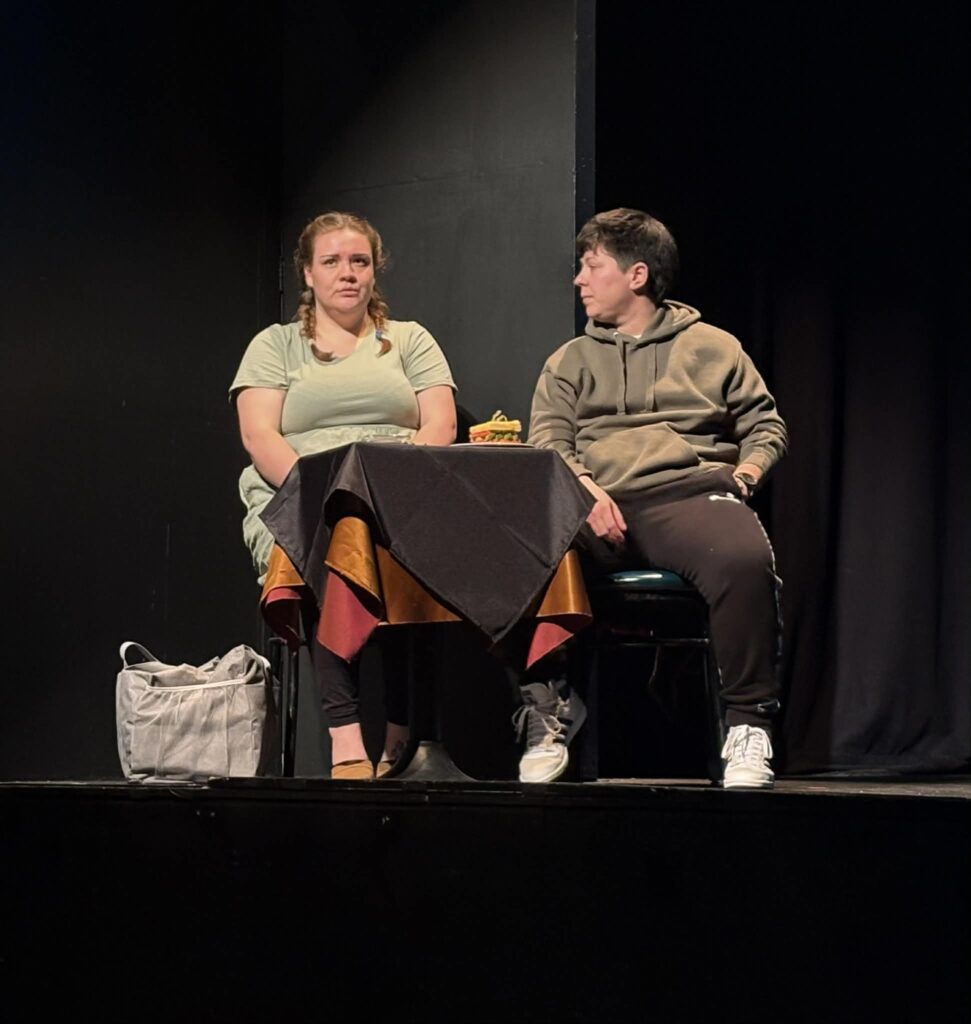
Co-director Connie Spears alludes to the powerful potential of the play’s themes when she says, “Rotterdam is a play that holds a mirror to the messy, exhilarating and deeply human process of becoming oneself. At its heart are characters doing their best to love honestly while grappling with identities that shift, collide, and evolve.” Spears reflects that this is a process that is turbulent, complex, vulnerable and even fearful, and says that the script resists the pressure to over-simplify the sometimes conflictual, uncomfortable parts of life.
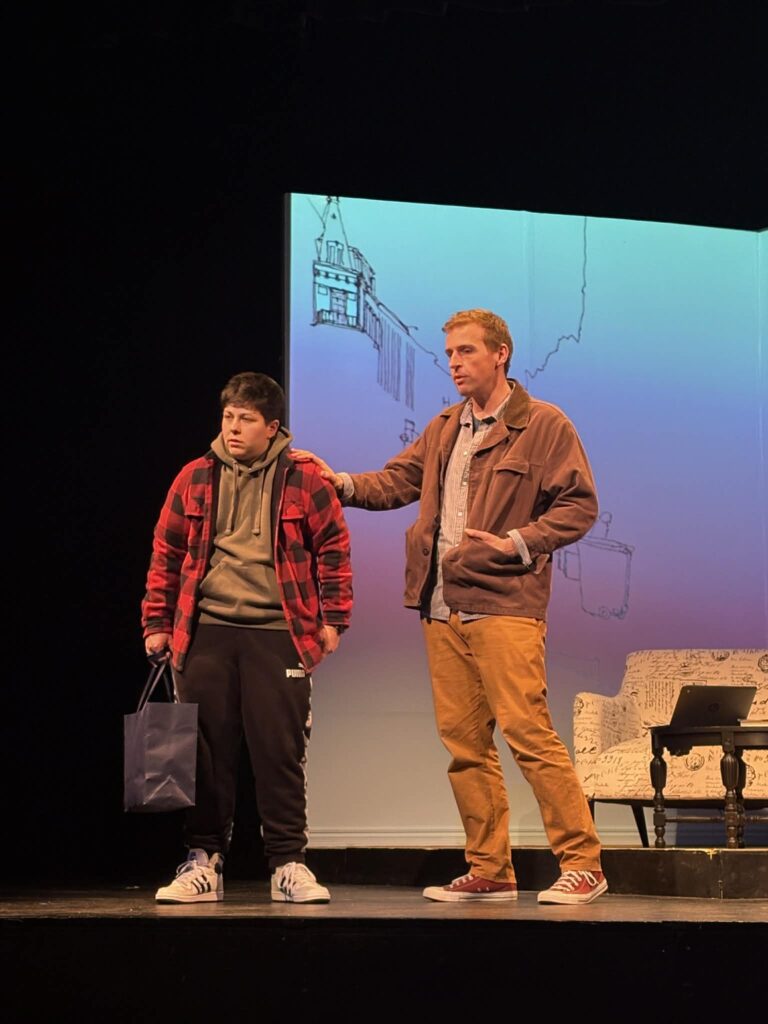
The Players’ Guild cast includes Rachel Meyers (Alice), Cino (Adrian/Fiona), Allison Dickey (Lelani), and Brendan Green (Josh). Dickey is charming and comedic as Lelani, a Dutch native with a peppy accent, playful allure, and the kind of devil-may-care attitude that strikes fear in the hearts of older people. (At one point, Lelani shrugs away increasingly outrageous red flags about her employer and her own personal safety that take Alice, and the audience, audibly aback). Green lends depth to the proceedings with a solid dose of heart, wisdom, humour and constancy as Alice’s former boyfriend and Adrian’s supportive big brother.
Cino’s portrayal of Fiona’s transition to Adrian is so interesting to watch. At first seemingly laid-back and self-assured, Fiona evolves – or, more accurately, Adrian is uncovered – to be both a more euphoric and more explosive personality, delighted by his changing body feeling newly authentic to him, yet feeling lingering hostility at being misgendered despite an apology. When Adrian’s feelings of impotent rage and frustration turn into a physical attack on his brother Josh, Cino has us holding our collective breath.
Meyers brings a through line of frisson and anxiety to Alice, and there is some realism to the heightened emotion she brings to the character, who seems too often to be a passenger in her own life, lacking the conviction or ability to take control. Still, the story would benefit from a bit more nuance and variation in the way Meyers portrays Alice’s reactions and emotional state.
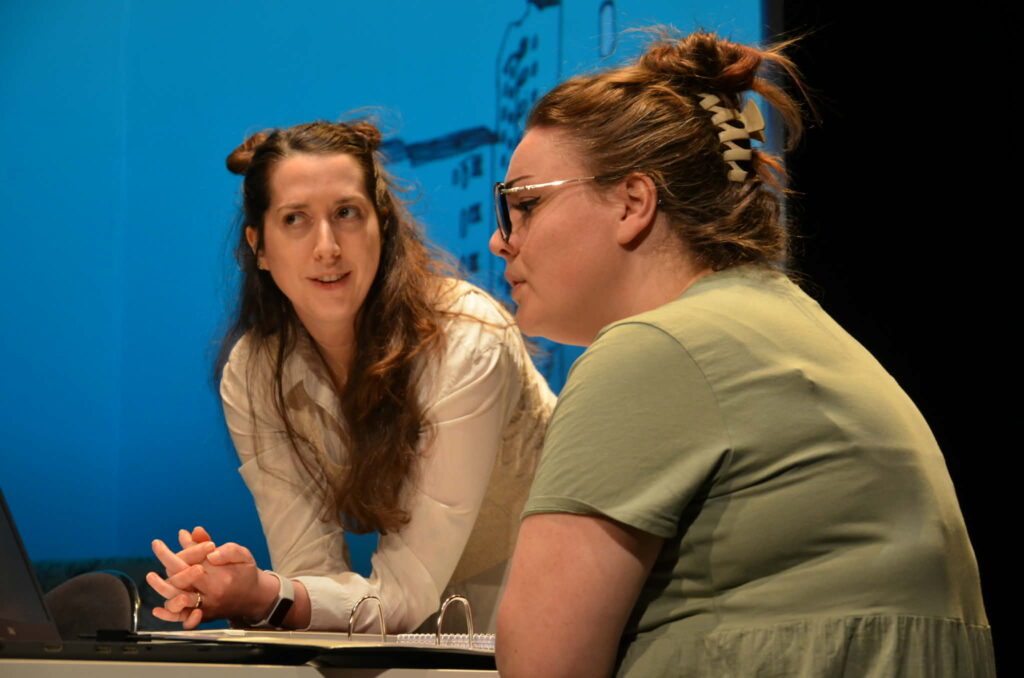
Alice seems almost constantly at a fevered level of anxiety, angst or indignation, and it has the tonal effect of striking the same high key on a piano, over and over. Aside from a few scenes, particularly when she takes an interest in community life in Rotterdam and seems to be enjoying herself, Alice rarely seems at ease or comfortable in her body, no matter where she is or what she’s doing. Maybe that is who the character really is. However, it becomes difficult to distinguish the moments when Alice is truly bereft, feeling a loss of her own identity and needs and boundaries, from lesser stresses and annoyances.
The production’s set is spare, using a table and chairs, a couch and coffee table, a bench and a mattress to denote Alice and Adrian’s apartment, a café, a club, a restaurant and a waiting room. From scene to scene, projections of attractive, minimalist line drawings help the audience visualize the setting.
The pacing of the play feels a bit sluggish, and there is no explanation given as to why, when three of the characters hail from the U.K., only Lelani has an accent. (This might have been remedied with a few alterations to the script to replace the United Kingdom and the ferry with Canadian references and an airplane).
I must confess that I did not enjoy the ending, which rang false in a play about authenticity. Rather than a mildly “happy” ending, all signs pointed toward a sad but bittersweet and poignant resolution full of personal growth, only for my hopes to be dashed. (That’s right, I’m the monster arguing for an unhappy ending for the lovers). However, that is my quibble for the playwright and not the artists that staged this production.
Rotterdam is about authenticity, relationship, and the very human need to be “seen” as well as to belong. Gender, sexuality (as well as location) are the compelling catalysts by which it examines these complicated and intersecting themes. With Rotterdam, Urquhart says, “we welcome our audience to … come away with the understanding that, at the end of the day, we all want the same thing: to be loved and known as we truly are.”
NEED TO KNOW
Rotterdam
The Players’ Guild of Hamilton
80 Queen St. S., Hamilton
Continues Jan. 16, 22, 23 & 24 at 8 p.m.
with matinees Jan. 17, 18 & 24 at 2 p.m.
Box office: (905) 529-0284 or playersguild.org