






The beat goes on at the Hamilton Music Collective
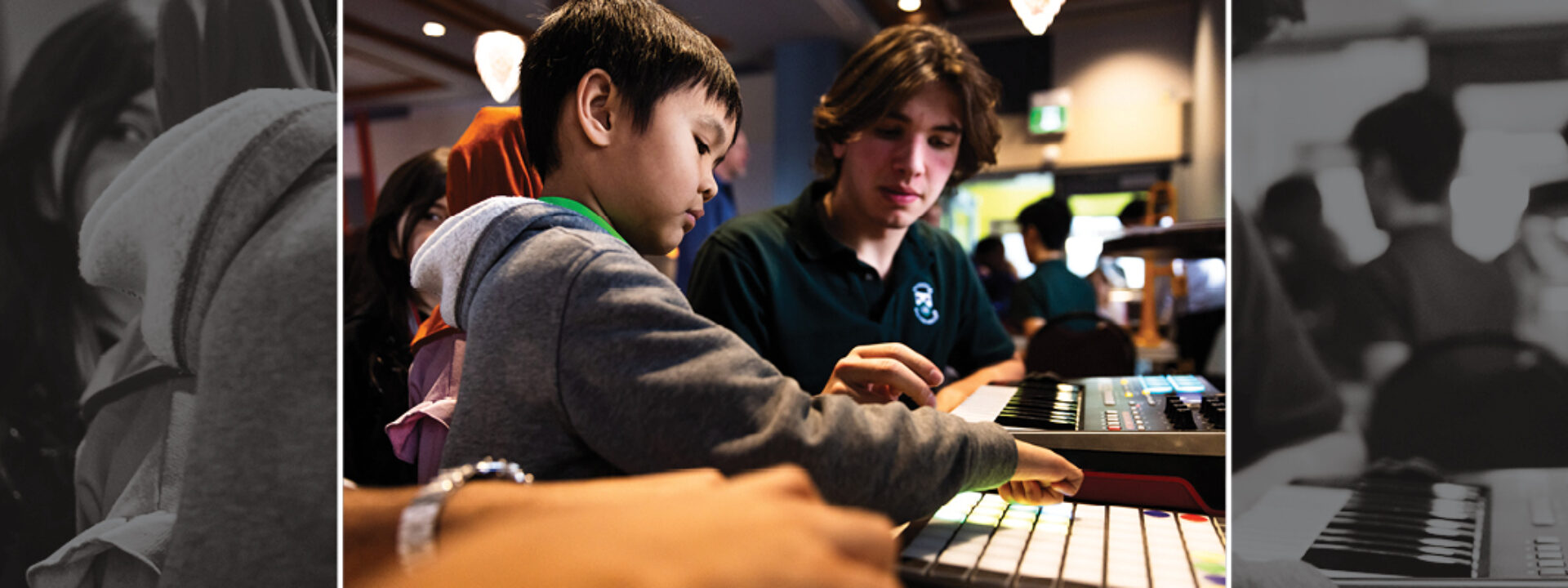
The music education charity got a big boost for its free and affordable programs from NBA superstar Shai Gilgeous-Alexander and a U.S. gaming company. A $150,000 donation will provide beat-making, music production, and DJing lessons to 250 kids. It comes at a pivotal time in HMC’s evolution.
When you get an email out of the blue mentioning the name of a hometown sports hero and talking about making a big investment in your music education charity, you’d probably be right to be initially suspicious.
“I figured it was spam but because I’m old school, I respond to everything,” says Astrid Hepner, CEO and founder of the Hamilton Music Collective (HMC), which delivers free and affordable music education programs to city kids.
It’s a good thing she wrote back because it resulted in a $150,000 donation to HMC’s electronic music programs thanks to the phenomenon that is NBA superstar Shai Gilgeous-Alexander.
The grant, from 2K Foundations and the Shai Gilgeous-Alexander Foundation, will allow more than 250 kids to access music production, beat-making, DJing, and recording classes over two years.
“They had really done their research. They said they loved us and they wanted to work with us.”
2K Foundations, the charitable arm of gaming company Take-Two Interactive, has contributed to the hometowns of the athletes featured in its video games through investing in community projects in sports facilities, schools, and non-profits around the world.
Gilgeous-Alexander (who goes by his initials SGA) is the cover athlete on Take-Two’s NBA 2K26 game, and Hepner is thrilled that SGA’s love of music led right to HMC’s doorstep.
Adding to its instruction programs on piano, violin, guitar, drums, and wind instruments, in 2016, HMC launched what it calls the Musical Futures Production Program, for kids interested in electronic expressions of music.
It’s now officially called the 2K Foundations SGA Musical Futures Production Program and having the spotlight that an NBA superstar and a huge gaming company bring is an exciting opportunity, says Hepner.
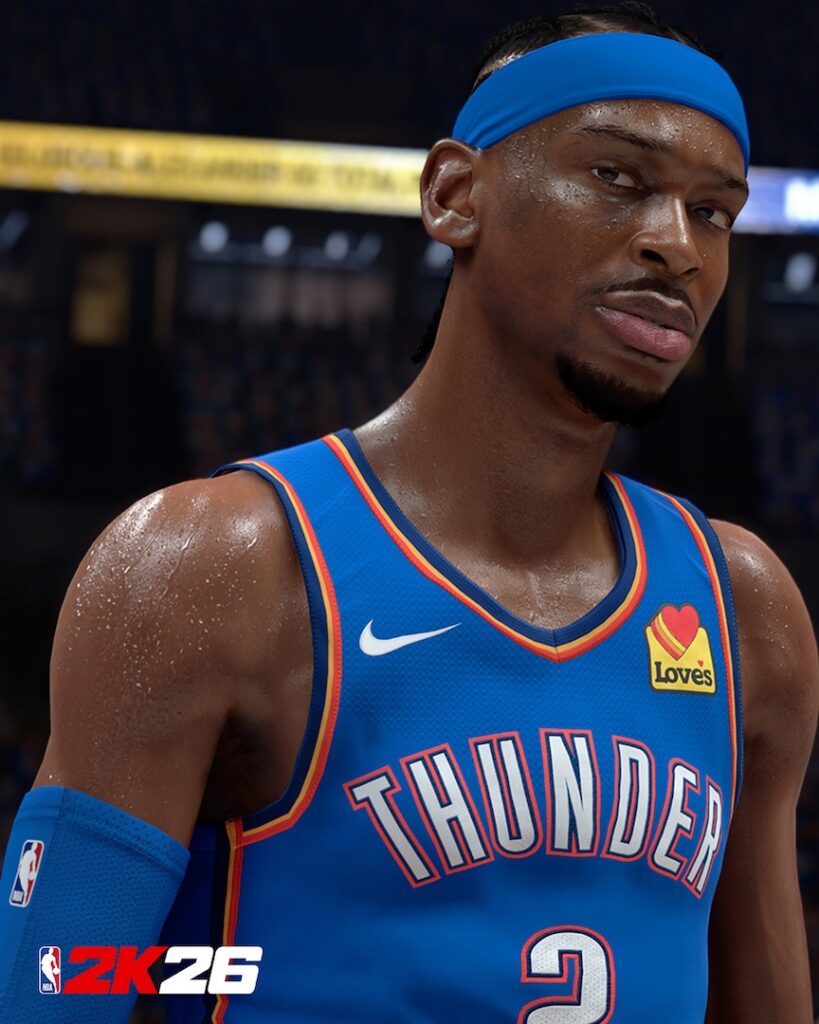
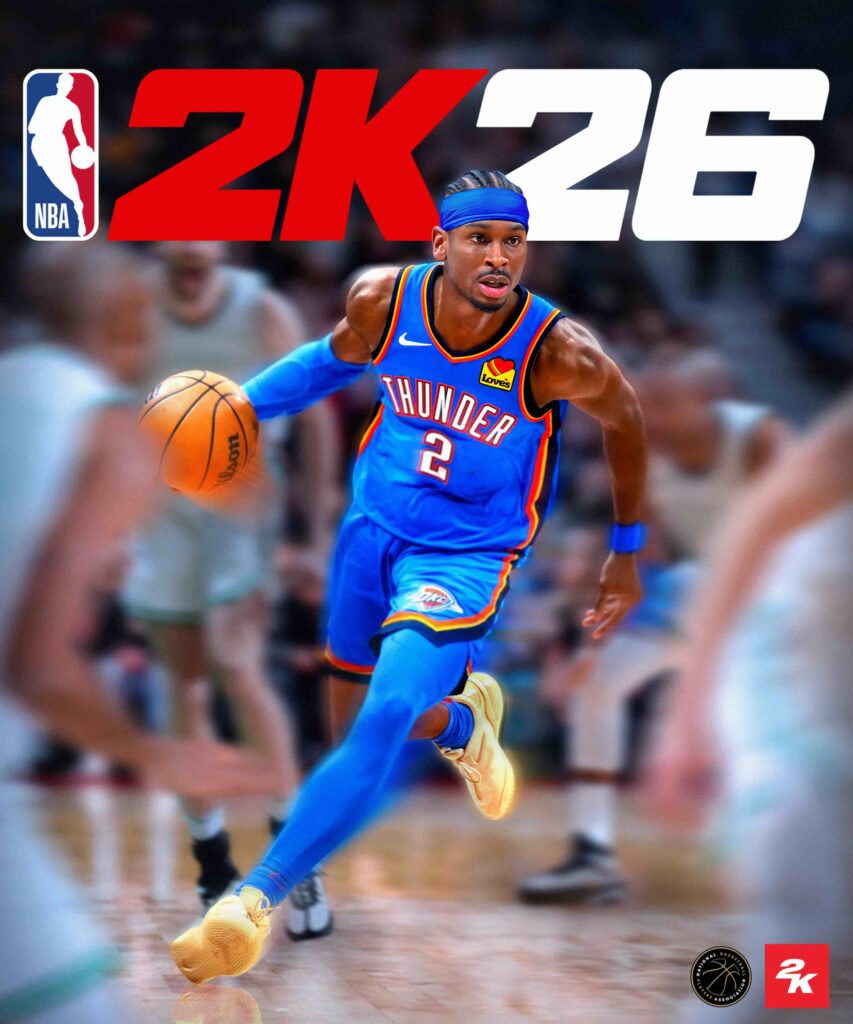
SGA’s team requested that HMC deliver the program through BGC Hamilton-Halton (formerly the Boys and Girls Club), which was no problem since the two organizations have worked together for a decade.
The new funding began in January, with 48 kids being bused from the east-end BGC to HMC’s centre. The program will continue to ramp up to 130 students each semester.
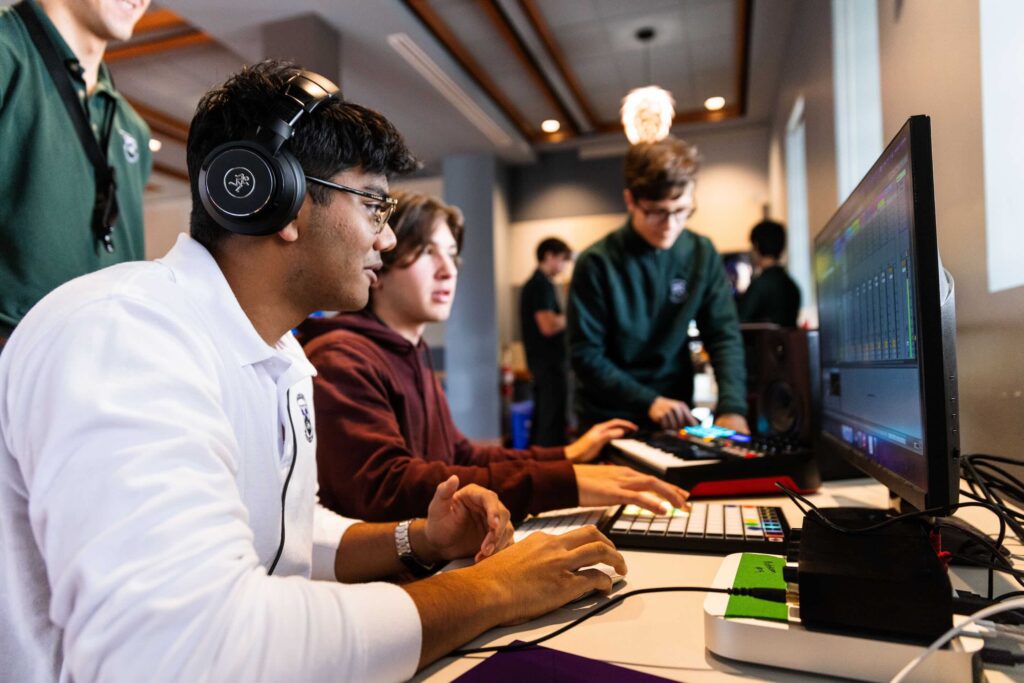
In these programs, kids and teens learn DJing techniques, the fundamentals of beat-making, and to write, produce, and record their own music. Some kids are aspiring performers or DJs, some want to create music for films or video games. Others just want to explore the sheer joy of creating music.
Whatever the kids are dreaming about, they are learning from professional musicians, DJs, music producers, and engineers, says Garrett Lajoie, HMC’s marketing and events coordinator, and an instructor in several programs.
“We have a very creative program here. We aren’t a traditional music school,” says Lajoie, a singer-songwriter who was key to creating the Music Futures program.
“I love it because so many kids are creative and musical, but they don’t always have fun sitting through a piano lesson.”
Much of the music kids hear today is being produced through a laptop in someone’s bedroom, he says.
“Music production is so accessible now. You don’t need a label signing or a million-dollar studio to build beats and loops in any style you like – hip hop, jazz, or dance.”
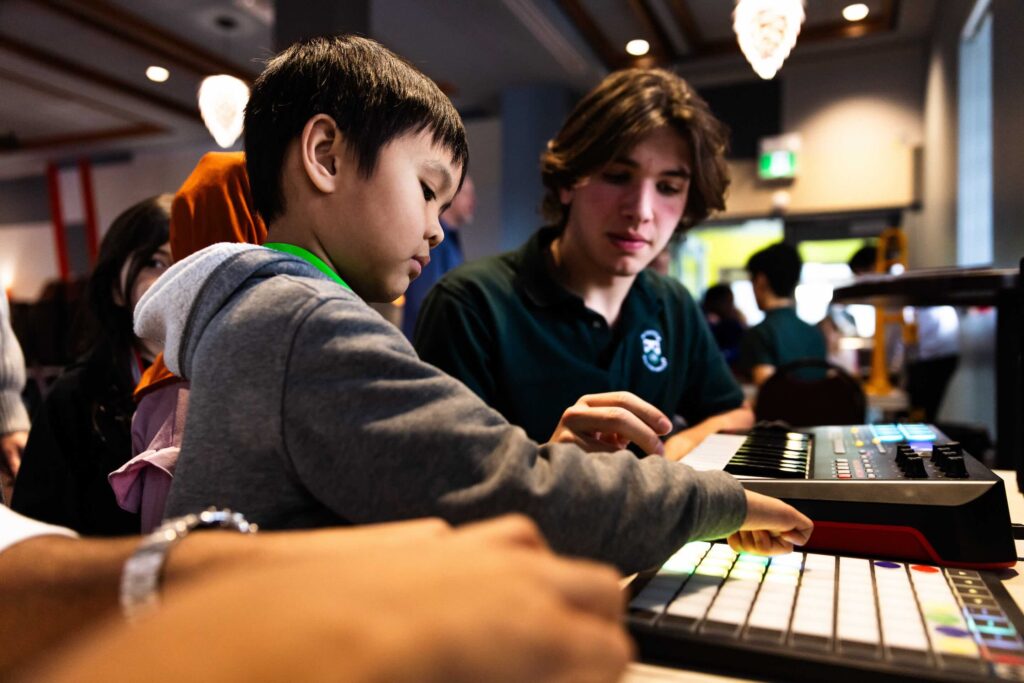
PHOTO: Felix Vlasak
A NEW SPOTLIGHT
SGA, a point guard with the Oklahoma City Thunder, was born in Toronto but grew up on the Hamilton Mountain. He had a historic season in 2025, winning the NBA MVP title and scoring crown for the regular season, powering his team to its first NBA Championship, and winning the NBA Finals MVP.
Despite all SGA’s success, including being named Sports Illustrated Sportsperson of the Year in January, and signing a record $285-million, four-year contract extension with the Thunder, the grant to the HMC is further proof that he hasn’t forgotten his hometown. He came back last year to accept a key to the city and take part in a celebration in his honour at a Ticats game. And in February, it was announced that SGA had taken an ownership stake in the operation of TD Coliseum. That deal includes SGA’s plan to host community events and programs in the venue. (Those details, or the value of his investment were not disclosed.)
Hepner hopes the spotlight that comes with SGA and 2K Foundations will open doors to more partnerships for the HMC.
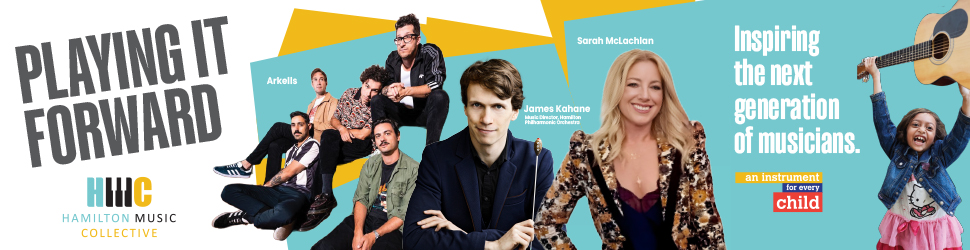
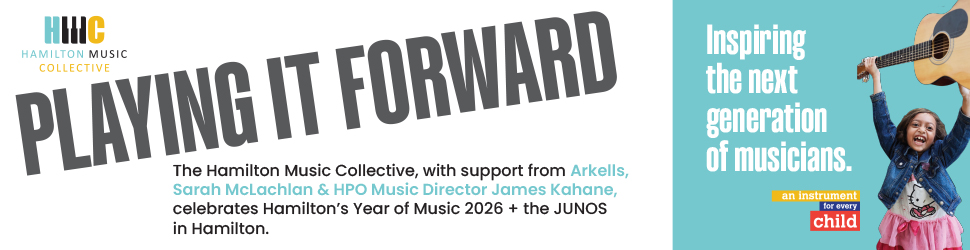
Hosting The JUNOS and Hamilton’s City of Music campaign are opportunities to get the word out, too. It doesn’t hurt that the likes of Arkells, Sarah McLachlan, and HPO conductor James Kahane have all lent their support to an awareness campaign with the tagline of Playing it Forward.
HAMILTON MUSIC COLLECTIVE: THE STORY
The new funding came at a perfect time for the HMC. The 18-year-old organization had been forced to go through a downsizing of some programs and a strategic refocusing on revenue generation at the end of 2024.
HMC launched in 2008 in one classroom in one school. The goal was to bring free, high-quality music education to children who otherwise might never have the opportunity to pick up an instrument. In 2010, HMC launched its flagship program, An Instrument for Every Child (AIFEC). Since then, it has reached more than 12,000 elementary students with barrier-free music education, providing instruments and instruction from experienced, high-quality instructors.
In the last school year, AIFEC provided $2.6 million in free music lessons and $300,000 in free instruments. That adds up to 95 classes every week in schools, and recreation centres, and another 35 weekly classes at the HMC Centre for Performance and Education at The Gasworks on Park Street North.
HMC also hosted 40 concerts and year-end student recitals last year, where kids get to show their musical skills to proud families.
Joseph Curto, principal at St. Ann Catholic Elementary School, says AIFEC allows his school to offer extracurricular activities beyond sports when funding wouldn’t have otherwise allowed it.
Grade 1 students learn about the instruments of an orchestra and AIFEC instructors come to his school to teach alongside the classroom teacher. Together, they determine the kids who are showing a keen interest in music and would benefit the most from free lessons that are offered to about 35 students during lunch. Groups typically range from four to six students who are learning ukulele, trumpet, violin, piano, percussion, and voice.
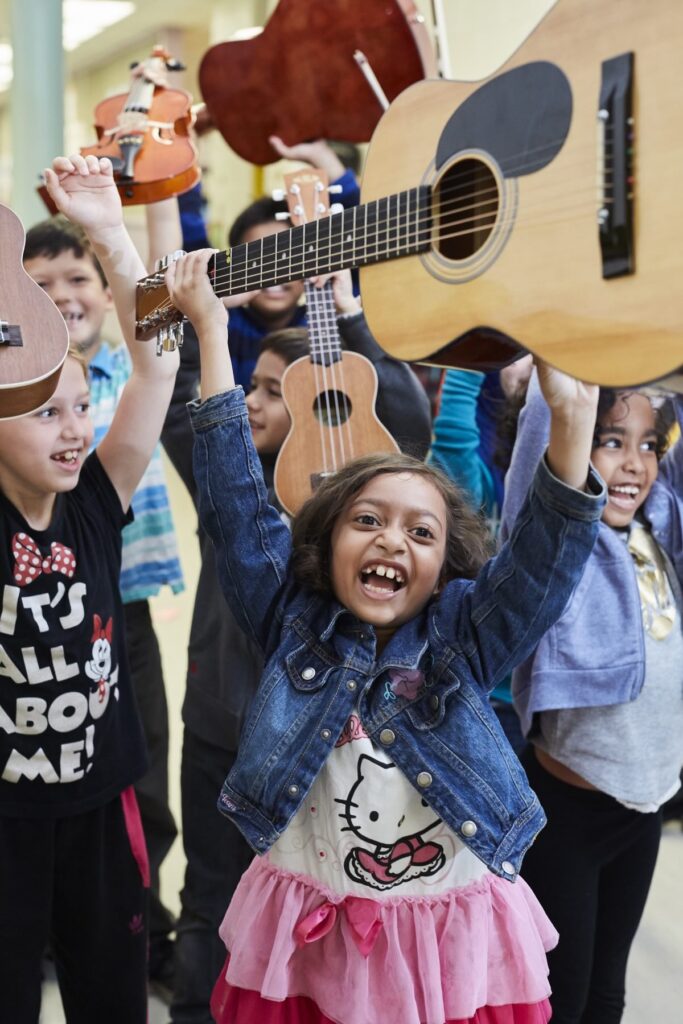
“We're so grateful to the funders and of course, to the instructors who come and provide the lessons to our students. They're getting top-notch lessons here,” says Curto. It’s often the extracurriculars that engage kids the most and get them to school each day, he says
“The families are so appreciative. Music lessons would be very expensive for many of them to afford.”
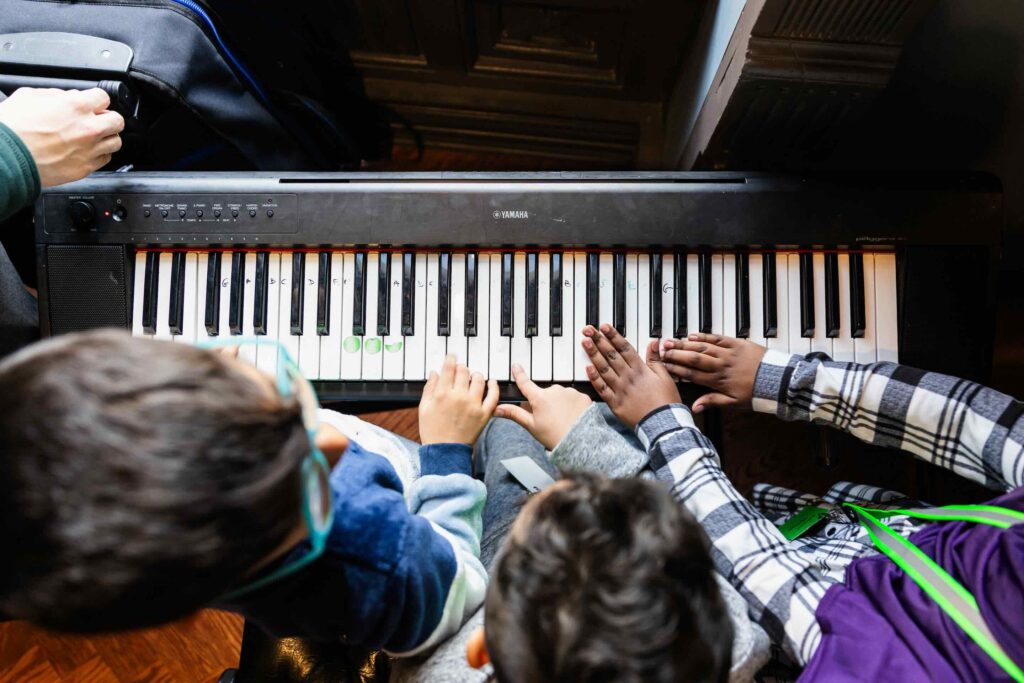
To reach broader audiences, HMC takes outreach programs to festivals and other community events to connect with kids. That includes Kids Rave, which introduces them to digital music tools and the extremely popular Instrument Petting Zoo where children get to try out musical instruments under the guidance of local musicians.
The HMC has raised more than $6 million to support its work, and forged partnerships with local school boards, the BGC Hamilton-Halton, and local festivals including Supercrawl and Telling Tales.
It also collaborates with the City of Hamilton, delivering music education in recreation centres across the city. Soon, programs will be delivered in Hamilton Public Library branches, too.
Hepner says HMC is filling a gap resulting from ever-shrinking funding for music and arts programs in elementary and high school, and the closure of music programs at McMaster University and Mohawk College.
“This is really my message: We are now the number one music education organization in Hamilton for kids and youth. We aren’t that small non-profit anymore. We are actually a city- embedded institution.”
From the kid who wants to play in an orchestra one day to the kid who spends hours building beats and recording loops, Hepner says HMC meets kids where they are.
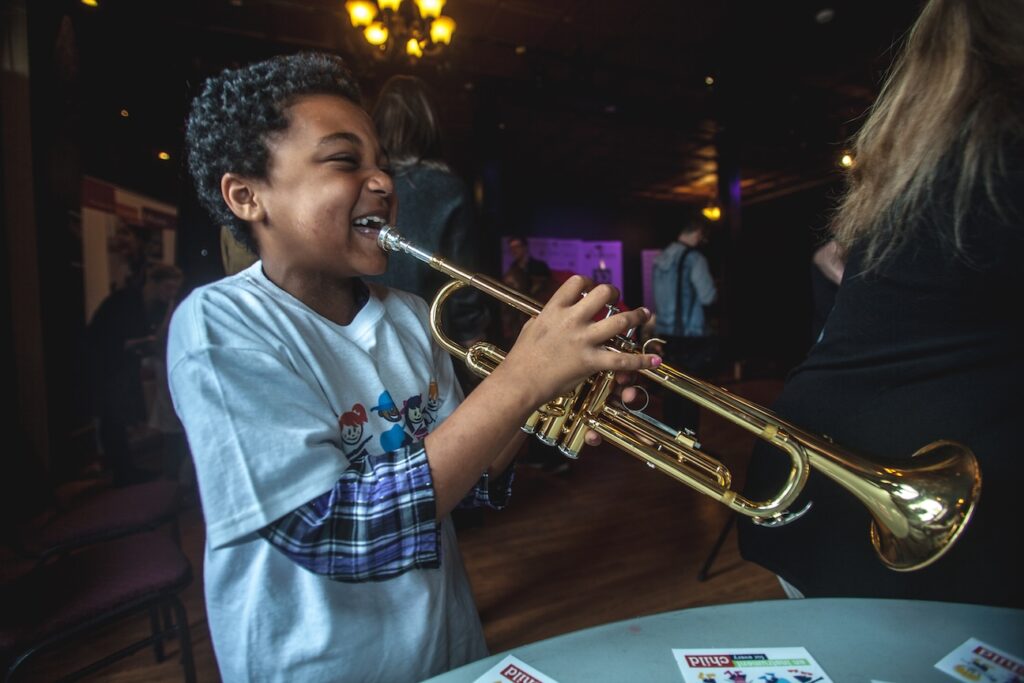
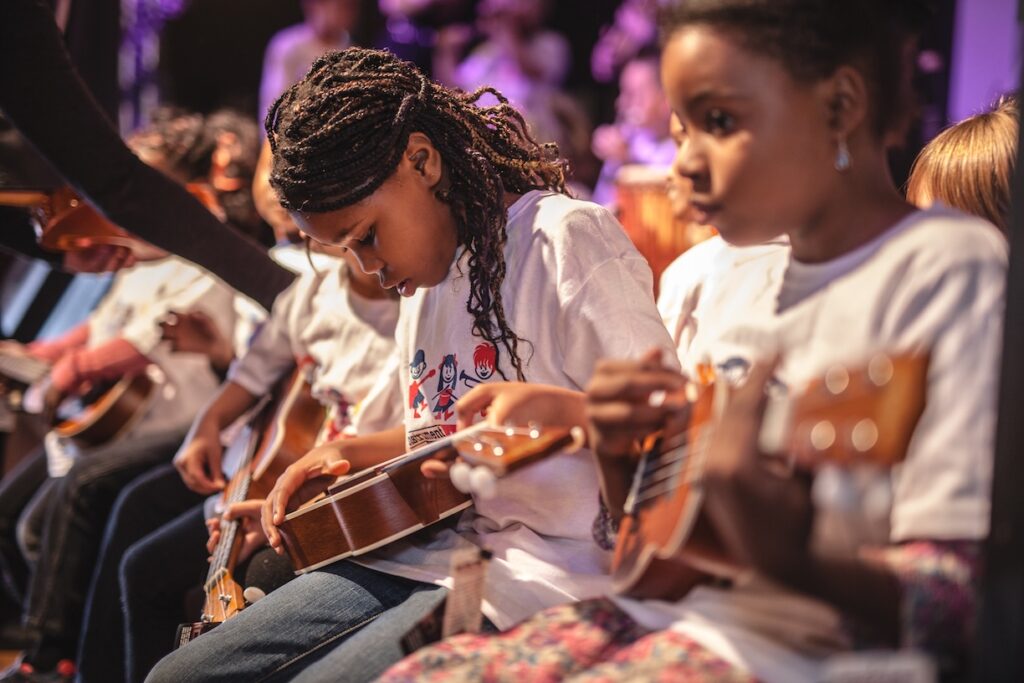
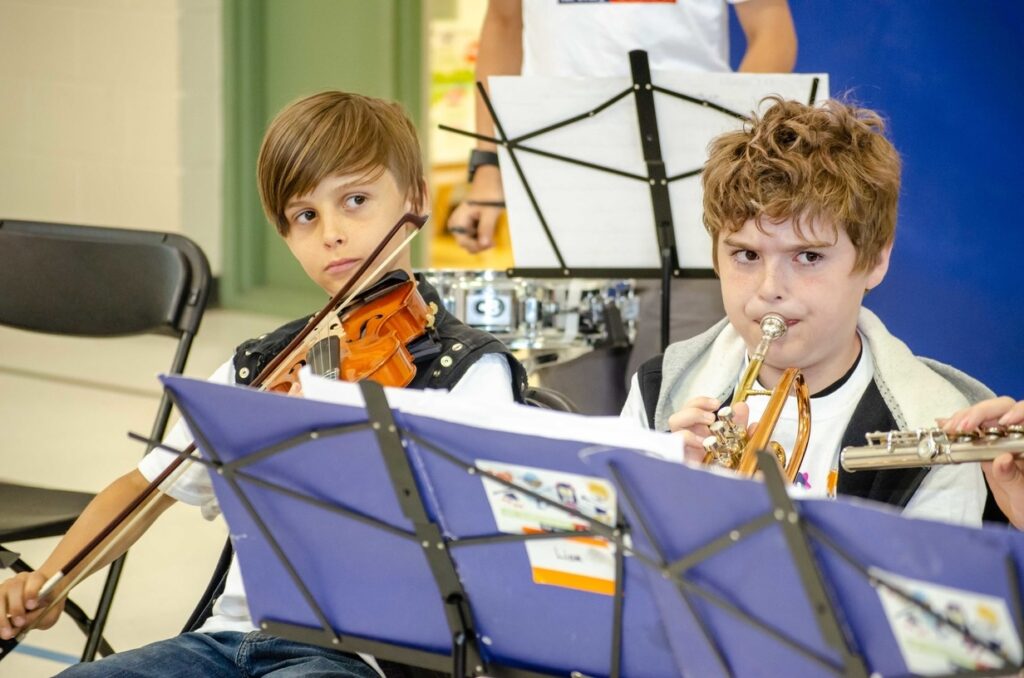
Fees are kept low and when they are still a barrier, funders such as the Hamilton Community Foundation and the incite Foundation for the Arts provide scholarships.
“We have become the place where organizations come to provide instruction music for them. We have the infrastructure and the instructors and the curriculum. We’ve become the go-to for music programming.”
Music has become an important offering at BGC, says chief operating officer Milja Minic, thanks to the partnership with the HMC.
“We are a recreation-based program and we know music and the arts in general are important and that many kids are interested. Families want these opportunities for the kids, but it’s expensive to offer.”
Building a partnership with HMC means consistent, high-quality instruction with musicians “who really align well with our approach in terms of being caring adults who are building relationships with kids and their families,” says Minic.
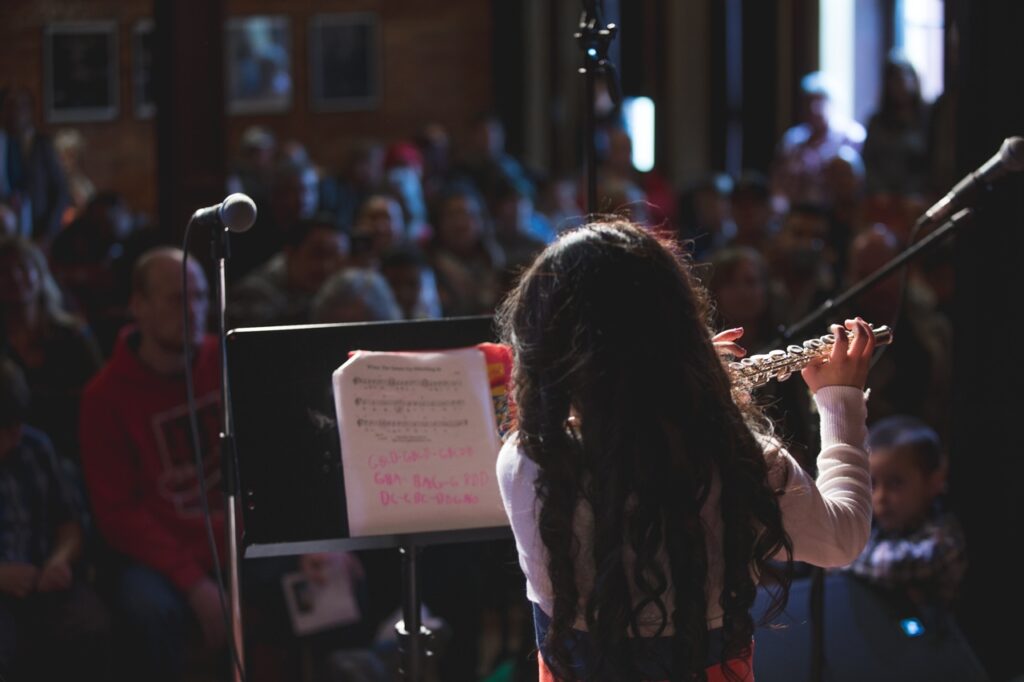
Every day, kids race into the BGC with their instruments in hand, excited to show off what they practised at home, says Minic. And an annual year-end concert is a highlight. The gym at the BGC is packed with parents, grandparents, siblings, and friends who are so thrilled to hear what the kids have learned.
“The confidence that these children get from people investing in them, and then them being able to show off their skills to their community. There is just so much positivity that comes through these programs.”
BUILDING A MUSICAL FUTURE
Hepner points out that without music education, there will be no city of music down the road. Unless they happen to have music in their family, that fire to create music has to be lit in kids. If they are never exposed to strumming a guitar, blowing in a trumpet, or using an electronic drum pad to create beats, the next generation of pro musicians, composers, and producers will never be raised.
And even if the kids who come through HMC’s programs don’t become musical artists, they will become the audiences and fans of the future and, in the meantime, will benefit from the clear academic, social, and emotional benefits of music.
“Research shows the achievement, empowerment, fun, and growth that come from music. It also teaches kids about commitment, and dedication,” says Hepner. “In our annual evaluation reports, kids tell us it gives them a sense of importance to be given the opportunity to learn with an instructor who is clearly a good artist.”
The accomplishment and community that comes from creating music together empowers young people, she says.
“Music is a connector and it's so important for these kids to have a way to connect, to play with each other in a band, to be in a room together with other kids and create. It is just so good for their mental well-being.”
HMC instructors become trusted adults who can help kids develop self-esteem as they gain new skills.
“When there's a teacher that really zooms into them and shows them the instrument or the beats program, and they feel seen and heard and they become creative, it's just a beautiful thing.”
Retired business owner Paul Lloyd has donated $25,000 to AIFEC every year since its founding.
“My interest is less in music and more in building self-esteem in these children,” he says. “I mean, I guess it really would be nice if we could get an Eric Clapton out of Hamilton, but that's really not what it's all about to me.”
Lloyd says he’s watched music lessons transform kids.
“You watch these kids at the beginning of the year, and they walk in, their heads are down. They can't look you in the eye. Their self-esteem is very low. And by the end of the year, they put on a concert and boy, these kids they stand tall. Their heads are up. There's a big smile on their face. They get up on stage and they perform.”
Lajoie, who is among about 20 instructors at HMC, says there is tremendous fulfillment in teaching because he has been able to watch kids grow up, overcome anxiety, gain self-esteem, and express themselves through music.
“It’s through your teachers and your peers that you learn how talented you are and what you are capable of.”
When River Evans said he wanted to learn the violin as a youngster in 2014, his mom Heather wasn’t sure she could afford to make that happen. But the Hamilton Music Collective provided inexpensive group lessons and an instrument on loan. He’s taken part in numerous HMC programs since then.
“The incredible support and diversity of the programming with HMC make a huge impact on our community, allowing children to reap the many educational, mental health, brain development, and social benefits of learning music, while removing the barrier of financial burden and providing accessibility for kids,” says Heather Evans.
“HMC has had a great impact on my family. They have given me skills that I can take into many walks of life and have helped me build connections for the future,” says River, who is in Grade 12. And while being able to play an instrument is a lot of fun, the learning and the practising can “be hard and tedious,” says River.
“The payout is worth it, not only developing the actual skills to play, but also the dedication developed to learn the instrument can be applied to other areas of life.”
NEW FOCUS AT HMC
Last year required something of a reboot of HMC’s approach. Rapid growth saw the collective delivering about 100 classes a week for 700-800 students.
But when a couple of grants that were counted on didn’t come through, Hepner was suddenly left wondering how she would pay the bills. The answer was to cut the school program in half, concentrating on the seven most high-needs schools, while focusing on the sustainability of the organization through revenue-generating programs, such as after-school classes and those geared to homeschooled students, as well as outreach programs, and concerts.
HMC hosts a popular jazz series at The Gasworks and one Saturday a month there is an open jam, for students ages 18 and under. Musicians and singers are welcome to perform a song on their own, or be accompanied by other bandmates, or a house band.
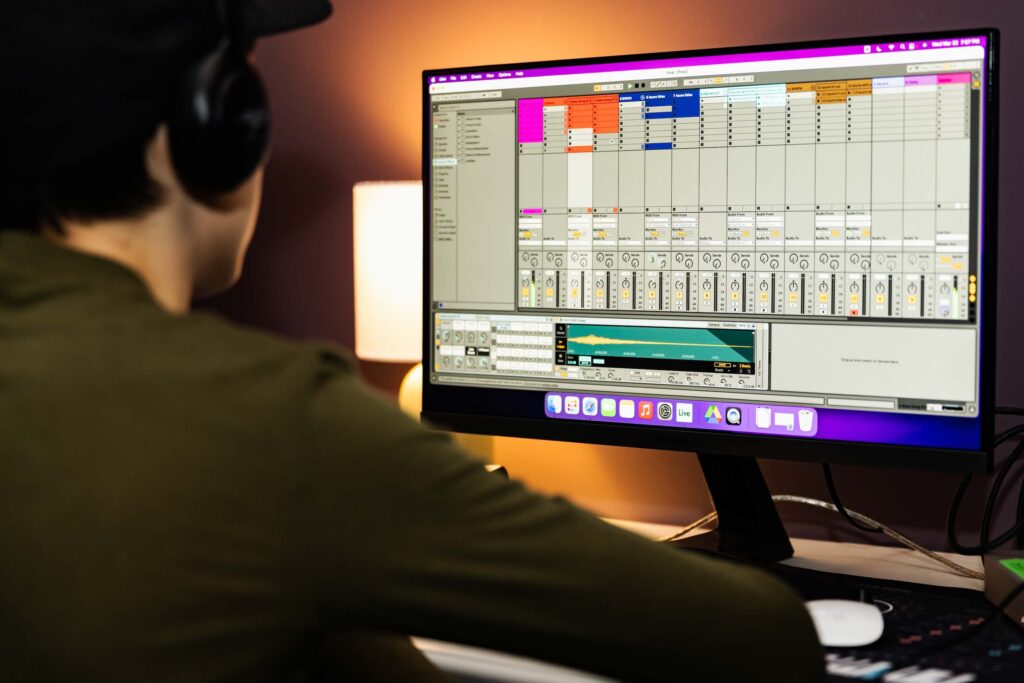
HMC is also growing new income opportunities. In 2024, HMC created its own state-of-the-art digital and analog recording studio, Soundhaus Studios, with revenues reinvested in its mission.
Downsizing wasn’t easy, but it was necessary, says Hepner. In the non-profit world, grants are often based on demonstrating growth, with a bias to establishing new programs. For HMC, that hustle meant growth was too rapid, and expenses began to outstrip funding. It kept Hepner up at night.
Now that there is a new strategy in place, along with securing new sponsors, and multi-year funders, the picture is much brighter, she says. She is now focused on securing funding to expand the AIFEC program beyond one Grade 1 class in each school to all students in Grade 1 over the next several years.
“Research consistently shows that music education supports: cognitive development; emotional regulation; social connection and collaboration; and school engagement and attendance,” Hepner wrote in a pitch to a corporate sponsor to support extending equity in a single high-needs school at a cost of $125,000 over four years.
“At a time when children are presenting with unprecedented mental-health and emotional-wellness challenges — and when 75 per cent of children who need mental-health supports cannot access them — AIFEC provides a proven, preventative, and inclusive intervention embedded directly in the school system. Without AIFEC, these children would have no accessto music education at all.”
HMC PROGRAMS: From orchestra to rock bands, and DJing to songwriting
Kids ages six and up to Grade 12 can take lessons at the beginner or intermediate level on piano, guitar, ukulele, violin, drums, flute and trumpet. Students are provided with an instrument and taught in groups of four to six. HMC also offers vocal classes at the junior (Grades 1-4) and senior (Grades 5-10) levels.
For students in Grades 3 to 8, HMC offers teaching within an orchestra and classical string ensemble.
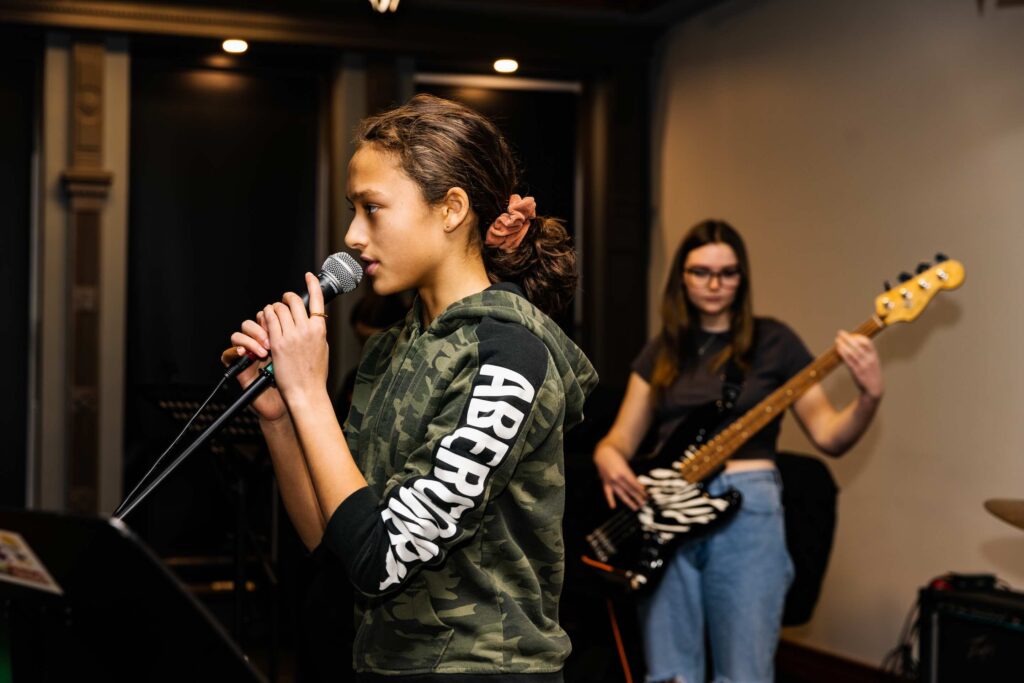
For those in grades 7 to 12, Jambassadors provides a unique performance-based experience that exposes students to the “ins and outs” of being in a band, with hands-on instruction and music industry insights from professional musicians. We provide rehearsal gear including microphones and drum kits, and our instructors lead the bands through learning songs and preparing for gigs.
Bands meet weekly to rehearse and perform in live professional settings, including Supercrawl, the Sound of Music Festival, Liuna Station, Hamilton Public Library, and Collective Arts Brewing.
Jam 101 is a fun-filled ensemble-based class for kids in Grades 1 to 6 who want to explore different styles of music without committing to a single instrument. It incorporates improvisation and jam sessions in a rock band setting.
Beats Jr. lets kids in Grades 1 to 4 explore different styles of music including DJ culture, remixing, and programming music. Students get to experiment with Garageband for iPad, microphones, groove boxes, synthesizers and keyboard controllers in a playful environment.
Introduction to DJing, for students in Grades 7 to 12, teaches the fundamentals of beat matching, mixing, setting up for a show, engaging an audience, curating a set, and building a record collection.
Beats by U! is a two-level program for young people ages 12 to 17 who want to make beats, loops and tracks as a music producer of electronic music.
Soundhaus Studios, a working recording studio and production lab, has about a dozen Mac work stations equipped with Ableton Live 11, the gold standard in electronic music production, and a MIDI keyboard controller. Students can take home a portable synthesizer/drum machine to make beats at home.
Students in the introductory level learn the basics of software, build drum kits, program beats, and create tracks using loops and virtual instruments. At the advanced level, kids are creating original music.
Songwriting pairs students in Grades 9 to 12 with a songwriting mentor as well as a professional studio engineer to create an original recording of their song.
An introduction to recording for students in Grades 7 to 12 shows them the basics of using microphones, mixing, mastering, and creating original music in Soundhaus Studios. Students are taught to record different instruments and styles of music, and combine it into a finished song for release.
HMC also offers Beats Jr., Beats by U!, Jam 101, Jambassadors, and songwriting during morning sessions that are geared to students who are homeschooled.