








Affordable housing for artists part of bold expansion plan for Art Gallery of Hamilton
Downtown institution’s preliminary plan calls for a new entrance and plaza on Main Street, a two-storey gallery dedicated to Hamilton’s history, and much more space for displaying the gallery’s collection.
An ambitious plan to transform the Art Gallery of Hamilton over the next decade is entering phase one with $950,000 from the federal government and a vision to include affordable housing geared to creatives.
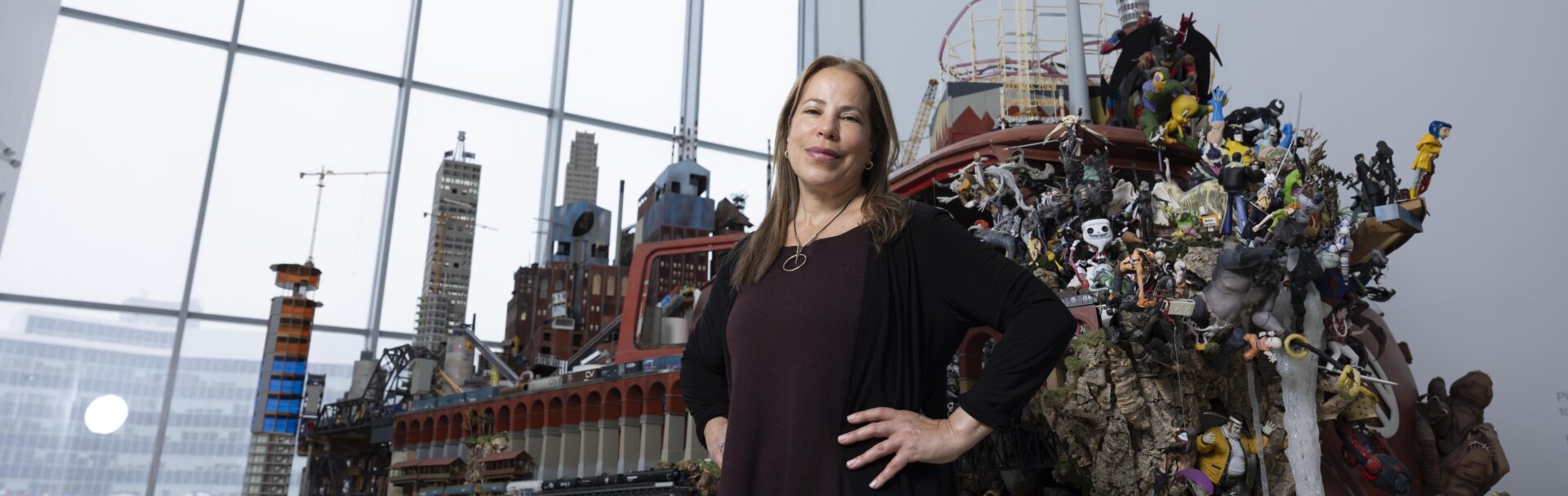
The plan is described by Shelley Falconer, president and CEO of the AGH, as a first of its kind in Canada and a made-in-Hamilton solution.
A proposed expansion to the gallery includes a new entrance and plaza space facing Main Street and the creation of a new 8,000-square-foot, two-storey gallery dedicated to Hamilton’s history as one of Canada’s leading industrial centres. Plans also include a 300-seat black box theatre, more studios for artists, more areas for educational programming, and a street-level retail store and café.
An adjacent affordable housing component, in partnership with CityHousing Hamilton, could rise as high as 30 storeys, and play an important role in downtown revitalization, Sean Botham, chief portfolio officer at CHH.
Enviable art collection
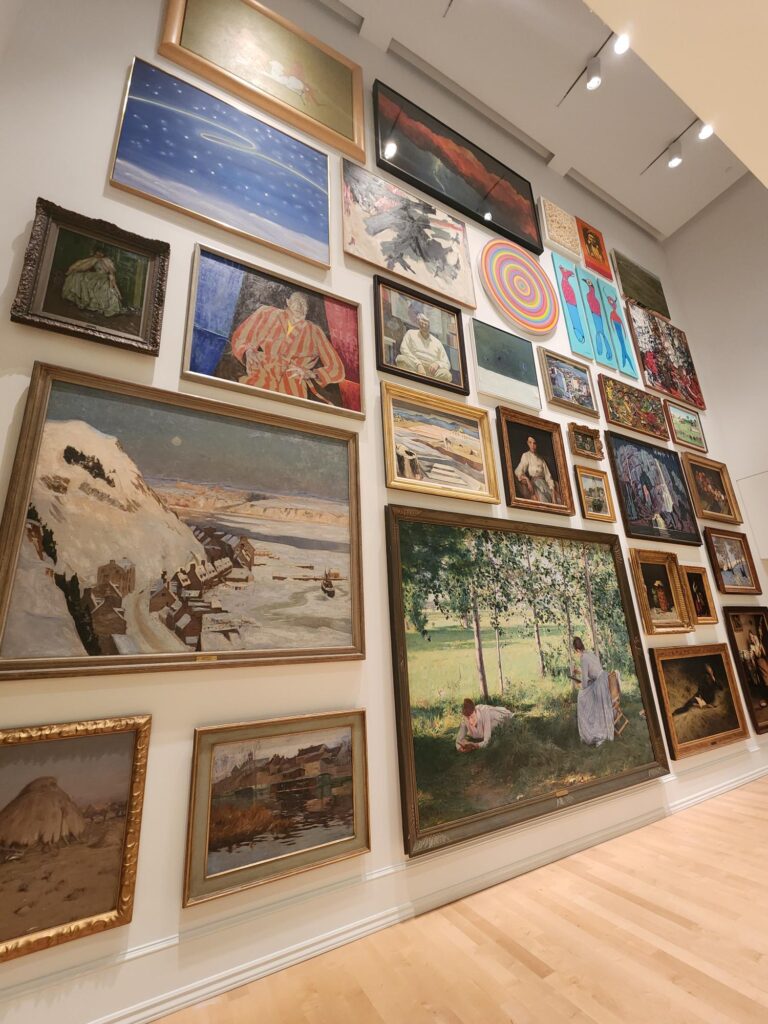
The AGH art collection numbers just under 12,000 pieces and is growing, says Falconer. It’s an enviable collection but gallery exhibition space allows only about 2 to 4 per cent to be displayed at any one time. That means important historical and contemporary paintings, sculptures, drawings and photographs from around the world covering more than 700 years are hidden away in storage. That includes strong group of Impressionist works, art from women and Indigenous creators, and Group of Seven art.
“We have great works,” she told HAMILTON CITY Magazine. “Not every museum has this. People fall in love with these works. They see them when they're kids at school. As they grow older, they go on a date here, and they form a relationship with this art. Which is why I often say you don’t go to the Louvre and not see the Mona Lisa.”
There is much for Hamilton residents and AGH visitors from afar to fall in love with in the gallery’s collection, if only they could be displayed.
“That’s a big part of our responsibility and it needs to be addressed. Which is what this expansion is about.”
AGH has received $950,000 in Cultural Spaces funding from the Department of Canadian Heritage. The funding will support the first phase of the expansion, including a request for qualifications to secure an architect.
Falconer says significant art gallery projects typically take five to 10 years to complete. A previous feasibility study called for a 48,000-square-foot expansion and estimated it would cost $90 million but that was five years ago and before the housing component was included.
Much design work remains to finalize the plan.
Increasing AGH visibility
The AGH, which was founded in 1914, is governed by a board of directors and operated as a non-profit entity. It is home to the third-largest art collection in Ontario and the fifth-largest in the country. It is the second-oldest municipal gallery in Canada, after Winnipeg.
About half of the collection, the AGH building, and the land it sits on all belong to the taxpayers of Hamilton, says Falconer, a reality that City council only formally acknowledged last year. The building, on Summers Lane beside the Hamilton Convention Centre, is nearing 50 years old and requires an increasing amount of renovation and repair, says Falconer.
Falconer says the AGH wants to play an important role in ongoing discussions around downtown revitalization and the investments that are being made in key facilities, including the TD Coliseum, FirstOntario Concert Hall, and the Hamilton Convention Centre, along with the future conversion of Main Street to two-way traffic.
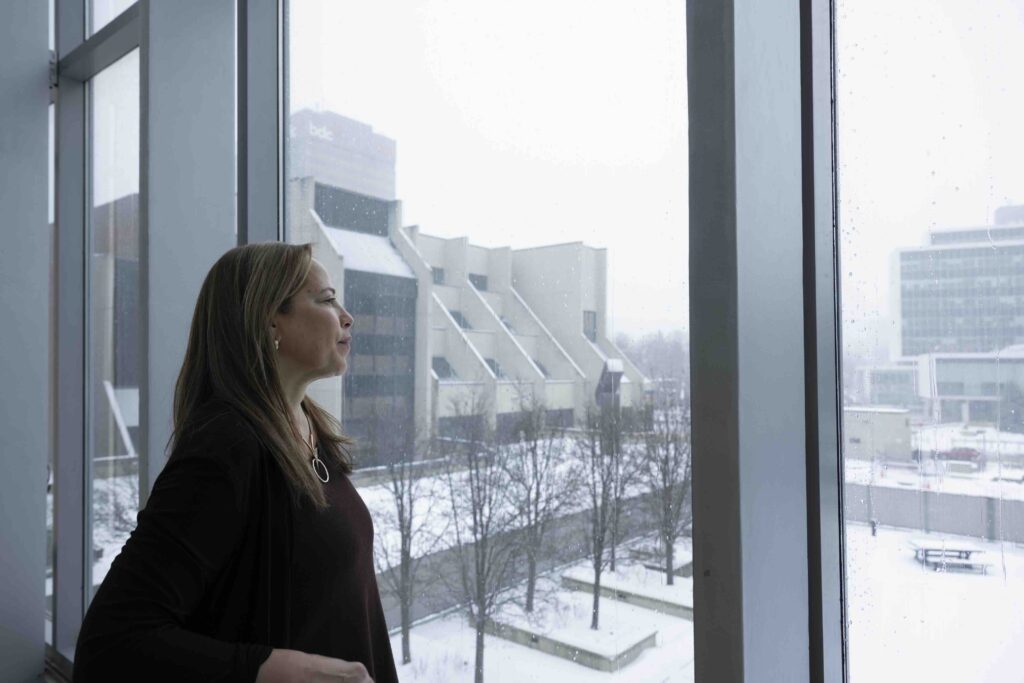
A goal of the expansion will be to increase the physical visibility of the gallery, says Falconer.
“We're bunkered in here and no one knows where we are. It doesn't matter how much I try to animate the building, there are people who work down here every day who are saying, ‘Where's the art gallery?’”
Falconer, who became CEO in 2014, is encouraged by the backing of the proposed project by the federal government and support from the AGH’s private donors, as well as funding from the City that allowed for upgraded elevators, and the province that is going towards new washrooms and a renovated lobby.
“Everything that we do in touching the building is part of this bigger plan.”
Falconer says when she arrived, the AGH was at the point it couldn’t pay its bills. It’s been her mission ever since to build a model of sustainability. A key part of that was coming to an ownership agreement with the City, which is now being finalized, and increasing funding from all levels of government.
The AGH collection is worth more than $1 billion, she says. Managing an asset that valuable requires making investments in the building, environmental control systems, security, art curation and conservation, and insurance.
“This is an important collection. It's in demand in Canada and all over the world,” says Falconer.
The AGH is in a unique position, she adds. In its industrial heyday, Hamilton was a booming city, home to prosperous families who collected art and eventually donated those works to the gallery, says Falconer.
“The reason you have a very weird situation in Hamilton is most municipalities don't have a collection this old and this big. Because most municipal collections are small, they tend to be more parochial and regional. This is an important national historical collection.”

Housing for artists
A secondary building on the AGH property has been on the radar for a long time, says Falconer. Other Canadian galleries have included hotels or condos in redevelopment plans, but after a meeting with people from CityHousing Hamilton about a year ago, Falconer says she knew the right direction was a targeted affordable housing project, a national first for a gallery.
“I said I want to do something that suits our mandate, but that's also a made-in-Hamilton solution,” she said. “I'm forever running into somebody new who just got here, an artist, filmmaker, a writer and there is a waiting list for studios right now.”
Ongoing discussions between the AGH and CityHousing Hamilton have moved toward entering a memorandum of understanding, said Sean Botham, chief portfolio manager at CHH.
CHH is always looking for land and partners for projects, says Botham.
“So I think it was it was a natural fit in one way. But obviously it's an unusual piece for an art gallery.”
Gearing housing to creatives acknowledges the role they have played in the rebirth of the city, says Botham. As steel and manufacturing declined, artists moved in due to Hamilton’s affordability in the region.
“So in a sense, you know, it’s the idea of having something that supports that cultural continuity, as Hamilton rises again, as its prices rise again, right? That’s the thread that I think is really compelling to me.”
CHH predominantly provides deeply affordable housing, but it does offer a couple of thousand units that are moderately affordable, meaning those units are economically self-sufficient without a profit motive.
“And this is the area that we're growing a lot more. And this is where these apartments would most likely lie, in that mid-market affordability.”
Creatives and cultural workers – those who work in visual arts, music, writing and publishing, performing arts, film and TV, and the culinary arts – often face the reality of gig and contract work that can make it difficult to count on a steady income or qualify for mortgages or loans, says Botham.
“There is a natural draw that the AGH will have in terms of artists and arts and the cultural community. I feel like it's the perfect pairing with something that's affordable but geared to artists in terms of amenity spaces and other design features. It could be certain types of maker spaces or the composition of studios. There will be ways in which we can, in the built form, support those who are in creative industries.”
Given the prime location downtown and Hamilton’s allowances to build to the height of the escarpment, this project would likely come in somewhere between 25 and 30 storeys, says Botham. That allows for economies of scale, proper densification downtown, and place-making.
“You can create a great vertical community and we're all about finding ways that folks feel at home, feel part of a community, in a building. And that would be our focus.”
CHH, a separate, wholly owned corporation of the City, already provides housing geared to artists in about a dozen units in its Mills Hardware building on King Street East. It’s also ramping up developments, with about seven projects in the last seven years, and more underway.
CHH is undertaking talks with a number of potential partners, beyond the AGH, including private, public and non-profit organizations. The sole focus for CHH is providing quality, affordable housing that results in sustainable social benefit, says Botham.
“So we want to make very wise and careful decisions, about who are we partner with and how and what those products look like. But I think there's going to be a variety of them.”
Strategic direction
The vision for a vastly expanded AGH aligns perfectly with the gallery’s five-year strategic plan (2023 to 2027).
After stakeholder and community consultation, the AGH laid out three key priorities: creating additional educational programming spaces and permanently install key works from its collection; expand current mandate to support community interest in Hamilton’s history and stories; and explore expansion of current exhibition and storage facilities.
Those priorities are premised on a desire to maintain the gallery’s location and to see it contribute to downtown revitalization and the “economic regeneration of the new Hamilton.”
Identified challenges included: a generally low awareness of the gallery; long-term sustainability and funding; engaging a growing and changing city; and balancing digital and in-person experiences.
Identified opportunities include: capitalizing on the scope, breadth, history and importance of the AGH collection; contribute to the growing need for accessible and public spaces; drive economic regeneration through tourism, employment and downtown revitalization; telling Hamilton’s story as a centre of industry and social and cultural significance; and the growth in the city’s population and downtown residents.