







Big Wreck: Still exploring, still curious
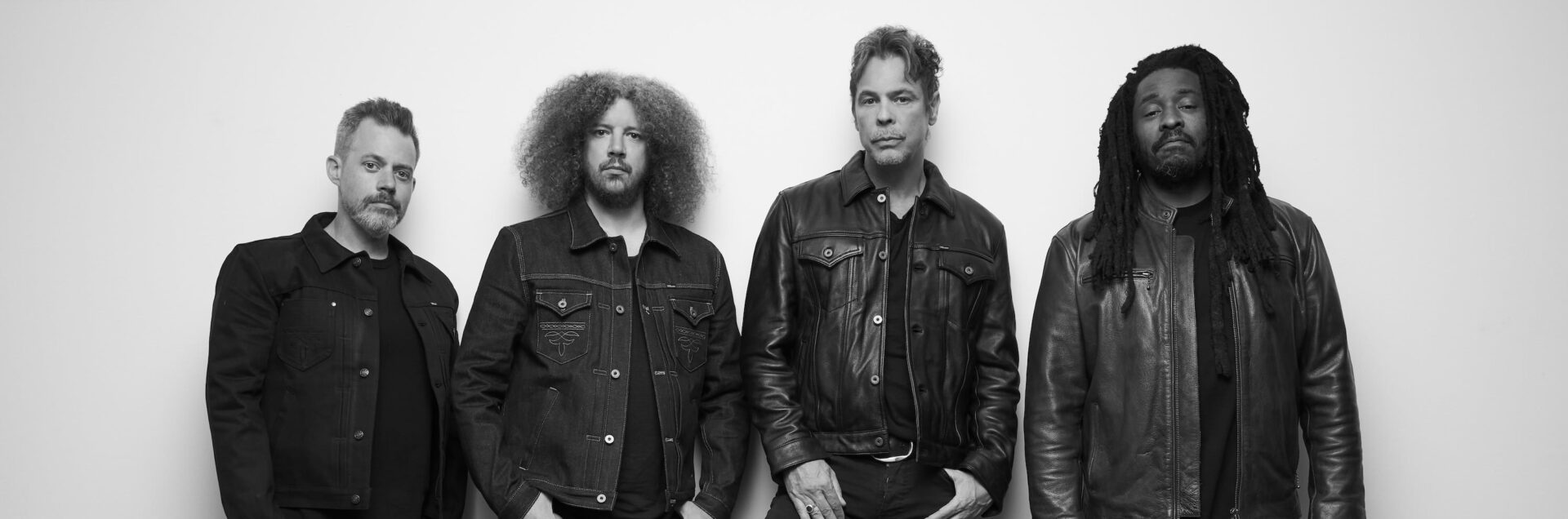
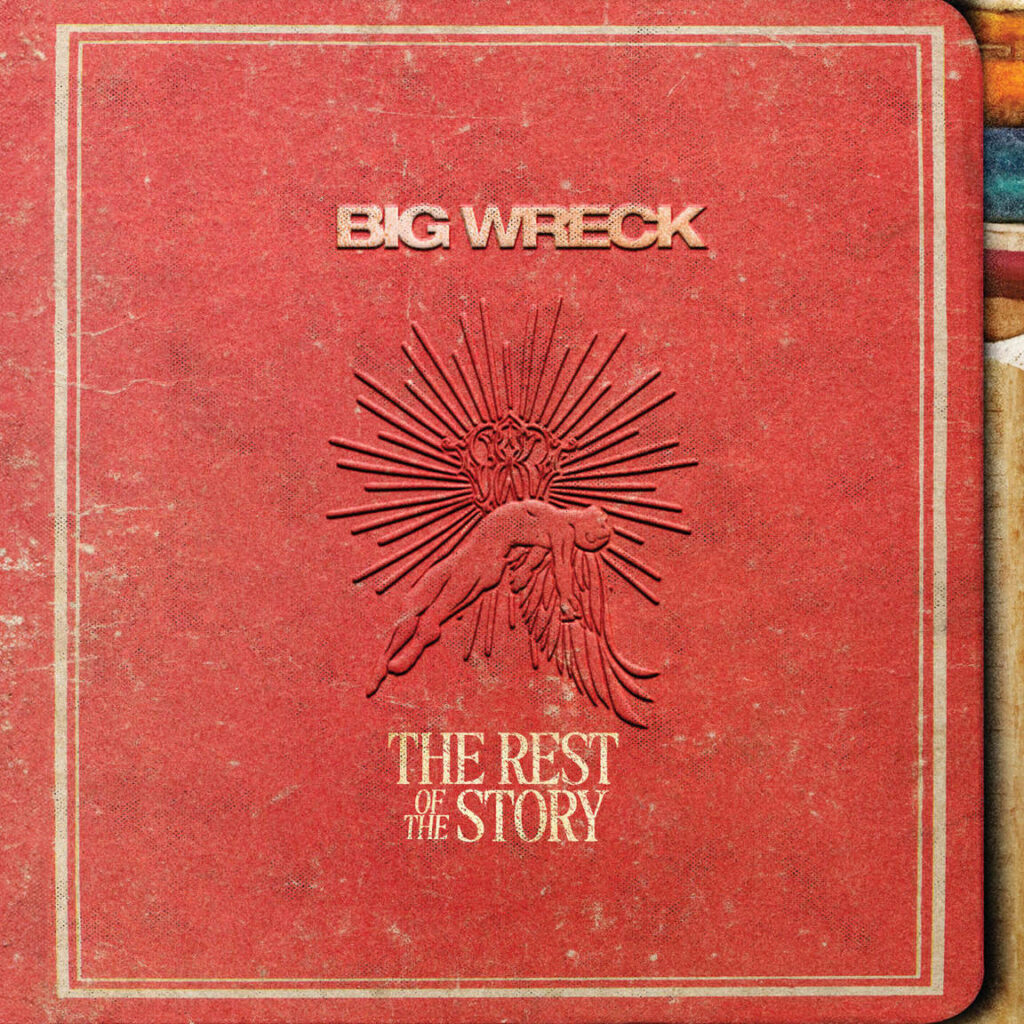
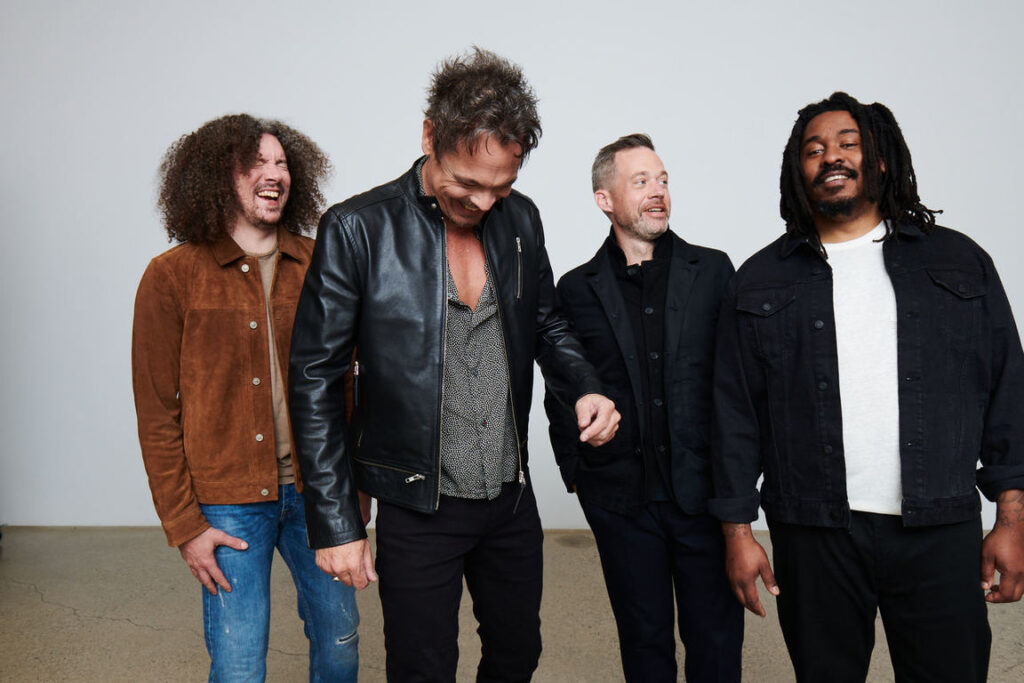
HCM music writer Dylan Hudecki chatted with singer and guitarist Ian Thornley about the making of the band’s eighth studio album The Rest of the Story, and embarking on a tour with LIVE and Econoline Crush. It hits Hamilton’s TD Coliseum on March 5.
With The Rest of the Story, Big Wreck delivers a new album that feels expansive, heavy, well produced, true to their sound, another example of Ian Thornley’s restless creative drive and the band’s ability to kick out the jams. This new record finds Big Wreck comfortably shifting between blistering hard rock, textured introspection, and moments of unexpected levity, all without losing their core identity.
Critics have been quick to highlight Thornley’s guitar work as a central force. From the virtuosic fire of “Holy Roller” to the more restrained, atmospheric tones of “Out of Range,” and “Around,” the album showcases a player still curious about sound, texture, and surprise.
Producer Nick Raskulinecz, whose long-standing partnership with Thornley continues here, helps frame it into something focused yet exploratory, capturing performances that feel both meticulous and alive. Lyrically, The Rest of the Story carries a reflective weight that reviewers have noted as one of the album’s strengths. Songs like “Believer” and “Escaping in Place” wrestle with uncertainty, personal responsibility, and a World that feels increasingly off-kilter, without drifting into sloganeering. Thornley’s words are thoughtful and human, often arriving quietly after the musical groundwork has been laid, adding depth rather than dominance. The calm of “Laws of Man” sits comfortably alongside the album’s heavier moments, reinforcing the sense that this record is less about genre than emotional flow.
The band’s chemistry also earns consistent praise. Bassist Dave McMillan and drummer Sekou Lumumba provide a muscular but flexible foundation, allowing arrangements to stretch and shift naturally. Recorded at Noble Street Studio in Toronto and connected sonically to the JUNO-nominated Pages, The Rest of the Story feels like a continuation rather than a reset. A hard rock album that rewards repeat listens, and curiosity. It’s Big Wreck sounding fully engaged with where they are now, still chasing the thrill of discovery, fun, studio spontaneity and inviting listeners along for the ride.
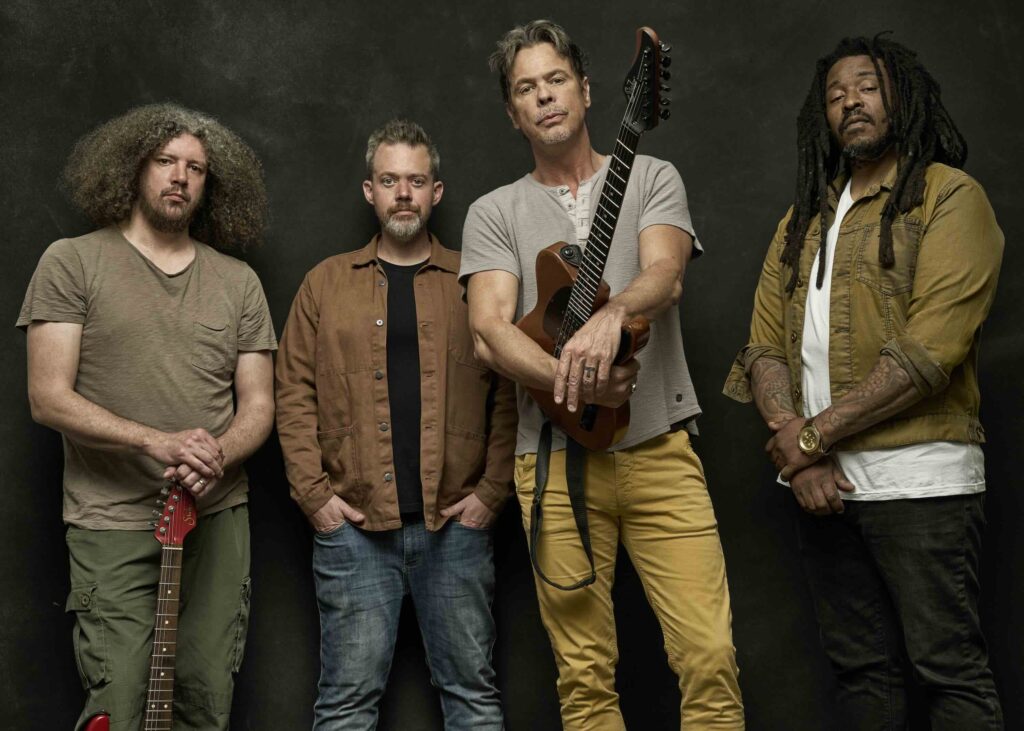
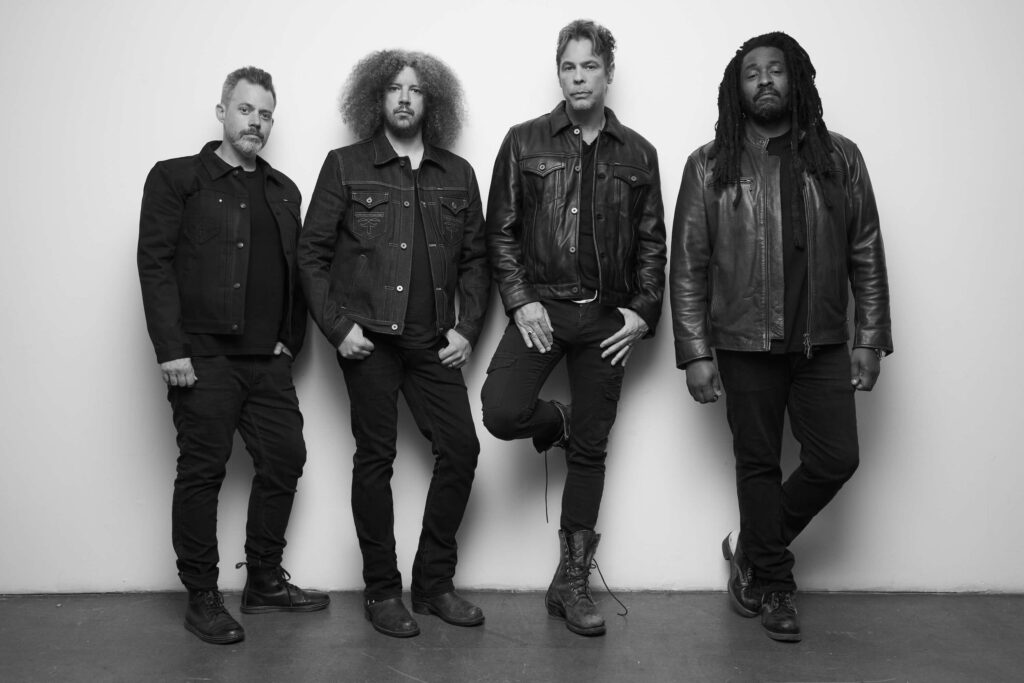
Ahead of an appearance at TD Coliseum in Hamilton on March 5, alongside LIVE and special guests Econoline Crush on the Like a Rollin’ Thunder Tour, here are nine questions with the man himself.
Dylan: Hey Ian, thanks for calling. Tell me about the recording process of Rest of the Story. Was it a full band? Did you write it by yourself? Did you track with you and your drummer or with a full band? What was the “story”?
Ian Thornley: Generally at these days I mean it's always subject to change, but generally speaking, I demo here at home, putting things together, send it out to the guys and then, you know, we kind of work on arrangements together, just like, “Are you doubling that chorus there?” And you know, that kind of stuff. And then we get the demos to a point where we think they're ready, and then we all go into the studio. We do track live, but on this one we didn't. We just start with the drums. The Rest of the Story was recorded the same time that we tracked Pages, which is the EP that preceded it. We did all 17, 19 songs at the same time because we were initially thinking it was going to be a three EPs, like pages one, pages two, pages three, but we essentially took pages two and pages three and put them in together, so it's the rest of the story.
But to answer your question, Sekou knocked out all of those tunes in like, three days, and then Dave went in and did all his bass parts in a day and a half, and then I just started rolling the guitars and vocals. It was a pretty quick process, really. With all these songs, which is generally, I think, how I like to work. I don't leave a lot of stuff up to the mixer and editor. I print a lot of the effects. If it's a guitar sound the way that we think it should be, then I'll print it like that. There's no “fix it in the mix” for us. It has to be inspiring in the studio to get the best performance out of every member, you know? It has to feel great. And if you're just like just laying down DI guitars for some other mixer guy to mix it in, that's not us. I don't work that way, and you know, I'm not taking anything away from people that do, but, you know, if we want a big, splashy, roomy drum sound, we're setting up that kit, and we're opening up the room and setting up the mics to record it that way.
Generally speaking there's anywhere from three to four different drum kits available, for whatever different kinds of sounds we want to use. We don't go in based on the demo for the kind of song that it is, we decide what is going to work best. So we'll kind of set up the Mick Fleetwood sort of Pink Floyd dead drum sound that's really close mic’d and not a lot of ambience. We'll set that kit up and then sort of go from there and season it to taste, and then it's just a matter of Sek will run the song two or three times and he's done. He's just that good. And then it's on to the next one, “Okay, we got to set up this sort of John Bonham, drums out for this one”, and then, you know, we pull out a different kit, and you know, sometimes it's a more modern approach where we'll do the cymbals separately, which I know Sekou hates, but you know, sometimes it's necessary. And then, you know, mix wise, we just got Eric Ratz, who's our guy. I think he's probably the best rock mixer in this country. He and I have a shorthand from years of working together. I’m there for some of the mixing, but generally speaking, you know, he sort of knows what I'm going for, because it would be what he'd go for too. So we had a good time. He's great.
Thirty years into your career, has the musical communication evolved with the band? How did your chemistry shape this album?
IT: It's nice. It's nice to work with such great players, whose instincts you really trust. Because the demos will get to a certain point, and of course, these are programmed drums on the demos, and the demos are just a jumping off point. Sekou takes them to different places, sonically and performance wise. Because you know, he's a very instinctive drummer and an incredibly musical drummer. It's not just about beats and the division of time with him. He also follows melodies in certain lines, in a very unique way. But all that stuff is very performance based, so like I said, if we get three different takes of a song, you know, the meat, potatoes will be generally where we think it should be, you know. Like this has to be that groove for that part and that has to be that groove for the rest. But then when it comes to things like fills and the little tasteful things that'll happen, you know, in between a vocal line, there'll be some little flurry or something. All that stuff is unique and I love it. So the same goes for Dave, when it comes to bass.
We're all real nerds. Like, I'm a guitar nerd through and through. Sekou is a drum nerd and Dave is definitely a bass nerd. So you know, we love our respective instruments and we love the things to take into the studio, and I think we've worked together so much for so long. Everybody knows that it always has to serve the song, but there's nothing wrong with a little tasty show-off every now and then, you know, provided it’s suited and doesn't pull focus from the overall tune.
Just to jump into your Thornley band for a second, do you like having the pressure off of you not to play Thornley songs at Big Wreck shows and vice versa? Or do you miss playing them? How do you separate that in your head?
IT: In regard to this album as well? I don't. Honestly, I don't separate them. I never really have. I think when I first started doing Thornley shows, that's when I separated the two, and I did not want to play Big Wreck songs. But eventually, like, we pull out like the odd song or something. Like, “Okay, fuck it, we'll play some Big Wreck song.” But I think we are far away from that. I just kind of look at them as it's all just our music. It all comes from the same place and you know, hopefully, I think some songs really translate well to the sort of Big Wreck treatment where we'll stretch something out and turn it into something else or, you turn it into a big solo section or whatever it is. But I don't look at it separately anymore. I’d have to be reminded that “Come Again” is a Thornley song and not a Big Wreck song. It’s all kind of in the same gumbo to me. Different ingredients in the same big giant pot. So I don't really separate the two. We did a couple shows where it was like a set of Thornley music and then a set of Big Wreck music. And I mean, it wouldn't be for me to say, it’d be for an audience member to see if it was any different. I don't know. You know, it's the same dude's playing. I think maybe the focus is different with Thornley tunes versus Big Wreck tunes.
One of the standout tracks on the album for me wasn't actually a heavy one. It's your song “Around.” Tell me about that one, because I heard a Matthew Sweet/Weezer vibe. There were even hints of Jeff Lynne, like the ELO vocal harmony choir production.
IT: I can see that I think. The final version of the song was one that we made a very conscious effort to make it production heavy. My demo for that was vastly different. To me, it sounded like a Stone's tune. So my demo had like really dry simple drums, I just imagined it like, “How would I put this together if it was a Stones thing?” And then I sang over it, and I loved the way it sounded and the way it felt. I thought that was a great treatment of the song and a real departure from anything that we'd done.
Nick felt differently. He was like, ‘No, no, no, no. The song's strong, but the treatment's wrong.’ I was like, ‘Oh, OK.’ So he thought we needed to do a lot of production: ‘let's just aim for pop radio.’ I was like, ‘Dude, I don't know where to begin.’ Luckily, a guy that was engineering with us is Chris Holmes, a Hollywood type guy. He spent many years in LA in one of those writing houses where they just churned out massive pop hits for massive pop stars. That's where he honed his chops as an engineer. I can't remember which one it was, but one of the big houses in LA. And I was like, ‘OK, what would you do? How would you do the treatment here? What do we need?’ And then we did a lot of synth ideas and sort of textual ideas that he would say, and I would sort of guitarize them as well. I would come up with that verse and then I'd find a part that would be a good keyboard part that I also played on guitar, and then we’d chop it so it sounded almost artificial and to start pasting it throughout the song. ‘OK, we've got something here!’ Once we laid down the bass and drums, which were very dry and very very basic, there was the tune! It was actually a lot of fun, like, working differently than I normally do, but I think to achieve the same ends, you know, like, just trying to build an atmosphere, but sort of giving myself a particular sandbox within which I have to stay in here, you know. I couldn't do this or that, which is one of my sort of knee jerk things, so I had to sort of get out of my toolbox. I'm mixing a lot of metaphors, but you know what I mean? Right? It was just like, What would be a string patch of a bubble? And it'd be like, okay, how can I imitate that with a guitar? So it was really a fun experiment which I think actually turned out. It's one of my favourites just because it's so different.
You're heading out across Canada this winter with LIVE and Econoline Crush. These are both deep bands with deep catalogues and a passionate fan base. How do you think you guys complement each other and are you a fan of theirs?
IT: I think anybody knows the big LIVE tune, right? “Lightning Crashes.” That's obviously a great song. I think that was like LIVE’s smash hit. But I've never run into them out on the road all these years, but I hear nothing but good things about them as dudes and them as a band. But yeah, it was more of a booking suggestion, like, ‘Hey, would you want to go out with LIVE? It’ll probably be a good fit.’ And then I think, you know, we were like, ‘Sure!’ and then the adults sort of take it from there. But no, I've never played with them before, so I'm kind of looking forward to it. I know Trevor and the Econoline Crush guys quite well, for many years. Great guys.
When you walk on stage in Hamilton at our new TD Coliseum, what do you hope someone that's seeing Big Wreck for the first time walks away feeling? And long time fans, too?
IT: I hope they have a good time! Simple as that. I saw McCartney there recently. I was really struck by that show, man. I was very moved. Not only because it's like, you know, you're seeing a fucking Beatle but just, you know, all of the incredible songs and music that he's created and was part of creating. Every once in a while, I'd scan the audience and that was the part that struck me the most. It sounds corny, like just thousands of people loving the music, the actual power of it, and I was struck how much this music meant to all these people! You can see it on their faces, you can see tears streaming down their face and it's like, this means so much to that person and to all these people. Just hands raised and eyes closed and like no phones in the fucking air, just people experiencing the moment! I was quite taken with it. I don't think anybody in that audience cared if the next person next to them voted one way or the other, you know, any of that bullshit. Everybody becomes one thing, and that's a fan of music.
There's muscle melody and power and precision with this album. How was the balance for the writing process? Did any song surprise you where they landed? Like, sonically as it's still mostly a hard-hitting record.
IT: There were a couple of instances, yes. I remember one of which was what we talked about “Around” where my initial impression for the song and the way it ended up is very different from where we initially saw it going. But another example was the “Laws of Man.” Because I had done sort of a, I hesitate to use the term, sort of a yacht rock version of it. It was not like Steely Dan, but maybe more like Christopher Cross, or early Dire Straits. Sonically that was the sort of template I was going for. I was really in love with that treatment of the song, but the band didn't like it, and the mix sounded like airport music. So, yeah, we ended up doing a sort of Chris Whitley dobro version of it, which I do quite like. I think it's cooler. It sort of lets the song stand on its own. I ran the album recently note for note from top to bottom and there's a couple songs I went back and listened to again, you know that really kind of, for me, just sort of came out of left field and we got it! I didn't think that this song or that song was gonna get me this much. “Out of Range” is another one. I just thought it was pretty, and I thought it was interesting. But now it’s something else completely. We captured a little bit of something on that one.
What are you listening to these days? What music would you recommend to the people of the world? The people of Hamilton?
IT: Oh, boy. Um … what am I listening to? I'm still listening to the same old shit that I've always listened to, and I'm working on a bunch of music, so that generally takes up most of my listening. Like when I get in the car, I listen to the latest mix of whatever we're working on. Recently, I had a friend over for dinner a couple nights ago. We were listening to Keith Jarrett’s Koln Concert. It's kind of a go-to for me. Vibe central. Oh, and Tears for Fears. We were listening to a lot of Tears for Fears out in LA. What else? Hmmm …. We were listening to Dire Straits as well. That's not really out of the ordinary though.
If you could talk to your early self that just got signed at the beginning of your Big Wreck career, what would you say to that puppy?
IT: Stick to your guns. Yeah I think that would be it. Stick to your guns.