









New film board is casting Hamilton in a starring role
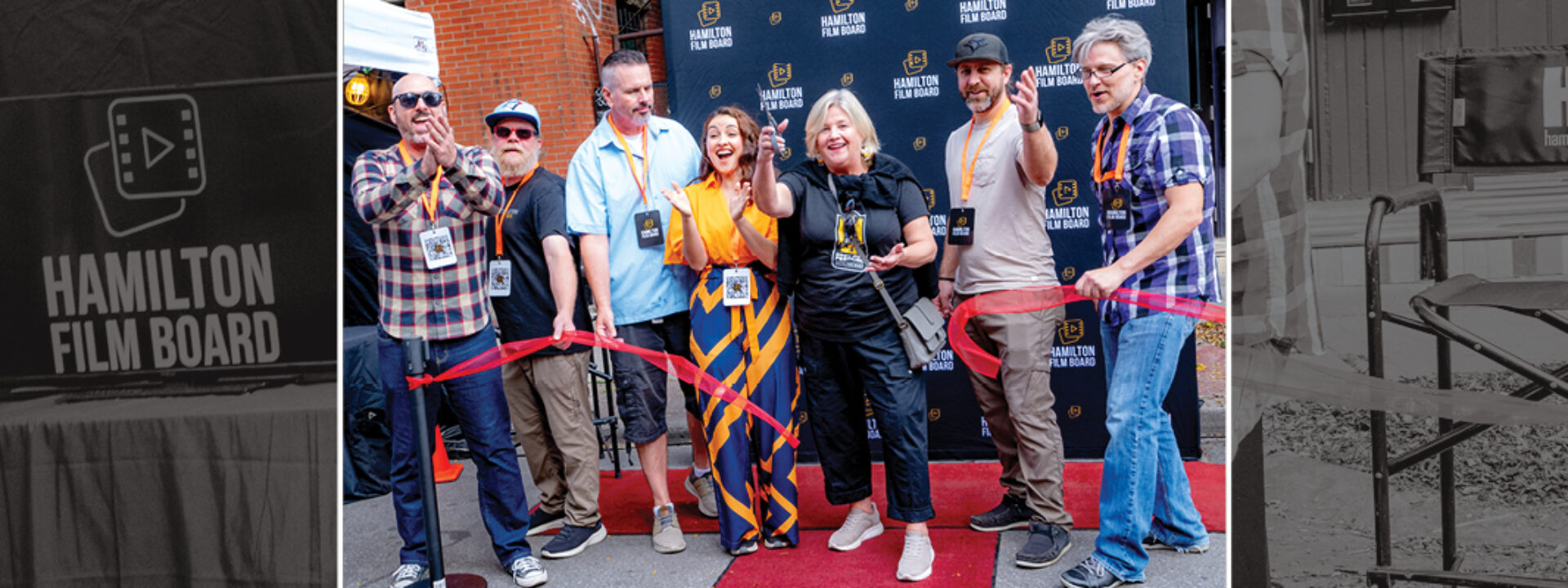
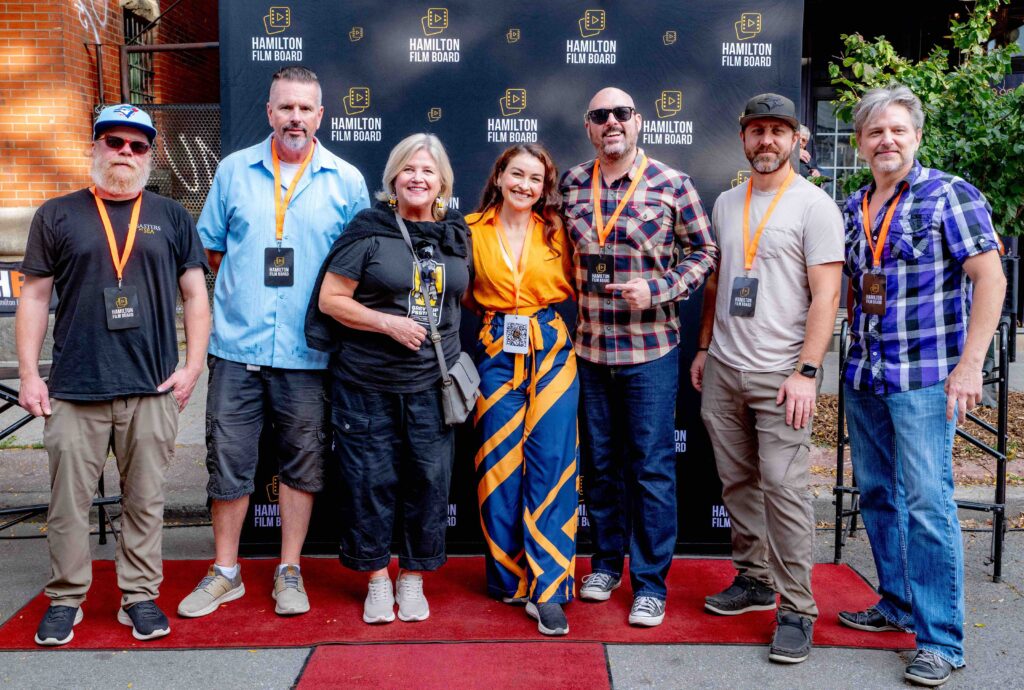
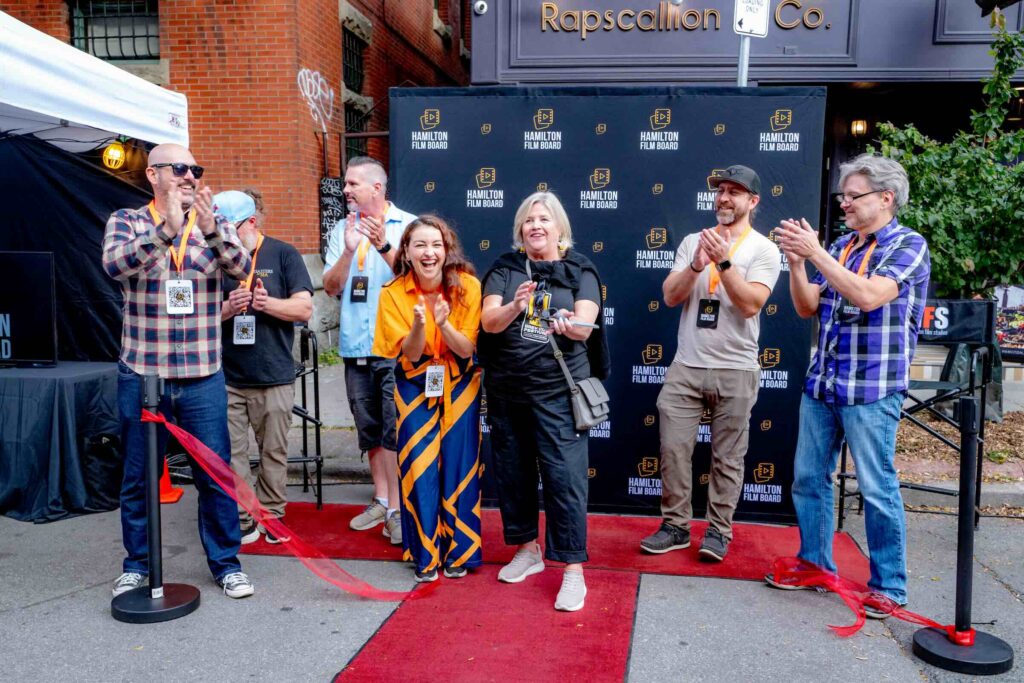
Local filmmakers have launched the Hamilton Film Board, with the intention of shining a spotlight on the city's potential as a movie and TV filming hub.
Who doesn’t get a thrill — maybe even a little burst of civic pride — when they spot Hamilton somewhere in a film or series?
The newly launched Hamilton Film Board (HFB) wants local screen buffs to feel that more often.
Zach Zohr, owner of Hamilton Film Studios, says it has long made sense to launch a film board but about a year ago he started talking to people he knew who also wanted to work to make the city a destination for filmmakers. Along with local music, art, theatre, and food, it adds to the mystique of Hamilton as an interesting, vibrant place.
“Maybe I’m biased, but I would like someone to prove me wrong. Name a better influx of cash into a neighbourhood other than a movie coming in. They’re going to spend money at the bakery and the coffee shop, the restaurant, the bar, the gas station, the Airbnb, the hotel, it could go on forever.”
After about a year or so of networking, the group incorporated as a non-profit, voted in a board, and developed a proposal to present to the City of Hamilton and potential sponsors.
The Hamilton Film Office has been a strong supporter of the HFB and the two will work in synergy, says president Christopher Giroux, a filmmaker who moved to Hamilton with his wife, actor Ann Pirvu, in 2020.
“We realized that on certain things, it’s better if the City takes the lead, and on other things, it’s better if we take the lead. So, our relationship is really hand-in-hand. We really believe in this kind of Red Rover approach, where we’re kind of all linking arms, we’re a little bit stronger together.”
The City’s film office does some work in attracting productions but is mainly focused on helping the productions that have already committed to shooting in the city get the proper permits, arrange for road closures, and link with local suppliers, says Giroux.
The HFB will focus on bringing more productions to the city, which will grow the talent base in Hamilton, and provide local work for the wide range of film and TV workers already living here.
Christoph Benfey, owner of Evil Empire Studios, says the HFB will work directly with producers and location scouts who decide where films and TV shows will shoot.
“People who work in the industry know how to guide them and incentivize them to come and film in Hamilton. It’s a board of people who can help the City do a better job of attracting productions to come here.”
The HFB will also offer networking opportunities, host community and industry events, gather feedback from filmmakers shooting locally, and create a talent directory.
Why Hamilton?
It’s well known that Hamilton offers a whole range of looks — dense downtown streetscapes, heritage architecture, industrial landscapes, waterfront, trails, farm land, and small towns. There is an economic advantage here, too. Productions filming outside the GTA, with the boundary beginning in the west at the border between Hamilton and Burlington, get a 10 per cent bonus on Ontario’s film tax credit.
And Hamilton offers less congestion, generally lower location costs, and fewer logistical headaches.
“You can’t close the Sky Dome, but you can close the Ticat stadium,” says Giroux. “You can’t close Yonge Street, but you can close Locke Street. Hamilton is just an easier place to shoot and we can be that overflow for Toronto. We already are that overflow.”
Hamilton is the second-biggest filming hub in Ontario. The list of film and TV productions that have set up in Hamilton includes two Academy Award Best Picture winners in The Shape of Water and Spotlight, blockbusters X-Men, The Incredible Hulk, Cinderella Man, and Resident Evil: Apocalypse, along with acclaimed streaming TV series The Handmaid’s Tale, The Boys, Umbrella Academy, and Reacher, Canadian productions Children Ruin Everything, Murdoch Mysteries, and Strays, and reality programs Canada’s Drag Race, Drink Masters, and Blown Away. A whole yuletide’s worth of Christmas movies have filmed here, too.
Why now?
Benfey, who moved to Hamilton in 2010, says the time is right for the HFB because the local film industry has grown to a size that makes it necessary.
“Everybody used to know everybody but now there are so many creators here. There’s probably like hundreds, if not thousands, of people doing it. It’s just become so much more saturated. And not that that’s a bad thing. I keep meeting people who live here, who’ve maybe moved here in the last five or six years, that do film or video or photography. You can’t even keep track of it anymore, whereas we literally used to fit on two hands.”
Hamilton film producer Jeff Boulton tried to set up a networking series when he arrived in the city in 2012 but it didn’t take off.
“There wasn’t enough critical mass of people living here who work professionally in the industry. There were a lot of hobbyists and a lot of independents that were kind of just operating at very low levels of budget and that sort of thing. There was this really great spirit, but there wasn’t really a realistic economic opportunity,” says Boulton, who launched Crafthaus Ltd., which produces thrillers, horror, and what he calls lo-fi sci-fi.
“You know, Hamilton, at that time, was still fairly busy with film, but it was always very much about ‘We need a place that looks like shit on camera,’ or ‘We need an industrial area on camera.’ So it was Toronto coming down and taking advantage of the not-as-impressive stuff.”
No one was talking about waterfalls, green spaces and beautiful urban buildings then, says Boulton. But as affordability continued to drive industry people out of Toronto, more of them wanted to stay in their new hometown to work. At the same time, more film infrastructure was being established that makes it easier to shoot locally.
Filmmaker and Hamilton Film Festival founder Nathan Fleet thinks it’s important to promote Hamilton within the domestic film industry, especially in the wake of tariff talk from the White House.
“So if production slows from the U.S., there is a strong enough base locally that we can keep good things going. We need to wave that Hamilton flag. We have the additional regional bonus, and a critical mass of cast and crew, and production resources. Everything is here, and it’s time to say that we’re here.”
Fleet, a Hamilton native, says it’s been about 10 years since the City campaigned heavily in Toronto to win film shoots. At the time, there were hopes that The Shape of Water director Guillermo del Toro would follow through on his musings about setting up a studio in the city.
Since then, only more film creatives and tech folks have moved to Hamilton, says Fleet. “Those people want to see a spotlight on the city. They’re really passionate about it.”
It just makes sense to have people working in the industry acting as ambassadors, says Fleet. They have the contacts, they understand the realities of the sector, and what filmmakers and production companies are looking for in deciding where to shoot.
What’s next?
Zohr moved to Hamilton eight years ago when he was spending too much time travelling to the city from Toronto for his projects. He says a decade ago, you couldn’t staff a film shoot from within Hamilton. That’s all changed now.
“I feel like I know someone who works in every department — costumes, art, props, sets, cinematography, everything — who lives right in my neighbourhood.”
Early on, Zohr saw an opportunity to open studio space where production companies could shoot or build sets. HFS opened in late 2018, then came Green Door Studios, Millworks Creative, Aeon, Digital Canaries, Picture Perfect, and Evil Empire. Other assets include set-builder Hamilton Scenic Specialties, Theatrix Costume House, Cabinet of Curiosities, and Hamilton Prop House.
Zohr’s business has now shifted to film and location equipment rentals and an expendables shop that provides set supplies such as tape, paint, bulbs, cables and cords to local shoots. That kind of infrastructure has been crucial to building a thriving filming presence, say a number of HFB members.
But the next critical step is developing a database of local talent that would make it easy for a producer to greenlight a shoot in Hamilton, knowing a cast and crew would be readily available.
“A registry will help us get our head around who’s here in town,” says Boulton. “And it will also give us an idea of where we’re shy in terms of the labour force, what departments or skills are missing. From there, we can lobby individuals we know who work in those areas to say, ‘Hey, have you ever thought of moving to Hamilton?’”
Giroux, who has worked on just shy of 60 features in his career, says once a production company has a positive experience in a film-friendly city, they will come back.
“Filmmaking has consistent hurdles, left turns, and a lot of moving pieces. So anything that can be repeated from a production in the past that has already worked is just taking something off those people’s plates. That’s what they’re looking for.”
Boulton hopes the HFB can promote Canadian productions to the community. For instance, he says indie Canadian filmmakers often get laughed out of locations because they can’t pay as much as a Netflix series. “It’s about fostering an understanding of the industry and an appreciation for the Canadian side of it, but also a civic pride in like, let’s go and support Canadian.”