







HPO concert celebrates heroic music
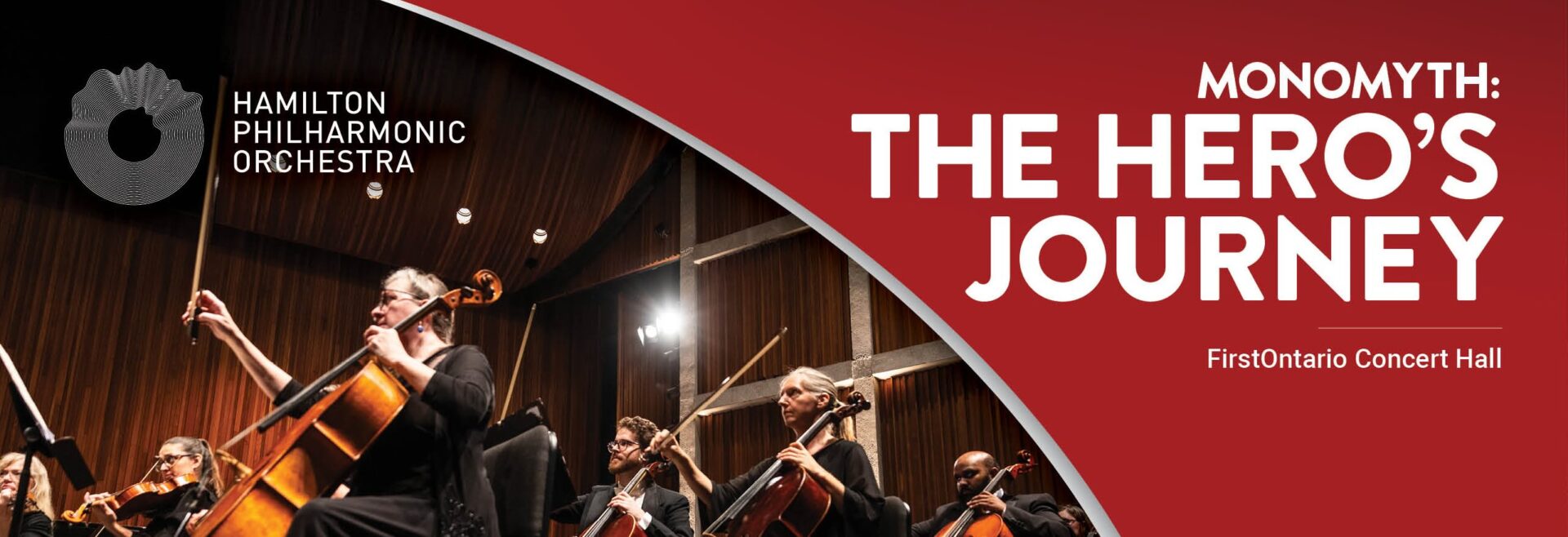
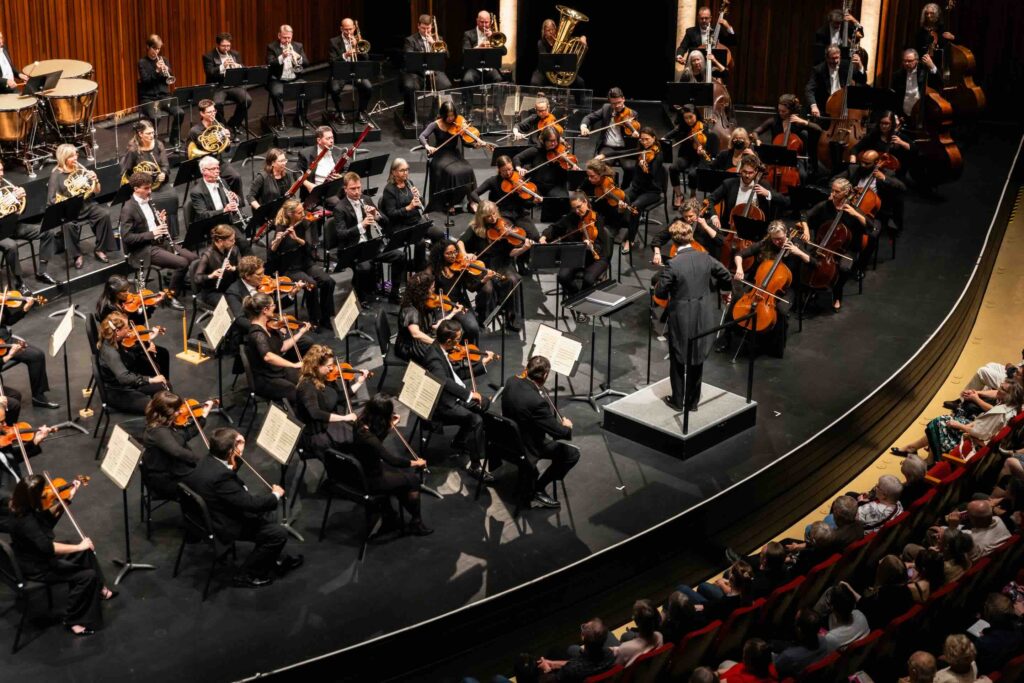
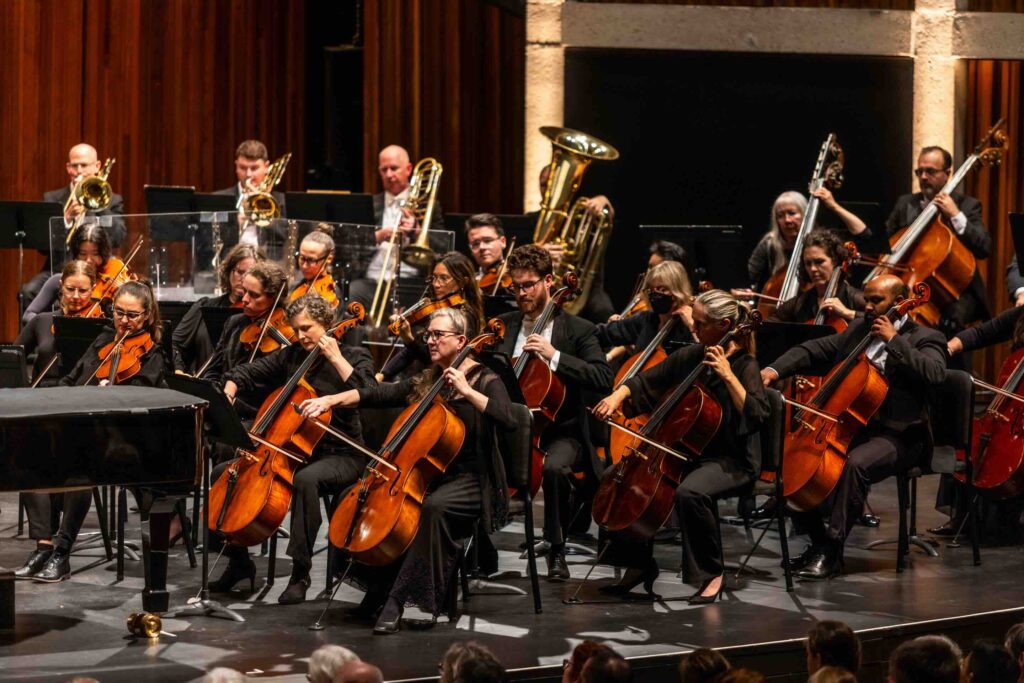
In Monomyth: The Hero’s Journey, the orchestra presents Mozart piano concerto and Beethoven symphony during a Jan. 17 matinee concert.
Do you want to choose a concert to go to where you just can’t go wrong? This is the one: Mozart’s "Piano Concerto No. 21” and Beethoven’s "Symphony No. 3, the Eroica,” with the Hamilton Philharmonic Orchestra. Guest conductor Alondra de la Parra leads the orchestra, and acclaimed pianist Thomas Enhco is soloist on the Mozart concerto.
The title of the concert is Monomyth: The Hero’s Journey. This refers to a typical mythical storyline of a hero facing trials in another world and returning victorious and transformed. In this case, there is no outside storyline but the music itself is the adventure. Musical themes build, collide and transform in the hands of these musical masters. The concerto adds the exciting element of the soloist playing with and against the orchestra.
Wolfgang Amadeus Mozart was one of the greatest talents music has ever seen. He was a child prodigy who became a mature and prolific composer while still a teenager. Composing music was effortless for Mozart. He composed in his head and wrote the music down casually, sometimes while in conversation. On top of that, his performance and improvisation skills were legendary. These skills would combine in his piano concertos (soloist with orchestra), where he was able to take centre stage as performer, composer and conductor in a single piece.
In Mozart’s day, musicians were usually employed by royals who might have orchestras, opera companies and certainly chamber music at their courts. A kapellmeister would direct the music program of the entire court and would often be a composer. Mozart’s father was a violinist in a court orchestra himself, at the court of Salzburg. He happened to have two remarkably talented musical children and was given leave to take them on tour across Europe. Young Mozart was toured around the courts of Europe from age six to 17 by his father in the hopes of eventually securing an excellent kapellmeister position.
Interestingly, this approach backfired. Some royals were offended and thought the family overstepped their social station (musicians were seen as servants until they reached the upper echelons), while many musicians in the courts found themselves “shown up” by young Mozart’s skills and didn’t want him around. Whatever the case, Mozart was unsuccessful at finding his desired court position and was forced to return to the Salzburg court he was born into, though he found it dreadfully limited and boring. After a spat with his ruling royal, who wanted to restrict his professional activities, Mozart left the court to settle in Vienna, at the age of 25, in 1781.
Mozart only lived to age 35. He spent his last 10 years in Vienna living as a freelancer, which was quite unusual in that time. Mozart found a way to make a living doing every element of music he could: performing, composing, teaching, mounting his own concerts, plus very important socializing with patrons of course. On March 9, 1785, Mozart premiered his “Piano Concerto No. 21.” doing quadruple duty with himself as composer, keyboard soloist, conductor and concert presenter. By chance, Mozart’s father Leopold was visiting and described the work as astonishingly difficult. Critics noted that the performance established Mozart as the best performer of his day. Our performance at the HPO will feature French pianist Thomas Enhco, who plays jazz and composes alongside being a classical soloist.
Twenty-one-year-old pianist and composer Ludwig van Beethoven travelled from his own home court of Bonn to Vienna in 1792, looking to advance his studies and career. Beethoven had intended to study with Mozart but that was prevented by his early death. Beethoven studied with the seasoned “Papa Haydn” instead, who helped introduce him to the Viennese music scene with its concerts taking place in royal houses by invitation only. Beethoven became the next big talent in Vienna in the 1790s. Following in Mozart’s footsteps, Beethoven lived his life in Vienna as a freelance composer without a court position, though he was supported by various royal patrons.
In 1798, the French ambassador to Vienna suggested that someone write a symphony in honour of Napoleon Bonaparte. Beethoven found the idea appealing. He was an admirer of Napoleon at the time, finding his revolutionary ideas in sync with his own. Even though Beethoven was dependent on royalty for his livelihood, he thought royals deserved no special treatment. Beethoven wrote a new symphony, in which he intended to take a new path, and dedicated it to Napoleon.
Why did Beethoven want to take a new path? It had nothing to do with Napoleon or politics. Beethoven was a spectacular pianist and composer in his 20s but had already started to suffer from hearing loss. Surprisingly, this impacted his social life more than his music. He was already a master of his craft and did not need to hear the notes at the piano to compose. Of course, this did eventually impact his musical life as he was unable to perform with others or conduct his own music. At age 31, in 1802, he had a crisis over his deafness. He wrote a letter to his brothers known as the Heiligenstadt Testament (Heiligenstadt was a country town where he escaped summer heat and social pressures) detailing his struggles. Beethoven decided he had more to give through his music and found a way forward. The next summer, he wrote his innovative third symphony dedicated to Napoleon and entitled it “Bonaparte.”
However, when Napoleon crowned himself Emperor in May of 1804, Beethoven was furious.: “He is nothing but an ordinary mortal! He will trample all the rights of men under foot to indulge his ambition….”
Beethoven ripped the title page in two and threw it to the ground. The symphony was then given the title of “Eroica” and dedicated to one of Beethoven’s royal patrons, Prince Lobkowitz. The “new path” is evident in the symphony as Beethoven shook up conventions and expectations throughout the work. This symphony was always Beethoven’s favourite of the nine he composed.
The HPO’s concert on Jan. 17 opens with a short work by female Polish composer and violinist Grazyna Bacewicz (1909-69). The work is entitled “Overture” and was written in 1943 during the German occupation of Poland. “Overture” contains a rhythmic pattern, morse code for V for Victory: dot dot dot dash (yes, the same rhythm of Beethoven’s famous Fifth Symphony).
NEED TO KNOW
Monomyth: The Hero’s Journey
Jan. 17, 3 p.m.
FirstOntario Concert Hall
1 Summers Lane, Hamilton
Tickets here
Come early at 2 p.m. for a pre-concert talk with pianist Thomas Enhco and conductor Alondra de la Parra.