







CITY VIEW: Leading change

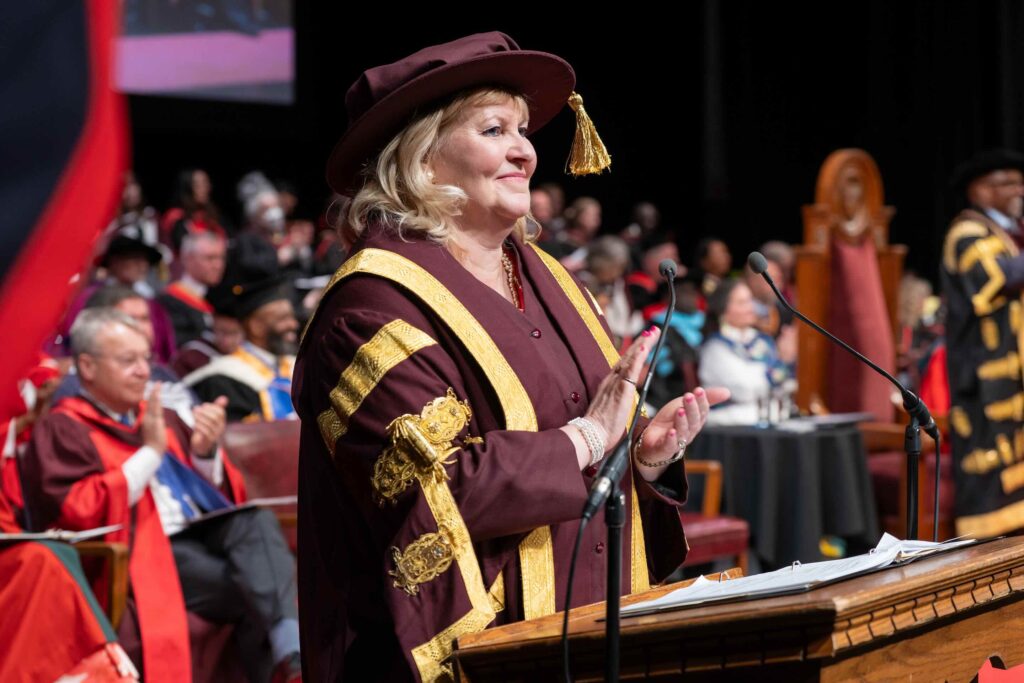
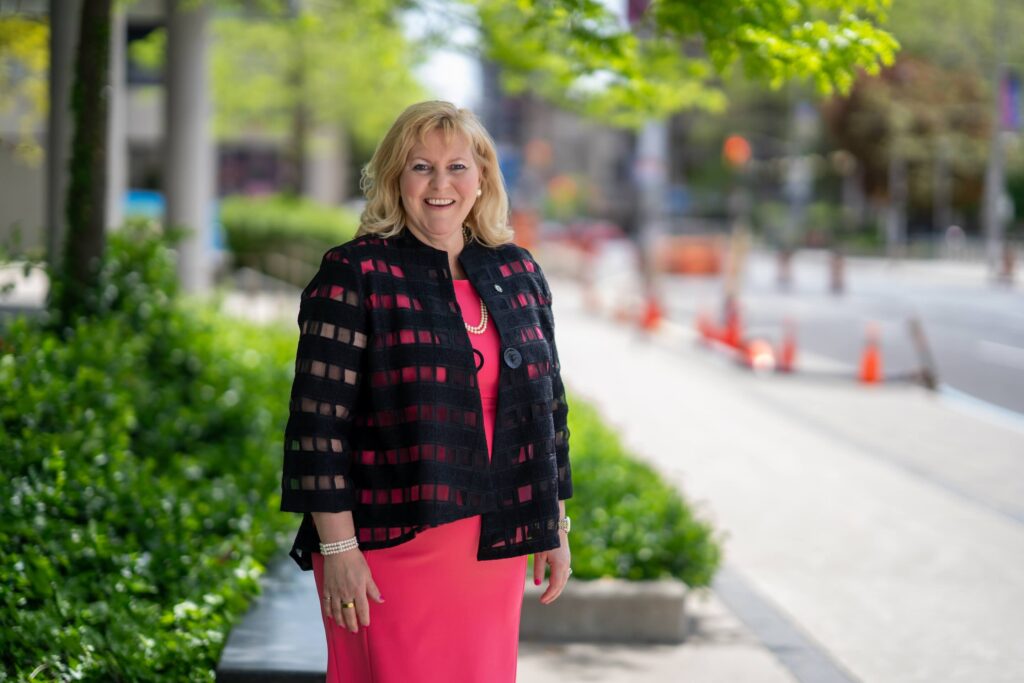
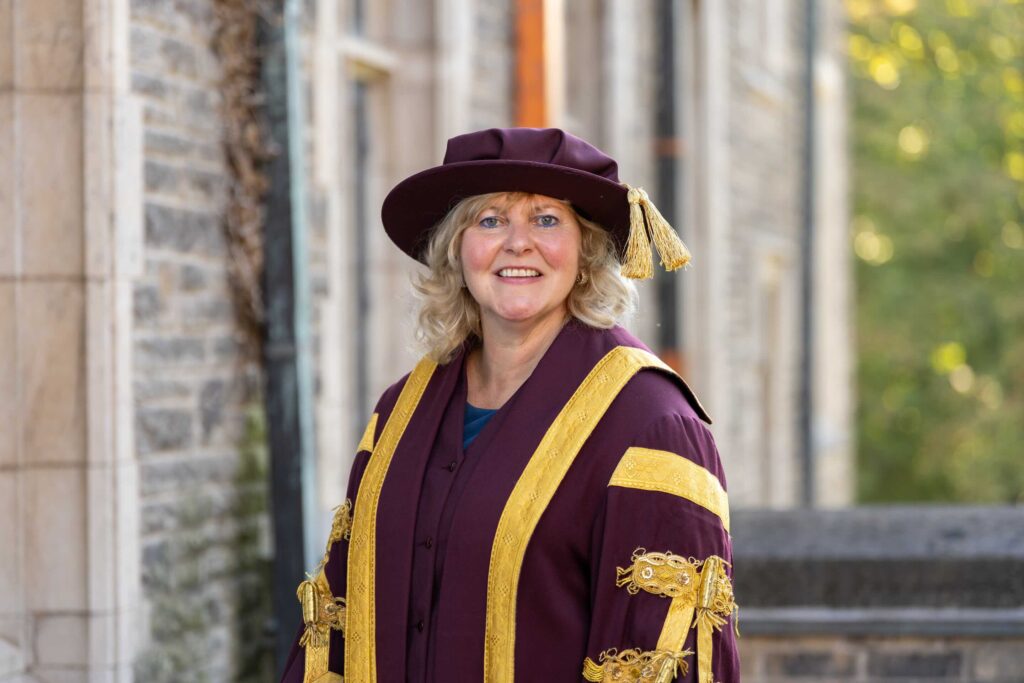
Susan Tighe became president and vice-chancellor of McMaster University in July 2025. Prior to that, she served as the university's provost and vice-president academic for five years. An engineer by training, Tighe's key priorities include student-centred learning, boosting the university's entrepreneurial impact, fostering inclusion, and deepening the connection between McMaster and Hamilton.
SUSAN TIGHE became McMaster’s ninth president and vice chancellor on July 1, 2025, following a five-year term as the university’s provost and vice-president academic. In her first year as president, she oversaw the creation of a new strategic plan for McMaster, Bolder Together, which prioritizes student-centred learning, transforming lives through research, fostering inclusion, and increasing the university’s positive impact on Hamilton, Ontario, Canada, and the wider world. Before coming to McMaster, Tighe, a civil engineer who specializes in the development, design, and management of sustainable paving materials for roads and runways, had been deputy provost at the University of Waterloo, where she also served as a professor of engineering for 20 years. Prior to earning her master’s and PhD, Tighe worked with the Ministry of Transportation on projects that included the construction of Hwy. 407. She grew up in Caledon, Ont., and lives in Hamilton with her husband Chris. They have two adult daughters.
Why did you choose engineering and then specifically civil?
Actually, my undergrad is chemical engineering. Then I switched to civil, and the primary reason I chose engineering is I always liked math and science. When I was doing junior achievement in high school, that was one of my extracurriculars, one of our advisors had done business, and her comment to me was, "If you like math and science, you should think about doing engineering. I was all cued up to do a commerce degree. I always liked finance. I thought I would be an accountant, and anyway, it turns out I learned a little more about engineering. My uncle was a civil engineer, but he was very discouraging about doing civil engineering or engineering. But my parents said do whatever you want to do, and I have never regretted doing my undergrad in engineering.
It was hard, and it was lots of challenges, and I was so grateful to have the problem-solving skills. And when I started working for the Ministry of Transportation, I fell in love with civil. I think you learn to think from a systems perspective. Civil engineering is all about protecting public safety. I loved solving problems, getting stuff done, having impact. But it was hard and complicated, and I think that was really something that I fell in love with, solving complex problems. I worked on the 407 and other 400 [highway] projects. I did a masters while I worked at the Ministry and then a PhD after that.
You worked in government for a few years before completing your PhD and moving into academia. What intrigued you about that path?
When I started a PhD, I didn't want to be a professor. I did it because I wanted to work for the World Bank because they build a lot of infrastructure.
And to work for the World Bank, you have to have a PhD. But as I did my PhD they had me teaching, and this is at a time when there were not many women in engineering, and there were very, very few women faculty. But I loved working with students. So I applied for a faculty job and competed and got it and never looked back.
Your research centred on the development, design, and management of sustainable concrete and asphalt transportation infrastructure. Why is that important and what led you to that work?
Well, I think it's an area that is definitely not deemed to be glamorous. There are other areas of civil engineering that I would say would be, like designing fantastic buildings or bridges. I guess the sheer volume of the work that is done on very materials focused work, so concrete and asphalt, and just the fact that I was always intrigued that if we could provide even 5 per cent savings or 1 per cent savings, that's a huge, huge impact. There are always issues to handle – heavier aircrafts, heavier trucks, climate change, more freeze-thaw cycles, higher temperatures in the summer, lower temperatures in the winter. There were no shortage of challenges, and I think I saw great opportunity.
And I think I cannot underplay those early years working in construction and design, and really appreciating the opportunity to be more sustainable, to recycle more as appropriate, to use materials smartly, to engineer materials, from recycled tires or recycled shingles. The thing that really intrigued me is that a lot of people don't think too much about the infrastructure until it's failed. I think the other part I liked was the idea that we could put our research into action.
You left the University of Waterloo to become the provost and vice-president academic at McMaster in 2020. That was a difficult time to lead a university.
When I was recruited to Mac to be provost, it was complicated. It was COVID, and every day something was happening. Effectively, though, as a civil engineer, it was running a small city, and I had advised many cities or many airports. A university is like an airport or a small city, you know. You've got a certain budget. How do you allocate it so that everything's safe and you maintain a level of service and you think about capacity needs and you're constantly juggling all these priorities, so you think systems wide and it's complicated.
So I was able to bring a different perspective to the role. We managed very, very well as an institution. You know, financially, we've maintained our small surplus. I like to say that didn't happen by accident. Obviously, I'm very data driven, but to a point. You never have the perfect data. You never have everything. I think one of the things that I learned as an engineer, and all those years running a large research centre, is that if you don't know the answer or you need information, you need to seek advice, and so during COVID, I went to one of the first meetings with public health, and I came out of that meeting and I immediately called the vice president and dean of the faculty of health science and said, "I need an infectious disease advisor.” Dr. Fiona Smaill came on to help me and delegate responsibility. The advisory group I set up had every faculty represented, and I think that hasn't always been the tradition in the academy.
What convinced you to come to McMaster?
I always admired McMaster for the quality of the students and the research in my field of engineering. There were always people here that I would say that we looked to the work they were doing. I had supervised several students in my graduate program at Waterloo that had come from Mac. They were all outstanding, very hardworking, practical, holistic. I would say well-rounded. I am a double alum from Waterloo. I spent 20 years there and I loved it. The recruiter did an excellent job because they had contacted me about other roles, and I wasn't interested in leaving. But they came to me with the provost job at McMaster. They said I was perfectly aligned. It's a research institution. There is an excellent engineering school. So I applied. It was the best decision. I love it here.
You are the first professor of engineering and the second woman to serve as president and vice-chancellor of McMaster. Do those milestones mean something to you?
I think so. Let's start with the engineer piece because I think being an engineer helps me with this role in many, many ways. But also having been what I like to say is a frontline faculty member. I think the best job in the world is being a professor. I enjoyed teaching immensely. I still do some guest lectures here. I still have a few grad students, but I have to say my colleagues in civil engineering help me manage them. I still have an NSERC (Natural Sciences and Engineering Research Council of Canada) grant.
And having been provost, coming into the president's job, I mean, it was a very quick get up and running, even though they're very different roles. Provost is operations, academic, budget, and my incoming provost and whole team are amazing. The president’s job is more external, but as chair of the senate, you're still ultimately responsible.
Being a woman to me has always been an advantage, bringing a different perspective. I've been in a lot of rooms where I'm the only woman, and you know I've always looked at it that I'm going to be professional, I'm going to be prepared, and I'm going to do the work.
And I think if you look at the team that I have around me and those that I've recruited, it is truly an inclusive team from many dimensions. Because I do believe that when we are fully inclusive, we get better results. I look at track record, I look at creativity, I look at strategy. I want people who are going to really lead change and be innovative and agile.
How has your background prepared you for this role?
One of my favourite projects was leading the development of the design guide for Canada, the primary design document that's used for pavement infrastructure in this country, and also how we allocate budgets. I had to recruit some of the best designers in the country, and some were in academia, but a lot of them were in the private sector, and a lot of them competed with each other. That was a really tricky conversation to get various people to come in, and the document was finished on time, on budget, and it actually created new interactions between people that naturally and typically competed with each other.
I haven't really changed in my approach to my work. It's more complicated and maybe the stakes are higher. I think that as a professional, you have to make decisions. And you know, I'm going to make decisions, and not everyone is going to be happy with them. But I'm going to make them from a values perspective, and I'm going to be able to explain what I did and why.
Research gives you an approach to understanding all this information and this data and this advice and all the various threads from the various stakeholders, and then you come up with something that you can then defend.
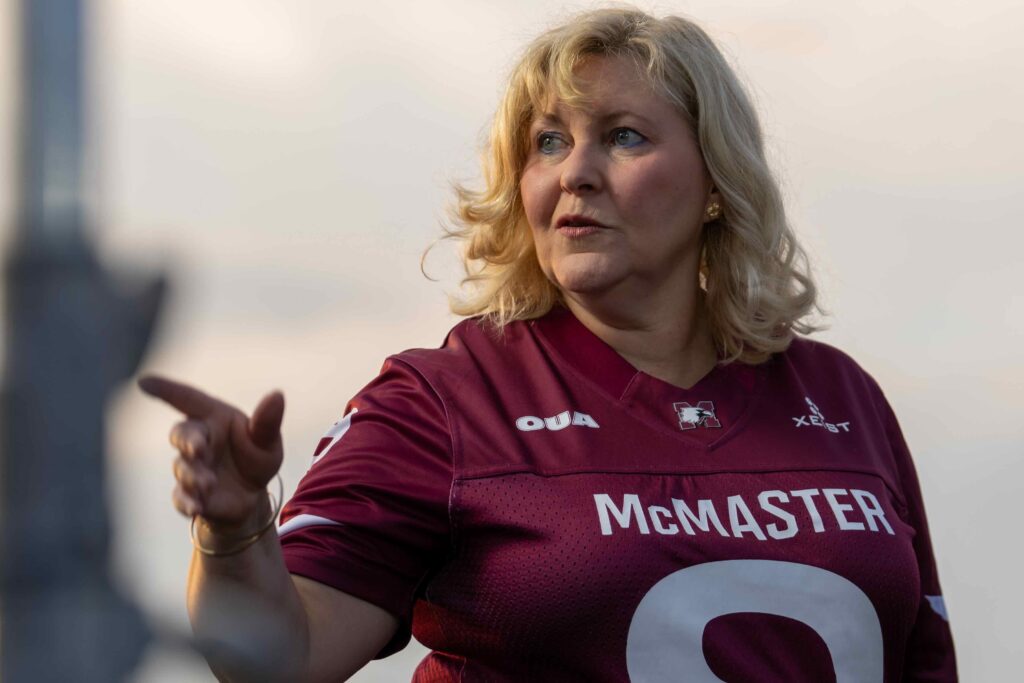
PHOTO: Georgia Kirko/McMaster University
What are some of your key priorities?
I look at our new strategic plan. We have a vision. We have a mission. We have core pillars that we're going to work from, and if there are opportunities that come our way, I think this is the agile piece. We're going to take advantage of them, and we're going to respond.
I think at this moment in time we are thinking about how do we support Canadian sovereignty? How do we support a stronger Hamilton? And in my installation address, and I stand by this: a strong McMaster means a strong Hamilton. A strong Hamilton means a strong McMaster. And it is about place, and it is about this amazing story of these citizens, cobbling together $500,000, a huge amount of money, to bring McMaster here to this beautiful city, to this beautiful plot of land in the west end.
And another key thing is how do we help get our research ideas, our processes, our new drug discovery, whatever it is, into a format and a mechanism and an ecosystem that they can be potentially commercialized. You know, not everything is going to be commercialized, but how do we get them into the hands of Canadians? We are known throughout the world in leading drug discovery and clinical trials.
That doesn't mean that we don't value basic science or basic research or what our humanists are doing, what our social scientists are doing. There's a place for everyone, and I think that's the key thing.
We are amplifying our impact across teaching and research that transforms lives. We're revising curriculum and pedagogy, and constantly reviewing. We are proud that all of our financial metrics are in the green. And then it’s about creating inclusive communities where all can flourish. That again comes in everything we do such as student experience, being an employer of choice, how we recruit and retain excellence. It’s thinking about what do we stop doing, what do we start doing, what do we keep doing. It's innovative teaching, innovative research, innovation in getting our discoveries out, empowering people to bring forward ideas. We know we have incredible staff and faculty that support our students and have a genuine love of this institution. How do we empower them to bring forward ideas? What is the next problem-based learning? What is the next Henry Thode research reactor?
What’s your favourite meal in Hamilton?
l like Express in Westdale. I like Bangkok Spoon in Dundas. I like eating on campus. Actually, I think The Buttery and The Phoenix are both really good, good places.
What are some of your favourite arts and cultural events?
I love going to the McMaster Museum of Art, and I've been going to the Ticat games this year with my husband. They're pretty fun.
What are some of Hamilton’s best-kept secrets?
I think best-kept secrets are the beautiful waterfalls, and actually, we love riding our bikes down to Bayfront Park.
Who inspires you?
I love our students and our faculty. I mean, there's no shortage of amazing people on campus, but Red Wilson, one of our former chancellors, stands out. I had the privilege to spend a fair bit of time with him, especially towards the end of his life as provost and he was just a beautiful man and great Canadian. He has been one of our largest donors, and I visit his wife Brenda. It was really wonderful to do a celebration of life for him. That was so well attended and just beautiful.
What is the greatest joy in your work?
I really enjoy leading an institution that I know can make a difference. I love teaching. I love research, and I think it's been a very difficult time when our institutions have been under fire for lots of reasons, and I really think that we have such an important role to play in helping our community, but also helping Canada. And I don't think we have done a good enough job in showcasing that value proposition. It's not even the value proposition. It's we're here to serve, and, you know, for me success in this role is that government, industry, partners, community members come to us first for help, for trusted advice. That we graduate the next generation of leaders, critical thinkers, and to me, that is why I do this work. I really care deeply about our role, our students, our faculty, and my philosophy is: lead, follow, get out of the way. Most of the time, I think I need to just get out of the way. But you know, my job is to uplift and bring people together.
What is challenging about your work?
I mean, it's hard. It's complicated. It’s long hours, and, you know, I signed up for it. I love it.
Do you have a message for Hamiltonians?
As an institution, we need to be accessible. We need to be available. And you know, we aren't an ivory tower. There is still this struggle, I think, of town and gown. I don't see it as an either or. And you know, in this environment, it's about getting people to the table and working together.