






Planting mini forests right in the city
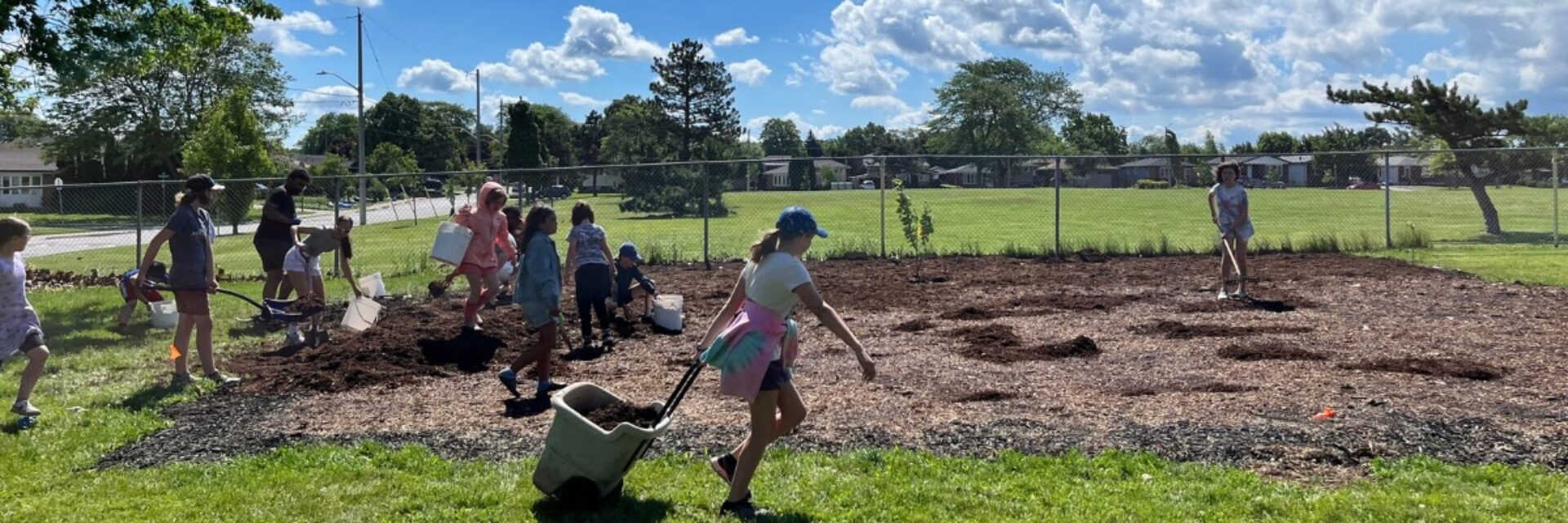
Green Venture is leading the effort to plant a cluster of 400 trees at Lawfield Elementary School after a year of preparing the site. The public is welcome to the Oct. 1 planting, which aims to increase biodiversity, add shade, and combat the effects of climate change.
Last week I went for a walk in Valens Conservation Area and took a not very well marked trail. As I picked my way through the tall cedars and birches, I noticed young tulip trees popping out of the forest floor and shrubs that were straining for the light. The forest floor was spongy and damp, despite us having no measurable rain for weeks, and the whole place was literally buzzing with life and biodiversity.
Now contrast that experience with walking past your average tree in downtown Hamilton. It stands alone, root-bound in its concrete “coffin” – that’s actually what city arborists call it! – with the soil around it trampled daily. No wonder city trees have such a short life span.
But it’s impossible and impractical to put a forest in the middle of a city, I hear you say.
Or is it?
Green Venture has been building mini forests, or Miyawaki forests in locations around Hamilton since 2021, and have found some fascinating places to put them.
“We have identified a great opportunity to put them on school grounds,” says LeeAnne MacGregor, program manager for green infrastructure for Green Venture. “We have identified them as being great learning opportunities, but they’re also a great way to sneak in more canopy.
“Trees, when they are planted on school grounds, run the risk of being loved to death,” MacGregor explains. “We notice that when kids congregate around trees, all the grass is worn away and the bark is smoothed off from kids wanting to be close to them.”
A mini forest groups trees together so they protect each other, while providing shade and a place for students to congregate, says MacGregor.
Green Venture has been partnering with Lawfield Elementary school for the last year, installing a garden and outdoor seating areas, and preparing the soil for the forest.
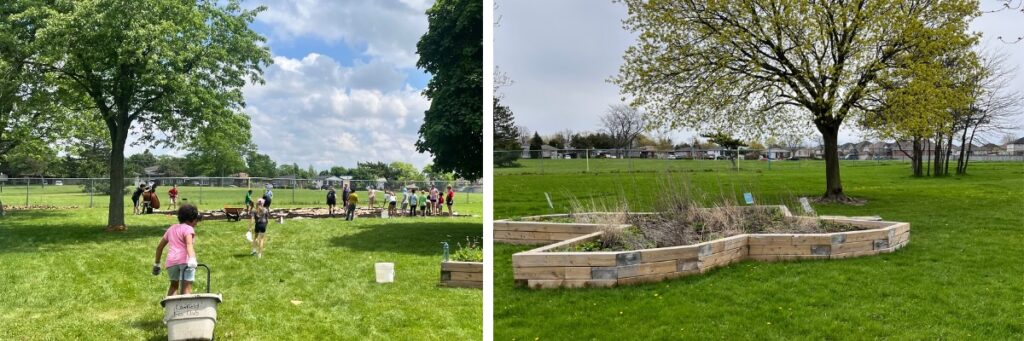
“We call this installing the forest floor,” MacGregor explains. “They collected cardboard from pizza day for several weeks. We laid down soaking wet cardboard. On top of that we put a layer of rich compost, and on top of that a layer of finely shredded hardwood tree mulch.”
This blocks the light and turns the grass below into compost, creating the rich soil needed to support the forest.
“On Oct. 1, we’re coming back to do the planting. We’re putting 400 trees in a 100-metre area, which is the mini forest concept,” says MacGregor. “We do four different layers of the forest, the canopy species, the sub canopy, the tall understory layer, and the shrub layer.”
The method creates an enormous amount of biodiversity in a small space and encourages the trees to grow tall and strong quickly. Mini forests also support a huge number of insects, caterpillars, and butterflies.
Contrast this with traditional planting of large trees far apart, where their survival rate is much lower and growth much slower than in mini forests.
This planting is made possible with grants from Green Communities Canada and Trees for Life Canada.
Trees for Life’s executive director is Marina Dimitradis, and she is very excited about the Oct. 1 planting. It is part of a blitz this fall of 55 plantings that will see more than 100,000 trees go in the ground across Canada.
But Trees for Life does more than just write cheques. It’s easy to underestimate how much coordination goes into a tree planting as complex as a mini forest.
“We tell our partners that whatever it takes for a tree to be successful, that’s what we’re here for,” says Dimitradis. “Sometimes it’s expertise and a planting plan, sometimes it’s connecting with a nursery, or getting the trees to the site, all the way to funding a portion of a planting and publicity and advertising,” she says.
“We’ve been doing this for over 10 years and have had over 4,000 volunteers help us plant over three and a half million trees,” Dimitradis explains. “Still, it’s not enough. It’s a good number and it makes a difference in your city and it’s a hot day and you’re craving shade. But it’s not enough at all.”
Trees for Life is in a race against climate change. “Trees are the most affordable and scalable climate solution out there.”
Both organizations will take a step in that race at Lawfield Elementary on Oct. 1. The day itself and the planting will be for students and staff, but from 3 p.m. to 6 p.m. the public is welcome to come and check out their hard work and learn more about the incredible biodiversity and growth created by a mini forest.
Who knows, maybe your neighbourhood school will be next?
Jason Allen is the former host of The Environmental Urbanist, and a frequent contributor to HAMILTON CITY Magazine, and has been encouraging Hamiltonians to explore the outdoors for almost two decades. He's also the author of 52 Things to Do in Hamilton: The Insider's Guide to Fun in the Hammer.