PRIDE: A look at three queer-owned Hamilton tattoo shops
Lowk’Ai, Inkcantations, and Sleepy Bones Studios create safe spaces for the city’s 2SLGBTQIA+ communities to express themselves with ink as artists and clients.
Hamilton is a home to many queer communities. Though not as crisply defined as neighbourhoods, the city is still a pull for queer populations who create businesses and experiences. The tattoo world is one such community. Lowk’Ai, Inkcantations, and Sleepy Bones Studios are three tattoo shops that are proudly queer owned. They carve out spaces that allow clientele and staff to be safe in their identities and that consider diverse needs, while each also create its own tattoo experiences.
Lowk’Ai
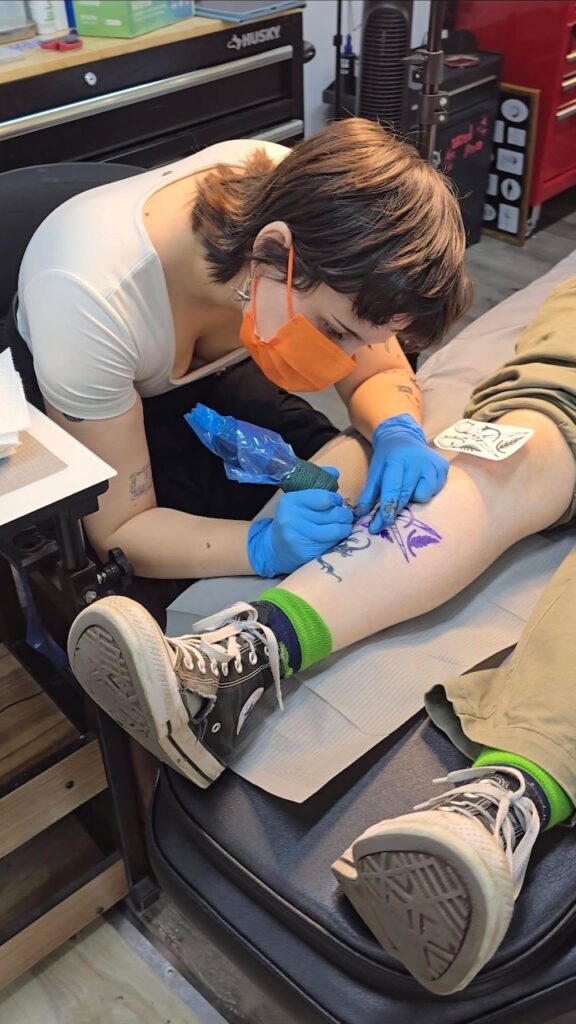
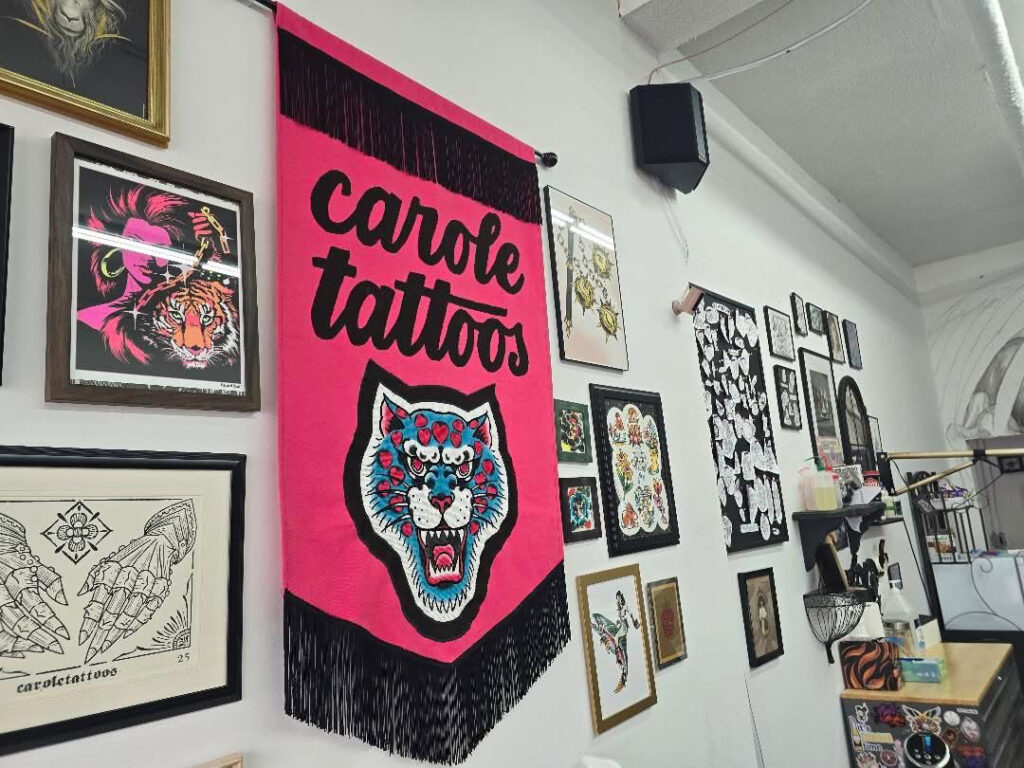
Lowk’Ai, a name dedicated to Leo Kheng’s mother and a nod to their Cambodian heritage, is a combination word Kheng describes as a reference to the moon, the caretaker of the seasons. Kheng is the owner of Lowk’Ai, a studio in downtown Hamilton on Barton Street near Sherman Avenue. This queer-owned tattoo shop has been described by those currently working there as a place where they’re safe to be themselves.
The shop opened in 2020 and has since seen many faces. Today, there are 14 artists, junior artists and apprentices who work out of Lowk’Ai studios, according to its website.
Kheng had been working and learning at a studio in Toronto before coming to Hamilton. He felt he wanted more from the shop. “I felt comfortable in [it], but it wasn't necessarily a queer safe space. It was an intellectual safe space, and emotionally, it was a safe space. But it didn't necessarily cater to my community … So then that's been the mission is to create a safe space for queer minorities and feminine people as well, too.”
Over time, the makeup of Lowk’Ai has changed. Kheng said originally his crew wasn’t necessarily queer, but now it is a mainly queer space. “It just sort of snowballs. So once you get more artists, then more queer artists came, and more clients came, because there's something identifiable in queer art.”
Finn Welch is an apprentice working under the guidance of Kheng and has been working at Lowk’Ai since March 2025. Welch says he’s unlikely to leave Lowk’Ai any time soon.
“Not every shop obviously is going to be toxic or homophobic or anything. But they do exist. And you don't really know what you're getting into until you're already working there. I don't really plan on taking that gamble, because I am a person who's very open and I'm very out and I'm proud. I don't want to ever be in a position where I have to be quiet about it for my own safety or even just treading the water, seeing what's up.”
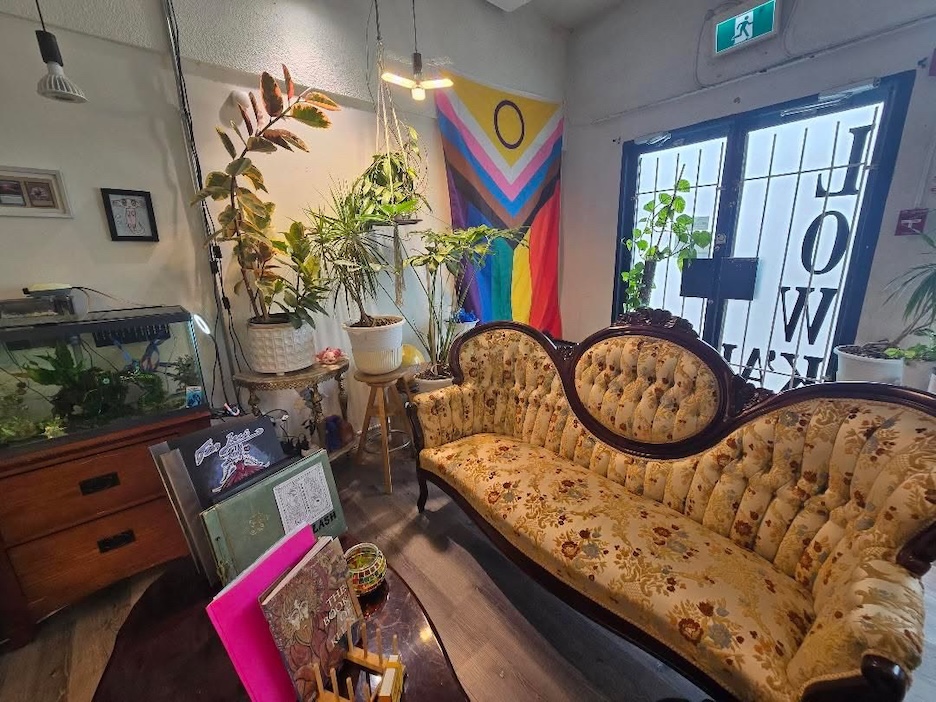
He explained that the open support in Lowk’Ai made him feel safe, indicating the trans Pride flag hanging on the wall of the waiting room. “There's a lot of other trans and queer people here, too, we have our own little community. It's really nice,” he said.
Symbols such as these are used to vibe check those in the space. Kheng indicated that while he doesn’t seek out particular people to work at the shop, once people are introduced to the location, it becomes very clear who will fit into the community. “You have to be a diehard ally of our community or else it's just not going to work out,” he said.
Others currently working at the location are happy to work in the space. Cloe M.Z. Wagstaffe, another apprentice in the shop, says the space gives them the opportunity to see other artists work. They’ve been apprenticing and sharing the Lowk’Ai space since January of this year. “I feel like it's (Lowk’Ai) a really fast-learning scenario,” they said.
Lowk’Ai works as a tier system. Artists can pay more to access the space more often.
“If you are at five days a week and you're like, I cannot sustain this any longer, then it's a very low-pressure environment to drop down a tier if that's what you're needing to do to support yourself properly, while still continuing to be able to move forward in your career. It's great,” said Kat Sears, an artist at Lowk’Ai.
Looking to the future, Kheng would like to own a building that could house Lowk’Ai. He wants to put more of the money toward creating a “stable home for this community of artists,” he said. “I have a lot of dreams. I've always been a big dreamer.”
Inkcantations
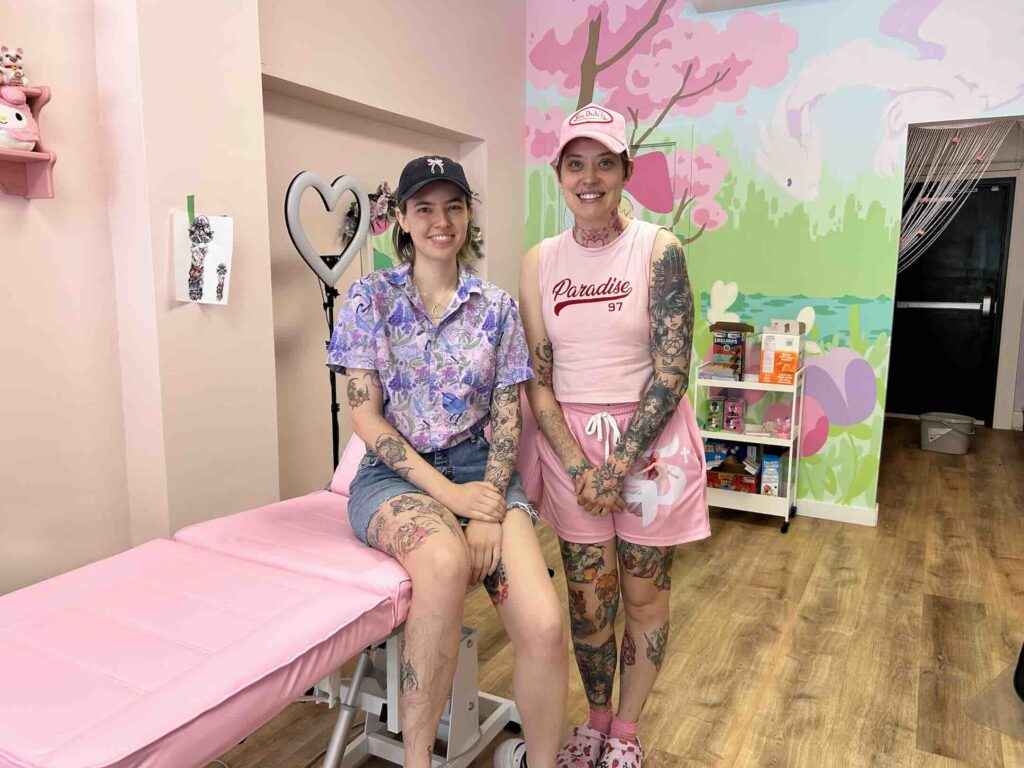
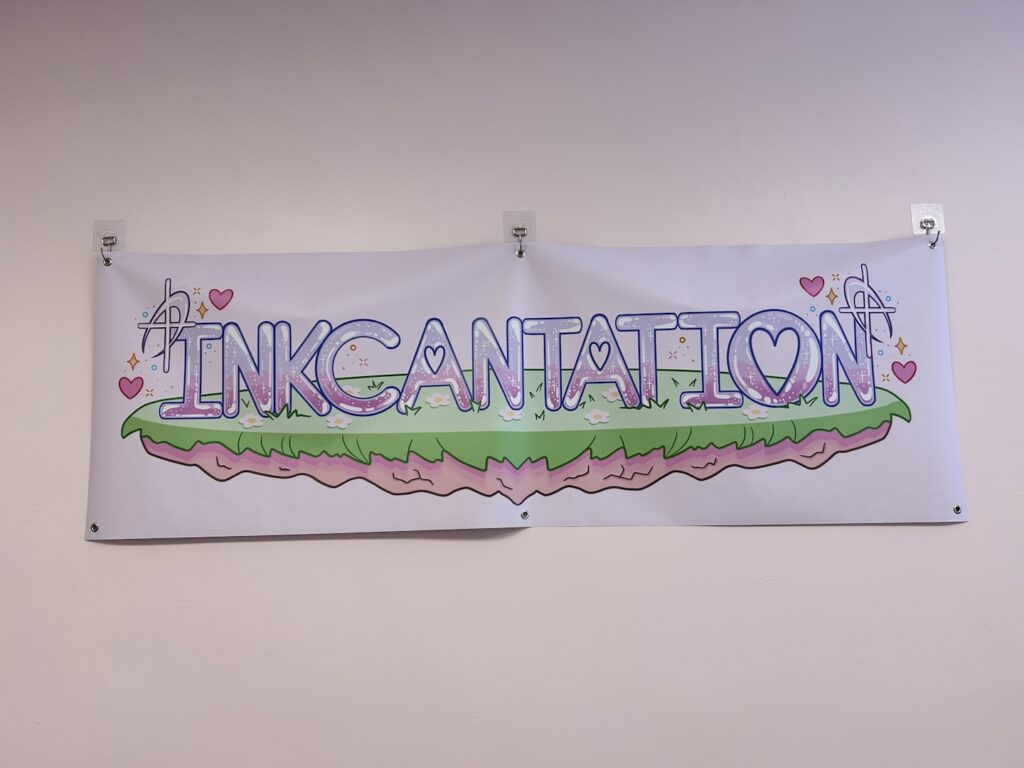
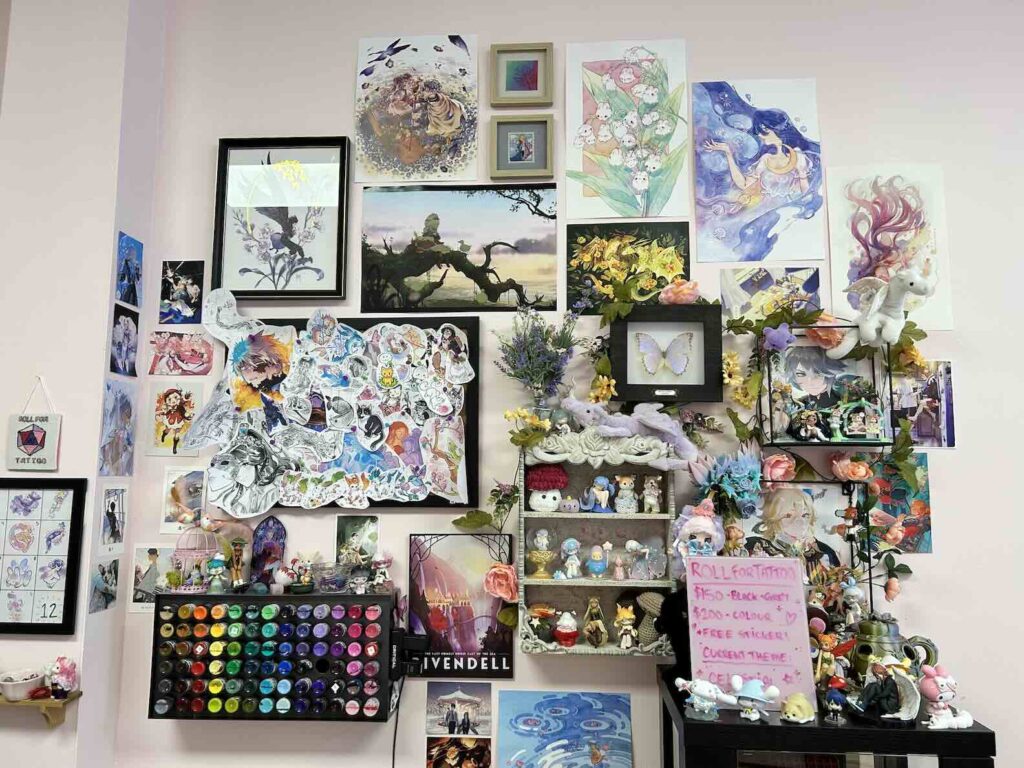
Inkcantations is a tattoo shop on King Street East east of Sherman Avenue. It was opened in 2025 by co-owners Lar Doughty and Ricky Scott-Thomas. Both had connections to Lowk’Ai, Scott-Thomas as an apprentice and Doughty as a resident artist. The two decided to depart while the shop changed locations. They were joined by junior-artist Ashley Constant.
Inkcantations takes pride in its very specific aesthetic. Described as whimsical and cute, the shop is decked out in pink, including the tattoo beds. Figurines, stickers, and art adorn the space, with a “cute” fantasy-inspired mural painted on the back wall. Both Doughty and Scott-Thomas noted their shop is a slight departure from many of the shops in Hamilton. While a shop like theirs is more common in Toronto, there’s a slight “void” for the kind of space they’ve created here, they said.
“Historically, a lot of tattoo shops, I think, can feel really intimidating to go into, like more old-school or traditional styles, which not that there's anything wrong with those, but for me, for example, I would feel uncomfortable going in there,” said Doughty. “So I think we wanted to have a place that was as approachable as possible and people do feel like they're at home and it just makes the whole process a little easier.”
One way they try to make their shop a safe space for people is by making available all of the information someone may need. They also believe a good tattoo experience starts before a person walks through their door.
While they are also a queer-owned shop, Doughty and Scott-Thomas prefer to show this off in a subtle way using symbols. Doughty referred to the My Little Pony display above one workstation. “I have the ponies up there in the lesbian flag colours,” and are joined by other “gay
Easter eggs” around the shop, she said.
“I think that's something we've talked about is wanting it to be part of our identity as a shop but not something for people to focus on like that's the priority,” Scott-Thomas said. “[So] trying to find that balance between not completely hiding it, but not having it be our main identity as a shop.”
The partners see Inkcantations expanding within the space its already in. They indicated their plans to eventually hire another artist, grow their skills and build their client base.
Sleepy Bones Studios
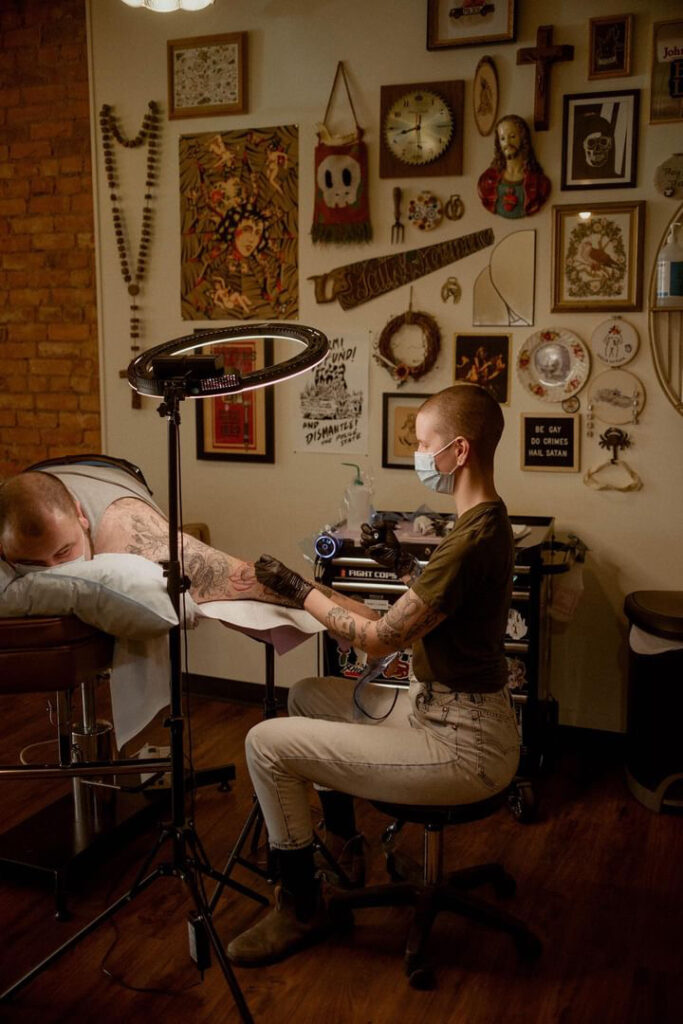
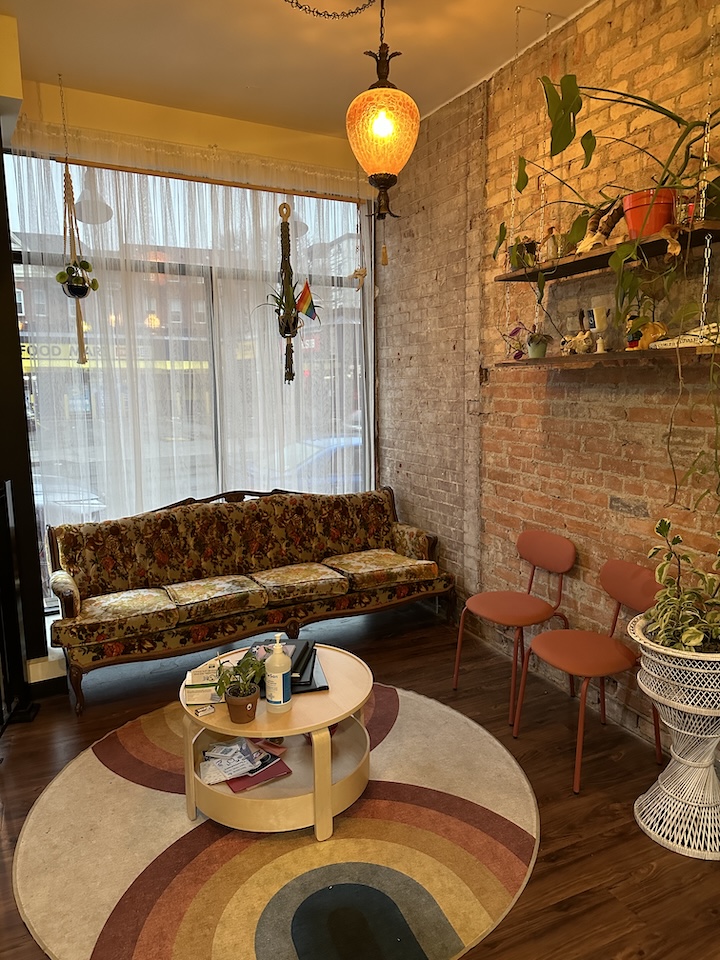
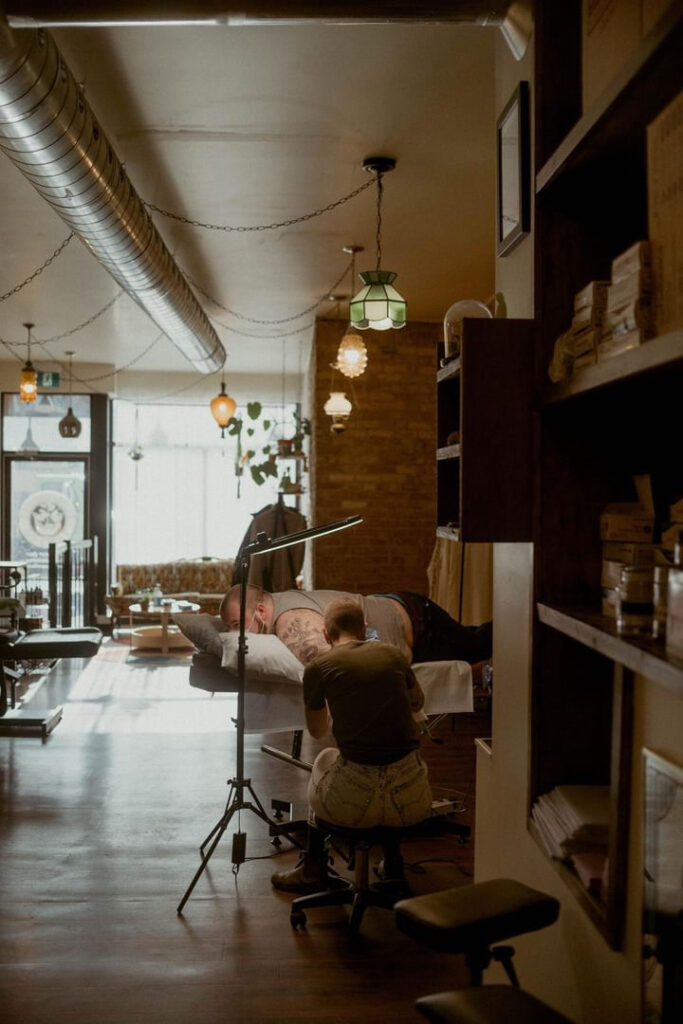
Sleepy Bones Studios on King Street East near Emerald Avenue is owned by Kat Gomboc. The shop opened in 2020, and is currently the home of four artists. Opening as the pandemic started, Sleepy Bones Studio had to pivot their vision, which ultimately changed its course. Due to restrictions, it became a private studio.
Despite this, Gomboc says they use the space for community events from time to time. The studio hosts the Trans Supply Library, a free-to-use grassroots system of borrowing and returning clean, reusable items for trans-specific healthcare needs. The shop has also done overdose response training, and has organized flash fundraisers for community organizations.
Sleepy Bones Studios doesn’t entirely advertise as a queer-owned shop. Instead, it relies on “underground communication” and “message sending,” said Gomboc. “Our shop is a queer and trans shop for instance, but we don't really advertise it that way because that feels like we're trying to prove something,” they said.
Gomboc recognizes that creating a truly safe space isn’t always possible. But what is possible is being communicative. “If there's a line of communication, you can discuss what is possible, [and] what is not possible,” they said. Considering clients' intersectionality and being aware of their identity is also an important thing the shop considers.
“If a trans femme person who might not present super feminine comes in and you're doing a chest piece where for sure it might be a little low, someone who doesn't have a concept of queer and trans bodies might be like, ‘Oh, whatever, we're just doing a chest piece on this person.’ Whereas someone who might be like, ‘Oh, this gal might want a barrier [for] the comfort of her body.”
Looking to the future, Gomboc doesn’t have any plans to expand the business. “I really dislike the concept of trying to grow things … feeling like one needs to continue to grow in a very capitalistic kind of way is not something that I strive for. I'm so content where we are.".