






THE PLAYLIST
Dylan Hudecki is a Canadian indie-rock vet having played in many different bands, including By Divine Right, Cowlick, Slow Beach and The Dill. He’s a proud Hamiltonian who covers local album releases for HAMILTON CITY Magazine.
Cut Flowers – Just Came Home to Come Home
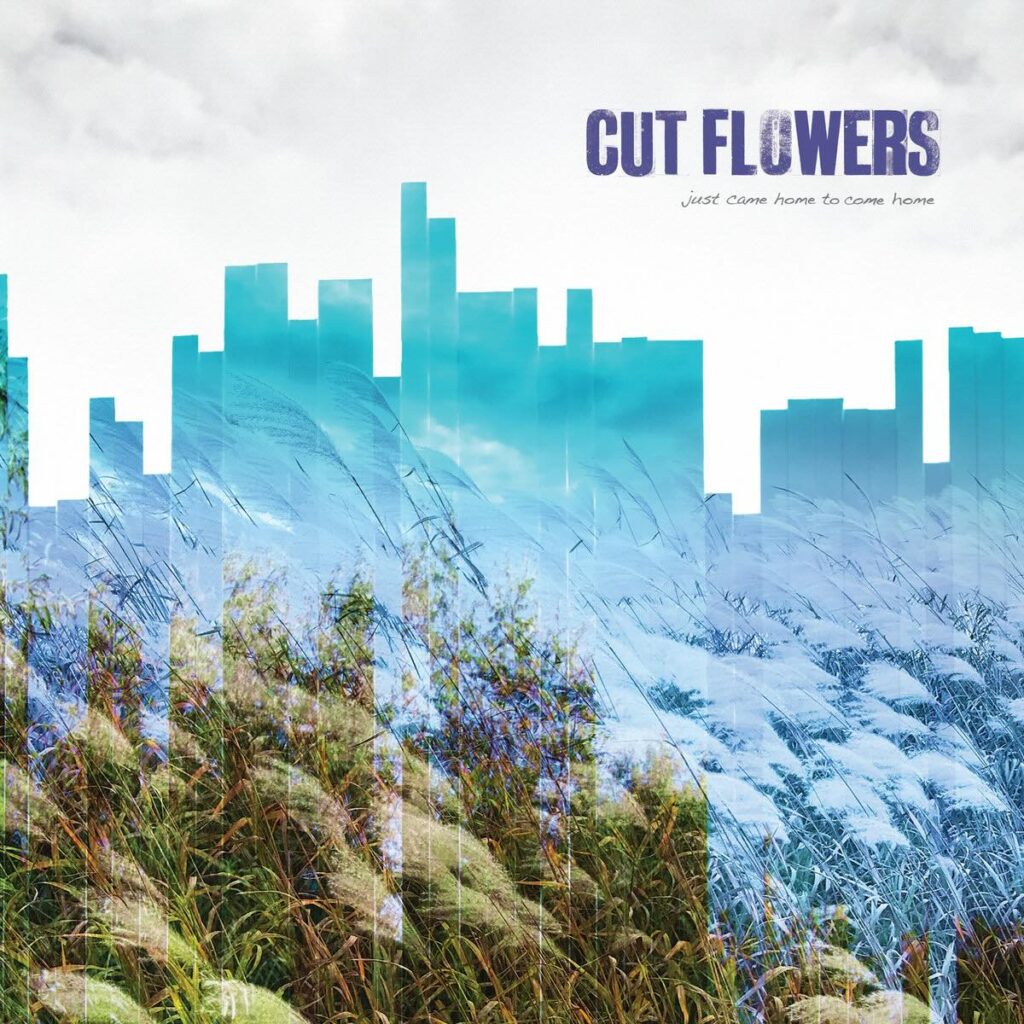
Cut Flowers arrive with serious musical pedigree on their debut full-length Just Came Home to Come Home, but what’s most striking about the record is how little it leans on reputation. Across these 10 songs, the band sounds less like a veteran supergroup and more like musicians rediscovering why they fell in love with making records in the first place. Playing music together!
Recorded live off the floor in two separate sessions at the acclaimed Boxcar Sound Recording beside Gage Park in Hamilton, the album thrives on looseness, chemistry, and emotional immediacy. You can hear the room in these songs, the push and pull between players, the warmth of the analog textures and the feeling that imperfections were left intact because they mattered more than polish.
That approach gives Just Came Home to Come Home a lived-in humanity that’s increasingly needed in modern music.
The album’s emotional centre arrives early with “Until It’s Time,” a weary and deeply affecting meditation on aging, regret, and connection. Like much of the record, it balances folk tenderness with ragged rock-and-roll spirit. Kevan Byrne’s songwriting and lyrics land because they feel conversational and earned. His voice carries the weathered honesty of someone documenting hard-won realizations rather than performing them.
Musically, Toronto’s Cut Flowers exists in a beautifully blurred space between jangly alternative rock, roots music, and folk-rock. The comparisons to R.E.M. and Richard Thompson make sense, but there are also traces of ’70s bar-band vibes, Motown warmth, and late-night Canadian canrock woven throughout the album.
Tracks like “Murders All Over Town” and “Ordinary People” expand the palette with trumpet and tenor saxophone flourishes that feel soulful rather than ornamental. Elsewhere, “Drying Down” and “Trouble I Need” lean into the band’s folk instincts, allowing the melodies room to breathe. Even the darker moodier moments, particularly the standout “Butterfly War” and “This Is How We Die”, avoid cynicism. Al Okada’s synths and keys subtly colour the songs without overwhelming them, while Rebecca Campbell’s harmonies add gravity and tenderness in equal measure. There’s sadness throughout the record, but also resilience.
What makes Just Came Home to Come Home especially compelling is the collective history behind it. Members of King Cobb Steelie, Heimlich Maneuver, Tristan Psionic, and Loomer all converge here, yet the album never feels like a nostalgia exercise. Instead, it sounds like a group of musicians arriving at a place where emotional clarity matters more than reinvention.
RIYL: R.E.M, Cracker, Crazy Horse, Weeping Tile, King Cobb Steelie, Wilco.
Listen on: Bandcamp or Apple Music
Minuscule – If Not Now
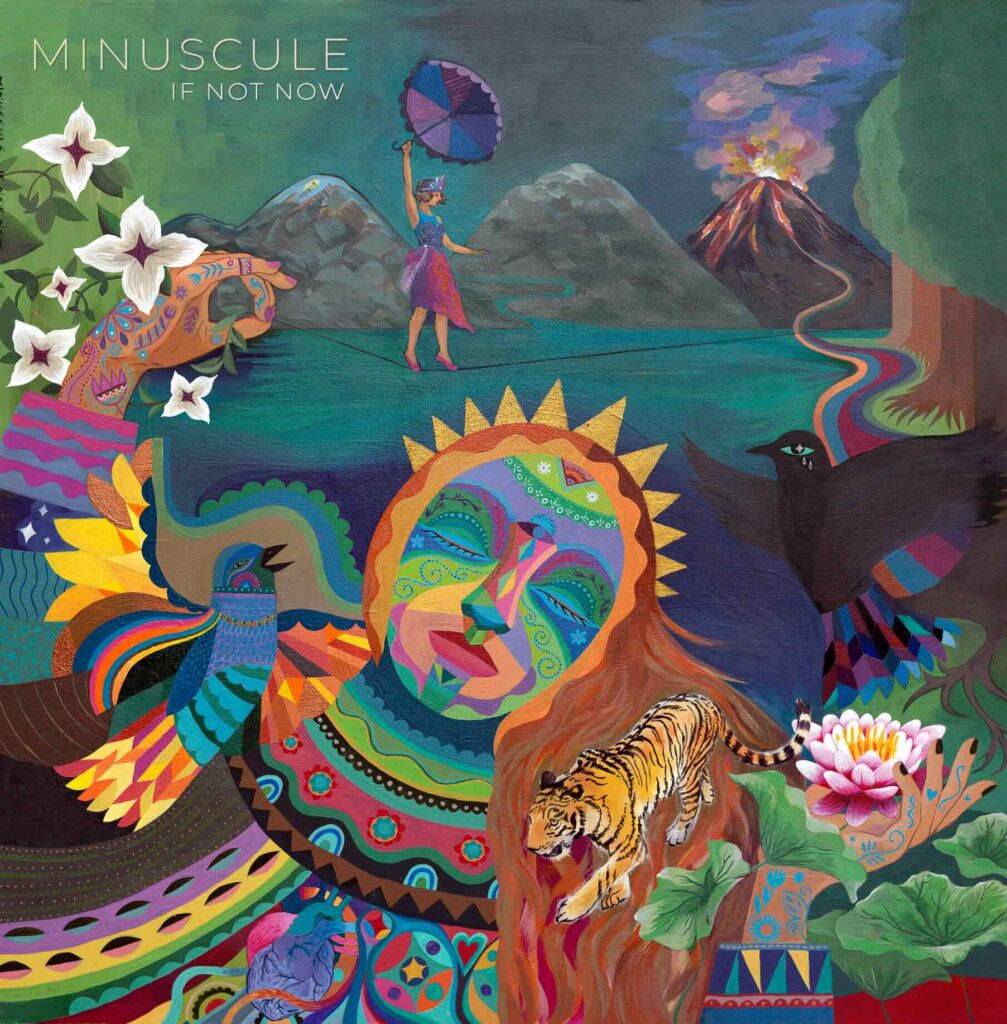
With If Not Now, Minuscule continue to quest to prove they are one of Ontario’s most emotionally resonant and musically ambitious bands. The Niagara-based five-piece (and sometimes 20-piece with a background choir) take folk music far beyond campfire intimacy, transforming it into something towering, communal, and deeply human. Led by songwriter and vocalist Laurel Minnes, the group balances vulnerability and confrontation with a rare sense of warmth, using layered harmonies and sharp lyrical insight to explore the messy corners of modern life.
There are traces of Joni Mitchell in the poetic songwriting and emotional detail, but Minuscule also channels the rhythmic looseness and vocal experimentation of Tune-Yards. Their songs can feel playful one moment and devastating the next, often wrapped in tongue-in-cheek observations that soften the blow without losing the message. Rather than preaching, the band invites listeners inward, creating music rooted in empathy, social awareness, and collective release.
At times, Minuscule sounds like they’ve been commissioned to score a new Broadway musical. Their songs carry a theatrical sweep, filled with dramatic vocal arrangements, emotional crescendos, and scene-setting performances that feel built for a stage.
What makes If Not Now stand out is how alive it feels. Co-produced by Minnes alongside Joe Lapinski at WOW! Recording Studio, the album captures the chemistry between the band’s five distinct voices, Minnes, Jillian Rene Smith, Tara Stanclik, Michael Saracino, and Taylor Hulley, without sanding away the rough edges or emotional immediacy. The production sounds grandiose and the arrangements swell and contract naturally, moving from hushed introspection to near-choral catharsis, while Jeff Elliott’s mastering gives the album clarity without sacrificing its warmth.
Their collaborations with artists ranging from Great Lake Swimmers to Vile Creature make sense when hearing If Not Now. It carries the intimacy of indie folk, the power of protest music, and the expansiveness of experimental vocal arrangements all at once. It’s no surprise the group previously earned recognition for their choral work and that Minnes received acclaim for her songwriting. More than anything, If Not Now feels designed for connection. These songs are less about performance than participation, pulling listeners into their harmonies and difficult conversations alike.
Minuscule may sing about uncertainty, exhaustion, asking for help and responsibility, but they do it with enough humanity and conviction to make those burdens feel shared instead of isolating.
RIYL: Fiona Apple, Choir! Choir! Choir!, Tune Yards, Great Lake Swimmers, Hey Rosetta!, Joni Mitchell, The Weather Station
Listen on: Bandcamp or Apple Music
Whitehorse – All I Want Is All of It
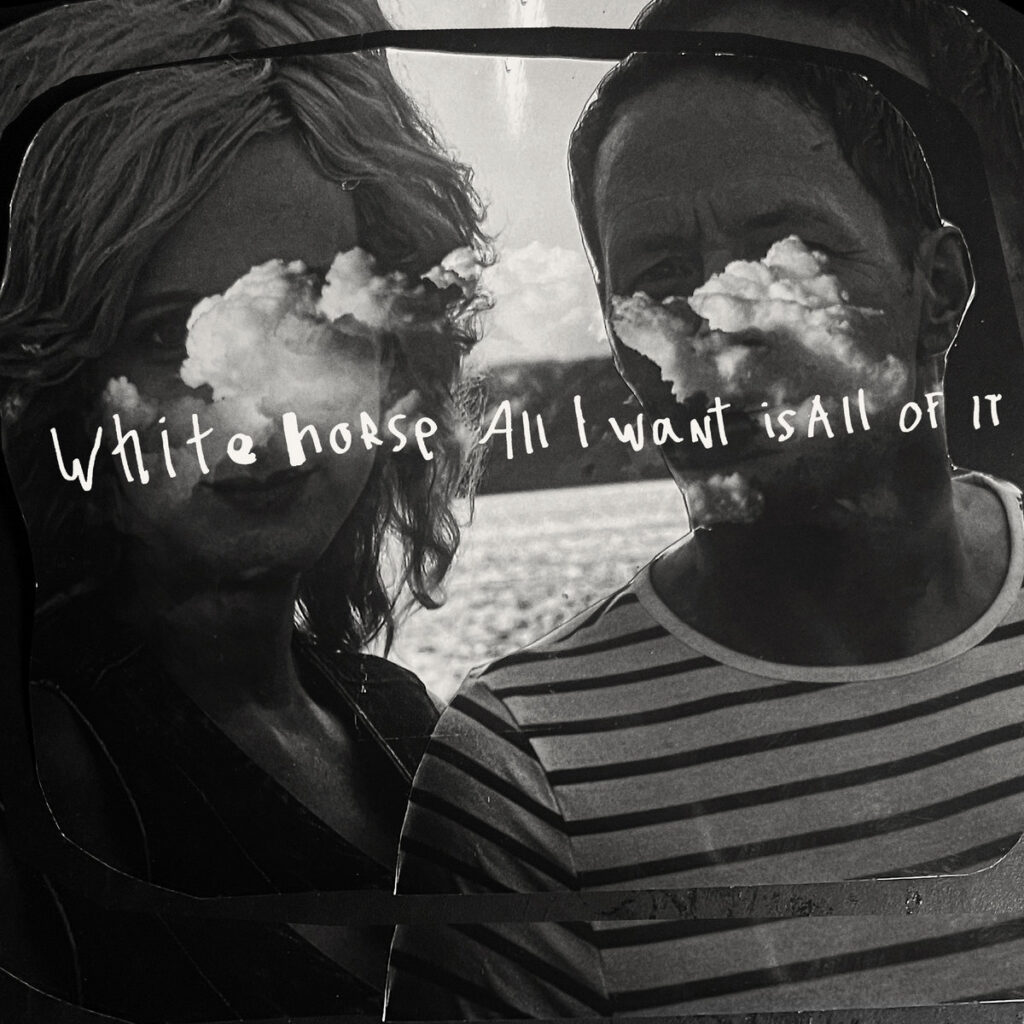
Whitehorse has always existed somewhere between campfire intimacy and a widescreen gritty romance drama. Sonically, this married duet is equally capable of dusty spaghetti-western twangy ballads, intergalactic blues grooves, and gritty cosmopolitan indie rock anthems. But where previous albums often experimented with genre hopping and production tricks, All I Want Is All of It strips nearly everything back to exposed beams, cracked floorboards, and hearts on their sleeves.
Recorded in an old farmhouse, the album feels intentionally loose and real in the best possible way. You can hear room ambience, overdriven amps, live timing, and performances that sound captured before anyone had the chance to polish them into submission. Instead of smoothing imperfections into algorithm-friendly indie-folk, Whitehorse leave smudgy fingerprints all over these strong songs. The result is warm, lived in, ragged, well loved, well crafted, and deeply human.
That looseness becomes the album’s emotional core. These songs aren’t trying to impress anyone with technical precision and quantized 808 kick-drum breakdowns. They’re trying to survive the moment they were written in with not much overthinking. The two are relying on their honed penmanship and technical ability, letting the songs do the heavy lifting, much like their heroes in the ’60s and ’70s did. The title itself feels almost ironic. All I Want Is All of It sounds ambitious, even greedy, but the songs underneath it wrestle constantly with limitations of reality. They document middle age, hedonism, the future, family, past relationships, love letters, wrestling with time, loneliness, and more.
“The stories are bullets, stars, steel towns, unholy matrimony, impure poetry, and the milk of babes,” says Whitehorse. “Secrets culled from the unspoken code that emerges when two hearts create as much as ours have.”
Husband-and-wife bands have been part of popular music history for decades, from Johnny Cash and June Carter Cash to Sonny & Cher, Sonic Youth, Fleetwood Mac, Arcade Fire, and The White Stripes. But few operate with the same conversational chemistry as Whitehorse where both partners share duties so equally. Luke Doucet and Melissa McClelland are two skilled songwriters who pass the microphone back and forth on lead vocals, who harmonize, and write songs together that often feel aimed directly at one another. Each record they complete rolls out like a pair of solo albums stitched together into one deeply intertwined collaboration. All I Want Is All of It is no exception.
Musically, the album wanders comfortably between folk-rock, country soul, dusty psychedelia, and blown-out garage jams. “Bullet in the Chamber” stretches from a powerful Sheryl Crow-esque radio hit into distorted Neil Young & Crazy Horse territory, guitars sputtering and threatening collapse at every turn. “See the Light” feels haunted, lovelorn, and weightless, while “Please Tell the Stars” and “Pure Poetry” drift through late-night melancholia without becoming overly precious. The incredibly catchy, “I Want the Milk” is an ode to the pure hedonism we all share as humans, especially in these modern times of gluttony, effortless access, and instant gratification. Then there’s “Lighthouse,” a strange and beautiful outlier that plays like a lovelorn sea shanty slowly dissolving into the orange glowy fog at dusk.
The sense of family as an undertone of the entire project has gotten a whole lot more real. The Burlington duo’s 11-year-old son Jimi contributes keys throughout the album and live, while Doucet’s adult daughter (from a previous relationship), Chloë Doucet, joins the band on guitar for their “All of It” family band touring this year.
This now turns Whitehorse into something larger than a traditional husband-and-wife act. This is no longer just music about romance or self-expression. These songs exist inside a wider ecosystem of legacy, continuity, stamina, love, and home life.
In an era where so much roots music is polished into lifeless perfection, Whitehorse chose vulnerability over control, and humanity becomes the point.
RIYL: Aimee Mann, Alison Krauss & Robert Plant, Neil Young & Crazy Horse, Wilco, Fleetwood Mac, Sheryl Crow
Listen on: Bandcamp and Apple Music
REVISIT ME
Many publications review reissues of albums, but none ever retroactively review albums that are fantastic and overlooked after years have gone by. Why not? Why does every music review have to be for a brand new release? Why do we have to wait until certain songs have made comebacks thanks to movies and TV shows like Kate Bush’s “Running Up That Hill” in Stranger Things or Redbone’s “Come and Get Your Love” from Guardians of the Galaxy to remind us how good a song or album is? So at HCM we have a feature in our reviews called: Revisit Me. In each edition, we’ll spotlight a Hamilton album that deserves another listen and the spotlight again.
Dan Edmonds - Danny Boy
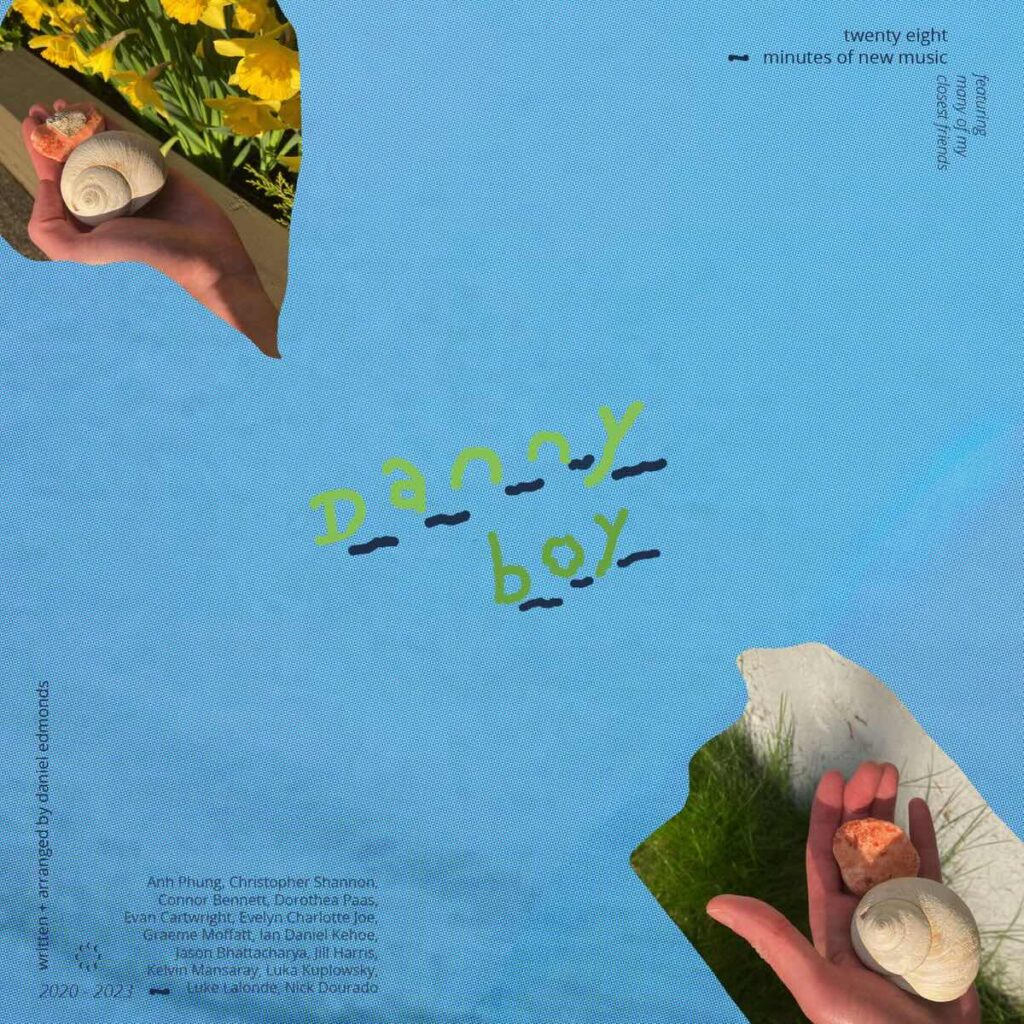
Released on Sept. 22, 2023, Danny Boy by Hamilton artist and musician Dan Edmonds feels like the kind of record that almost slips through the cracks of the modern music landscape entirely. In an era where indie musicians often sharpen every edge for maximum digital content impact, Danny Boy moves in the opposite direction: softer, slower, blurrier, more fragile, more free, more paint, less paint, more and less at the same time. It’s art!
What makes the record quietly remarkable is the way Edmonds drifts deeper into jazz-inflected folk and ambient chamber pop more than he ever has, using silence and space as compositional tools rather than empty gaps waiting to be filled. The album often feels suspended in stillness. Brushes skim softly across percussion, pianos and woodwinds dissolve into tape haze, and harmonies arrive like half-remembered conversations from another room.
The arrangements feel instinctual and unfixed, as though the musicians simply followed whichever sound best served the emotional temperature of the song at that exact moment. That artistic looseness becomes part of the album’s emotional architecture. Instead of polished precision, Edmonds prioritizes atmosphere, texture, and the accidental beauty of musicians listening closely to one another in real time.
The collaborative cast surrounding Edmonds, including Luka Kuplowsky and Dorothea Paas, gives the record its communal warmth. Their presence never overwhelms the material, but subtly expands it outward. On “All Things Will,” one of the album’s standouts, the interplay between voices and instrumentation creates a kind of floating emotional suspension that recalls the intimacy of late-night jazz records and softly psychedelic folk sessions alike. The instrumental track “Between Time” is another example of that, as the moods move with patience, carried along by a soft Wurli-piano and talkative saxophone call and response with distant percussion, and even some distant bird noises as well. Almost like it was being tracked in someone's living room with the windows open to let the Spring breeze in as a band member in spirit.
There are moments here that evoke Nick Drake, the hushed precision of Kings of Convenience, or even the genre-fluid sophistication of BADBADNOTGOOD, but Edmonds never sounds derivative. His songwriting has matured from his early songwriting days in his teenage alt-folk rock band Harlan Pepper, into something understated and deeply poetic. Danny Boy exists somewhere between psych-folk sketchbook, ambient slowcore meditation, and a communal living-room improv jazz session.
What lingers after Danny Boy ends is its remarkable lack of pretension. Edmonds is documenting his fleeting emotional states with patience and restraint, allowing the songs to remain imperfect, unresolved, and human. The result is an album that reveals its depth slowly, almost accidentally.
RIYL: Destroyer, Robert Wyatt, Andy Shauf, Devendra Banhart, Nick Drake, Luka Kuplowsky, Arthur Russell, yacht jazz textures, experimental folk, soft-focus chamber pop.
Listen on: Bandcamp or Apple Music