






A new home for Linus the cello
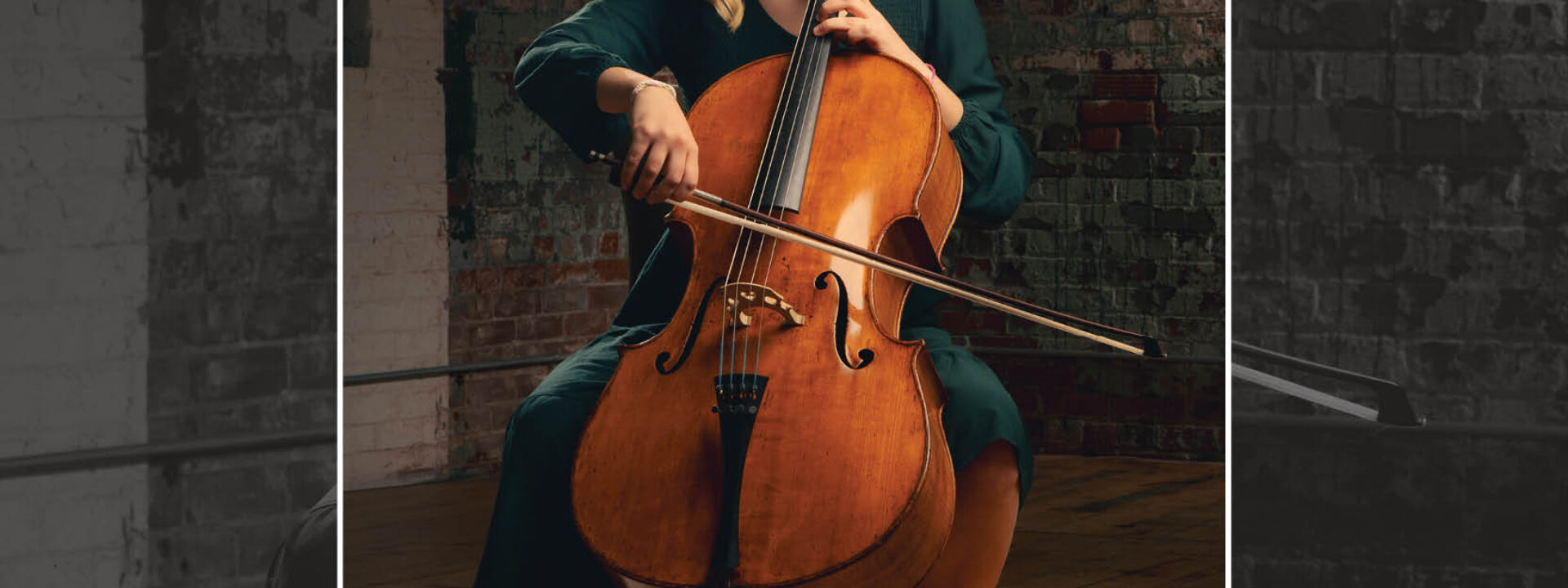
A devastating accident means John Dvořák can no longer play his beloved instrument, so he donated it to the Hamilton Youth Philharmonic Orchestra, where he once played.
When a devastating bicycle accident left John Dvořák with a spinal cord industry that meant he could no longer play the cello, he searched for a new home for his instrument, lovingly named Linus.
Dvořák, who comes from a highly accomplished musical family that has deep ties to Hamilton, found a perfect new home at the Hamilton Youth Philharmonic Orchestra.
Dvořák is the son of well-known violinist and teacher Marta Hidy and the great-great-great nephew of famed composer Antonin Dvořák.
His parents, both professional musicians in Budapest, escaped Hungary during the 1956 revolution against the Soviet Union. They fled on New Year’s Eve, travelling through deep snow with a small group of refugees who were met by the Red Cross and shepherded to Vienna.
Though that city was a flourishing musical city, Dvořák’s parents wanted to get as far away from the Soviet Union as they could. While waiting for a visa housed in empty prison cells, one refugee announced that he had received an American visa and had a Canadian one he would no longer be using. Dvořák’s father, Antal Dvořák, said he would take it.
“So it was by chance that Canada became a new home,” Dvořák says in an email exchange with HAMILTON CITY Magazine.
The family arrived by a ship to Halifax and was then sent to Winnipeg. Eventually, Hidy became assistant concert master of the Winnipeg Symphony Orchestra Antal Dvořák earned a place in the trombone section. The couple also played in the CBC Radio Orchestra, which launched Hidy’s national career as a soloist. After performing Bartok’s violin concerto for the Toronto Symphony Orchestra, then HPO conductor Lee Hepner became aware of Hidy.
Hepner was also chair of a newly emerging music department at McMaster University, and in 1965 invited Hidy to join the HPO as concertmaster and become a professor at the university. Antal Dvořák also joined the HPO, playing double bass.
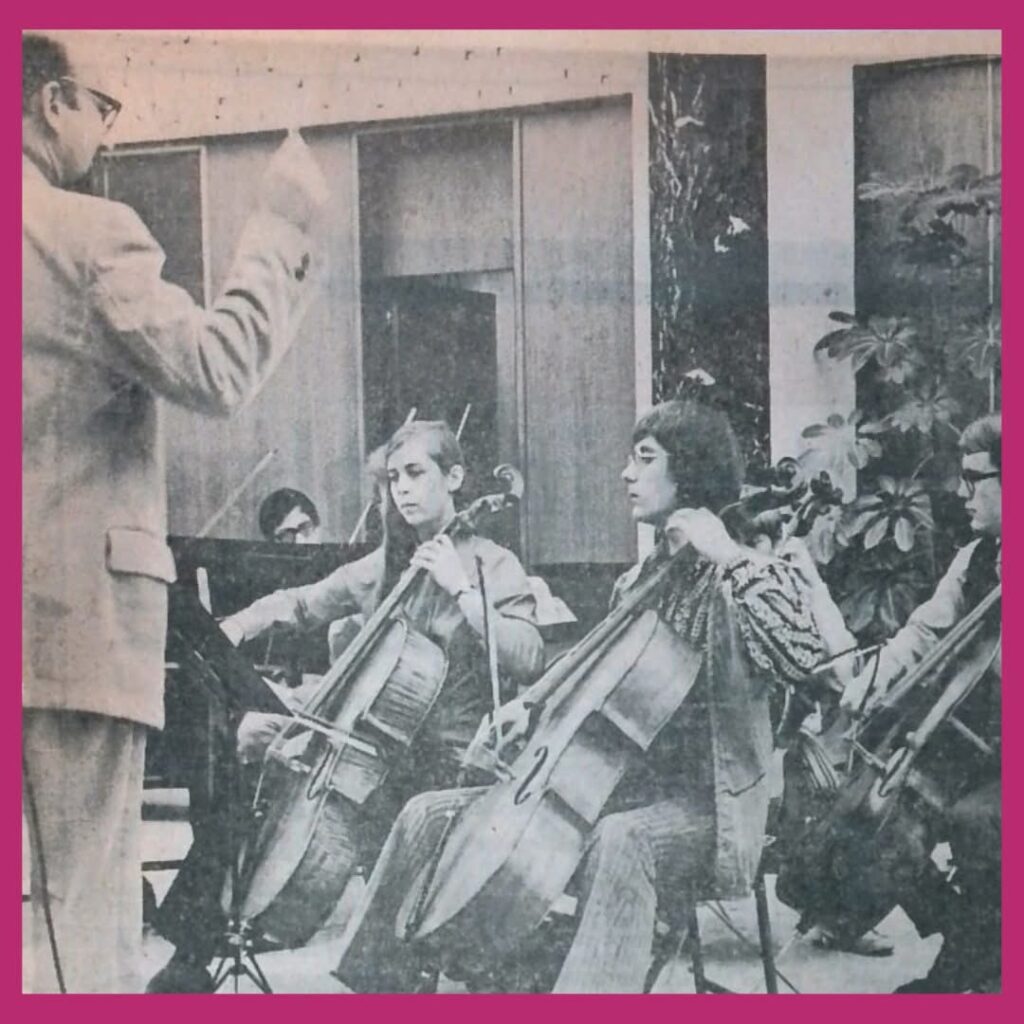
Dvořák and his sister Marta, a violinist like her mother, both joined the Hamilton Philharmonic Youth Orchestra in its first year. Dvořák eventually became principal cellist and he had several opportunities to play with the HPO, performing alongside his parents.
One memory that stands out was a concert in which Dvorak was able to play with both his parents, and his grandmother, a violinist visiting from Budapest. (She eventually moved to Hamilton and joined the HPO, too).
“Three generations. It was blissful,” Dvořák wrote. His mother performed a Mendelssohn violin concerto that night.
Linus came into Dvořák’s life by chance.
His mother was searching for a full-size cello for him, when one of the HPO’s board members said she had a cello in her attic that she had inherited.
“It was love at first sight. Visually, the cello was beautiful, and its sound warm and magnificent. That cello stayed with me ever since.”
Dvořák moved to Toronto after graduating from McMaster University with a masters degree in sociology, finding work at CBC TV. He joined a community orchestra that eventually became Orchestra Toronto, where he spent 35 years as assistant principal cellist. He also played chamber music with several trios and quartets.
All the while, Linus was with him.
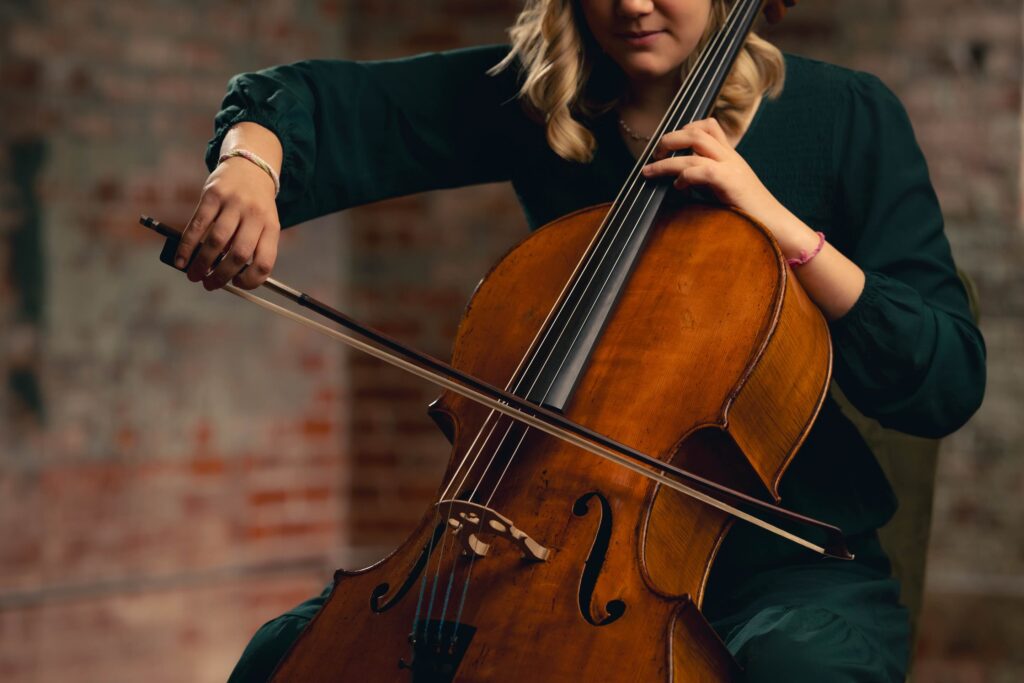
When Dvořák had the instrument assessed and restored by Toronto’s Remenyi House of Music, he found it was a French Mirecourt violoncello and dated from about 1880.
But to Dvořák, the cello was much more than wood and strings.
“My cello was a companion, a faithful friend,” Dvořák told HCM. “A friend who gave me beauty, joy and solace for over 50 years. I loved to read Peanuts in The Hamilton Spectator. My favourite character was Linus. He carried a blanket with him for solace. One day it sparked in me the realization that my cello provided me companionship and solace.”
But Linus can no longer provide that to Dvořák.
On a warm and sunny April Saturday five years ago, he was cycling down the Humber River ravine to the lakefront. When he reached the lakefront bike trail heading west, he relaxed, and was enjoying “the beauty of the sunshine glittering on the water. Then all of a sudden, bang. I hit something.”
Pedestrians walking their dogs saw him strike a barrierl. He catapulted over his bike and landed on his back. The bystanders called an ambulance and Dvořák’s wife Martha. Before he was taken into an operating room at St. Michael’s Hospital to have pins and bolts inserted in his neck, a surgeon told him he would never walk again.
“In a blink of an eye, my life changed. In the blink of an eye, I became a tetraplegic with a spinal injury in my neck. The neurons necessary for my legs to walk and for my hands to play were no longer connecting my brain with the necessary muscles. Luckily, I was labelled as an incomplete tetraplegic because it wasn't a full break. I've spent five years now with physiotherapists who have worked with me to recover. I am now able to stand and have short walks with a walker. That surgeon was wrong. But I could no longer play with Linus. It was a day when my music died.”
Dvořák lost so much that day, including his driver’s licence, and his ability to travel. He had to relearn how to feed himself.
“I grieved. I mourned. But I continued to recover. I was determined to see the beauty of my life and be grateful for all my blessings. Of course, I knew that musical instruments need to be taken care of and played. Deep down, I knew that I would have to find Linus a new home.”
When thinking about where Linus should go, Dvořák knew he wanted to keep in touch with whoever would “adopt him” and that he would go to a long-term home. That wouldn’t be guaranteed with a private sale.
Dvořák considered donating it to the University of Toronto’s Faculty of Music and a cellist friend, Mary-Katherine Finch, is a professor there who got the ball rolling. But Finch also plays frequently with the HPO and had the idea that the cello could go to the HYPO.
When she talked to Megan Benjafield, HPO music education manager and HPYO general manager, about Linus, she learned that Benjafield had taken violin lessons with Marta Hidy.
“It was the perfect place for Linus, to return to the HPYO and HPO where we played together,” Dvořák says of his family. When he learned his donation was accepted, “I was overcome with joy in my heart and tears in my eyes.”
When Linus was fully restored before the donation, a special engraving was added to the back of the cello: Linus, a gift of John Dvořák.
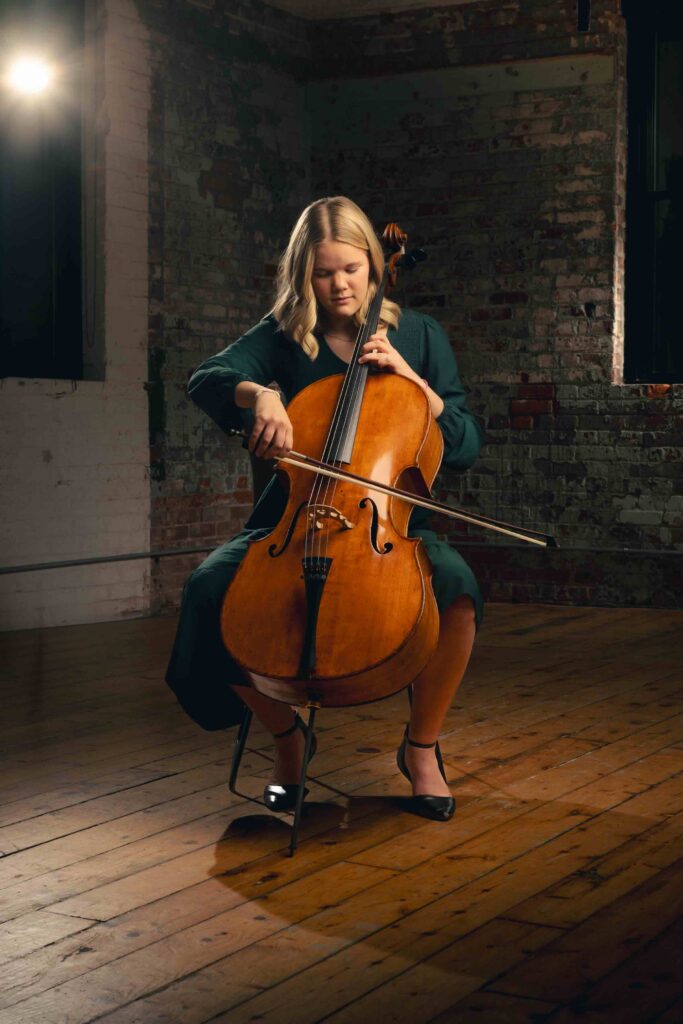
That gift will be played by the principal cellist for as long as they remain in the HYPO.
Dvořák hopes the recipient will be inspired by Linus to practise more and play more chamber music.
“I think the deserved receiver of Linus will fall in love with him. His beautiful colour. His beautiful sound.”
Eighteen-year-old cellist Jillian deBlieck feels lucky to be the first to play Linus.
deBlieck, a Brantford resident who attends a private high school in Copetown, has played in the HYPO since she was eight and is among the longest-standing musicians in the ensemble.
“I love Linus so much,” she says. “It's so wonderful to play. It's very responsive compared to my other cello. If I stroke my bow on the string, it comes out super colourful. It's really warm, too. And it has a rich tone, which is really fun because I don't normally get that. I feel like youth don't really get this good quality instrument, so it's cool to be able to play it.”
deBlieck has shared some email conversations with Dvořák. He’s not able to attend an HYPO concert due to challenges with travelling with his electric wheelchair. She is honoured to play Linus.
“It gives me confidence. I find it's less scary to play in front of other people because I just want to show everybody how amazing this cello is.”