
FOR THE LOVE OF HAMILTON
This regular feature highlights people from all walks of life who have embraced Hamilton as their new home.
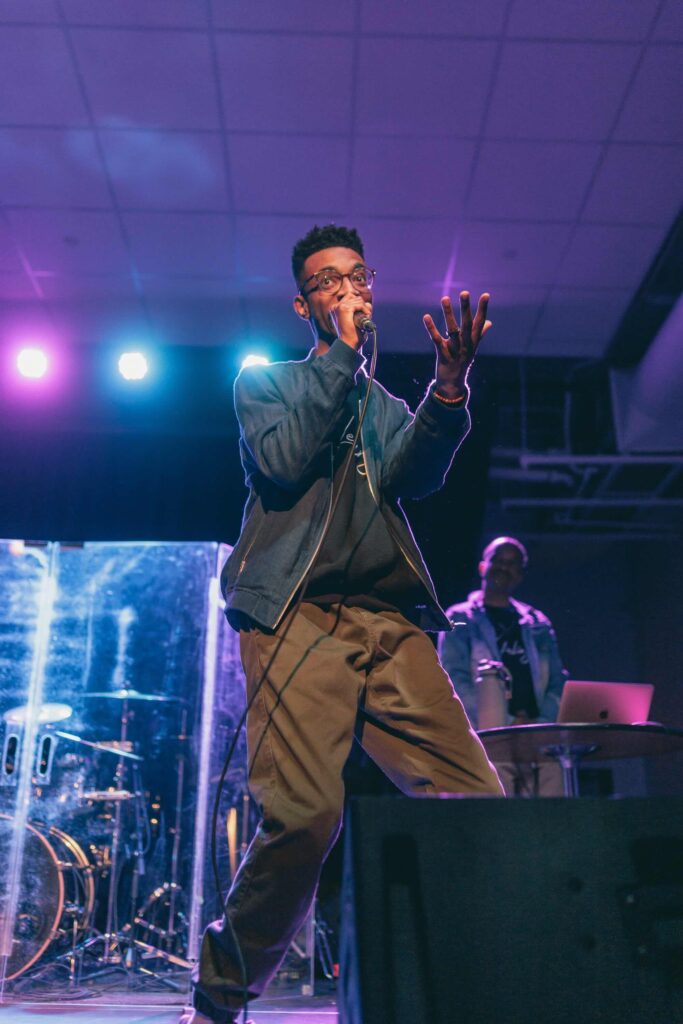
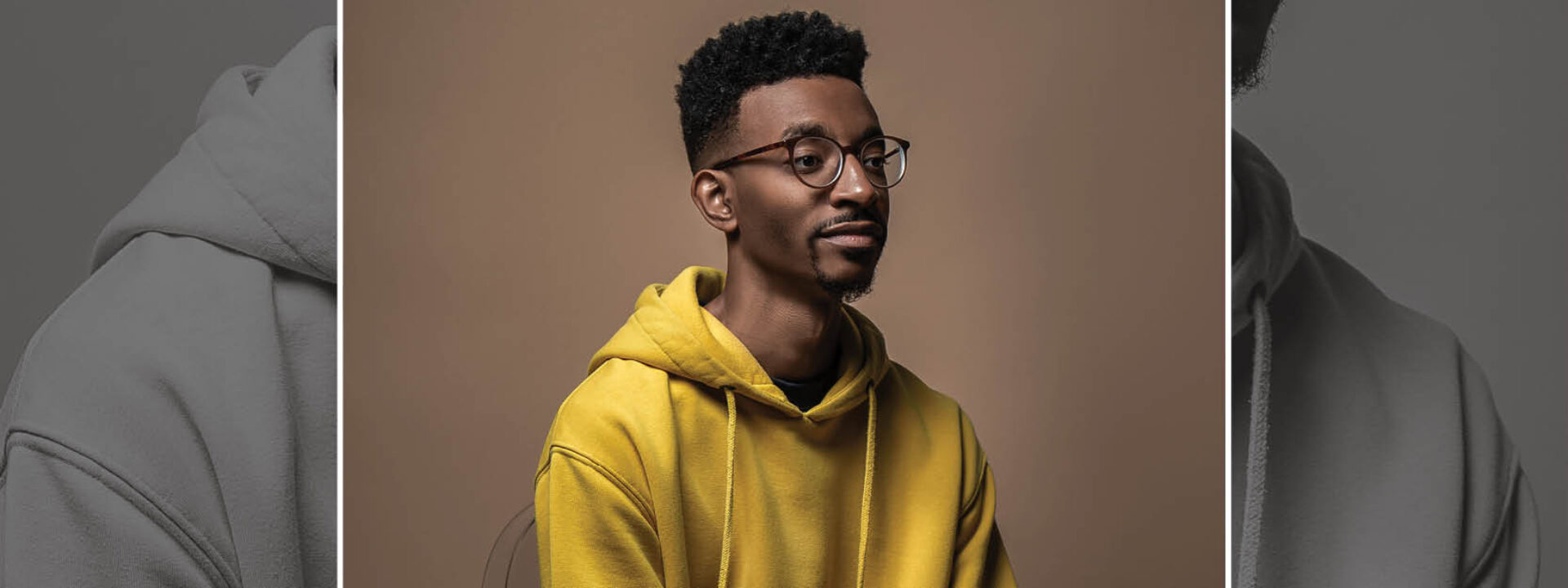
JORDAN HEYWOOD (he/him) is a Hamilton-based social worker and hip-hop artist who performs under the stage name Jaye Woods. Born and raised in Mississauga as the youngest child of Caribbean immigrants, his curiousity about human emotion led him to study social work at Toronto Metropolitan University (BSW) and York University (MSW), where he researched lyric-writing as a practice for collective wellness. In 2019, he co-founded Enliven Counselling with his wife and fellow therapist Amanda, offering body-oriented psychotherapy for adults seeking to reclaim self-trust after difficult early-life experiences. Alongside his clinical work, Jordan has been performing hip-hop for over a decade, creating reflective, soulful music that champions sensitivity, vulnerability, and healing. Whether through therapy or art, his work invites people to slow down, feel deeply, and reconnect with the goodness of their humanity.
When did you move to Hamilton and what brought you here?
Hamilton has been home since July 2022. I can't believe it's coming up to four years. It feels new, but it also feels like it's always been home at the same time, which is really weird. So I moved here with my wife from Mississauga, which is where I was born and raised, and we were living with my family for a while during COVID. So we wanted to have our own space, of course, and as first-time homebuyers, Hamilton had more affordability than Mississauga and more Toronto-area spaces. But we also wanted to be some place that felt like it had some lively community life to it. We wanted to be someplace with access to nature and hiking trails, and also have some relative proximity to our family in Mississauga, Brampton, Milton, and so Hamilton ticked our boxes. We've become ‘Hammer evangelists’ to all of our friends and family. We are constantly telling people to move out here, because we really love it here. Since day one, it's felt like that.
What neighborhood do you live in, and why did you choose it?
We are in Corktown. We chose it because we loved the closeness to downtown Hamilton life, all the shops and restaurants and just spaces for events, and also the closeness to hiking trails and nature. There's a trail right behind our house. The steps up the Mountain, up the escarpment, are like a five-minute walk away. It feels like just the right, the perfect balance between the things we want to experience. And also part of it was just happenstance. We showed up to an open house on the wrong day. We got the dates mixed up. The homeowner invited us in, offered us soup out of his freezer, and we bonded over our shared Caribbean heritage. He knocked the price down by $15,000 for us. And we're like, OK, if this is what this neighborhood and people out here are like, let's go.
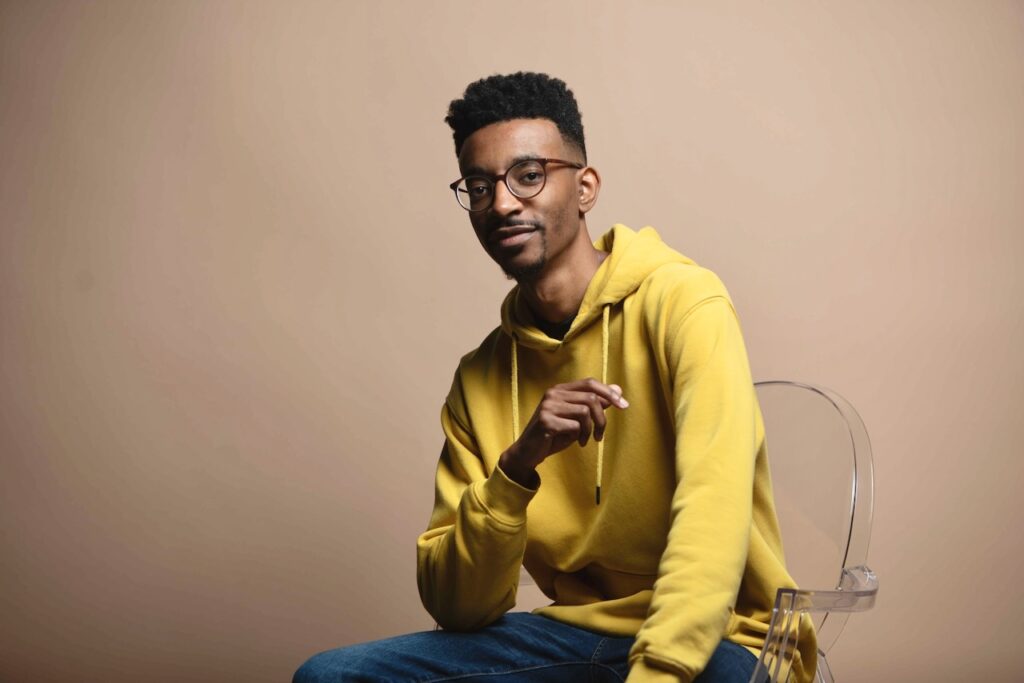
PHOTO: Sheldon Steele, Zary Photography
What was your journey to becoming a therapist?
From a young age, I was always a sensitive guy, felt things deeply, was fascinated by emotions and relationship dynamics, and I grew up as the youngest kid in a Caribbean household to parents who were loving and caring and also didn't quite have the lens or the resources or the examples in their own life on how to work through emotions and conflict and just hard things in a way that was helpful for me. So from high school, I gravitated towards social work, or psychology, as a field I was interested in. Every aptitude test I ever took, or careers class pointed me in that direction. So I studied my bachelor of social work at TMU (Toronto Metropolitan University) when it was Ryerson.
And then I worked for a few years at the Yonge Street Mission in Toronto with street-involved youth doing employment counselling, and I realized that I wanted to sit down for longer than 30 minutes and help someone with their resumé. I actually wanted to support them in making sense of their life and their story and their identity and their patterns and their feelings and needs, and so I did my masters of social work at York in 2018. I did a great internship that really just taught me a lot about the craft of psychotherapy.
You and your wife are in practice together. How did that happen?
We actually met at that internship. We were candidates for the internship, competing against each other in the same room in a group interview, and we both got hired and worked there for the internship, and then beyond that. And in 2019 we launched our practice Enliven Counselling Services. We work with aspiring cycle-breakers who come from families that modeled emotional suppression, and are wanting to break that cycle, learn how to feel their feelings, learn how to tap into their own needs and their own voice. We work with folks across Ontario, virtually. And then just one day a week, I rent an office on James Street where I see folks in person.
What qualities do you bring to your work as a therapist?
I hope that my clients experience me as a curious and empathic guide in their journey who can see the best in them when it's hard to see it in themselves. I'm someone who's comfortable not having all the answers, because I really trust the process that unfolds when a person feels genuinely seen. I believe people have a lot of innate wisdom and tools for their own healing journey that are unlocked and discovered when there’s safe enough space to go inside and find them.
How did your music career come to be?
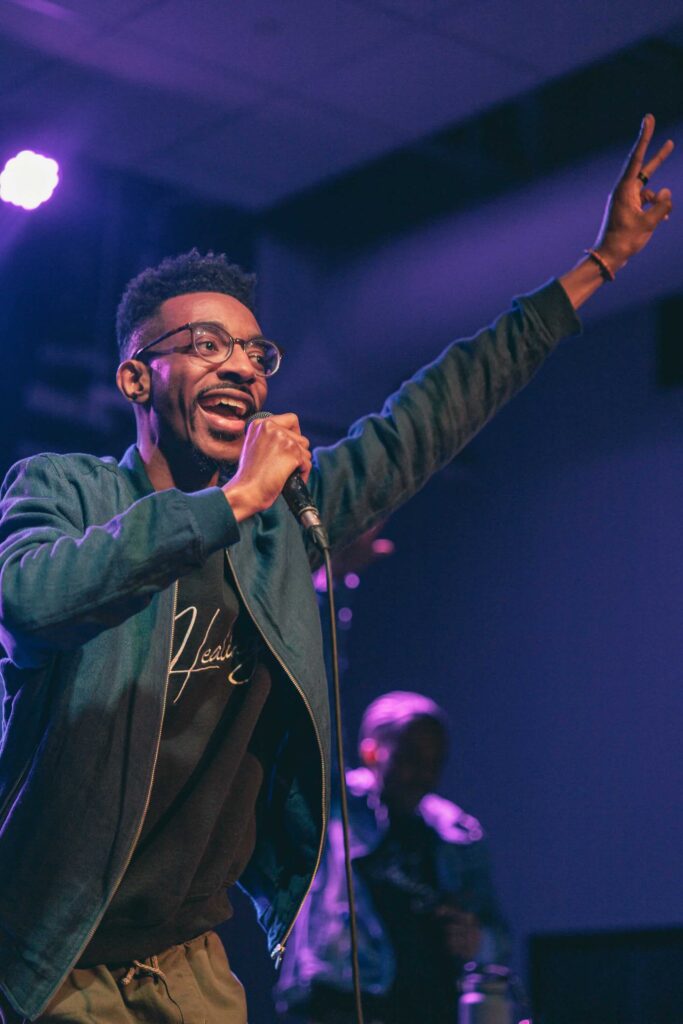
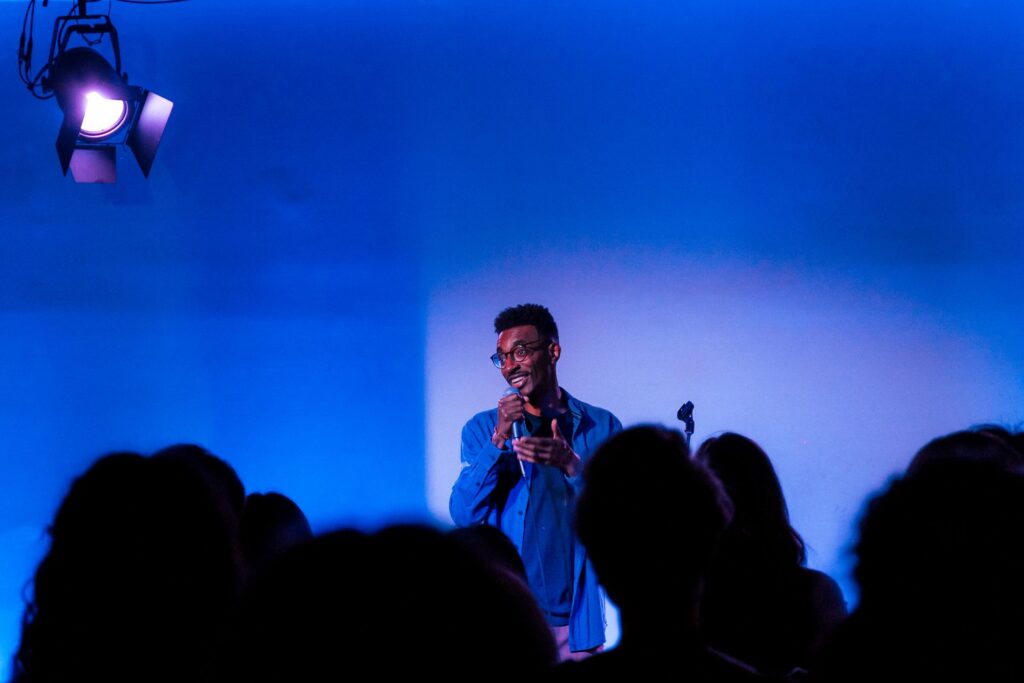
I perform under the name Jaye Woods. I make soulful hip-hop that explores emotions and healing and community care. I've been making music since I was 16, which was about the time I discovered my interest in the field of psychology and therapy. The therapy and the art have been two pedals on the same bicycle for me.
I spent a lot of years performing in churches under a different alias. And some more recent spiritual and creative shifts in my life led me to reset my artistry. This was about five years ago, and since then, I've been more intentionally synthesizing the art with the therapeutic framework that I hold. So, I like putting together live sets and recording music that feel like a conversation with friends that make space to celebrate vulnerability, that invite people to get in touch with their own stuff. And so that tends to land best in intimate venues and reflective spaces when it comes to the live portion of things.
What has been a musical highlight so far?
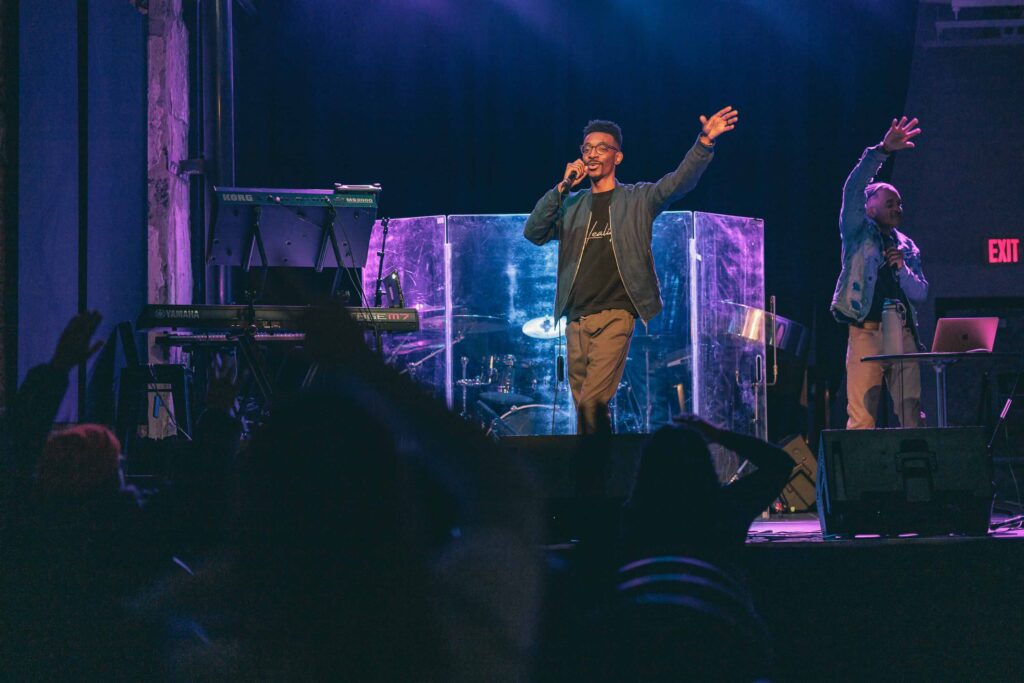
Definitely a huge highlight was opening for Shad, who is one of my hip-hop heroes for sure, at Bridgeworks just this past February. It was really cool to be able to go down the street from my home in this city that has helped me kind of rediscover and expand my artistry and open for an artist whose work has been a part of my journey from the start.
How does music complement your therapy?
I think that they complement each other in a lot of ways. I think the comfortability that I've developed over the years of being on stage and messing up and forgetting a lyric and rolling with it right, or making light of that, or turning that into a moment that has been something that's translated into the therapy room, where I feel pretty at ease at this point in my clinical career, not knowing exactly how things are going to unfold, but being able to freestyle with it. I’m thinking sometimes, how do we make art with this revelation you've just shared, or with these tears that are coming up? It’s just like a shift of tempo, or a key change.
Is Jaye Woods a different person than Jordan Heywood?
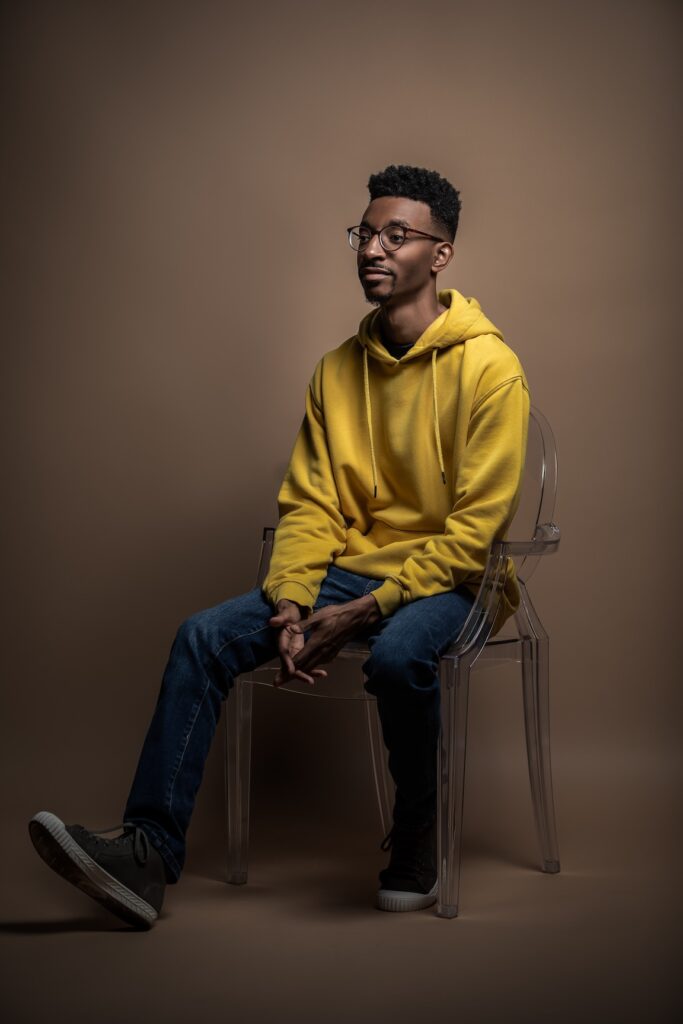
Truth be told, I like the name Jaye Woods because it feels like an artist's name. It’s a reworking of the letters of my name. It's a part of who I am. When I'm on a stage or I'm recording, yes, this is a true, honest reflection of Jordan, of who I am, what I value, the conversations I'm having with people in my life. Anyways, this is who I am, and also you're getting a very amplified expression of those things.
What did participating in the artist development program Blueprint offer to you?
When I started picking up my artistry with more intention, after the move to Hamilton, I told myself, I just want to keep the word try on the tip of my tongue. Try for opportunities. Try for things that might be a little uncomfortable and when I learned about Blueprint, it just struck me as something worth trying, and I have certainly experienced that. It’s been a huge boost to my career in terms of opportunities, for shows, for new connections, and I've also experienced it as a huge learning experience in terms of how I think about my artistry, how I think about releasing music, how I plan for a release, what I wear on stage that conveys something about what I represent.
There are so many elements of artistry that I hadn't thought about with depth before, and this program gave a really clear breakdown, and a lot of mentorship in those areas, in ways that have really made a difference in my career.
What is the greatest joy in your work?
Witnessing and getting to contribute to somebody loving themselves more fully and getting to witness the signs of that. So after a show, when somebody tells me, ‘I had to go to the washroom and cry because that song of yours reminded me of my kid self and all the needs that weren't met for them.’ That means infinitely more to me than somebody saying I have a sick flow, which I hope I do. But knowing that I was able to contribute something to this person's journey of loving themselves more is the richest gift to me. And likewise in therapy, when I witness it before my eyes, somebody acknowledging feelings or needs that have existed for their whole life that they've been pushing down to be accepted by a parent or a partner. That's the coolest thing for me to witness.
What's the greatest challenge?
Hands down, it’s managing my own capacity. I have a song called “Spoon Theory” that talks about the spoon theory as popularized by Christine Miserandino. She's a writer from the U.S. who lives with lupus. The concept of spoon theory is that those of us who live with chronic physical or mental health challenges have to do extra work, to ration our energy to get through each day just doing regular human things like eating, and showing up to work, and getting through daily routines. I live with a pretty constant fatigue, a pretty constant swing from overwhelm to fatigue. I haven't yet been diagnosed with ADHD, but I'm pretty sure I've been living with it my whole life, and it makes mundane tasks feel like a mountain to climb. A lot of days, I get easily overwhelmed with communication and emails and phone calls with family and friends and just doing the things that so-called adults are supposed to do. And so preparing a set for shows, doing any form of public-facing work, beyond my one-to-one client work, and writing at home, those things that take place outside of that are extremely taxing for my system. It takes a lot to prepare and it takes a lot to recover afterwards.
It's not something I had awareness of or language for until my later 20s, so I lived a lot of my life kind of anxiously trying to keep up with what felt like just unending overwhelm and demand. I was working two jobs and volunteering at the church I used to go to for 10 hours a week, and playing two or three shows every week, and connecting with friends and showing up for family. And I think the biggest game changer was 2022, right before moving to Hamilton, my diagnosis of ulcerative colitis. In the middle of a frantic week of public speaking events and a full schedule of sessions, and not eating or sleeping enough, my gut started bleeding internally. I was hospitalized for 10 days, diagnosed with this chronic condition that will be with me for the rest of my life, which, from my understanding, is activated by nervous system dysregulation. And so since then, and having to pause and take a couple of months off work, I've been acutely mindful of how I'm doing, how far I'm pushing past my body's actual threshold. I’m making adjustments, saying no to things, which is still a challenge, but something I'm getting better at.
It’s the hypocrisy of therapists. We devote our entire lives to supporting other people's well-being and encouraging them to care of themselves and making that a priority. And then we book our days full of seven or eight sessions without stopping for a meal or going outside or taking a moment to breathe, right?
Who inspires you?
People who don't apologize for their own existence and who aren't afraid to express themselves. And of course, that doesn't mean expressing aggressively and steamrolling over other people, But being oneself fully, unabashedly, while still having empathy and compassion for others. I'm a huge fan of the work of Alok Menon. They're a poet, artist, comedian, trans activist. I really enjoy everything that comes out of their mouth. I enjoy the work of James Baldwin. I’m a huge fan of Shad and of TOBi.
What’s your take on Hamilton now that you have some roots here?
A lot of people who live here have a lot of love for the city. People who live here enjoy living here and want to live here. They don't just happen to be here. I love the fact that I could be in line to buy a donut, and the person in front of me will strike up a whole conversation out of thin air about their day and be genuinely curious about mine. That's not something I'm used to experiencing in Mississauga or Toronto, but it's something that happens so much in Hamilton. There's a kind of human, a beautiful, messy human, grittiness in Hamilton that in my experience, is rare in the GTA.
I also see a lot of art and desire for collaboration among creatives out here that's represented in the communities like the one that I see the Blueprint cultivating, where artists work on songs together, play shows together, hang out, just because they like each other. It's something that I see with (songwriters collective) the Shaky Knees Club, which I've had the privilege of being part of as well. These are artists creating space just because they want to be with other artists and vulnerably share unfinished works together and put on a show that the community really comes out to support, no matter how successful or novice those artists might be.
And I also realize that the city is what you make it, which I suppose is true for anywhere. I do hear some people say that, ‘Oh, the music scene is dead out here,’ or they can't find community.
So even in my experience of all this rich community and collaboration and people open to connection, I recognize that there's a lot of people who say they don't see that at all. So maybe I'm just privileged to come across the right people.
How would you describe this city as a place for someone making music?
Supportive, communal, ripe. I suppose this could be said for any aspect of life in the city, but I only know it through my lens, through my experience. I know there are people in different pockets and different like subsets of the music scene that I haven't been in the same circles with, but the circles I've encountered have been with people who create art for the love of it
and want to see, want to see the art and want to see the arts community flourish more than they want to just win on an individual level, kind of crab bucket style. I don't see that here. It almost wouldn't make sense in the infrastructure of the Hamilton scene as I know it. I've had the pleasure of being invited into studio sessions with people who don't know me at all, but just want to connect. I'm seeing shows in bookstores and cafés and venues that would be unusual in other places, but there's such a heart to the scene here, it really feels like the music scene, as I've witnessed, is part of the heartbeat of the city. So, if you’re choosing to be part of that scene and plug into the community rather than just complete, if that’s your mindset, they will thrive here.
Favourite hangout in Hamilton?
Bayfront Park. There is always something going on there.
What's your favourite meal in Hamilton?
All right, this might be a deep cut, but I'm going with the pad see ew at Vanh’s Asian Gourmet. It used to be Mimi's. It changed management but they kept the recipe. It's still fire. Shout out to Mimi.
Is there an Hamilton arts or cultural event that you look most forward to attending?
Art Crawl. I don't get out as much as I'd like to, but every time I do, it's the most beautiful chaos. Yes, it's just so it's just so human. People selling their cool stuff, and playing music, and seeing the community show up just to participate, to support, to purchase, to be together. It's so Hamilton. I love it.
What do you like to do in your spare time?
Most days, just vibing on the couch with my wife and our cat, debriefing the day, enjoying each other's company. Other times, I might join a board games night with friends or I might sink a few hours into whichever Legend of Zelda game I'm playing at the time. And then sleep.
What's Hamilton's best kept secret?
I will give two very different answers. Number one is Smokey Hollow in Waterdown is the best trail for hiking. It has a beautiful waterfall right at the front. And then really exciting trails. I don't know enough people who are aware of that as a hiking spot. And my other answer is just the deep bag of creative talent that exists in this city. There are artists you've never heard of who would blow your mind, or who would be A-list award-winning artists given the right opportunities and resources.
What does Hamilton need more of?
Common humanity, which might sound like a contradiction, given a lot that I've already said, but I'm thinking about the ways our City, through infrastructure and policies, can really dehumanize houseless folks. I think that's one area that we're really lacking in integrity when it comes to the kind of values I know a lot of us want to embody. We show up for each other in so many ways, but when somebody doesn't have resources to maintain safety and shelter and nourishment and dignity, we don't show up in ways that we could.
What does Hamilton need less of?
Union busting. Democracy was my favourite, and you better believe I'm still bitter about that.
What’s the one thing you brag about Hamilton to outsiders?
The aliveness of the city; the palpable aliveness in the city that doesn't come at the cost of over stimulation, constant heavy traffic and $40 parking. Everything you could want is here and living close to downtown, there's so much within walking distance. I can get to a comedy club, a huge show at the Coliseum or walk to a tiny little book bookstore like Upper Room, or dozens of coffee shops. It's just so cool to have access to all of that, without having to drive on a Gardiner or a 401 and just go through a whole day of headache. It's so accessible.