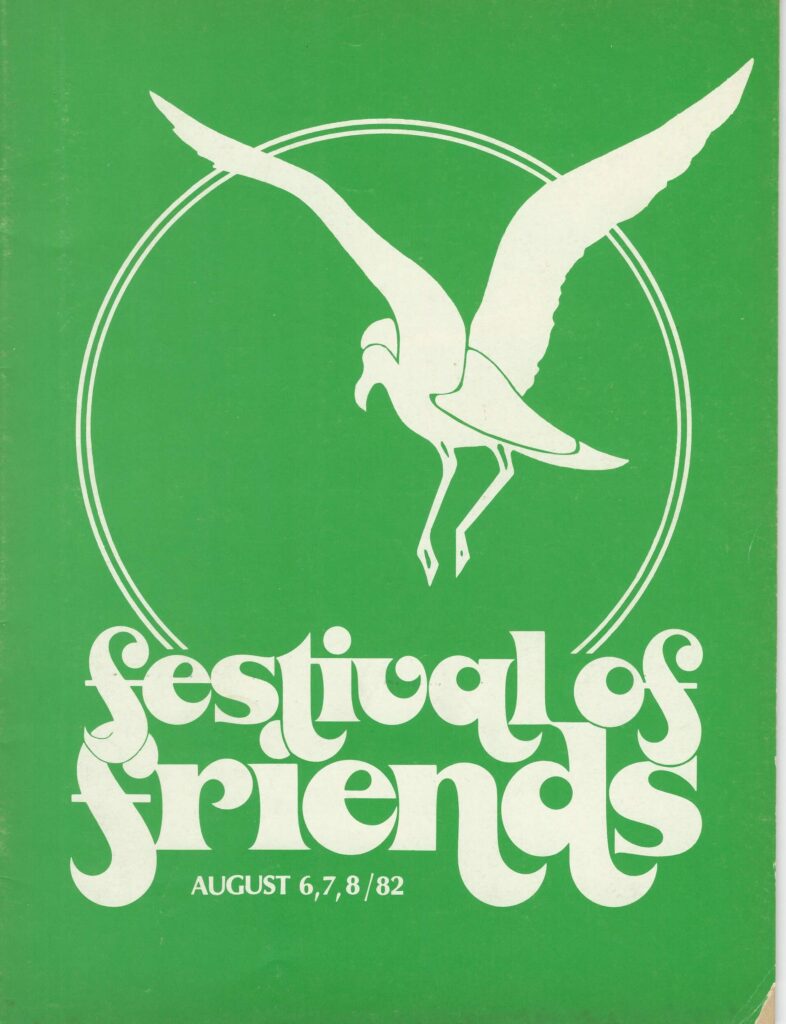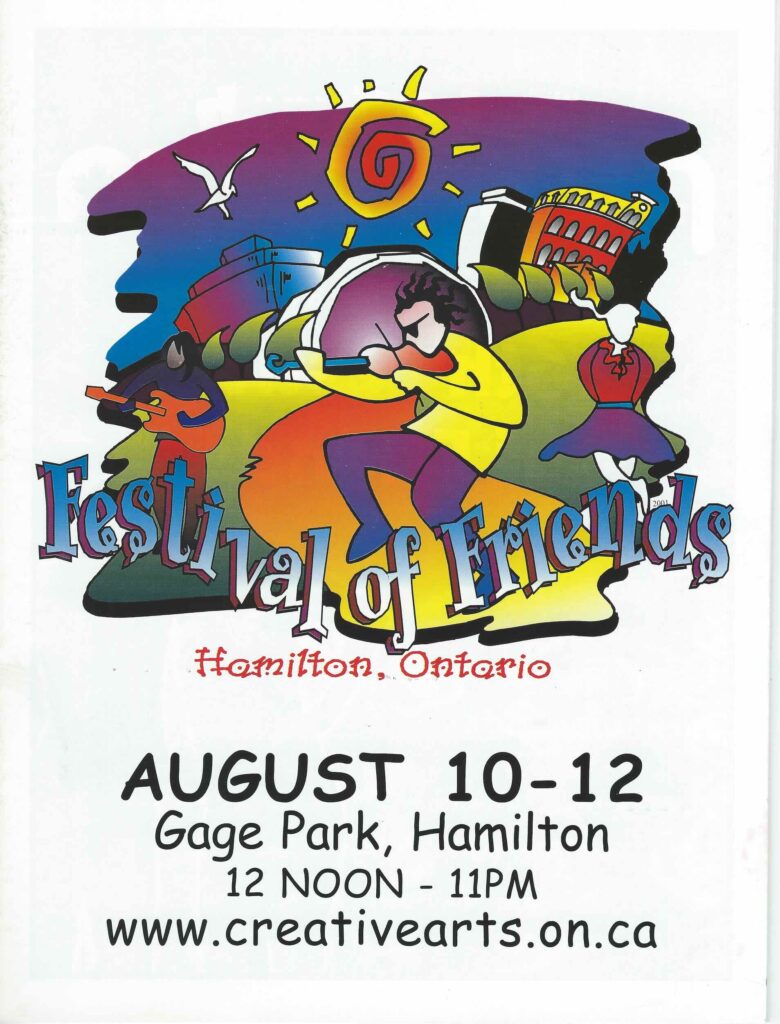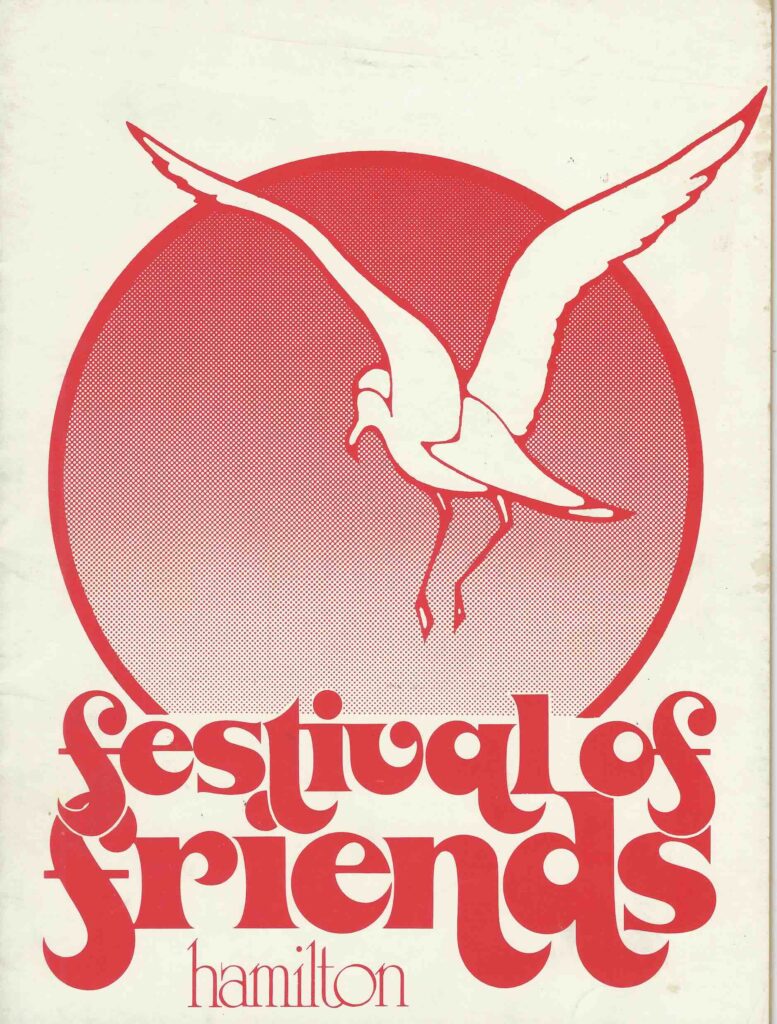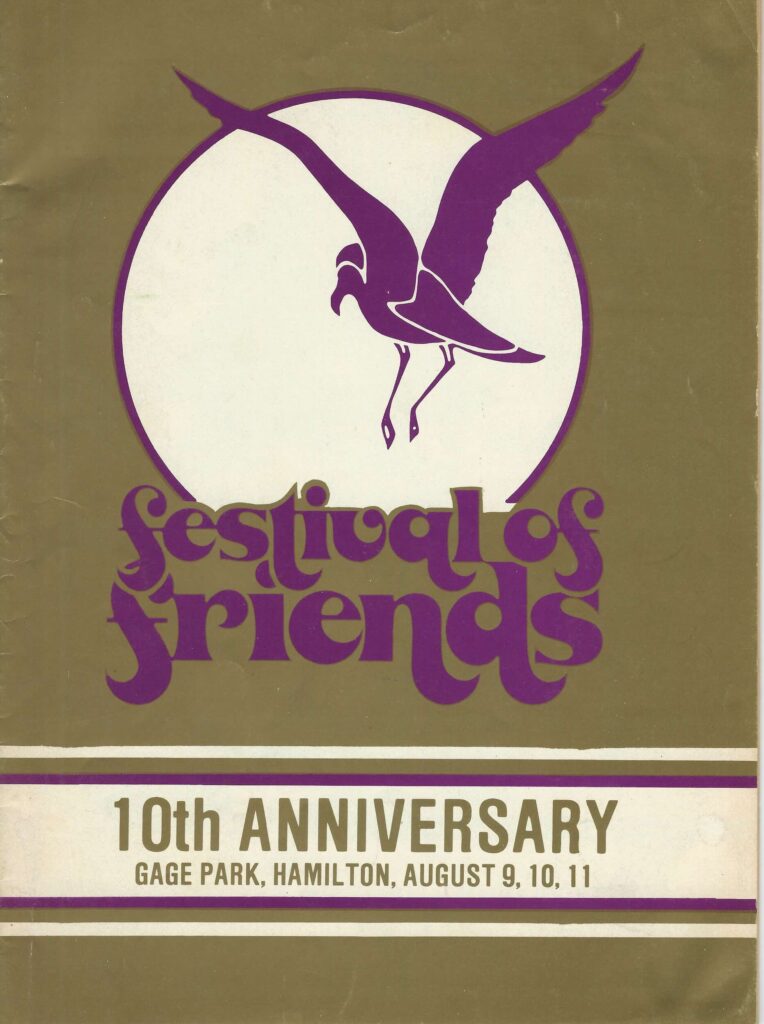


Festival of Friends at 50
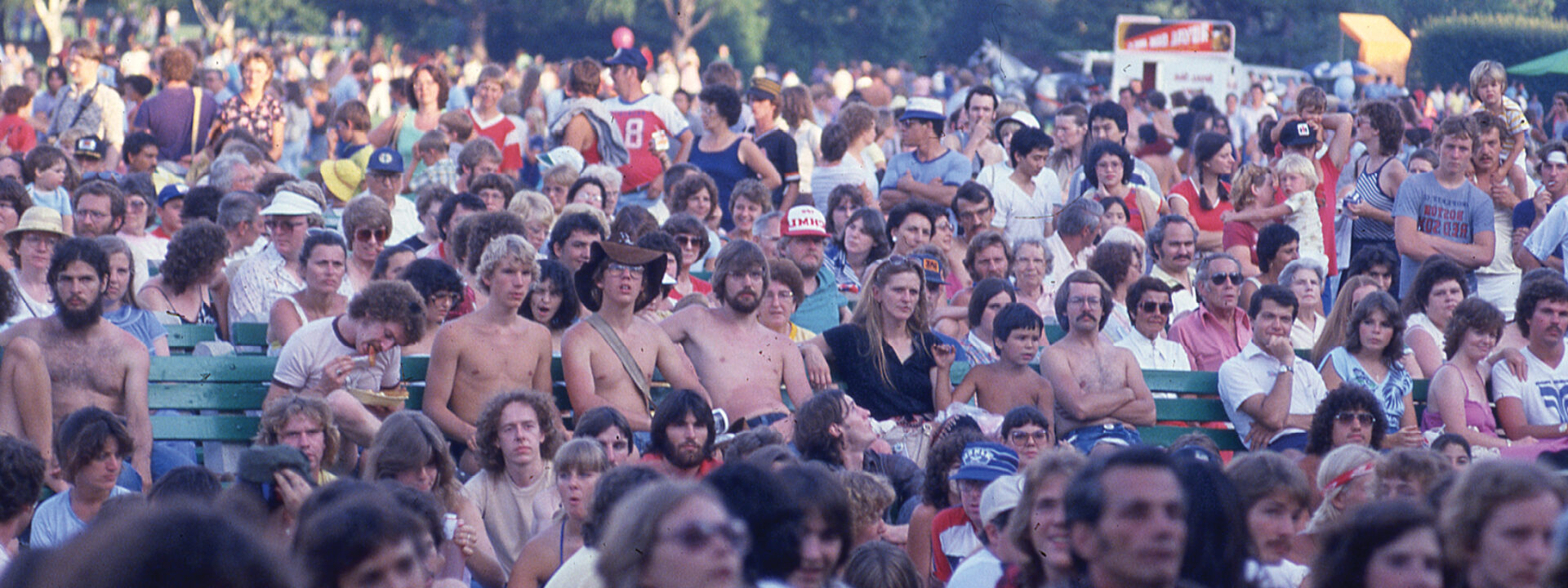
The iconic Festival of Friends, a Hamilton summer music tradition, celebrates a half-century of harmonies by looking back at what makes a lasting and much-loved legacy.
For the Festival of Friends, the magic is the moments.
From unforgettable musical acts to iconic artists returning year after year, the Festival of Friends is a sacred Hamilton tradition. Whether trying to smash the record for number of guitarists strumming “Smoke on the Water” or inspiring 40,000 fans to dance out “Y-M-C-A” with the Village People, the milestones have left an indelible impression. And they all set the stage for this year’s 50th anniversary, as a chance to celebrate the festival and commemorate all those who have defined its history.
“The stories that come out of this event, that’s the key,” says festival director Rob Rakoczy. He recalls board members, volunteers, artists, and countless attendees whose first festival left them with lasting memories. “For some,” he says, “they had no money growing up, but their grandma took them to the festival when they were like four years old, and it was the greatest moment because it really put music into their brain.”
If Hamilton is a music city, then the Festival of Friends is its beating heart.
“We try to keep it about the music,” says Rackozy. And those roots remain a core philosophy. “Our origin story is all about bringing the music to people for free.”
SEE OUR FESTIVAL OF FRIENDS ARCHIVE PHOTO GALLERY HERE!
SEE OUR FESTIVAL OF FRIENDS 2026 PHOTO GALLERY HERE!
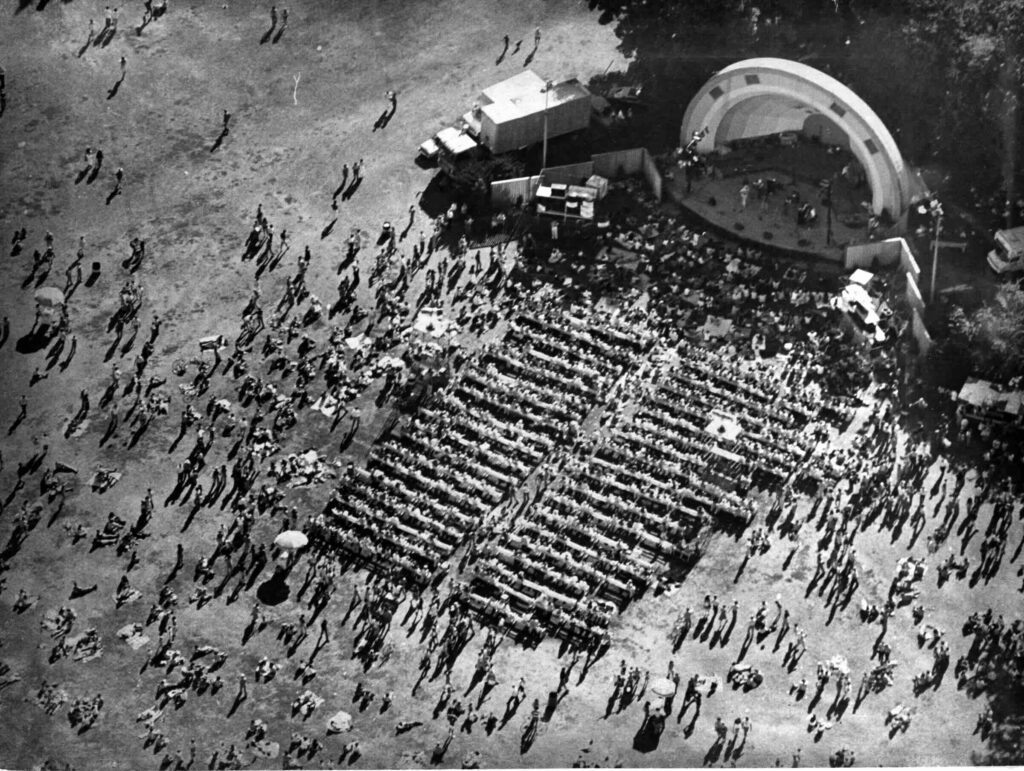
PHOTO: Festival of Friends archive
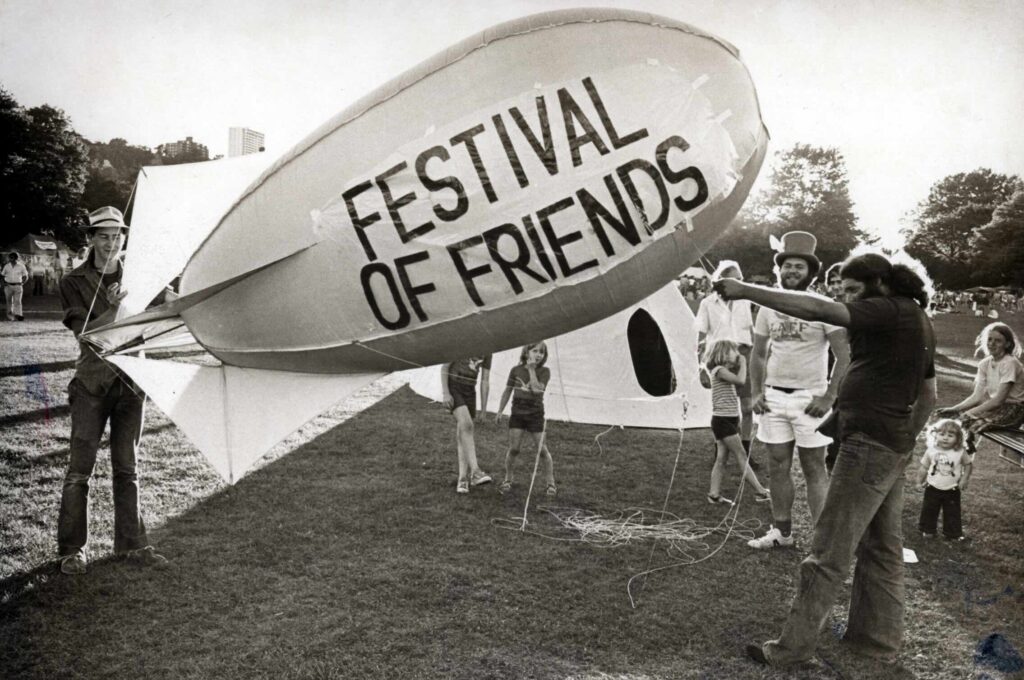
As origin heroes go, it’s hard to think of anyone more renowned than Festival of Friends founder Bill Powell. A prolific Hamilton artist and cultural icon, Powell managed a handful of musicians including Tom Wilson of Junkhouse and Blackie and the Rodeo Kings. His founding of the festival, said Wilson, “put the seed in Hamilton [and] we are all standing on his shoulders.” Powell's vision was all-Canadian. "We started looking at the top names," he told The Hamilton Spectator in 1976, "and came up with 85 acts that are just dynamite.”
That inaugural Festival of Friends was a roaring success … and it was free, as it has been ever since. Thousands came out to Gage Park to enjoy three days of country and folk music, despite tornado warnings and torrential rain. Featuring artists that included Sylvia Tyson, Willie P. Bennett, and Jesse Winchester, the festival hosted workshops, handcraft vendors, children's activities, theatre, and poetry. There were even impromptu jam sessions spilling into the now-defunct Delta Theatre once the festival closed for the night.
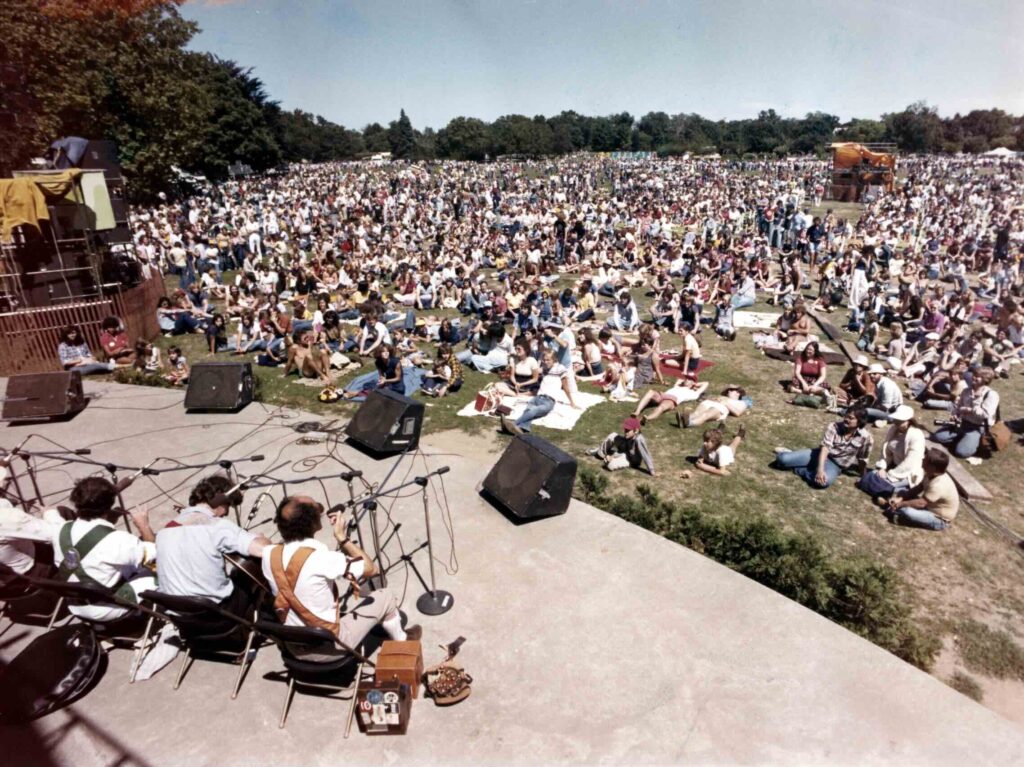
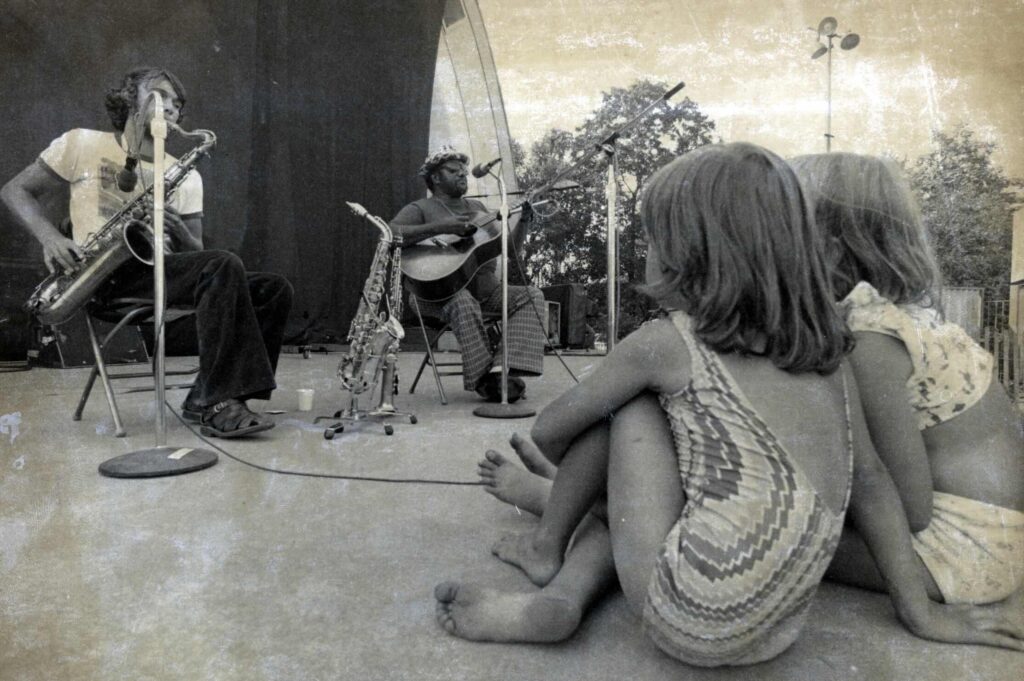
Retired Spectator music columnist Graham Rockingham remembers it like it was yesterday. “There were all these little stages around the park, and you just moved from stage to stage to see these musicians working together, passing the guitar. It was vibrant, lively, and fun.” Part of his love is rooted in the Gage Park venue. “The park was the vibe of the festival … it was part of the show.” Powell kept the festival there even as the event grew in size and status year after year.
The hometown appeal was also something that drew the many Hamilton artists who played there. Jon Harvey, of Monster Truck fame, remembers "staring out over a sea of people enjoying our music in our hometown.” And blues artist Alfie Smith grew up watching icons like Jackie Washington and Mose Scarlett play at the festival. "Later on," he says, "I shared the stage with them as an adult. That meant so much to me.”
When Powell retired in 2000, local arts promoter Loren Lieberman stepped up to run the festival. With a mixture of creative and business smarts, Lieberman was seen as a fresh face to move the event forward. True to form, he brought in a host of artists from outside of the festival’s folk roots, including The Nylons, Sass Jordan, Randy Bachman, and David Wilcox. And the expansion of acts brought other changes, such as the introduction of beer sales to assist in generating revenue as civic and government funding was scaled back.
Still, thanks in part to Lieberman’s push for corporate support, the festival thrived. "There's only one way for us to do a free concert with huge entertainment budgets,” he told The Spectator. Mindful of the financial struggles from the past two decades, Rakoczy admits, “Sponsorship is always hard. There’s this idea that tax money covers everything, but it’s only about a third of our budget.” The rest comes from sponsors, vendors, beer sales, and parking.
The festival made headlines for its Aug. 8, 2009 push to break the Guinness World Record for largest guitar ensemble. The 1,726 guitarists who gathered at Gage Park to strum the opening riff for "Smoke on the Water" set a Canadian record but fell 76 people short of the global mark.
But controversy was brewing. First, there was pushback about corporate logos on festival banners. But that paled in comparison to perhaps the most contentious change: the move from Gage Park to the Ancaster Fairgrounds in 2011. The fairgrounds had moved from its cozy location on Garner Road to a sprawling, open spot on Trinity Road and Wilson Street West a couple of years before.
Festival organizers argued the move was necessary to handle crowds, solve parking problems, and increase revenue. But critics were vocal, fearing the move would kill what remained of the festival's folksy atmosphere and hometown roots.
The outcry prompted Lieberman to write an editorial in the newspaper aimed at the naysayers. "Many reasons … forced this decision. Public safety, horticultural preservation, neighbourhood nuisance, and congestion of the city streets all come down to the same point: Gage Park was no longer working … I cannot honour the festival by only looking to our past.” For Lieberman, the core mandate was clear: “To entertain, in the Hamilton region, people for free. That’s it, that's all.”
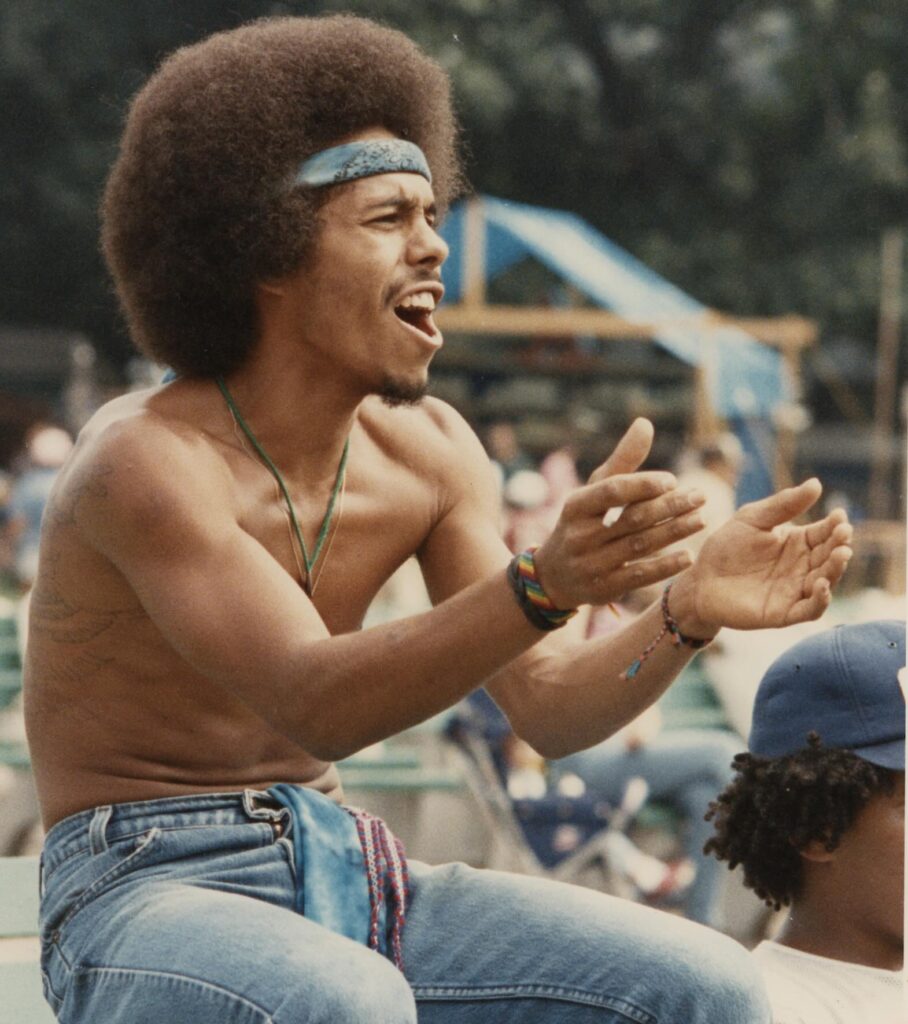
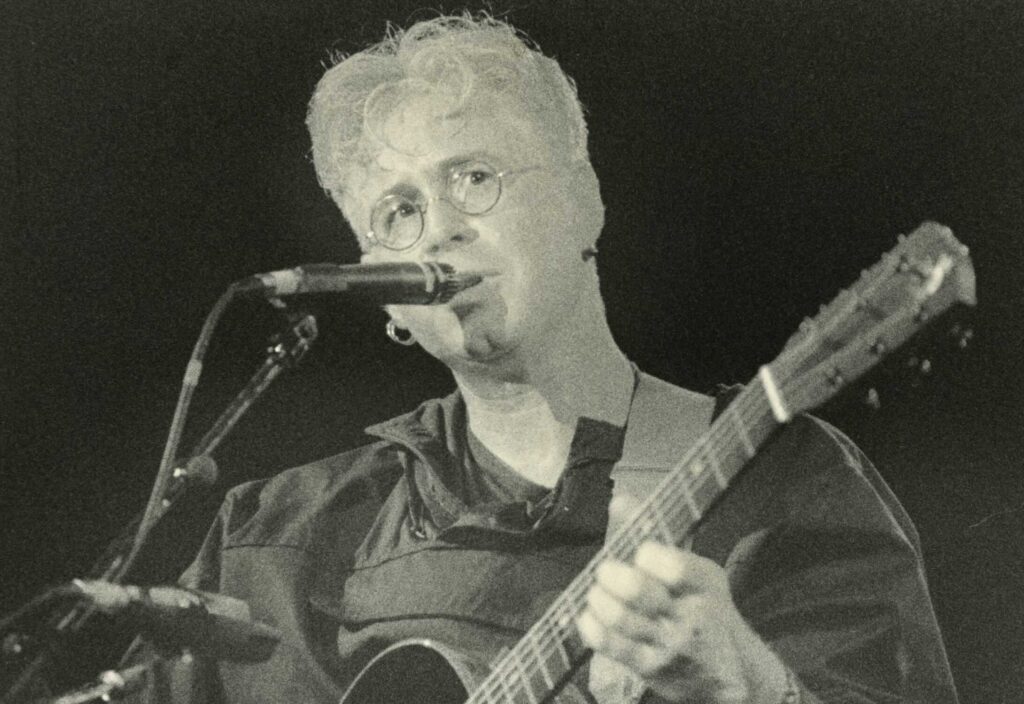
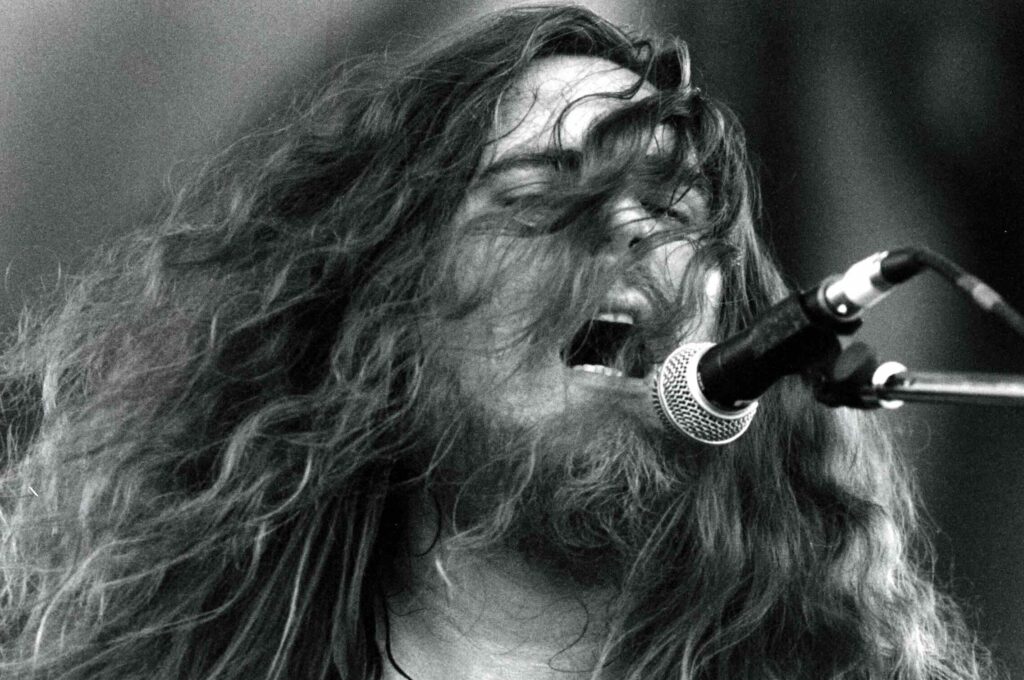
Rakoczy defends the decision to move at the time.
"It's always been our job to put on a great event that ups itself every year [and] if we wanted to grow, we had to expand the acts." The move to Ancaster made that possible, he says. And it did allow for perks unavailable at Gage, like a partnership with the Ancaster Agricultural Society and the use of the fairground buildings for craft vendors, heritage displays, and weather shelter.
That first festival in Ancaster was packed to overflowing and perhaps "too successful,” according to Rockingham. Covering the event for The Spectator, he recalls an "endless stream of cars trying to get [to] the fairgrounds” to see Arkells, City and Colour, and The Sheepdogs. Lacking the ambience of Gage, it sometimes felt more like a county fair but “there were some great shows up there,” recalls Rockingham. Featuring big acts like Canned Heat, The Psychedelic Furs, Mickey Hart (of the Grateful Dead), and The B-52s, Rockingham says, “It's hard to criticize a festival that's doing its best to provide a great show for free.”
But the festival’s roots ran deep and, despite growth, the pull of the past kept tugging on organizers. So, when Lieberman stepped down in 2017, and Rakoczy stepped up as new festival director, there was one change he knew he had to make: move back to Gage Park.

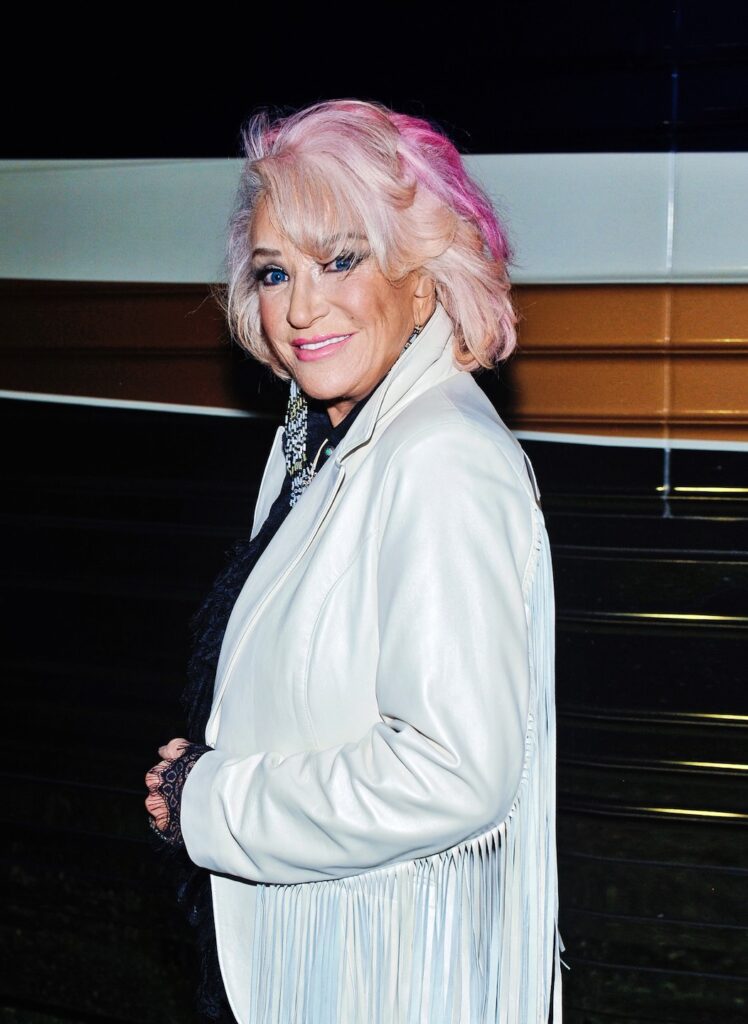

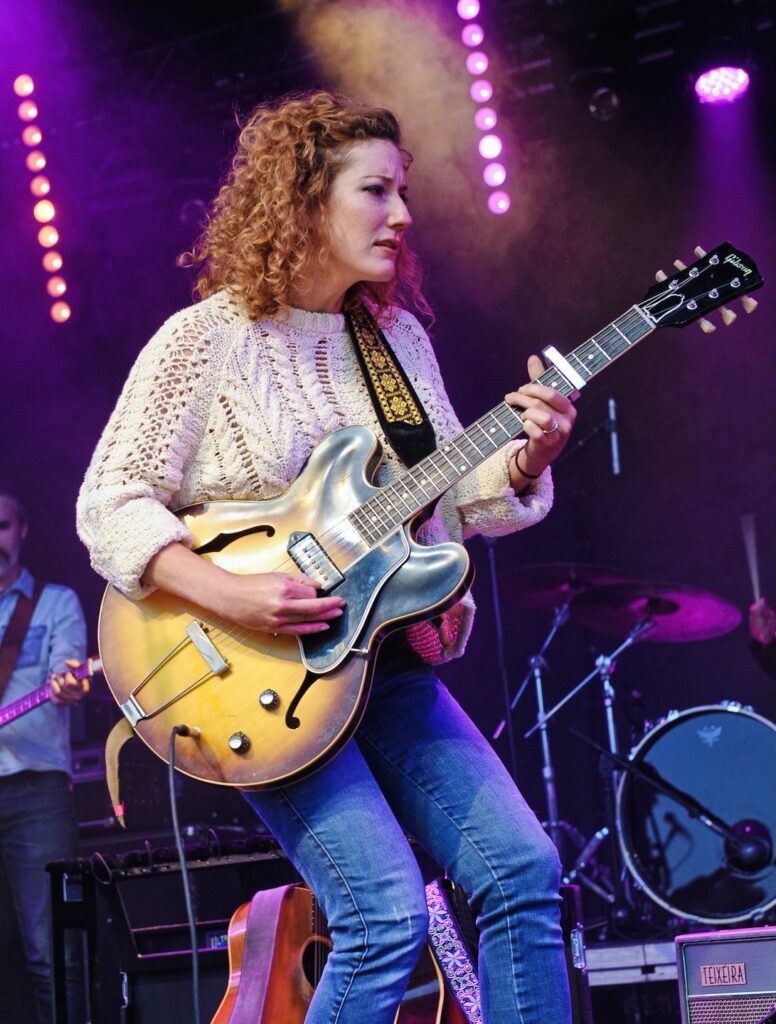
As new leadership emerged at city hall, Rakoczy saw “the perfect time to make new relationships and find ways to get back to where we started.” Rakoczy continued to up the ante when it came to the lineup. Programming Tanya Tucker in 2019, The Village People in 2024 and Brett Kissel in 2025 fired up a broader base of fans and brought them to the park.
The return to Gage also gave organizers a chance to look at the festival with a fresh set of eyes. That led to an improvement in public access and increased walkability, especially for those living in downtown Hamilton. “We were able to re-envision how the park was laid out … I think the festival is significantly better now in its feel. It's the way it flows and the way people can gather.” For Rockingham, this is the Festival of Friends as it should be. “It was important to move back because it allowed the people in the inner city to have that free festival.” Harvey, who has created a new band with a country-rock sound called The Wild High, agrees.
"Right in the middle of the city, by the stadium, it allows anyone access.” And the fact that it’s free “makes it amazing for lower-income individuals to enjoy a great concert.”
The festival's accessibility is also important to musician Chris Chambers, who once opened for the legendary David Wilcox. “It caters to so many demographics, musically and culturally, like a yearly reminder where people of Hamilton can count on an entertaining and peaceful time.” For JUNO Award-winning Motown icon Harrison Kennedy, playing the festival has meant connecting with an “outstanding lineup of hometown talent.” Yet, his most cherished memory is rooted to his family: "when my daughter came on the stage and told the audience to start clapping."
Though many musical artists have seized the headlines, perhaps the true friends of the festival are the countless volunteers who dedicate their time and energy to keeping things running. For Rakoczy, they’re literally the unsung heroes. “We have something like 300 people doing volunteer work, all for free. There are some who drive in from out of province every year. They take off work, come in, and just live in the park for the week. That kind of buy-in? That's the thing that’s made us so successful.”
Kim Burke is one of those who makes the annual trek. “I live in New Brunswick, but we still make the drive halfway across the country to volunteer. Gage Park is such a special place and the music is legendary,” she says, “but it's the people that keep me coming back.” That’s also true for Willow Binx, a volunteer who got her start as a child with her mom at the park. She now volunteers every year, saying the festival is “deep rooted in Hamilton’s culture [and] part of our lives just by its existence.”
For Rakoczy, who has been part of Hamilton’s music scene his whole life, the 50th anniversary means pulling out all the stops. That included a kickoff concert at the end of June at The Westdale that included a lineup of festival alumni, including Tom Wilson, Harrison Kennedy, Marc Jordan, Suzie McNeil, Jon Harvey, The Redhill Valleys, Jacob Moon, Jim Witter, and Hawksley Workman.
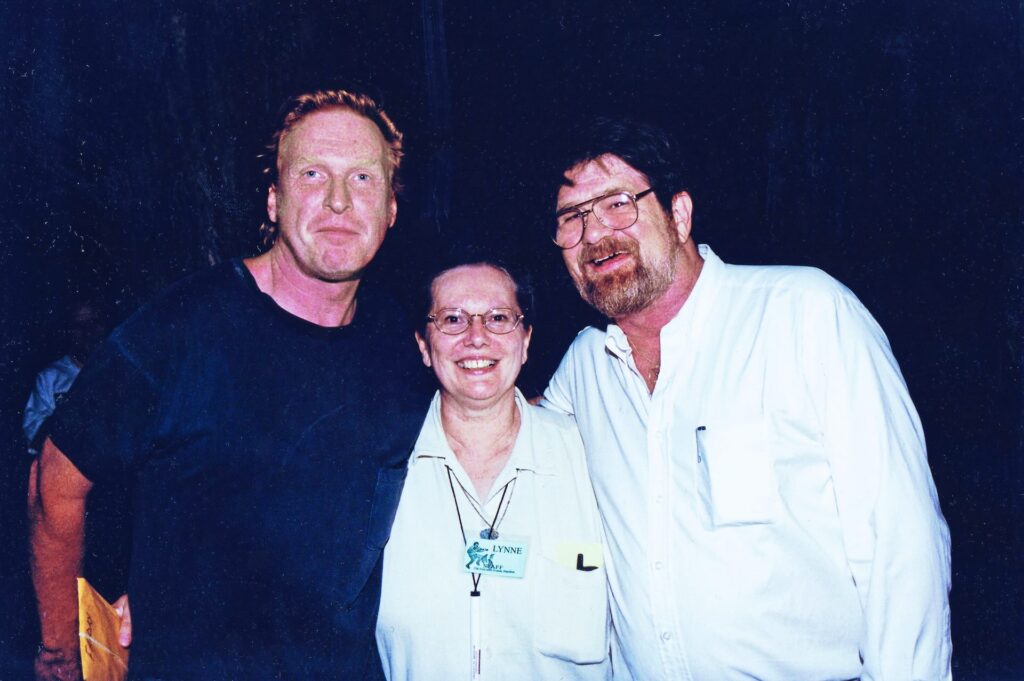
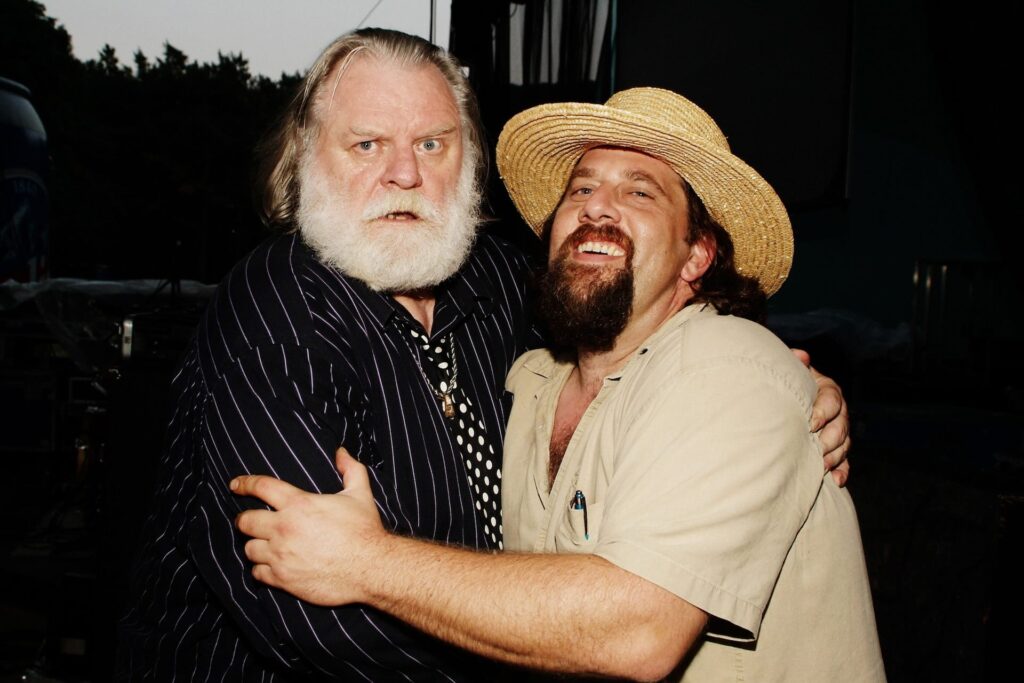
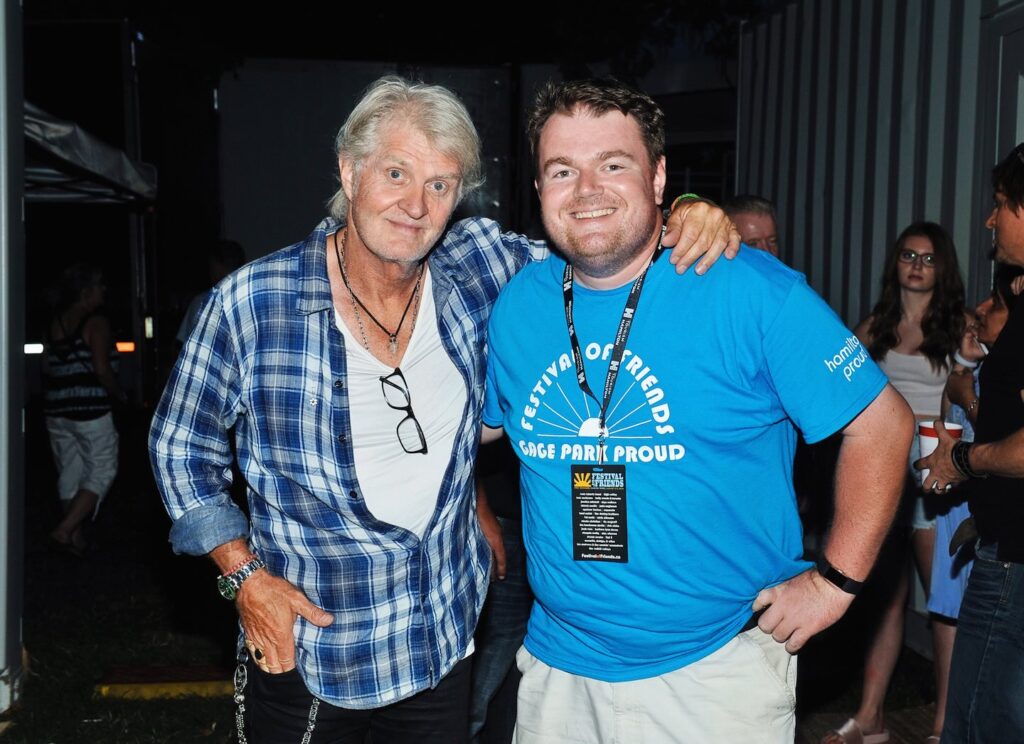
PHOTOS: Festival of Friends archive
And this year’s lineup for the Festival of Friends is a true show-stopper, too. On Friday, he’s planning a country night headlined by Dallas Smith, the record holder for No. 1 hits by a male Canadian country artist. And Saturday night will see Canadian indie-pop icon Feist take the stage.
“It’s insane,” says Rakoczy, with equal amounts of wonder and awe. ”She's doing the festival because of our legacy, our history, and what we've been able to accomplish over 50 years, and that's huge.”
The festival will also feature a distinct call-back to its roots. “There’ll be a folk workshop stage, and a children's stage,” says Rakoczy. What’s more, he’s reached out to city heritage organizers to celebrate the festival’s past. “We're working with Tourism Hamilton to set up a museum exhibit with some of our artifacts. They're also doing a display at the Fieldcote Museum, focusing on our 50 years and talking about the time in Ancaster.”
But he’s most excited about Sunday’s closing act. “We're doing a big Last Waltz-style concert,” Rakoczy says, referring to the iconic last concert of The Band in 1976, which was filmed by Martin Scorsese and released as a documentary in 1978.
“We've got Blackie and the Rodeo Kings, that's Tom Wilson and Colin Linden, they're like the house band, and then we're going to have a rotating list of various festival alum … probably 25 different artists will come up and play a song each. There’ll be lots of surprises.”
If it all sounds like Rockingham’s fond memories of the festival back in ’76, with musicians sharing a guitar under the shade of Gage Park, that’s probably the point. “If you're gonna come,” urges Rakoczy, “this is the year to come.”