




Paying homage to made in Hamilton
Third-generation steelworker and eighth-generation Hamiltonian Glen Faulman has spent two decades collecting artifacts from the city’s extensive and impressive manufacturing history. More than 400 items make up Made in Hamilton: The Glen Faulman Collection, on display at the Art Gallery of Hamilton until Jan. 3, 2027.
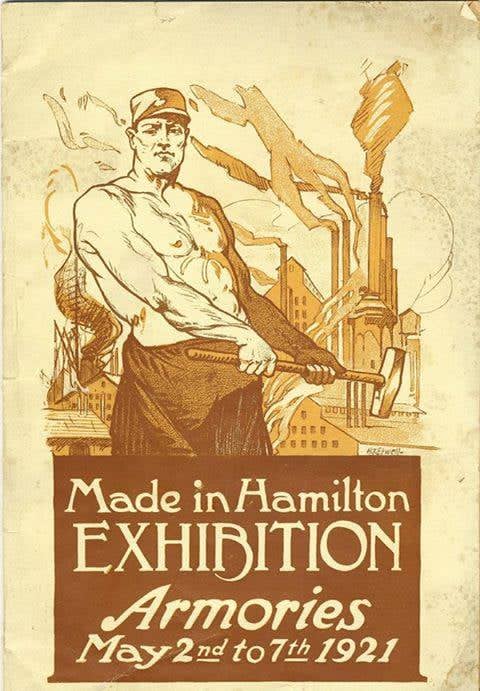
A manly slab of shirtless steelworker poses before sepia smokestacks on the enlarged 1921 Made in Hamilton Exhibition program cover that welcomes visitors to its spiritual successor, Made in Hamilton: The Glen Faulman Collection at the Art Gallery of Hamilton. The collector himself wryly acknowledges that this stripped-down paragon sets a terribly dangerous example for workplace safety, pausing in our conversation to show off the fingers he has shortened through his factory labours.
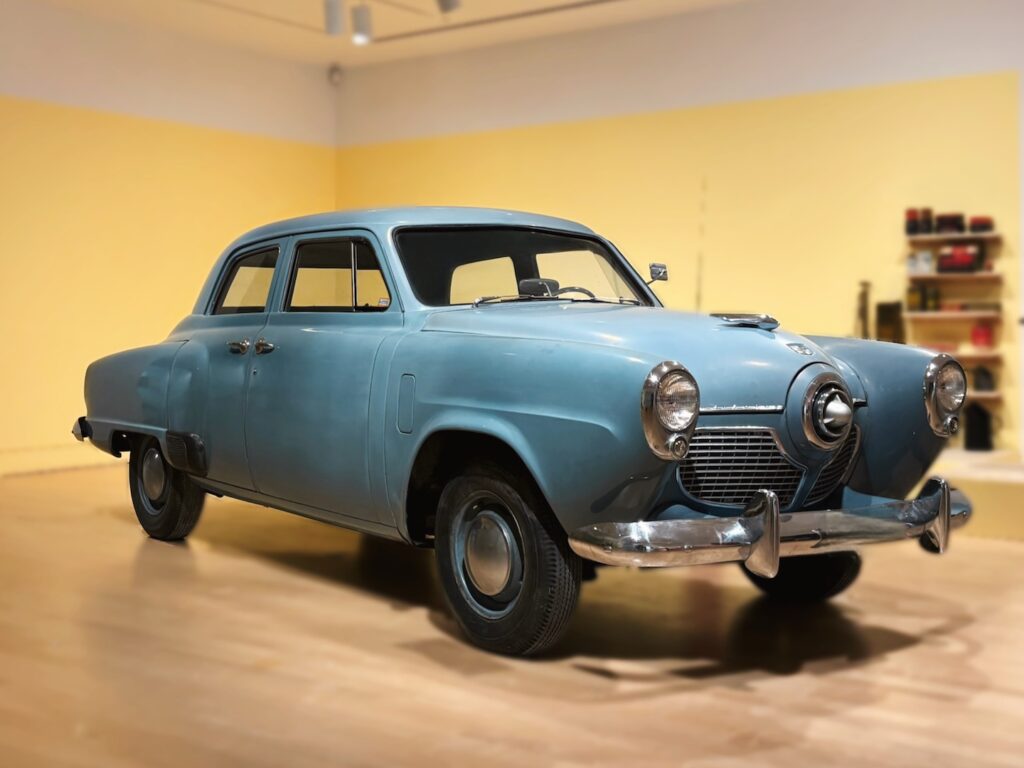
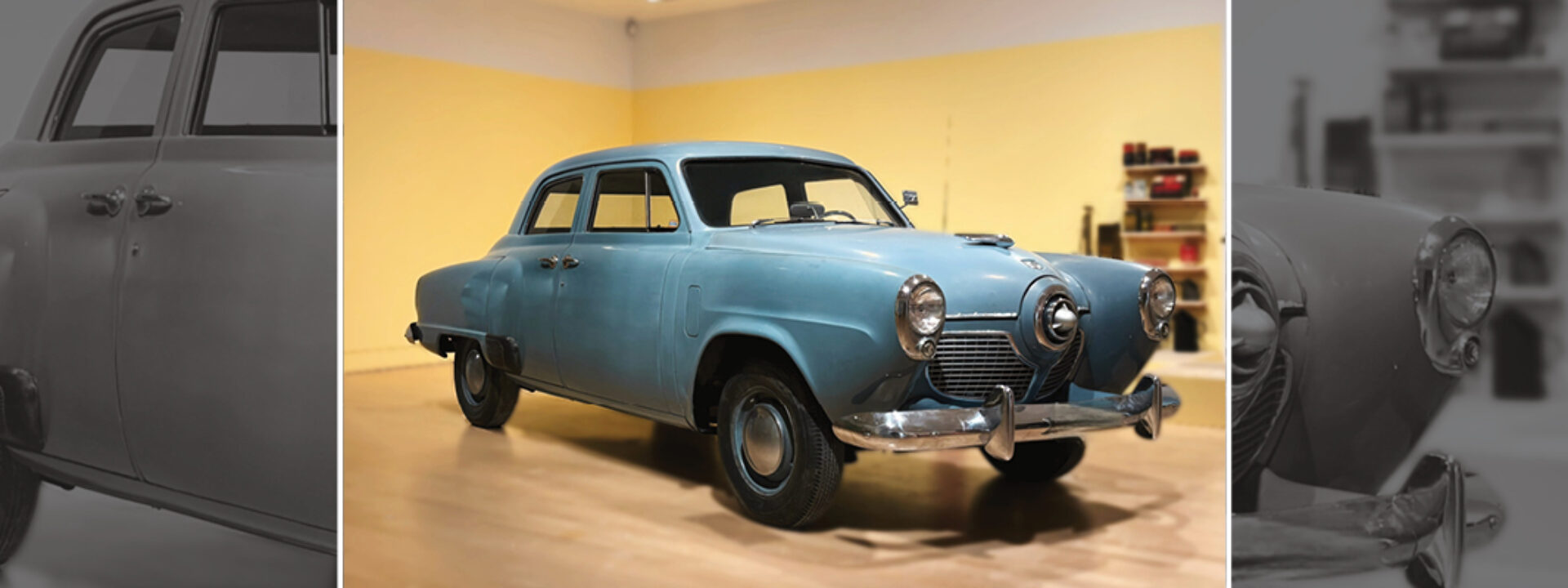
This irreverence is typical of the punk-rock energy and steelworker ethic that eighth-generation Hamiltonian Glen Faulman brings to the task of preserving Hamilton’s manufacturing history. The third-generation Stelco employee and punk rocker has a musician’s long-lived habit of browsing records in second-hand shops where myriad antiques kept catching his eye. Guided by his family’s conviction to buy local, he sought out any objects that were manufactured in Hamilton. This curiosity soon blossomed into a life-long mission to find an object from each of the 750 industries that operated in Hamilton by the time of its productive peak in the 1920s, from empty soda bottles to the bullet-nosed 1951 Studebaker that is the stunning centrepiece of Made in Hamilton.
Faulman invited Hamilton-born artist Tor Lukasik-Foss, who previously served as the AGH’s director of programs, to collaborate as curator for his local perspective as well as his capacities as a consummate storyteller and fellow performer. Lukasik-Foss immediately recognized the potential of these objects “to sow yourself back in time” to the nostalgic peak of the early 20th century, a distant time close enough to imagine one’s grandparents having touched these very items.
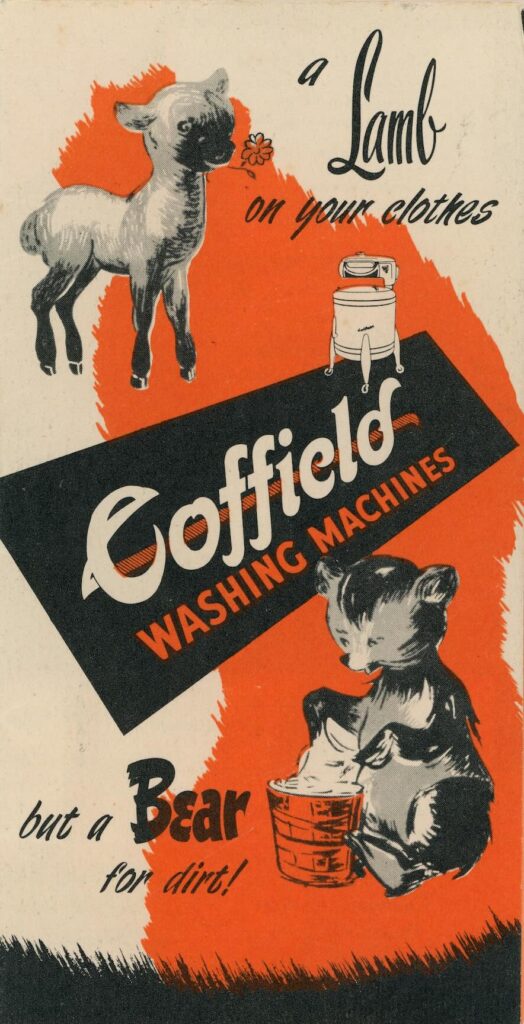
With inspiration taken from the annual Made in Hamilton exhibitions that used to show off Hamilton’s manufacturing might in the James Street Armouries starting in 1903, more than 400 objects are presented in themes that showcase products in pantry, appliances, automotive, and more. Any industry could host a booth at these wildly popular events that would attract over 50,000 visitors from both near and far to explore Hamilton’s latest innovations in an atmosphere heightened by festive food, dances, and games – inspiring competition and community-building alike.
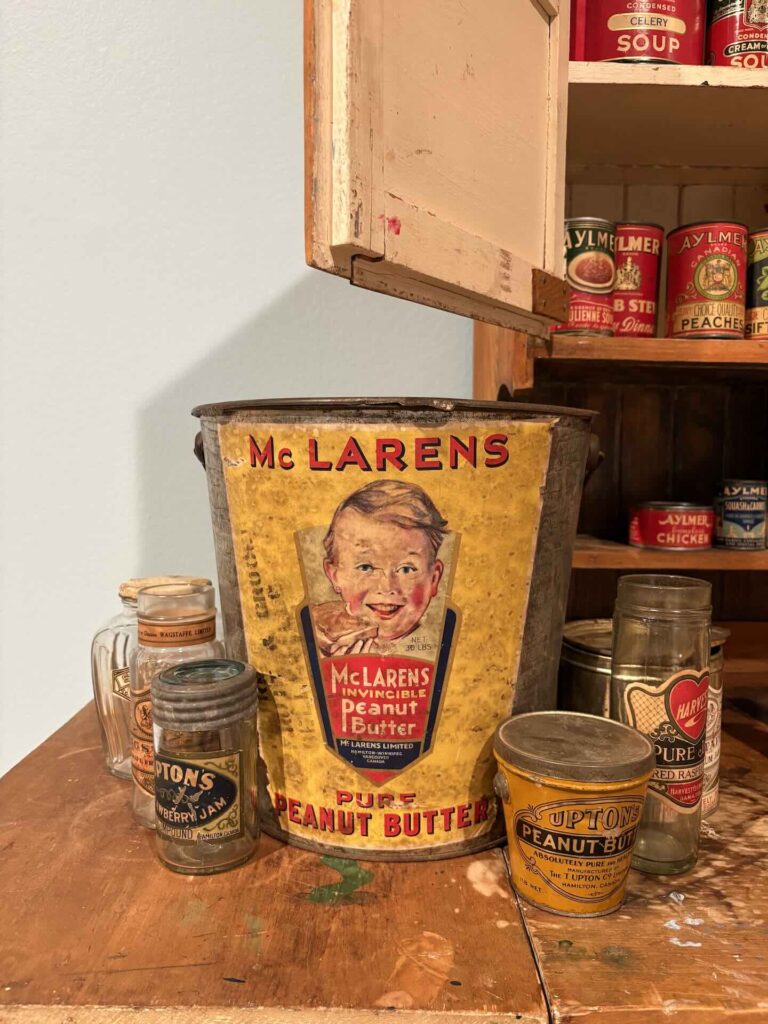
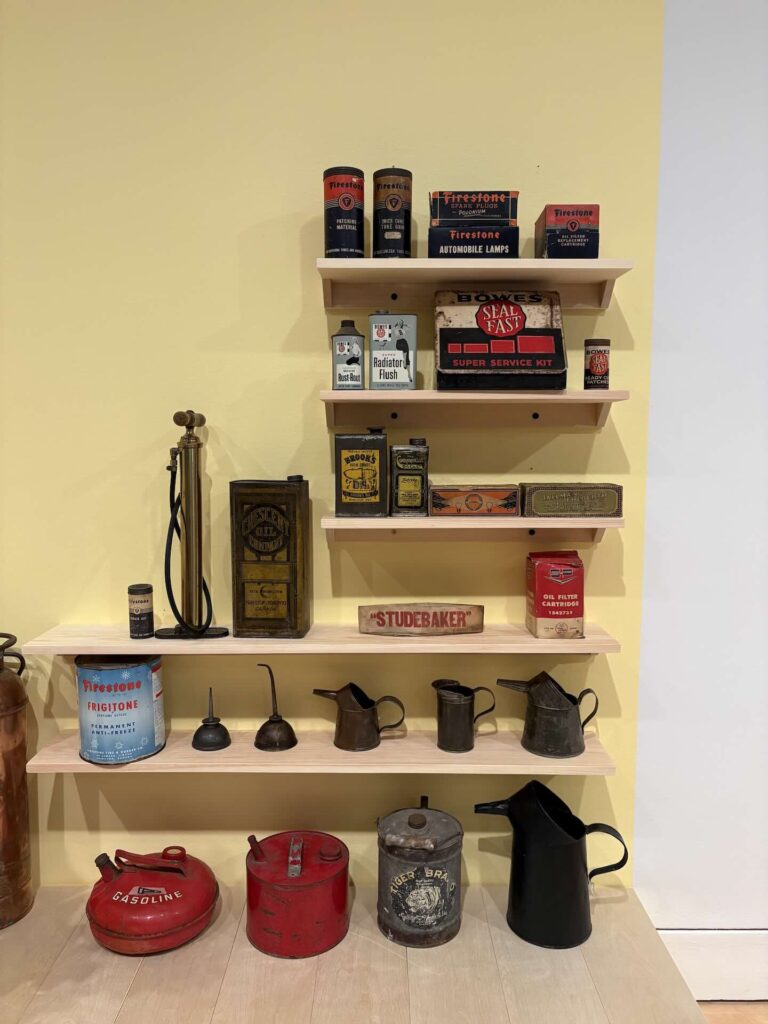
Accented in retro pastels that brighten a century of tin and steel treasures, each roped-off display is more playful than prohibitive or precious. While steel undergirds Hamilton’s massive strides in canning and automobiles, among many other industries, Made in Hamilton de-emphasizes the monolith that steel has become in our civic imagination to display the incredible range of manufacturing activity that created Hamilton jobs and communities in the early 20th century. The city’s strength in these decades was not owed to a singular power, but rather its diversity of players and the boundless potential for any and all new ideas to find a foothold and thrive in our economy.
This was the era in which enterprising men such as George Elias Tuckett could grow a local shoe store and polish business into a national tobacco brand, and Parke & Parke would become Canada’s largest pharmaceutical manufacturer from its humble beginnings in a downtown storefront. Success stories such as these are scattered throughout this exhibition, a repeating pattern that Faulman and Lukasik-Foss attribute to a perfect storm of cheap electricity, excellent transportation corridors, and an interconnected community of factories and makers that kept supply chains local.
Hamilton’s contributions to civic growth during this period extend beyond private business interests to include groundbreaking advances in the commons. Canada’s first public water fountain – the once-ubiquitous "Shorty Green” – was commissioned by Hamilton’s medical officer of health in 1914 and installed across Hamilton at a time when Toronto didn’t yet have running water.
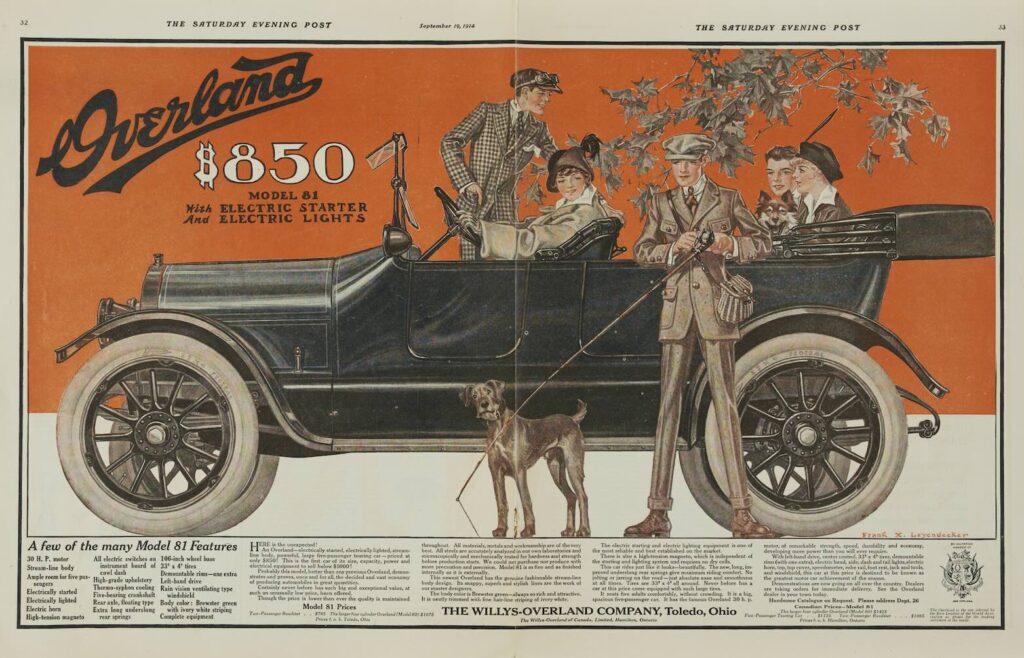
The competitive spirit that caused Hamilton to be derisively deemed The Ambitious City by outsiders was stoked in large measure by the Made in Hamilton quarterly publication, presented here as an interactive digital display of Hamilton’s industrial players from 1910 to 1926. Advertisements pulled from its pages champion the city with stylish Art Deco angels of industry and exquisite typography, while selectively omitting any mention of labour movements and worker protests simmering beneath the surface. This exclusion clearly amuses Faulman, whose grandfather’s 1946 Stelco strike card is quietly displayed within a small vitrine alongside his and his father’s company IDs as a nod to the collector’s steelworker lineage.
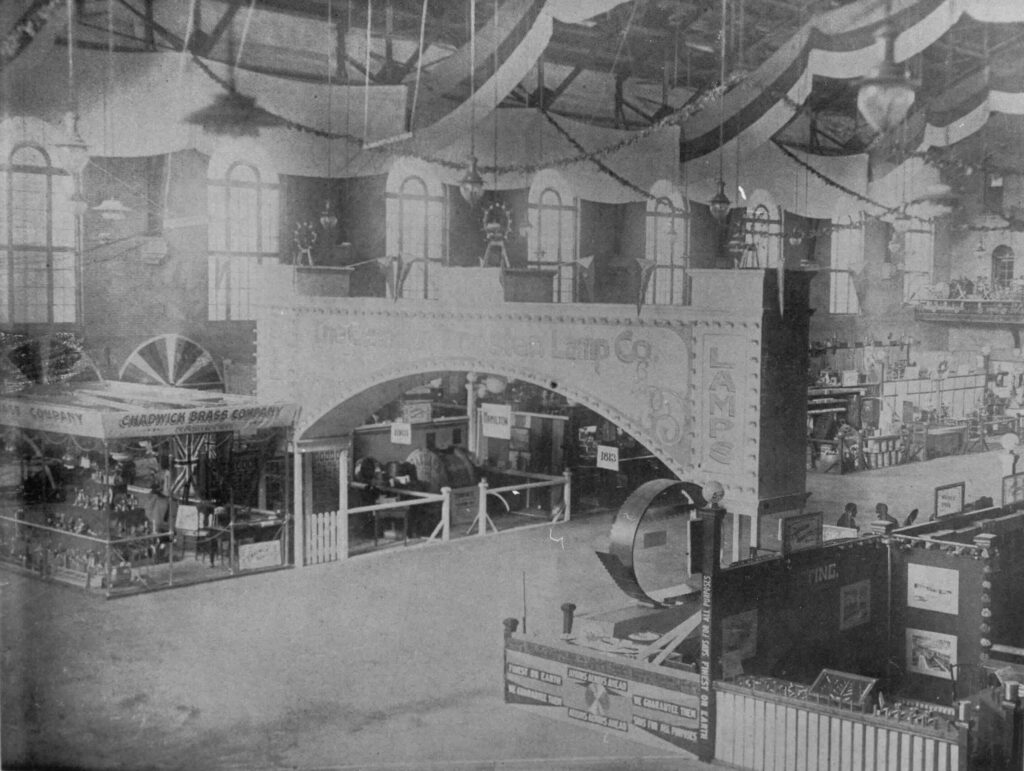
Local History and Archives, Black Mount Collection
Made in Hamilton, which runs until Jan. 3, 2027, advances its own spin on the overwhelming productivity of Hamilton past and places the credit firmly in the hands of our working class as city builders deserving of recognition. Faulman is unambiguous in his conviction that Hamilton needs a civic museum to make this history readily available to its people. With assets scattered everywhere from his own attic to unarchived municipal warehouses, there is a larger story waiting to be told.
The Workers Arts & Heritage Centre is a natural partner to this endeavour, and has brought a new chapter of its own 2024 community storytelling project, Steelworkers Legacies: Objects and Stories, to the AGH’s exhibition. As with its previous iteration, steelworkers and their families are invited to share objects of personal significance that will be photographed on site in November for inclusion in WAHC’s growing archive of memories.
Faulman and Lukasik-Foss are mindful of what this material legacy could inspire at a time when our diminished industrial strength has made our communities vulnerable to the tides of globalization – whether that is a future museum that restores civic pride in our prosperous past, or a new generation of makers and manufacturers ready to write the next chapter.