






REVIEW: Living up to the challenge of Murder on the Nile
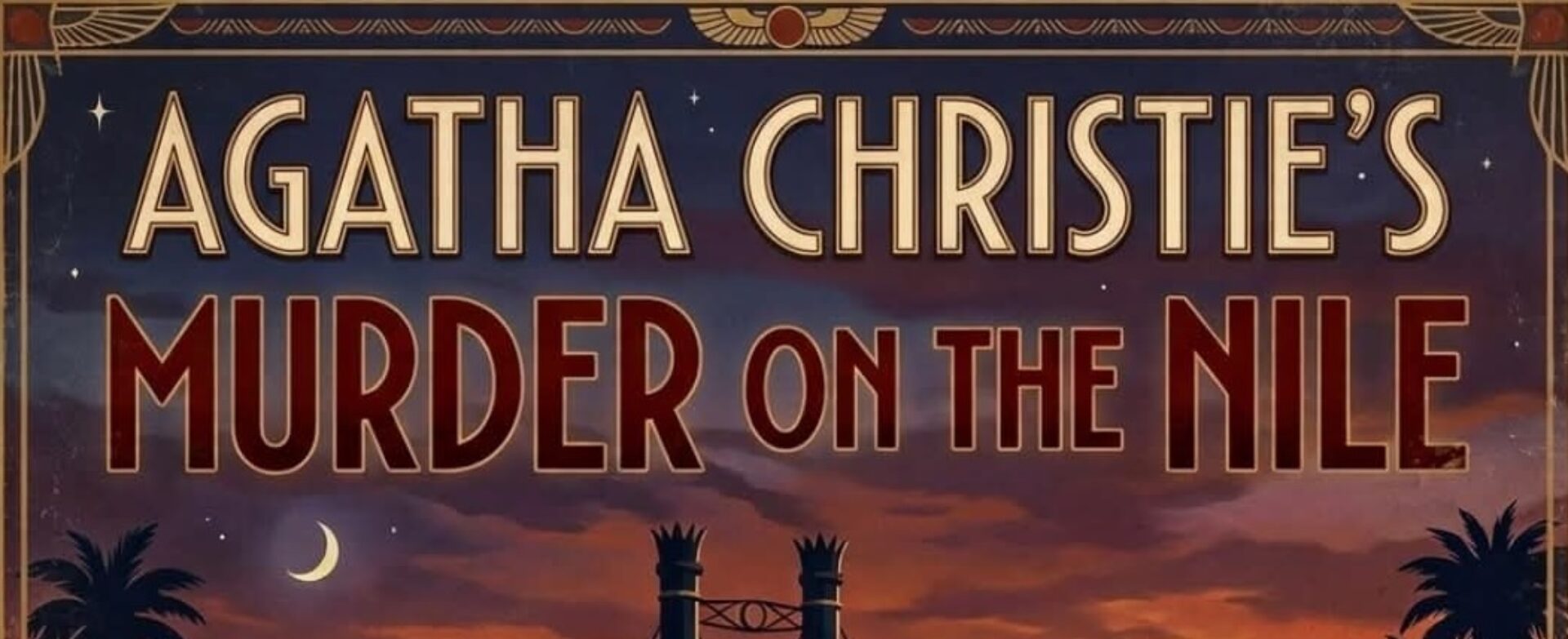
Binbrook Little Theatre presents a spirited and effective production of Agatha Christie’s ambitious whodunit.
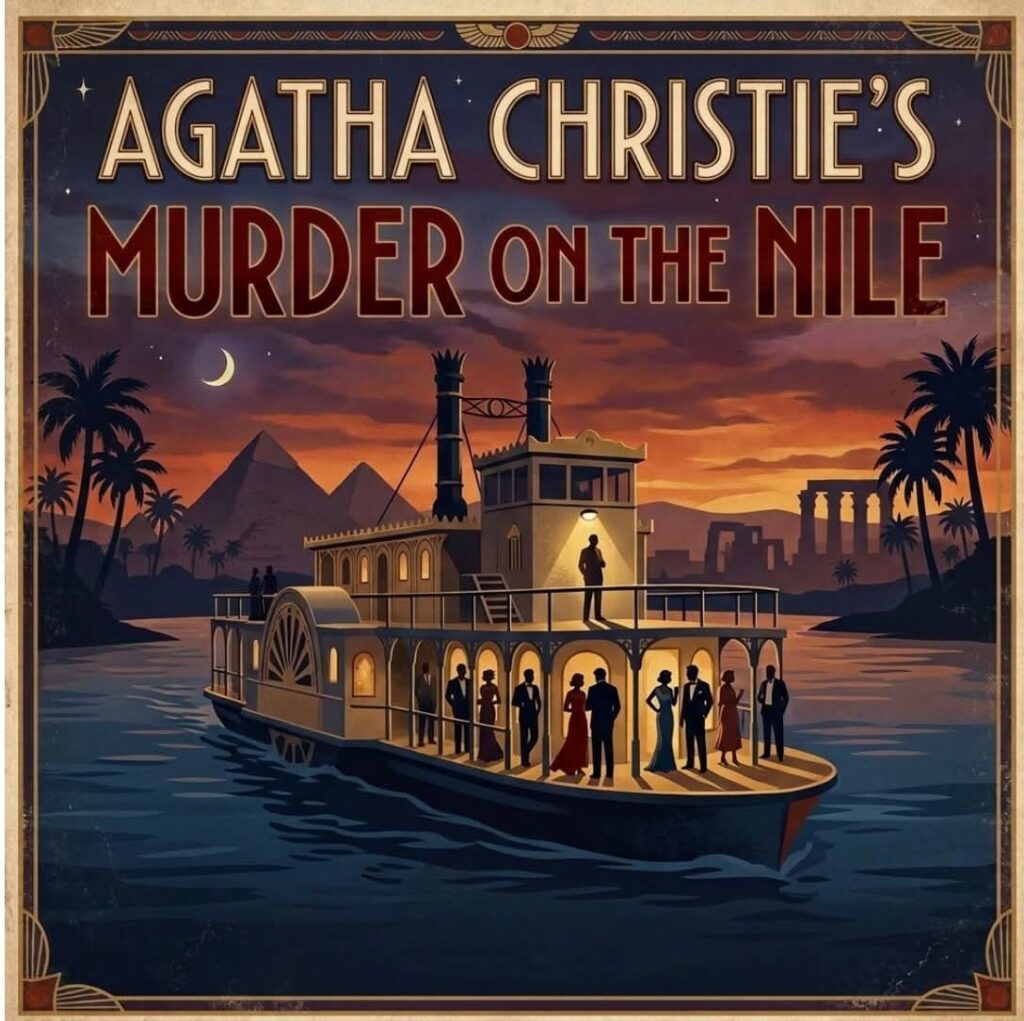
Binbrook Little Theatre has mobilized its considerable heart and dedicated community to stage a challenging whodunit by Agatha Christie. Murder on the Nile features a large cast of colourful characters in an attention-grabbing, two-act drama that hinges on some narrative sleight-of-hand that may leave some a little confounded. Binbrook Little Theatre says, “a dozen motives, one killer,” and there are just a few opportunities remaining to find out who has introduced cold-blooded murder into the luxurious setting of a 1930s Egyptian cruise.
The play is directed and produced, respectively, by husband and wife team Paul and Shirley Marshall (with stage management by Rachel Rogers). Murder on the Nile represents director Marshall’s 10th production with Binbrook Little Theatre, with other shows including The Kitchen Witches, Lonestar Love Potion, and Sadie Flynn Comes to Big Oak. Marshall directs a cast that appears evenly split between returning BLT actors and those making their debut on the Binbrook stage.
In Murder on the Nile, a starlet named Kay Mostyn is the very important guest expected on paddle steamer Lotus, docked at Shellal, Egypt. With her new husband Simon in tow, they are hoping for a honeymoon trip down the Nile that will hopefully bid an end to some drama that has been following them. Joining them on the boat are assorted other passengers and crew, each with their own backstories and motivations. When a shocking murder takes place, everyone is suddenly under scrutiny and tension builds in the search for answers.
The play’s author, Dame Agatha Christie, was dubbed the “Queen of Crime.” Christie is the best-selling novelist of all time with over a billion books sold in English and another billion translated into other languages. She has been outsold only by the Bible and William Shakespeare. She was also extremely prolific, averaging a book a year. According to Concord Theatricals, Christie “wrote 80 crime novels and collections of short stories, over 25 plays (including The Mousetrap, the world’s longest-running play), and six additional novels under the pseudonym Mary Westmacott.” Christie is responsible for such well-known characters as detective Hercule Poirot as well as Miss Marple, and she herself lived a life so colourful as to be impossible to adequately describe it in this short space.
Murder on the Nile is based on Christie’s 1937 novel Death on the Nile. Ironically, she began writing the story as a play called Moon on the Nile. It first premiered in January 1944 at Dundee Repertory Theatre under the title Hidden Horizon and later opened in the West End at the Ambassadors Theatre in March 1946. It continued to Broadway in September 1946 at the Plymouth Theater in New York, but closed after only 12 performances. Still, Agatha Christie remains popular for book readers, theatre-goers, and television and film fans. Readers may recall that there was a production of Agatha Christie’s Murder on the Orient Express this past spring at Theatre Aquarius.
The cast provides a spirited performance of the play and fulfill their roles sufficiently. A few performers and moments bear mentioning. Having seen Sue Blackman in Binbrook’s Frankenstein, I already knew that she comes by her own English accent naturally and here she turns in another excellent performance as a difficult, entitled upperclass woman, Helen Ffoliot-Ffoulkes, who is a trial to all who encounter her. Rick Kuipers provides some welcome moments of comic relief as the deeply earnest and frazzled Dr. Bessner.

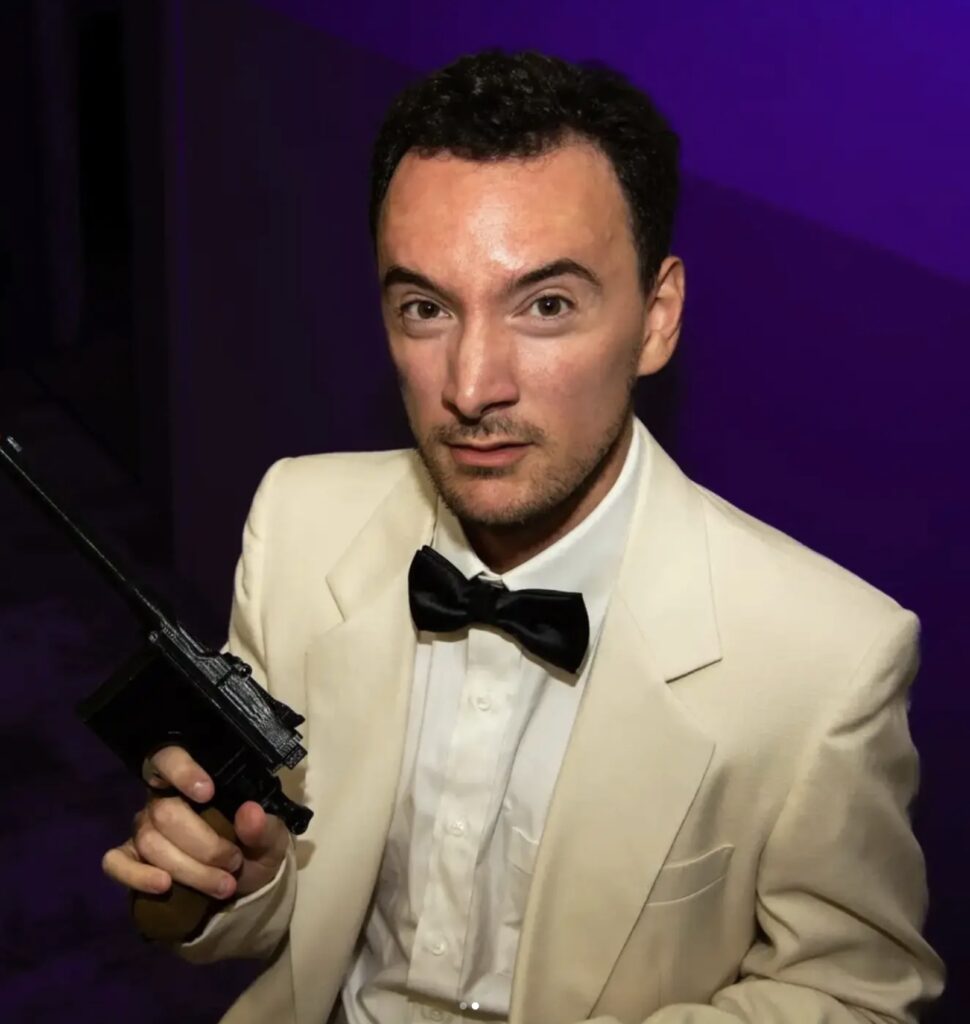
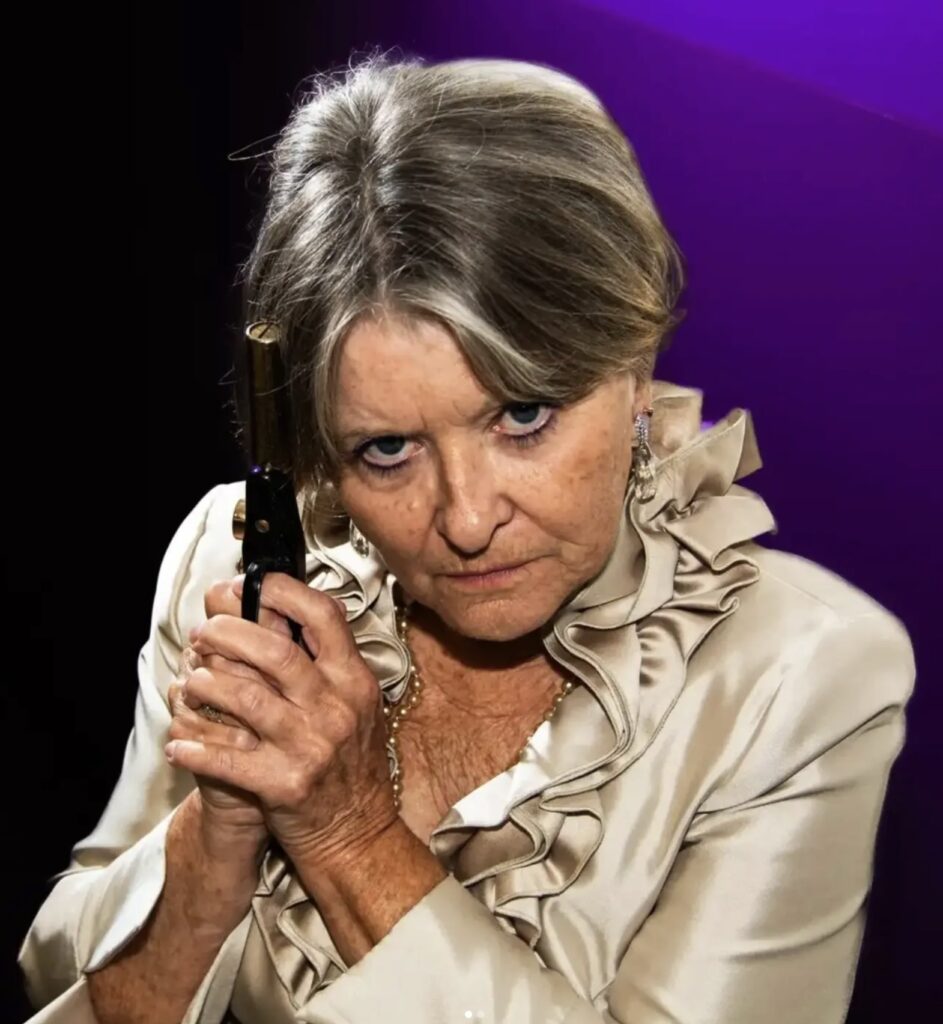
Despite being constrained by his role as a servant, Mike Scalera as The Steward makes the most of his time onstage with a few wordless, well-timed facial expressions. Jess Horton’s lady maid Louise has some fun moments of barely contained contempt for her employer and it’s a delight when accusations begin to fly and she reverts to declarations of her innocence in French. And Paul Byrne provides a sense of ballast to the proceedings with his performance of Canon Ambrose Pennefather, a character who succeeds in being both a candidate for murder and a moral compass in lieu of a detective such as Miss Marple or Monsieur Poirot on hand.
A qualm I have with the production relates to the treatment of the two bead sellers who were very charming and funny in the pre-show as they mingled with the audience and sold strings of beads as part of a mental health charity fundraiser. Initially, it was difficult to tell who they were supposed to be from their appearance alone, wearing brown tunics and festooned with beads. Were the tunics medieval, monastic or peasant garb? It was not clear that they were meddlesome Egyptian peddlers until they began interacting with the cruise guests. And, while they were obviously meant to infuse some humour into the opening scenes, their clownish demeanour and the repetition of their antics felt awkward to me and, given that they seem to be the only Egyptians we encounter in the play, bordered on feeling culturally insensitive. (This is not to criticize the performers; this may well be an aspect of the script that hasn’t aged well or a directorial choice).
If the small sample of Binbrook productions I’ve seen shows a pattern, it’s that the production team particularly excels in its set design and costumes. Most of the stage is a common room or lounge with several well-appointed seating areas where most of the action converges. Exits at each end of the stage lead to unseen rows of sleeping cabins. With the help of some charming projected images, the back of the stage lets in the outside world of Egypt and its environs visible from the portion of the deck by which the guests enter the ship.

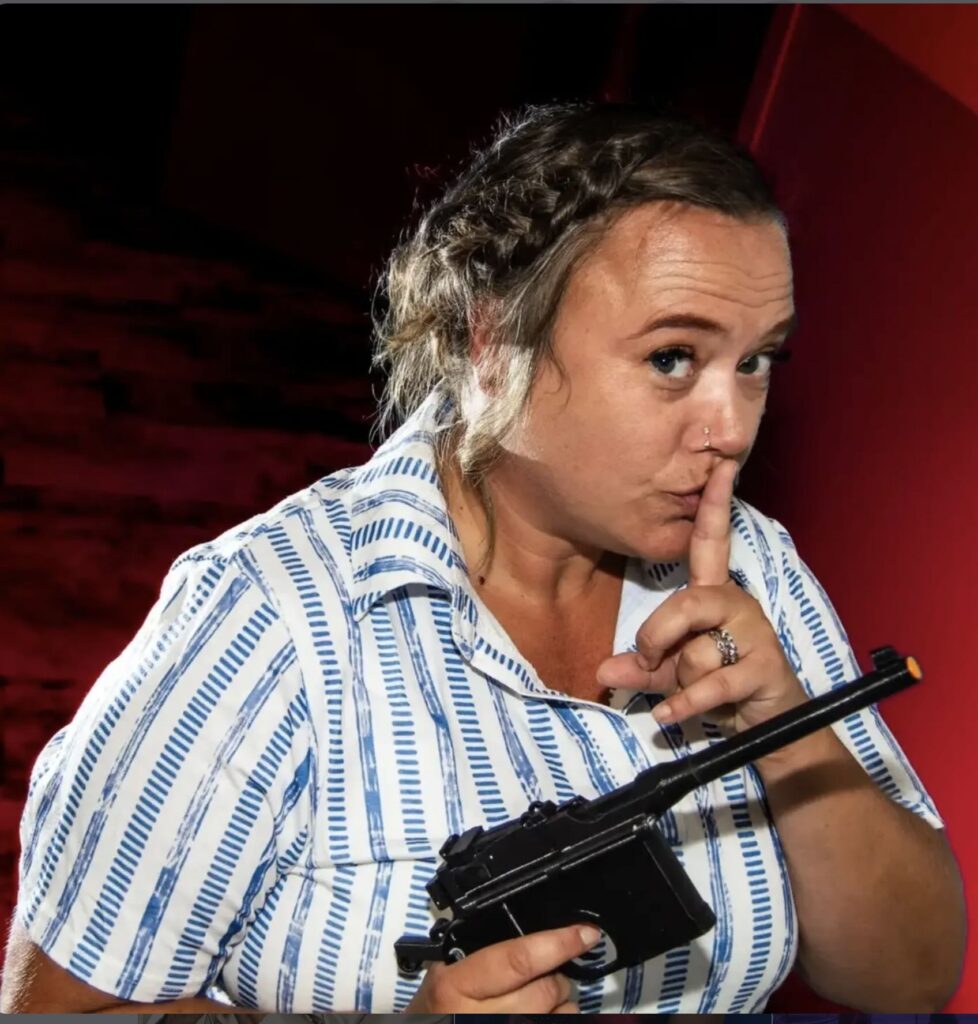

The cast are outfitted in class- and era-appropriate garb, and the glittering dresses worn by Kay Mostyn (Danielle Wells) and Jacqueline de Severac (Dallas Dabrowski) are particularly lovely. Given that a number of the cast members appear to be extremely tall, kudos to the costuming team of Tiffany Metcalfe and Deb Twigg for making sure that everything fits well. In a crime drama where the audience needs to pick up on clues, I was also impressed by the attention paid to particular details; specifically, from my seat about a dozen rows back, I could easily see a “gunshot” hole in a scarf, which boded well for its general visibility for the audience.
The sound design team uses various audio clips to create another dimension to the ambient environment of the boat, including sounds of people talking on shore and nature on the banks of the Nile. For the most part, this use of audio is evocative and does not compete with the action on stage. Unfortunately, there’s a particular segment of audio in the second half in which a bird sound repeats to a noticeable and maddening degree. I began sincerely hoping the mystery killer would add an avian member to their hit list.
Agatha Christie’s Murder on the Nile is an ambitious choice for a community theatre. It has a large cast of interesting roles to maximize the number of those able to participate; the action follows a generally understood formula or narrative structure; and the popularity of “true crime” has not appeared to flag in the least with regard to 21st century entertainment. The pacing is good and steady, yet there are a number of red-herrings and dead ends which makes following the final exposition of Canon Pennefather (Byrne) to Jacqueline de Severac (Dabrowski) extremely vital. The play appeared to satisfy the appetites of the majority of the attendees as a well choreographed and decently told murder mystery.
Next up for Binbrook Little Theatre is Just One More, Mr. Munsch!, adapted by David Wice and directed by Emma Campea, onstage Jan. 29 to Feb. 14, 2027.
NEED TO KNOW
Agatha Christie’s Murder on the Nile
Continues Oct.30, 8 p.m. and Nov. 1, 2 p.m. (nearly sold out)
Binbrook Little Theatre, Memorial Hall
2600 Hwy 56, Binbrook
Box office: (905) 692-5076, tickets@binbrooktheatre.ca, or online
Tickets: $25
Doors open 30 minutes before the performance