






Learning to Breathe: Clara Hughes discovers life beyond the finish line

After a lifetime of pushing her body to extraordinary limits, the six-time Olympic medallist found herself facing an unfamiliar opponent: stillness. In her new memoir, the cyclist and speed skater explores a devastating injury, menopausal upheaval, and buried trauma that forced her to rethink everything she thought she knew about strength. She is in Hamilton Oct. 20.
It’s not at all surprising that for Clara Hughes, retirement was never going to mean slowing down.
After decades spent testing the limits of human endurance, first as a competitive cyclist and then as an Olympic speed skater, she simply found new ways to keep moving. There were mountains to climb, long-distance trails to conquer, and causes that demanded her boundless energy.
Long-distance through hiking with her husband Peter Guzman from their home on Vancouver Island became her new adrenaline rush. The Pacific Crest Trail, the Continental Divide Trail, the Appalachian Trail, and Canada's Great Divide Trail are among the routes she has conquered.
“I always thought I just really enjoyed being outside, being on the trail, camping,” she tells HAMILTON CITY Magazine during a video call. “But it was really the only place where I felt calm, and I needed it.”
She also threw herself into the work of mental health advocacy, which took her across Canada and introduced her to people whose struggles echoed her own. Clara’s Big Ride in 2014 was an 11,000 kilometre, 110 day trek around Canada for mental health.
That constant movement was familiar territory for Hughes, a way to make sense of the world and, perhaps without fully realizing it, a way to keep difficult feelings at bay.
Then her knee gave out.
A devastating injury, followed by two major surgeries, left Hughes unable to hike for more than a year. For three months, she was virtually immobile. The trails that had offered solace and escape were suddenly out of reach.
As her knee healed, she began to fight for motivation, something she never had experienced before. Depression took hold. Rage and confusion intruded into her closest relationships. She sometimes felt she didn't want to be around anymore.
She was navigating menopause, a profound physical and emotional transition she had never fully understood. Hormonal changes had been unfolding for years, but she hadn't recognized what was happening. Now, without her usual outlets, she couldn’t outrun the feelings that surfaced.
“I literally felt like I was losing my mind because I literally lost my lifeline, and that was movement,” Hughes says.
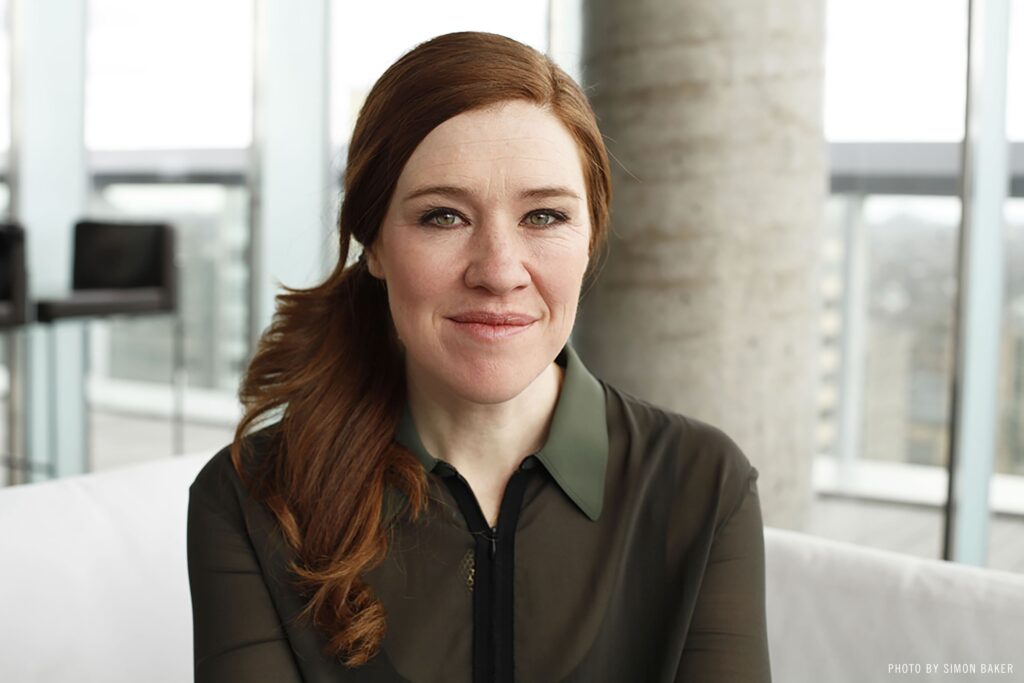
For a woman whose identity had been shaped by relentless forward motion, the forced stillness exposed how much of her life had been about pushing through, suppressing pain, and never allowing herself to stop.
Hughes, now 54, had spent much of her life proving what she could endure. She had won six Olympic medals across two sports, becoming the only athlete to win multiple medals in both the Summer and Winter Games. She had become a leading voice in Canada's mental health conversation.
There were many accolades: the Order of Manitoba and the Order of Canada, a star on Canada’s Walk of Fame, a Meritorious Service Cross, and induction into Canada’s Sports Hall of Fame. Hughes was Canada’s flag bearer for the 2010 Olympic Winter Games, founding spokesperson for Bell Canada’s Let’s Talk initiative and was named an Olympian for Life.
Yet the question confronting her was not how much more she could accomplish. It was whether she could learn to live without constantly demanding something of herself.
Her new memoir, Learning to Breathe, released Oct. 13, chronicles that reckoning. It is a candid account of injury, menopause, depression and a deeply personal journey into long-buried trauma. It is also a story about discovering that the qualities celebrated throughout an extraordinary athletic career — discipline, endurance, the ability to ignore pain — can become obstacles when the competition is over.
Hughes is coming to the Playhouse Cinema on Oct. 20 to talk about her new book, part of Hamilton’s readers and writers festival gritLIT.

For gritLIT artistic director Jessica Rose, honesty is a central part of Hughes's appeal. In the new memoir, Rose says, Hughes offers a vulnerable but funny account of catastrophic injury, menopause, and the challenge of confronting long-held fears.
The book also reflects gritLIT's broader ambition to bring major literary voices to Hamilton throughout the year, creating more opportunities for readers to hear authors discuss their work and connect with one another beyond its festival in April.
“A big part of this has been publishers realizing that Hamilton has a vibrant, engaged literary scene, and because of that, we’re seeing more and more big-name authors stopping here in Hamilton. In the past, many authors would stop in Toronto and skip Hamilton altogether. We’re starting to see that change, and gritLIT is thrilled to be part of that momentum.”
Hamilton is a more than just a tour stop for Hughes. She lived in Dundas for seven years in the 1990s, moving there to train as a cyclist. She rented a room with university students to save money and found friends who remain close to her decades later.
The city also became part of her athletic story. In 2013, a section of the Sydenham Hill trail was named Clara's Climb, commemorating the hill repeats she once completed during training. She still receives photographs from people who reach the top.
She remembers riding up the hill 10 or 12 times in a session. These days, she jokes, she would be happy to make it up once.
“Just get me to the top so I can see the view.”
Hughes has always defied the odds. She started drinking in Grade 3 and was smoking a pack of cigarettes a day by Grade 7. She struggled to imagine her future as a teenager.
Yet she became one of Canada's greatest athletes, winning two bronze medals in cycling at the 1996 Summer Olympics in Atlanta before switching sports and becoming an Olympic speed-skating champion. She collected four more medals at the Winter Games, including gold in Turin in 2006.
All of that was documented in her first memoir, Open Heart, Open Mind, published in 2015, which explored her troubled youth in Winnipeg, her substance abuse as a teen, her rise to sporting success, and her mental health struggles. She thought she had said what she needed to say.
In fact, she was “vehemently against writing another book.”
But this new season of life changed her mind.
“Menopause was the impetus to this book,” she says. It was, in her words, a “confusing and beautifully rich experience” that opened up a set of unexpected journeys.
She was unaware of hormone replacement therapy to manage the symptoms of menopause until she sought help.
Hughes's experience reflects a wider problem, she says. Menopause can affect women in profoundly different ways, with physical and psychological symptoms that are often misunderstood or dismissed. Hughes believes women deserve better information, better medical support, and more opportunities to speak honestly about what they are experiencing.
She wanted to share what she has learned, including learning to listen to the body she had spent a lifetime directing, demanding from and pushing to its limits.
“I came to realize really fast that I had no connection to this body,” she says. “It was just like I had only directed it and demanded of it, but I couldn't feel it.”
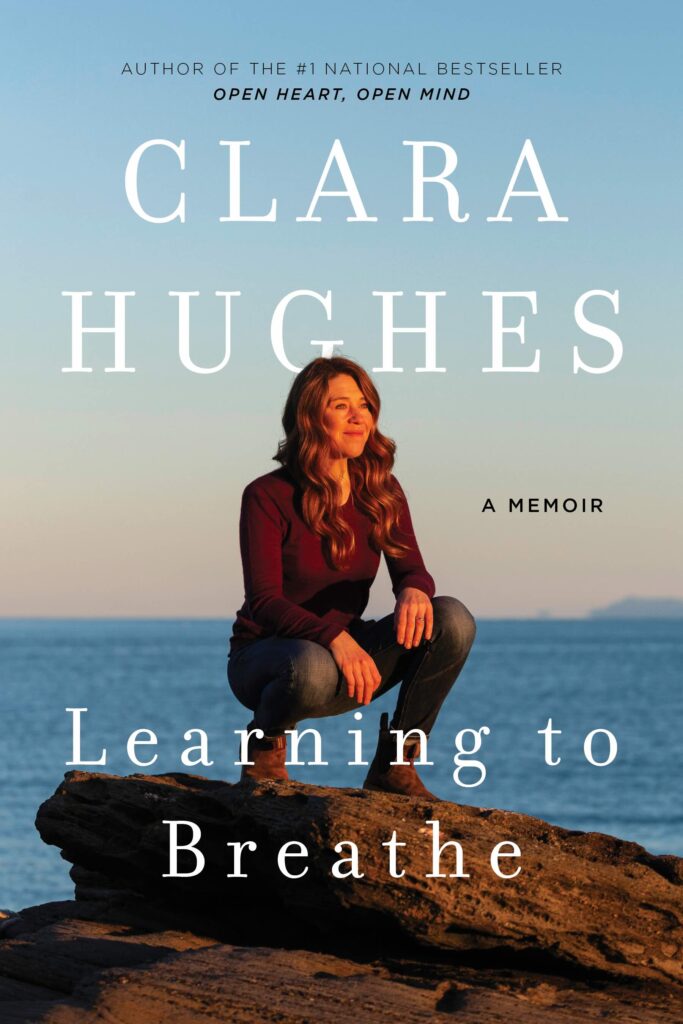
She had to confront long-ignored wounds, saying, “Our secrets don't keep us safe. They actually keep us caged up.”
What followed was a two-year journey involving psychotherapy, somatic therapy, and psychedelic-assisted therapy, through which she began to confront childhood experiences and deeply ingrained beliefs about her own worth.
“I left every session I did swearing to never ever do that again,” she says. “Because it was really, really hard.”
But she continued, gradually learning to recognize feelings she had spent years suppressing, deflecting or burying. She describes the process as a journey back to herself.
“I look back at the constant inner dialogue that I had that was telling me, and actually believing, that I was never enough,” she says. “And I was never good enough, and that I was nothing even after winning an Olympic gold medal.”
Movement is still medicine for Hughes, but she is now able to move forward without needing to outrun herself.
She’s even learned to sit quietly. For years, she could not bear the silence of meditation. Now she spends five or 10 minutes each morning sitting, breathing and checking in with herself.
Hughes hopes readers will recognize something of themselves in her story, whether they are confronting menopause, recovering from injury, navigating depression, or simply trying to understand why achievement has failed to bring the satisfaction they expected.
When she meets readers on tour, she is often struck by how readily people share their own stories. An extrovert, she says she comes away from these encounters feeling full rather than depleted.
The healing process was difficult, she says, but it allowed her to reconnect with herself in a way that achievement alone never had. She’s developed deeper connections with the people she loves and with nature.
There are still hard days and there is still work to do. Healing, she knows, does not have a finish line.
But she no longer needs to exhaust herself to find peace. She no longer needs to prove her worth. And she is learning that the strength to keep going can sometimes mean allowing yourself to stop.
“For me, learning to breathe is learning to breathe from a place of love, from a place of connection, from a place of empathy and compassion for myself.”
NEED TO KNOW
gritLIT presents Clara Hughes
Interviewed by Robin Lacambra
Tuesday, Oct. 20, 7 p.m.
Playhouse Cinema
177 Sherman Ave. N., Hamilton
Tickets here
Upcoming gritLIT events include:
- Emily St. John Mandel is an internationally acclaimed Canadian writer who now lives in New York City. She’s touring her new book Exit Party, and will make a sold-out stop in Hamilton where she’ll be interviewed by Wendy O’Brien, Sunday, Oct. 18 (sold out);
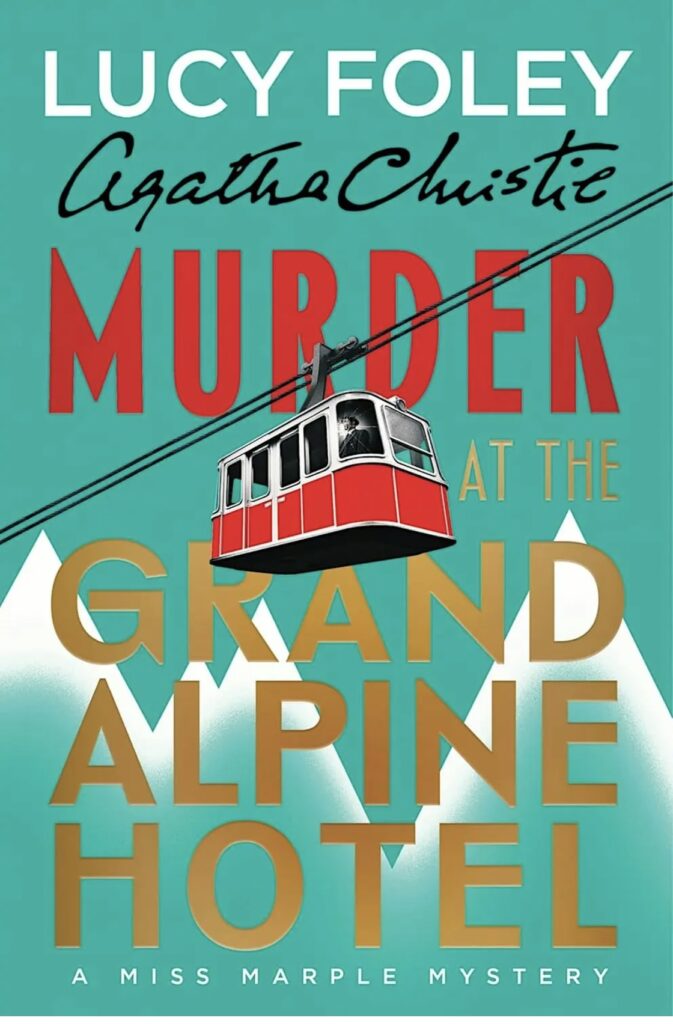
- Lucy Foley in partnership with the Hamilton Public Library on Nov. 6, 6:30 p.m. Foley is a popular British author who has been tasked with penning a new Miss Marple mystery. The result is Murder at the Grand Alpine Hotel. She’ll be in conversation with Canadian writer Uzma Jalaluddin. This is a free event, but registration is required.
- The gritLIT festival will take place April 14-18 at the Homewood Suites by Hilton, and other locations across the city, including opening night at the Art Gallery of Hamilton on April 15. Lineup to come.