






Tej Sandhu: Guided by a North Star

Tej Sandhu returned to Hamilton to pursue his dream of building community through entrepreneurship – just like his grandparents did. Now he’s sharing the lessons he’s learned with the next generation.
Getting the attention of Gen Z isn’t easy. But Tej Sandhu knows how to stop people in their tracks.
In November of last year, he set up a table in the middle of the McMaster campus with a sign that read: “I am an entrepreneur. Ask me anything.” To sweeten the deal, he offered free slices of Cowabunga pizza to those who stopped for a chat.
As the new entrepreneur in residence at the DeGroote School of Business, Sandhu had a clear purpose for the pop-up. He wanted to spark honest conversations about entrepreneurship. He also wanted to introduce students to the Marinucci Entrepreneurial Bridge, a new hub for student entrepreneurship at McMaster, and create the kind of buzz on campus that makes people take notice.
Over two days, Sandhu, a DeGroote alum himself, chatted with over 300 students from across different faculties. The response from students was eye-opening.
“It was incredible how well it worked,” says Sandhu, who made a local name for himself as the founder of MERIT Brewing in downtown Hamilton.

“We got a lot of early-stage questions like, ‘What’s the hardest thing about being an entrepreneur?’ or ‘How do you have enough time as a student to start a business?’ Then it moved to, ‘I have this idea,’ or ‘I’m already working on this research. Here’s where we’re stuck. What do we do next?’ We were able to address both the philosophical and the practical sides of entrepreneurship in the same setting.”
Sandhu has also been active in Hamilton’s business community. He serves as chair of BLK Owned, sits on the advisory board of the Centre for Research on Community-Oriented Entrepreneurship, and is a board director with the Hamilton Chamber of Commerce.
It wasn’t the kind of informational booth you’d expect to see at the university. And that was entirely the point.
“The best compliment I got was, ‘That kind of thing doesn’t belong on campus.’ And that’s exactly what I wanted it to be: new and disruptive to how students usually engage with opportunities.”
At the core of Sandhu’s new role is making entrepreneurship accessible to students. That means meeting them where they are, understanding the barriers they face, and ensuring their voices influence how the programming is developed.
“I don't want to build something that everyone else is doing, or what I think is best,” says Sandhu. “As much as I'm using my experience as a student entrepreneur to inform my work, I also know that things are different now. So it's important for me to centre that student voice, and this was one of the biggest opportunities that I got to do that.”
Things have definitely changed since Sandhu graduated from McMaster 17 years ago. The job market for new grads today is far more challenging. According to the Labour Market Information Council, job postings in Canada requiring a bachelor’s degree and less than three years of experience have dropped by more than half since 2022.
“Out of necessity, a lot of students are thinking about entrepreneurship now,” says Sandhu.
But for many students, the only thing scarier than a bleak job market is the unpredictability of entrepreneurship. Sandhu encountered that fear repeatedly in his campus conversations, where uncertainty was often the biggest barrier holding students back.
“But the rest of the world is uncertain, too,” says Sandhu. “Jobs are uncertain. Getting a traditional entry-level job is tough right now, and even if you land one, there’s no guarantee it will last. So if everything feels risky, why not bet on yourself? Why not build something where you can control more of the variables?”

PHOTO: Genevieve Wakutz, McMaster University Libraries
That approach to entrepreneurship is deeply rooted in Sandhu’s DNA. When his grandparents immigrated to Canada from India, they opened a furniture store in Nanaimo, British Columbia. Over time, that single shop grew into 22 locations across western Canada. But their goal was never financial; it was always focused on building community.
“My grandparents didn’t care that much about furniture,” says Sandhu. “With every new store they opened, they brought people from our village in India to Canada and gave them the opportunity to become new Canadians. They housed them, clothed them, fed them, and employed them. Over their lives, they helped more than 1,000 people from our village build new futures. That was their life’s work. That was their mission.”
Sandhu’s own entrepreneurial story started early. At 16, he was living in Mississauga and recording hip-hop music. By the time he arrived at McMaster, he had turned a solo dorm room into a recording studio, representing producers and renting the space to local artists. He stretched his degree to five years to focus on his business, eventually working with high-profile Canadian artists, including Drake.
“It was fun,” he says. “But I wasn’t building a business. I was building a series of transactions. There was no structure, no process, no brand. By the time I left university, I knew I needed to learn how to build something properly.”
Looking back, Sandhu says many of his biggest lessons came from the mistakes he made early on, lessons he now hopes to pass on to the next generation of entrepreneurs.
“You have to start early and not be afraid to fail,” says Sandhu. “Every entrepreneur hits setbacks. The key is using those moments to learn and adjust. When you’re a student, you’re surrounded by people with different skills and perspectives. That’s the perfect environment to build teams and try things, because the stakes are lower and the opportunity to learn is huge.”
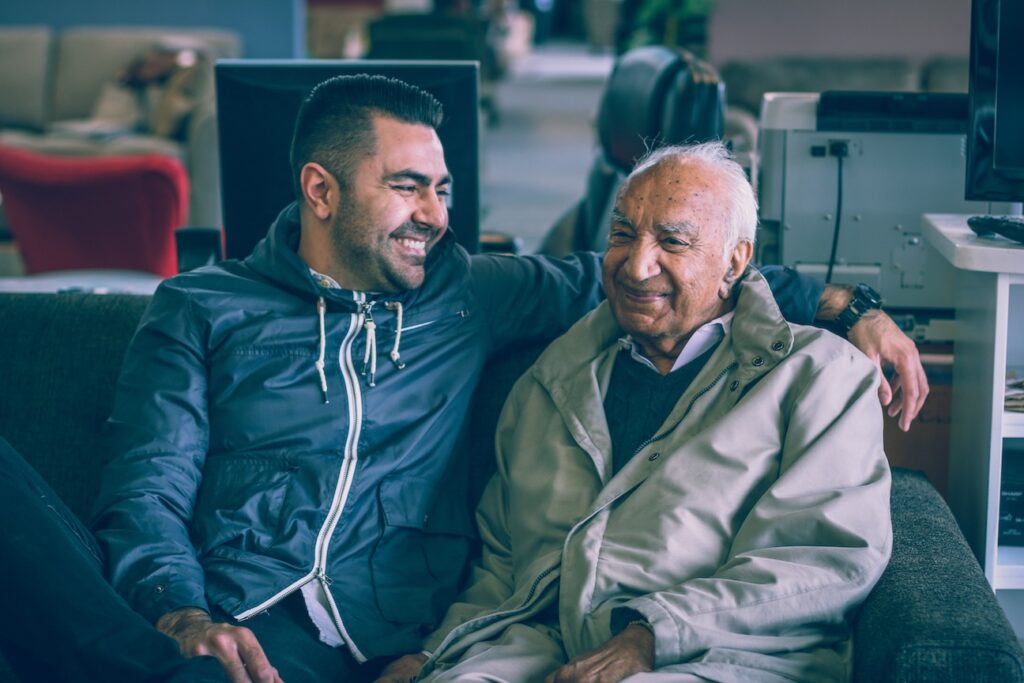
Sandhu went on to work as a music agent in Toronto, then helped launch a live music venture in New York. After years of building, and eventually selling that business, Sandhu found himself wanting a project that felt more meaningful.
That desire led him back to Hamilton and to craft brewing. On James Street North, he saw how independently owned spaces shaped the neighbourhood, and imagined a brewery that could serve a great IPA while also bringing people together.
“I was being an entrepreneur, but not the way my grandparents were,” says Sandhu. “I didn't have this purpose or community at the centre of what I was doing. Whatever I did next, I wanted it to be guided towards that North Star. I saw what was happening in the craft beer industry. I saw how breweries were becoming places where community was created, and how much collaboration happened between breweries and local businesses.”
After apprenticing at a Toronto brewery, Sandhu spent three years working with his business partner Aaron Spinney, fundraising and building what would become MERIT Brewing Company, named after his grandparents’ furniture store. He opened the doors in May 2017.
Located in the heart of downtown Hamilton, MERIT amassed a loyal following and became an important gathering place in the city. On top of hosting events, the brewery funded the Chanan Singh Sandhu Scholarship (named in honour of Sandhu’s grandfather) in partnership with Empowerment Squared, and supported local organizations, including the YWCA Hamilton, Living Rock, Mission Services, and Good Shepherd, among others.

PHOTO: Merit Brewing
Sandhu thought he would work at MERIT forever. But after becoming a father and finding the right buyer, he sold the brewery in November 2024 to Muskoka’s Lake of Bays Brewing.
After the sale, he stepped back from full-time work but began consulting, including with McMaster around entrepreneurship. Eventually, the university asked him to take on the role full-time. He worked with the DeGroote School of Business to shape the new position designed to bring real-world entrepreneurial experience into a hands-on program.
“For me, entrepreneurship is about having a larger impact than yourself,” says Sandhu. “It’s more than finances. It’s about building community and building other people up. I see my move from MERIT to McMaster in the same way, as an opportunity to develop cohorts of entrepreneurs year after year who can go out and put their magic into the world. That's a thrilling thought to me and it's really purposeful.”
When Sandhu was a student at McMaster, support for entrepreneurs was limited. The Marinucci Entrepreneurial Bridge is meant to change that.
It will be housed in the new McLean Centre for Collaborative Discovery, a 130,000-square-foot interdisciplinary learning building located in the heart of McMaster’s campus near Mills Memorial Library and the Burke Science Building. Designed to bring students from across faculties together, the centre will feature collaborative classrooms, project spaces, and areas where faculty, industry partners, and community mentors can work alongside students.
Within the centre, the Marinucci Entrepreneurial Bridge, named for McMaster alumnus and entrepreneur John Marinucci, whose philanthropic support helped launch the initiative, will serve as the building’s largest learning hub focused on venture building and entrepreneurship.
Located on the seventh floor of the McLean Centre, the Bridge will include spaces such as the Teresa Cascioli Teaching Studio, an ideation lounge, and a collaboration studio, along with the social impact hub, and design and innovation hub. Together, these spaces will bring students from across faculties together to brainstorm, prototype, and develop solutions to real-world challenges. Full programming is expected to launch in the fall of 2026.
“I feel rooted in purpose, being able to say, ‘I’ve been you. I know where you're at. I want to listen to what you need and use my entrepreneurial muscles to help build those things for you,’” says Sandhu. “I want entrepreneurs not only to feel supported while they're in school, but to use that support to build real businesses and, hopefully, do good for their communities and others through their work. I think an awesome kind of multiplication can happen when you put yourself in a position to help.”
The Entrepreneurial Bridge will offer a minor in entrepreneurship, available to first-year students in any faculty, and serve as a central hub for venture-building at McMaster.
The initial cohort will be capped at 200 students, allowing for more focused support. The first year focuses on foundational coursework, with later years dedicated to building and scaling student-created businesses through mentorship, milestones, and funding support. The structure is designed to help students build confidence and get practical experience before stepping into the unknowns of entrepreneurship.
“Uncertainty is the perfect time to do something different,” says Sandhu. “It’s the perfect time to test and build something everyone else is afraid to build. We're not building something new, but we’re building it differently. We're centring experiential learning in a way that no one else is. We’re truly innovating and prioritizing that in a way that’s special and going to be really valuable to students.”
Training covers go-to-market strategy and regulatory compliance, and connects students with industry partners with the potential to become early customers. Extracurricular programming, like workshops and panels, will also be open to the wider student community.
“The best time for students to start a business is right now,” says Sandhu. “They’re surrounded by like-minded peers who might share the same ambition, so they can gather teams together to mobilize toward an idea. Hopefully, they have less responsibility than they'll ever have, so they can focus. They're in a place where exploring and failing is no big deal, and where the university supports that exploration to make sure the fall is as small as possible. It's a magical time for entrepreneurship.”
Sandhu is working to involve McMaster and DeGroote alumni in the program, as well as the broader Hamilton business community. Building strong connections across the city’s entrepreneurial network is a key priority, though specifics are still in the works.

“We have so many great people in Hamilton who want to support students,” he says. “One of the most fulfilling things for me is directly connecting a student who’s interested in creating, say, an interior design business with interior designers in Hamilton who can guide them on their path. There’s real value in helping students navigate the university system and the broader entrepreneurship ecosystem in Hamilton, regionally, and even Canada-wide, having someone to guide them along the way.”
While Sandhu says the city was once not appreciated as an entrepreneurial hub, it's now drawing attention from new and scaling businesses. The challenge is to hold onto what made it special in the first place: the independent spirit, the collaboration, the sense of community.
For Sandhu, helping the next generation of entrepreneurs build here is one way to do that.
“Hamilton’s always been very ambitious, very scrappy,” says Sandhu. “Now, more formal entrepreneurs and private equity or venture capital-backed businesses are coming into the city. Everybody has their eye on Hamilton. It kind of flew under the radar for the perfect amount of time. Only those who saw what was special about Hamilton came here, and it was less about numbers and more about community. I'm hopeful that we can keep that independent spirit alive. Because that's very Hamilton.”