
Third spaces shape Hamilton’s social fabric
Gathering spaces, from parks to coffee shops, are what connect this city’s residents and build quality of life in neighbourhoods. We should be doing all we can to nurture them.
They are often taken for granted, until they are gone. Sometimes they emerge and people can’t imagine daily life without them. Other times the need for one is glaringly obvious and an opportunity to transform a space follows suit.
I’m talking about third spaces – places in our community that are neither home, nor workplace. Places we meet up with others. Places we go to on our own to relax. Places that give us an interesting destination. These can be in nature – parks, trails, the waterfront. They can be on our streets – a small plaza at the popular street corner. Or they can be a local business – a coffee shop, restaurant, or bar.
Third spaces are an important part of a community’s DNA as they form a social network of destinations that can make or break the social fabric of a city. These social networks form at different levels.
Through our work on neighbourhood mobility planning in several Ancaster neighbourhoods, we have found that there are an interesting number of third spaces that residents identify as being an important part of their daily life in neighbourhoods. Some of these centre around their neighbourhood park where kids play, parents meet up, people walk their dogs, or residents might go for a walk or run for exercise. The second type of location is the local elementary school, which becomes a hub of activity twice a day with the school drop-off and pick-up routine. This was especially strong for parents or caregivers whose kids walked to or from school. The walk routine has places along popular routes where kids meet up with their friends or where parents socialize before or after dropping off their kids.
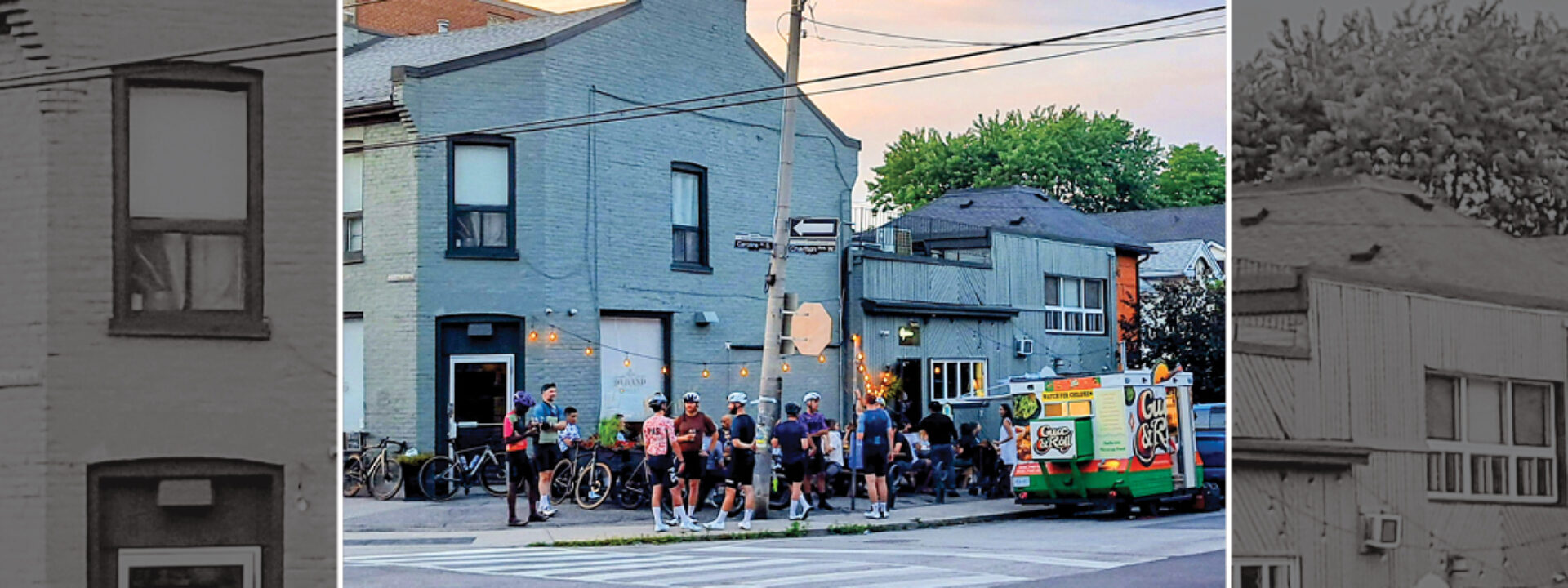
In more urban neighbourhoods closer to commercial districts, third spaces often take the form of the local coffee shop. A textbook example of this can be found on Locke Street South where popular local coffee shop Democracy closed late last year, leaving a gaping hole, literally and figuratively, in the life of this vibrant commercial strip. Several months later, the closed storefront remains a scar on the landscape. By contrast, one neighbourhood over, you find a popular hub of community activity at Durand Coffee. These two locations offer a stark comparison with lessons on a number of fronts. Where the Locke Street location is a vacancy in the midst of an ever-evolving commercial district, Durand Coffee is a legacy commercial space in the middle of a residential neighbourhood. Often called non-conforming uses, these legacy commercial spaces play a vital role in providing a diversity of destinations and services for neighbourhoods.
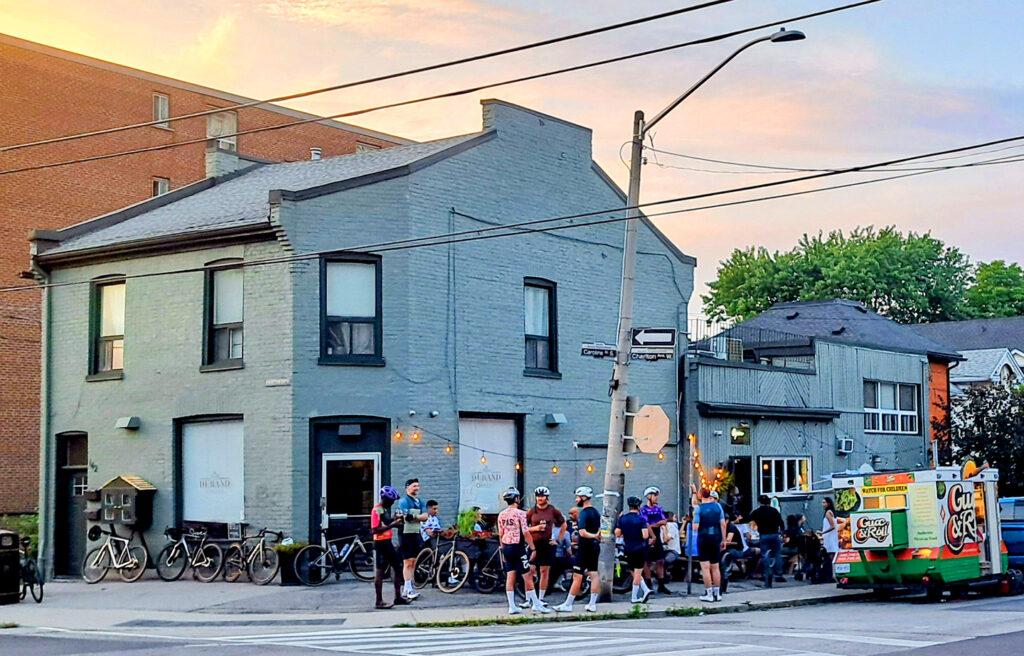
PHOTO: Paul Shaker
Another type of third space include more formal city institutions such as a recreation centre or library. Go to any library branch and you will see a wide variety of activities, with a diversity of users. These are important hubs for all sorts of reasons. The intensity of the current debate over whether to require card access to the downtown central library branch is precisely because people value this location as an important third space in their daily life.
When planning our city, we should be investing in more third spaces as a means of boosting our quality of life. Further, we can look at the successful third spaces all around us as a roadmap for where we should focus our efforts. For example, at the neighbourhood level, park space is clearly an important piece of neighbourhood social infrastructure, not just a space to have sports facilities. More passive recreational space that gives residents opportunities to meet up should be prioritized. From a landscape-design perspective, we should get creative. If we need to install a stormwater pond to deal with rainwater, make it a feature with seating and a lookout. If there is a buried creek under existing parkland, consider daylighting it to create a unique water feature with trails and seating for residents to visit.
Equally important is the connectivity between these great social nodes. On this front, we need to get serious about rebalancing the priority of users on our roads. This means redoubling efforts on better street design to make the links between third spaces safer, more convenient, and enjoyable. We need to transition from thinking of street safety as a general goal as part of location-specific road design, to a deeper understanding of the actual network of spaces that are being connected. Similarly, it’s not just about what spaces are connected, but how. On this front, the streets need to be made safe for pedestrians, not “safer,” but redesigned to a standard where they actually become a viable way of getting around on foot. This is what will grow and sustain third spaces. The ultimate test of whether a neighbourhood is successfully designed or not, can be found in the number and vibrancy of its third spaces.
Aside from city infrastructure that can connect public space, like parks, together, we can be more welcoming and encouraging to smaller-scale commercial activities in legacy, non-conforming spaces. These spaces exist all around the city. As part of our work in Ancaster, many residents referred to a popular gelato shop, located smack in the middle of a residential neighbourhood. This widely popular spot is a classic third space and would likely not be allowed if it was proposed from scratch today. Ask every one of those residents and they would agree that their neighbourhood would be a poorer, less interesting place if that gelato shop wasn’t there.
Looking back to the example of Durand Coffee, I had the privilege of assisting the owners through the planning process when they opened years ago. We had to make a solid planning argument to the City for why a coffee shop should be allowed in this legacy space in the current residential neighbourhood. Our submission was strong and supported by neighbours, which led to approval, but the outcome was not a foregone conclusion. Looking at this vibrant community hub today, one can only imagine what their neighbourhood would be missing had this third space not been allowed to open. Seeing the success of these commercial third spaces, City planners should make every attempt to ensure more can open across the community.
Overall, it’s not an exaggeration to say that third spaces are a driver for Hamilton’s quality of life. Strong social fabric is essential for strong economic activity. A successful network of third spaces should be a focus as we strive to build a stronger Hamilton.
Paul Shaker is a Hamilton-based urban planner and principal with Civicplan.