



CITY VIEW: TRANSFORMING GRIEF

Danielle Zucchet lost her son to cancer and now leads the Kemp Care Network, formed more than 30 years ago to address the needs of individuals living with a serious illness, facing their last chapter, or grieving a death. The organization is fundraising for the opening of Keaton’s House – Paul Paletta Children’s Hospice, which is named after her son.
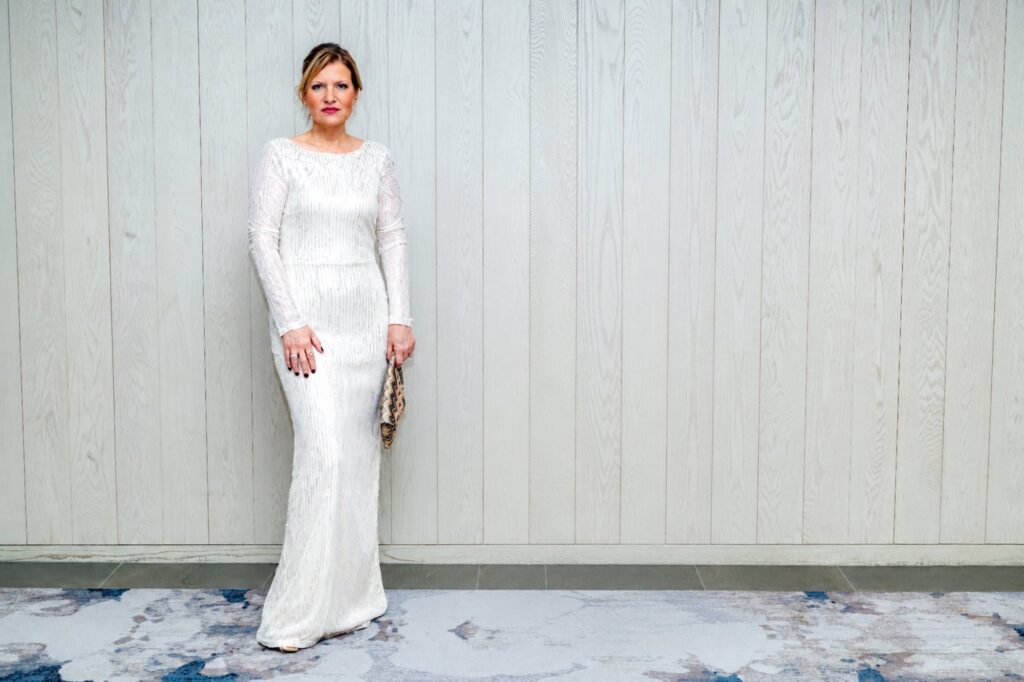
DANIELLE ZUCCHET grew up in Etobicoke and Mississauga and lives in Burlington with her spouse and daughter. She holds an MBA from the University of Fredericton and an honours biology degree from the University of Waterloo. After leaving a successful two-decade career in the dental and orthodontic sector to pursue purpose-driven work, Zucchet is now CEO of Kemp Care Network, which provides hospice care, community programs, and grief support. She is also helping bring Keaton’s House – Paul Paletta Children’s Hospice to life. Inspired by her family’s experience with loss, she is committed to ensuring individuals and families facing serious illness receive dignity, compassion, and exceptional care.
Tell us about the Kemp Care Network, its facilities, and its programs.
Our organization was started in 1994 by our founder, our namesake, Dr. Bob Kemp, who was a palliative care physician in Stoney Creek, and he really saw at that time the gap that existed for his palliative patients and rallied the community together to build the 10-bed hospice where it stands today in Hamilton on Stone Church. He started some of the programming that we still run today in terms of our day wellness program, end-of-life support, and our volunteer visiting. We also run different programming for grief and bereavement, including a bereavement camp for children, to meet people where they are. That is for anyone in the community who's experienced a loss. They don't have to have come through the hospice. Any individual can access our grief and bereavement programs.
We have just shy of 70 team members on our staff, and that is administrative staff, frontline staff – nurses, PSWs, physicians. We have full-time and then part-time and casual staff. And we are over 150 volunteers right now that help in various capacities across the organization. And a huge shout-out to them because we absolutely could not do what we do without our volunteers. They help in the kitchen, they help at the bedside with supportive care around grief and bereavement and companionship, and at events, and you know, it's a true testament to the legacy of Dr. Kemp that a number of our volunteers knew him, worked with him, and are still volunteering with us today. And that actually makes me really emotional because I think what a beautiful legacy that they still want to be involved with us.
What does your role as CEO entail?
So I provide overall direction and leadership under the Kemp Care Network umbrella. I really work closely with our board of directors, our senior leadership team, our staff, and our volunteers to make sure that the care that we're providing is true to our values and our direction as an organization. A large part of my role is building relationships and connecting with families, with donors, with health healthcare providers, and the government. And right now, that includes trying to strengthen our existing programs while simultaneously building out the future development of Keaton's House.
Can you tell us about your journey with the loss of your son?
Keaton was a firecracker of a kid, an absolute firecracker. So fun. He just had this spark about him that he lit up every room he walked into, and I don't think he has ever met anyone that he didn't have belly laughing about two minutes afterwards. But he was a deeply old soul as well, and he was four and a half when our daughter Ella was born, and three weeks later, we learned that he had a cancer diagnosis. We went from thinking we had this million-dollar family to our world turned upside down. We went through three tumultuous years of remission and relapse, and remission and relapse. And throughout it all he never complained. In the summer of 2010, things took a turn, and in that early fall, we had to make the difficult decision to stop the chemo treatments that weren't really helping him anymore. We made the decision to truly go and make as many memories as we could with whatever time we had left. He went to make his rainbows and shooting stars on Dec. 4, 2010.
I've said this to many people when I say he was an old soul. So many times, when we would get discharged from the hospital, we never knew what he would feel like eating because of the treatment he was on, or the steroids. And we would always stop at the grocery store on the way home, and at our grocery store there is a big flower shop in the middle of it. And he would say, ‘Mama, let's go in and smell the flowers.’ And I said, ‘Keaton, don't you just want to get home? Let's get in and get out and get you home.’ And he said, ‘Mama, there's always time to stop and smell flowers.’ And so to this day, no matter how rushed I am, I will take two seconds to go and look at the flowers, because I can.
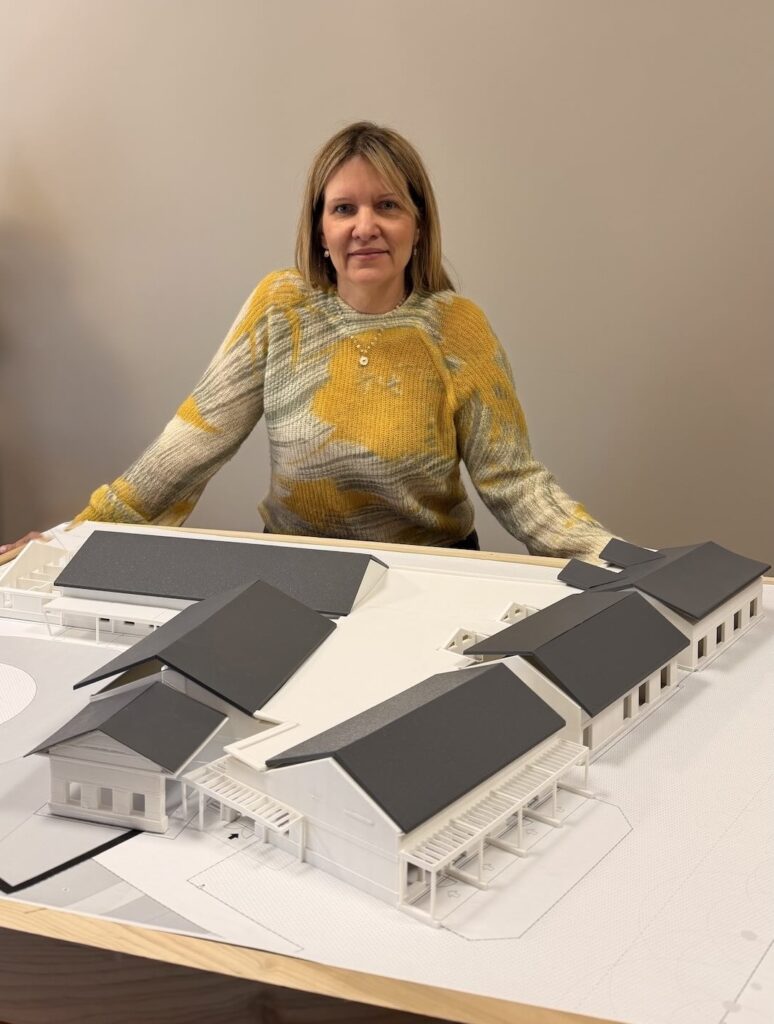
PHOTO: Kemp Care Network
How did your loss lead you to the Kemp Care Network?
Probably about six to eight months after his passing, I was introduced to another family who was, unfortunately, walking a similar path to us, and they asked me about a children's hospice in Toronto. They were being treated out of Sick Kids, and we were out of McMaster, and I was shocked. I said, ‘I'm not sure what you're talking about. Tell me more.’ And they explained that they had the option of, as we did, of being at home or in the hospital. Those were the only two options for us at the time, and because our daughter was so young, and for us, it just wasn't the right decision for us to have Keaton at home. It just wasn't right for us. We had him in the hospital, and the care team at Mac is top notch and did everything they could.
But the reality is, you're in a clinical setting, and my family was out in the hallways, and you could hear the codes going off. And when I spoke to this family, I said, ‘Tell me about this place.’ And you know, they described the home-like setting, and the care there, and I said they I thought they should explore it as an option. And then I ended up attending a grief and bereavement seminar that Kemp had put on at the RBG, and I learned that they were exploring the potential of bridging the gap for children and their families. I was with my cousin, and she smacked me and said, ‘This is why you're here today. This is why we came.’ And so I went up and and I spoke with the executive director at the time, and one of the social workers, and learned about what they were trying to do. And there was a position open, and I jumped in and applied. And here we are, nine years later. I was the director of development for just shy of five years. I came from sales in the corporate world, so it was an easy transition because it's about meeting people and building relationships, but with purpose and with meaning.
What is it like to work in the palliative field after experiencing such a deep loss?
Often times people say to me that they don't know how I work in this space day in and day out. But there's an immense beauty to it. Yes, there are sad moments because people are watching their loved ones pass, and especially with children, but there is an immense beauty in sharing this time. And I think what a gift that these families that come through our doors share their vulnerability and allow us to care for them in those moments. There is so much laughter and so many beautiful moments that are experienced day in and day out.
Now that I'm immersed in this palliative care world, and I see the beautiful care that the team provides day in and day out to our adults, but still we don't have this to support seriously ill children and their families, it's deeply personal for me. My family’s experience showed the gap, and now being immersed in it, we have to do everything that we can to ensure that there's a choice for families.
Tell us about the progress on Keaton's House – Paul Paletta Children's Hospice.
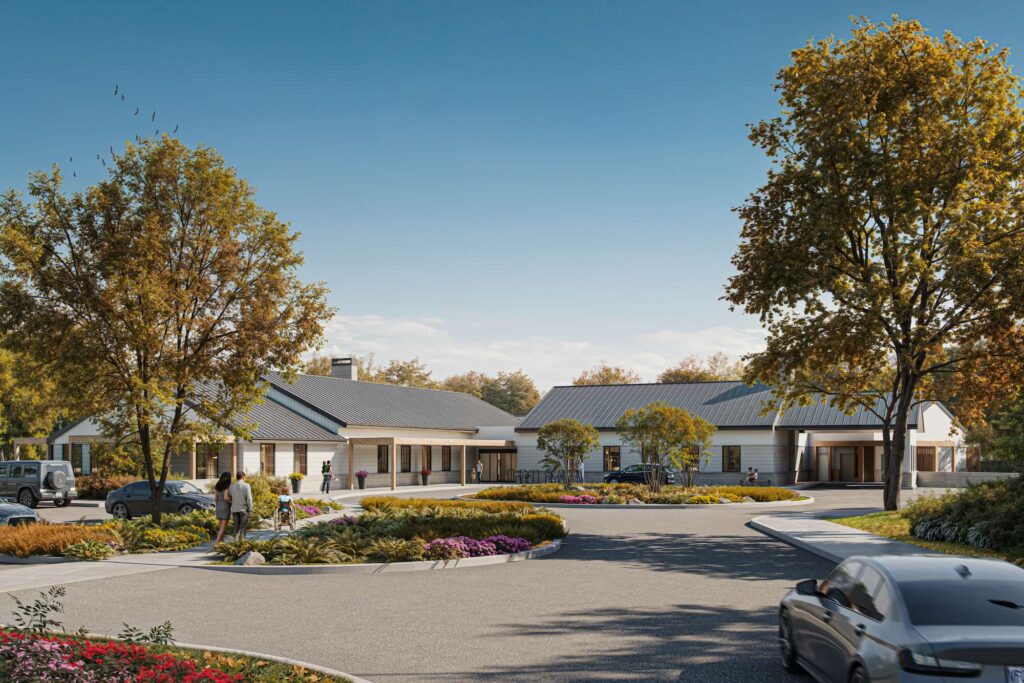
We're at a really exciting time. We're in the throes of our $25-million campaign, and we're at just shy of $15 million. But we are in the next phase of movement on site. The site works will start in the next couple of weeks (August). We'll see fencing go up and soil improvements, and we are ready to go. We've got our permits, and so it's really shifted from a vision to reality, and it's really exciting.
Why did you choose the Dundas location?
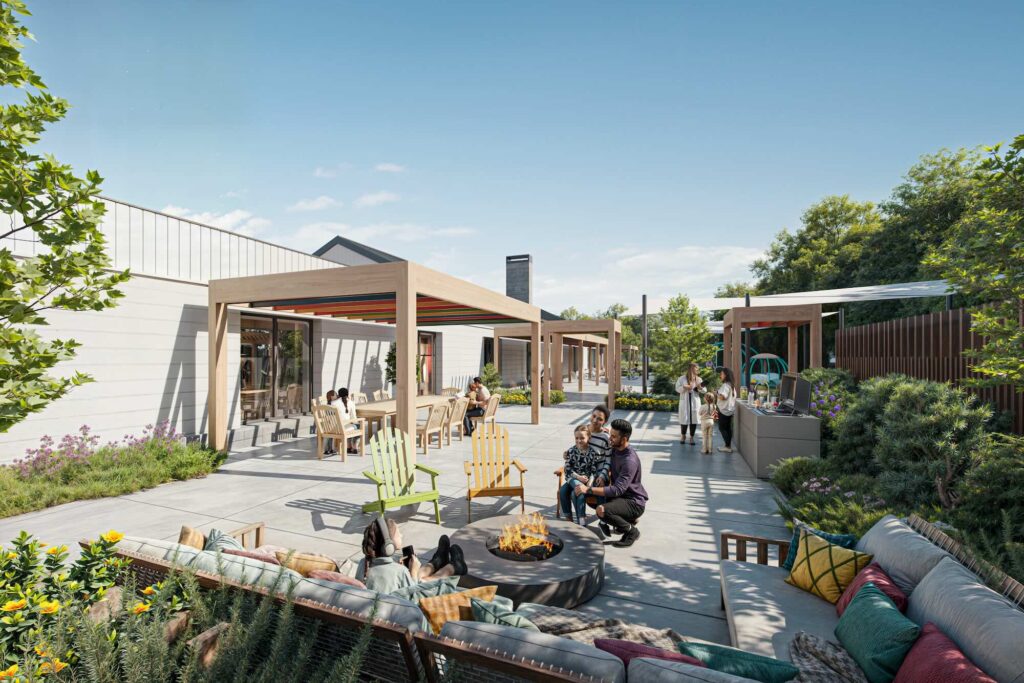
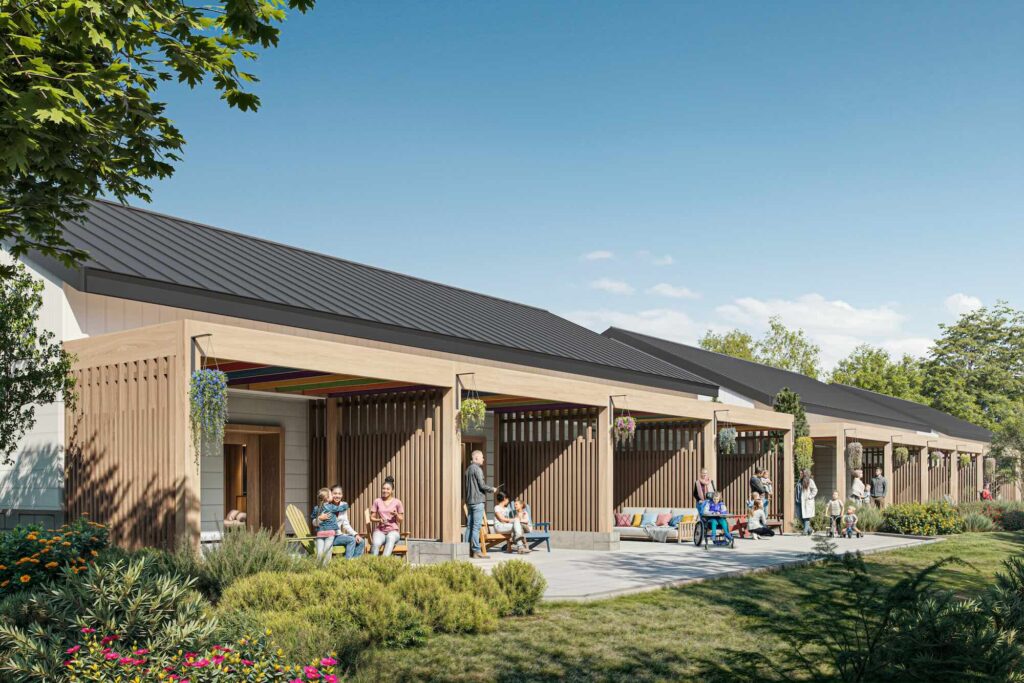
We had been looking for a number of years for a location, and we looked at various pieces of land. This piece of land in Dundas is in a residential neighbourhood and it backs onto the rail trail. There are beautiful trees and a community, and it's literally 10 minutes away from the hospital. So you know, depending on where the child or family needs to be, they're immersed in community, but very close to the hospital, and it's just a very serene environment. There'll be beautiful gardens on site that families can walk through and sit in and be in nature, which is so important for that feeling of tranquility. I feel like it was well worth the wait because, in my opinion, it's the most perfect spot.
What is the relationship between Keaton’s House and McMaster Children's Hospital?
We’ve got a partnership with McMaster Children’s Hospital and its Quality of Life and Advanced Care program (part of Hamilton Health Sciences) (which supports infants, children, teens, and families facing serious, life-limiting, or life-threatening health conditions.) The QoLA team can run community programming out of the hospice and keep families and children out of the hospital as much as possible. So for things like pain and symptom management, they’ll be able to come into the clinic as opposed to going into the hospital. Our catchment area is the same footprint that McMaster Children's Hospital serves.
How will care be delivered at Keaton’s House?
It will be a 24/7 facility that's really centred on the needs of each child and the family. The care model is really developed in line with Hamilton Health Sciences and McMaster Children's Hospital, with specialized pediatric expertise in a home-like setting, with wraparound care. It's a 10-bed program, providing end-of-life care, respite stays, symptom management, transitional support, wellness programming, as well as we will continue to support the whole family unit through grief and bereavement. It will really complement both home and hospital, not replace it. The goal is to give families another trusted option to provide the right care in the right setting when it's needed.
What need will Keaton's house fill?
Well, currently there's no dedicated children’s hospice in southcentral Ontario. It's hard to believe. Even though at any given time there are over 1,000 children in our region that face serious illness every year, there's no dedicated space for respite or end-of-life or grief and bereavement support, and for many families, the choices can feel limited to being at home or hospital. There are so many children that have very complex medical illnesses and their families have mini hospital rooms set up at home. The simple things that we take for granted, like having a cup of coffee, these families can't do in their homes. So specialized care in a setting that is as close to home will give respite for caregivers. It bridges that need by providing the right care in a place that's designed around children and families. We’ve got a world-class children's hospital, and yet we don't have a children's hospice associated with it.
For families living with a child who has a serious illness, it can be so immensely isolating. To create a space that is centred around children and families, and supporting the whole family unit, my hope is that it will make families feel less alone.
What does it mean to have this facility named after your son?
Paul Paletta was really the driving force behind that. It's incredibly emotional and deeply meaningful to see or and hear Keaton's House that carries his name, that his legacy will live on. But it's not only about our family. It's about giving other children, and I've met so many families along the journey, a home that carries his name that will provide so much comfort and compassion for other children and families. That’s a choice they deserve.
How did developer Paul Paletta become the lead donor on Keaton’s House?
About five years ago, I was invited to speak at a Gowlings summit and tell my story as part of a community initiative that was bringing community partners together. I had never met Paul prior to this, and I got up and told my story, and Paul came forward and said, ‘I want to help. I want to make this happen.’ And he has been the biggest champion on this project, and continues to be an advocate in driving the project forward. His commitment and his tenacity, I will be forever grateful for. He's an anchor on this project that continues to be collaborative and an ambassador and he's so passionate about it that he makes other people passionate and want to be involved, which is a really beautiful thing.
What do you need from the community to realize the vision of Keaton’s House?
So I think a few things. We need the community to understand the need. Unless you're touched by hospice care, people don't realize that this is such an immense need in our community. Share the story. Help us finish what we've started. We've got a $25 million capital campaign, and reaching it will take individual donors, businesses, foundations, and community support to make it happen. We need to fundraise and continue to fundraise for the project, as you know hospices are only funded at about 50 per cent operationally and 10 per cent for capital.
How would you describe Hamilton as a centre of palliative care?
Hamilton has a deep clinical expertise, strong education and research, and community organizations that understand the importance of palliative care to quality of life. I think we're fortunate to have a partner like Hamilton Health Sciences and McMaster Children's Hospital, along with other experienced hospice and community providers. I think what makes Hamilton especially strong is the willingness to collaborate and to bridge these gaps together, and Keaton’s House will fill an important gap by bringing dedicated pediatric hospice care to the region.
What's the greatest joy in your work?
I think the simple compassionate moments that hospice care can make, and that may just be a family having dinner together, or sharing a quiet moment out in the garden. Those moments remind me that while we may not be able to change an outcome, we can certainly change the experience of care. I find it fills me up when I see the joy and the pride that our team takes and our volunteers take in showing up every day, providing that care and compassion.
What is the greatest challenge in your work?
The awareness around the need for hospice care and the resources that are available to support it. The challenge is growing responsibly and maintaining high-quality care and trying to build sustainable funding. It is definitely challenging, and it's emotionally demanding work, and that is the reality of it. There is a big misunderstanding around hospice and palliative care, and I think part of our ongoing job is to help people understand that this care is about quality of life, and comfort and dignity and choice, and that there is an immense beauty in that.
Do you have a story from a patient/family that stands out for you?
When I say that there is immense beauty and legacy moments and memory making at the hospice, and that's what we will be creating at Keaton's House as well. We have held weddings in our facility, and graduations and Super Bowl parties. Recently, we had a family that had a get-together, and in our beautiful, great room in our facility. They brought all their friends and had a dinner together, and it was just some normalcy for them. To be able to make that happen and be part of these experiences for those families is incredible. There's so much more to that circle of care and providing dignity for these families. It's not just clinical.
Who inspires you?
On a personal level, I would say my family has been my greatest source of inspiration. Certainly, the loss of Keaton and and seeing his resilience and his zest for life forever changed my understanding of grief and continues to shape both my life and my purpose. But my family, my spouse, and our daughter remind me every day why this work and why these moments matter, and they continue to teach me that even through difficult times and difficult moments, that love has the power to create hope and inspire and create purpose.
What's your favourite hangout in Hamilton?
My spouse and I frequent the Hamilton Farmers’ Market often. I love puttering around the market. I love the diversity. We love walking there, and our daughter when she's home will come with us. A typical Saturday morning for us is to head down there.
What's your favourite meal in Hamilton?
I'm part Italian and part Polish, so I gravitate towards carbs. I like so many restaurants that it’s very hard to pick. But I love the cappuccinos from the market.
Is there a Hamilton arts or cultural event that you look forward to attending?
I look forward to Supercrawl. Hamilton is, I think, incredibly understated in terms of culture and the arts. It really brings out and highlights what the city has to offer.
Is there something you brag about Hamilton to outsiders?
There are so many incredible restaurants in the Hamilton area, and great little shops.
What does Hamilton need more of?
I think Hamilton does a great job of collaborating, but I think that we could do more collaboration. We've got incredible organizations and generous communities that work together for a shared purpose. And I think when we expand that circle of collaboration, we can accomplish extraordinary things. And I think that it makes it possible to build stronger, more compassionate communities.
What does Hamilton need less of?
In my world, it’s stigma around death and dying and hospice care. It's something that people don't want to talk about or think about. We have these conversations that 100 per cent of us are going to get there. We plan for everything in our lives. We plan for school. We plan for major life events, and we plan for birth. Dying is an event in our lives, but many people just don't want to think about it that way.
At the end of the day, this work is about people, and it's about the person receiving the care and the family unit that surrounds them, and the team and the volunteers who show up in the community, and that all make the work possible.