






State of the City: Hamilton needs 50 ideas to turn around the downtown
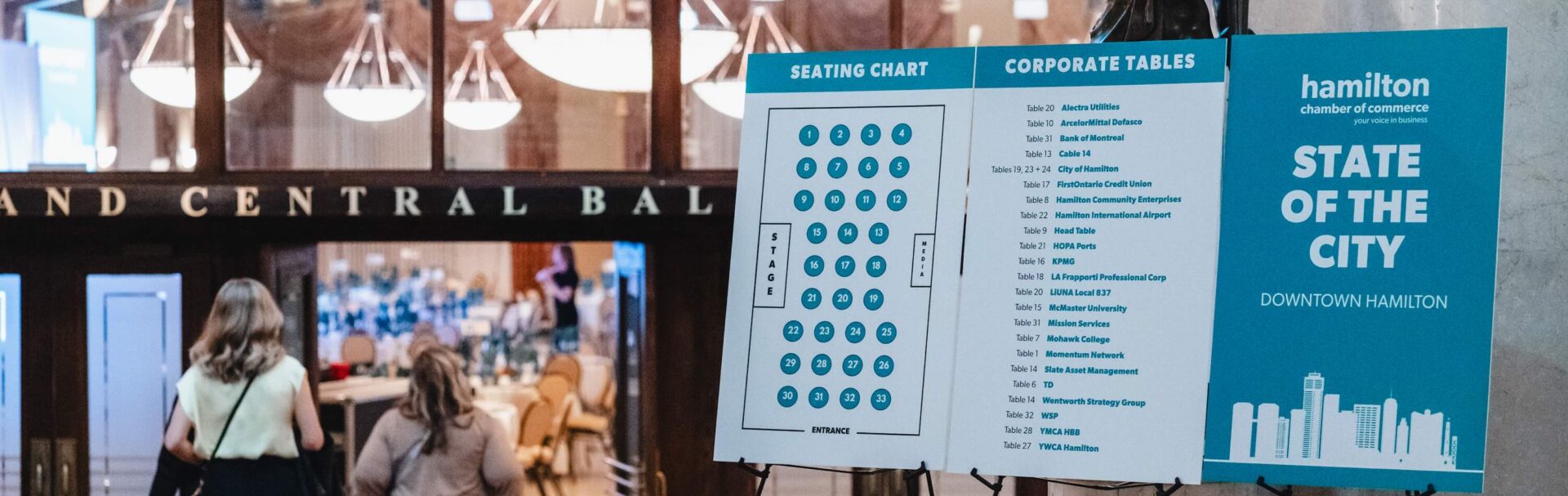
Business leaders, urban planners, and police officials call for well-executed small wins, stronger partnerships with other levels of government, and coordinated community action to restore confidence in the city’s core.
Hamilton’s downtown revival will depend as much on fixing everyday problems as it does on major infrastructure investments, civic and business leaders said at the State of the City, hosted by the Hamilton Chamber of Commerce this week.
The event, hosted by retired TV journalist Annette Hamm, brought together representatives of major local institutions, including McMaster University, the Hamilton-Oshawa Port Authority and Hamilton International Airport. But the bulk of the program focused on downtown Hamilton, where concerns about public safety, homelessness, addiction, vacant storefronts, and business confidence have become central to the city’s economic future.
The message from speakers was clear: Hamilton has significant assets and opportunities, but turning them into a thriving downtown will require coordinated leadership and action that residents and businesses can see.
“We need 50 things that need to be done differently,” said Carlos Alvarez, a partner at KPMG, which has been in Hamilton for 140 years.
Alvarez said that the city had been losing ground downtown over the past five or six years, but argued that waiting for a perfect plan was no longer an option. He urged business and community leaders to bring forward practical ideas and invest the work needed to make them happen.
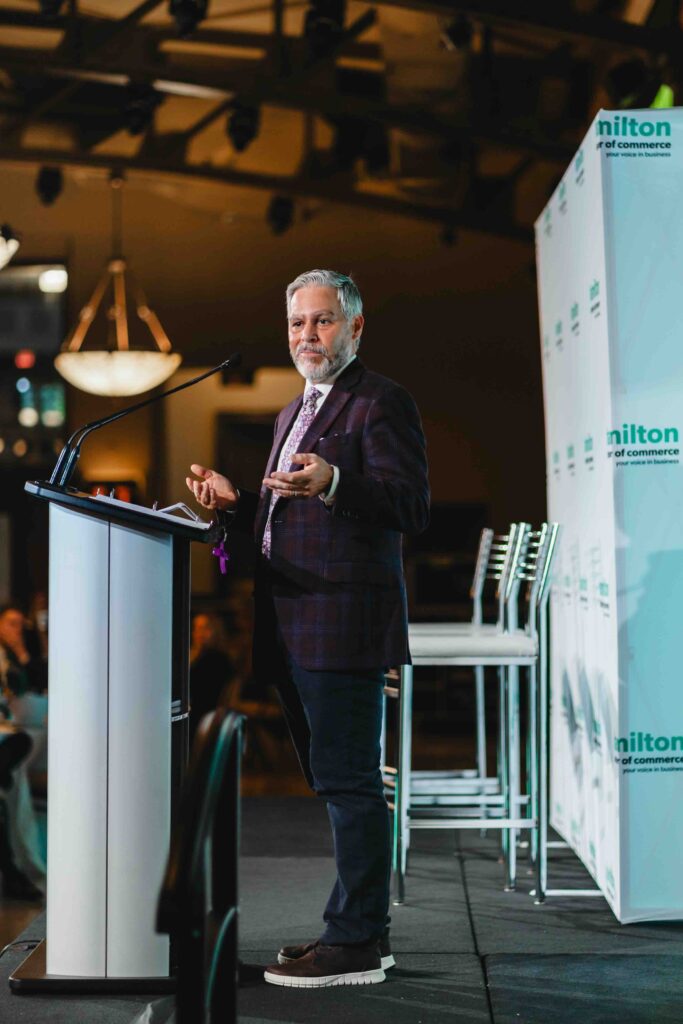
“I think we're at that stage now where we need to try different things, and we can't wait for something to be fully thought out in a 50-page philosophy document. I think that time has now passed, so I do have hope that in the near future, call it a year or two years, that we can turn the ship,” he told the crowd of about 330 people at Liuna Station.
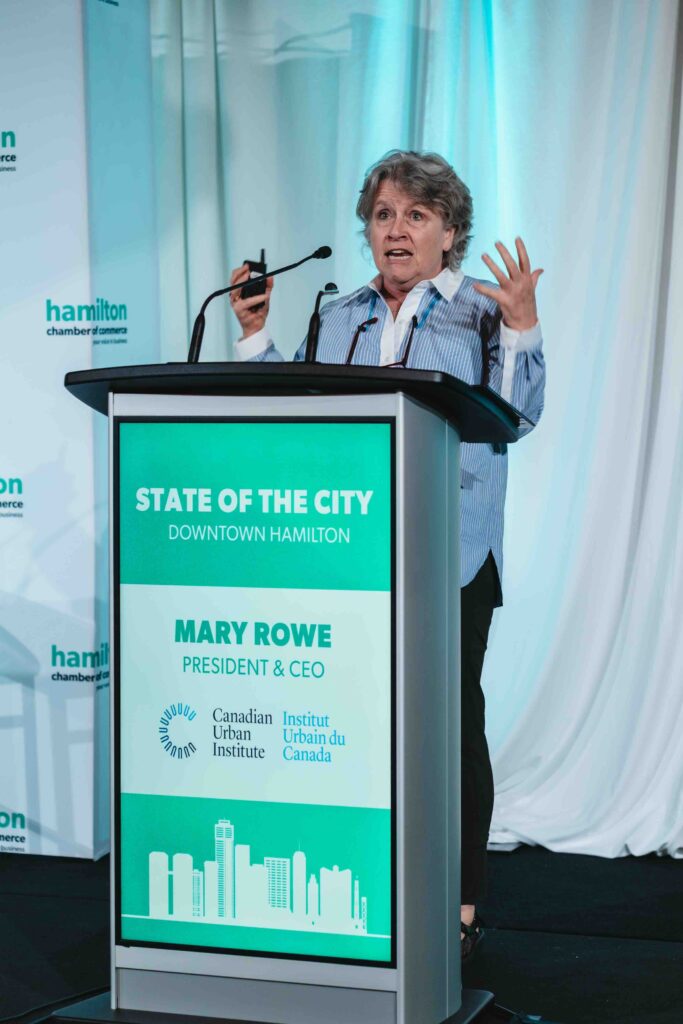
That call for action was echoed by Mary Rowe, president and CEO of the Canadian Urban Institute, who told attendees that Hamilton is not alone in facing downtown challenges. Approximately 100 downtowns across Canada are struggling under similar pressures, she said, creating an opportunity for communities to learn from one another and to collectively advocate for coordinated government investment.
Rowe said Hamilton’s 10-year downtown revitalization strategy, combined with a historic, multi-billion-dollar investment in LRT is something other cities can only dream about.
Calling upon the words of the legendary late Mississauga mayor Hazel McCallion, Rowe argued that downtown revitalization requires cooperation across municipal, provincial and federal governments.
McCallion said the federal government has all the money, the provincial government has all the power, and municipalities have all the problems. Rowe added that communities have all the solutions.
“And that's why you need to be in tandem with governments to make sure that you're providing this kind of best advice from the ground up,” she said.
“Government cannot do all of this. It just can’t.”
Small changes, build trust
Hamiltonian aren’t looking to a landmark development to begin revitalizing their downtown, said Christophe Rivet, the urban-planning consultant who led the development of Hamilton’s 10-year downtown revitalization strategy,
After months of walking downtown streets and speaking with residents, businesses and community members, Rivet said he heard consistent requests for basic improvements: clean, well-lit streets, maintained buildings, places to sit, green space, grocery stores, and safe routes to transit.
The findings challenge the notion that sparking a turnaround requires dramatic new development or large investments, he said. And at the root of it all is trust in leadership to deliver.
“Trust isn’t produced by consultation,” Rivet said. Instead, it grows when people see small, visible improvements delivered reliably and on schedule.
When the smaller things are done right, the public will have confidence in ambitious projects.
He added that businesses are essential to the process, with storefront activity, opening hours, lighting, and property maintenance all contributing to how people experience downtown.
“When a corridor goes dark at six, enforcement is being asked to do a job design should have done,” he said.

‘We’re not going to enforce our way out of this’
The city can’t arrest its way out of challenges in its downtown, said Hamilton Police Chief Frank Bergen.
He told the audience that 41 per cent of police calls for service fall within areas involving complex social needs, including homelessness, addiction, and mental illness.
The chief highlighted several downtown initiatives, including a high-visibility police substation at Jackson Square, increased foot patrols, and increased street outreach.
Bergen said eight officers were assigned to the broader foot-patrol effort, alongside three to four officers working from the King Street East substation.
Between June 22 and the end of September, the substation handled 271 calls, he reported.
The service has also established an online portal through which members of the public can report concerns about illegal activity and drug-related activity. Bergen said the portal had received 79 reports so far.
The initiatives are intended not only to respond to incidents but also to change how people perceive and experience safety in the core, said Bergen.
St. Joseph’s Healthcare Hamilton is about to launch the Community Assessment Recovery Engagement and Safety Initiative (CARES). The mobile unit – a hospital on wheels – that brings mobile medical and mental health care providers from St. Joe's, alongside police officers, peer support workers, social workers, and nurse practitioners to connect with vulnerable people on the street, in low-income housing, and in the business communities downtown.
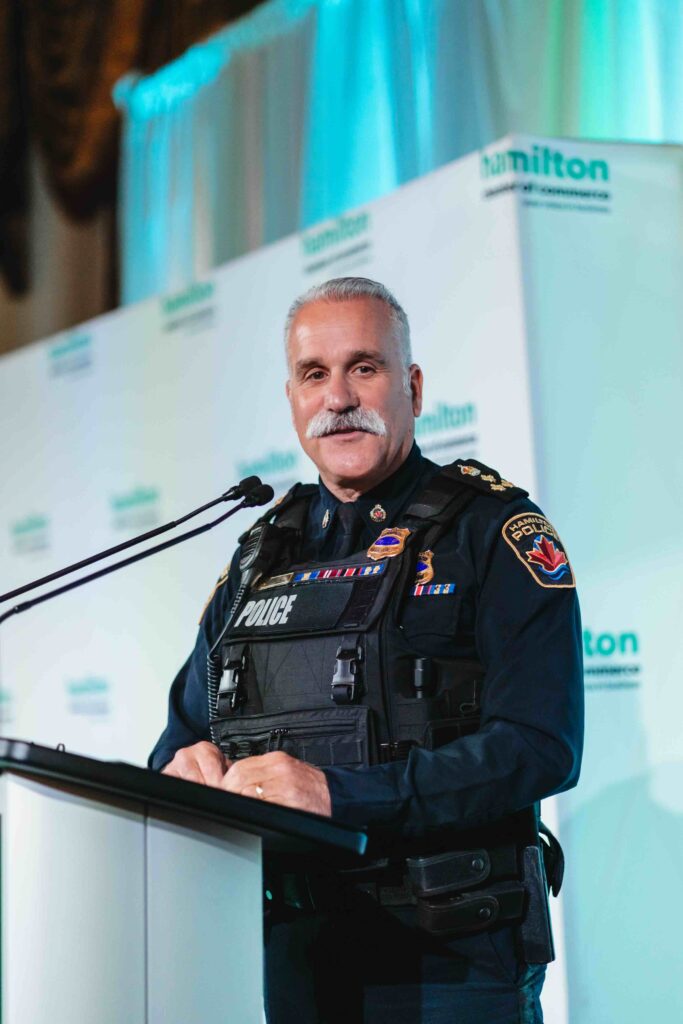
PHOTO: Matko Photo
For Bergen, such partnerships are essential to avoiding a system in which police, firefighters and paramedics become the default response to every social crisis.
He called on businesses and community organizations to identify additional opportunities for collaboration.
“If there’s something we’re missing, there’s something else that we can do,” he told attendees. “Make sure that we have the ability to be a partner with you.”
Bergen also reported positive crime data. There were a record 60 shootings in 2024, compared with 30 in 2025 and 12 so far this year. The chief emphasized that prevention and partnerships are essential to sustaining progress.
“We’re not going to enforce our way out of this,” Bergen said, calling for broader community involvement and more support to address the underlying causes of crime and public disorder.
Transformation and disruption
A transformative project is on the horizon, but it will come with disruption.
Danielle Bury, vice-president of the Hamilton light rail transit project at Metrolinx, said LRT construction offers an opportunity to upgrade roads, utilities, cycling routes and pedestrian infrastructure while creating local employment opportunities.
The project team, she said, is working on detailed design and construction planning, with an emphasis on community engagement, and minimizing disruption to businesses.
The challenge, Bury said, is to deliver a major infrastructure project while protecting the businesses, services and community connections that make downtown Hamilton function.
“It's really built on how we can transform and how we can be part of the solution,” Bury said. “Construction can be hard, delivery can be hard, but the only way we can address it is if we do it together.”
Rivet cautioned that construction must be planned around the people who continue to travel through downtown. “Pedestrians don’t vanish during construction,” he said. “They get redirected.”
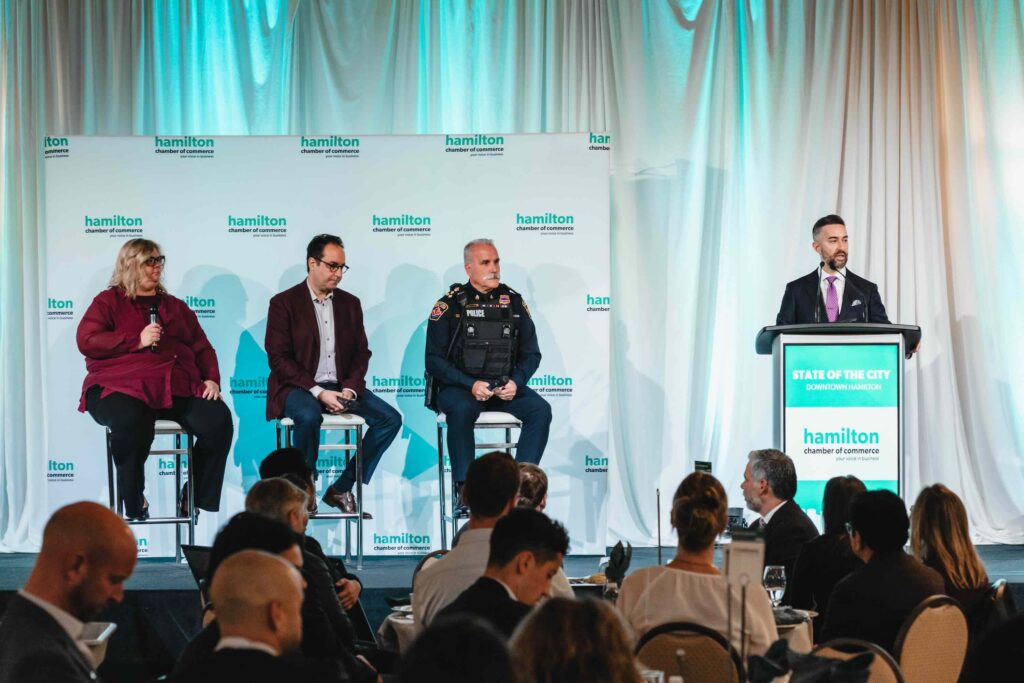
Heart of the city
“As our city's economic and civic engine, downtown is more than a collection of buildings, businesses, and public spaces,” said Greg Dunnett, CEO of the Hamilton Chamber of Commerce. “It is the heart of our city, our largest employment centre, supporting more than 28,000 jobs, and a reflection of our city's ambition, identity, and potential. When downtowns thrive, all of Hamilton benefits.”
Hamilton must align all the downtown efforts that are underway, and build a unified voice for the city.
“Last week, I was on a chamber CEO call from across the country, and during that conversation one of my colleagues began to describe the challenges facing their downtown: public safety and disorder, homelessness, addiction, mental health, and physical crises, declining foot traffic along with vacant storefronts and office spaces, untapped cultural and economic potential, fragmented leadership, and a lack of coordinated economic development,” he said.
“It sounded a little bit familiar, and it stuck with me because Hamilton is not alone in facing these challenges, but we're responsible for how we respond to them.”