

Learn all the nonna secrets at Hamilton workshops
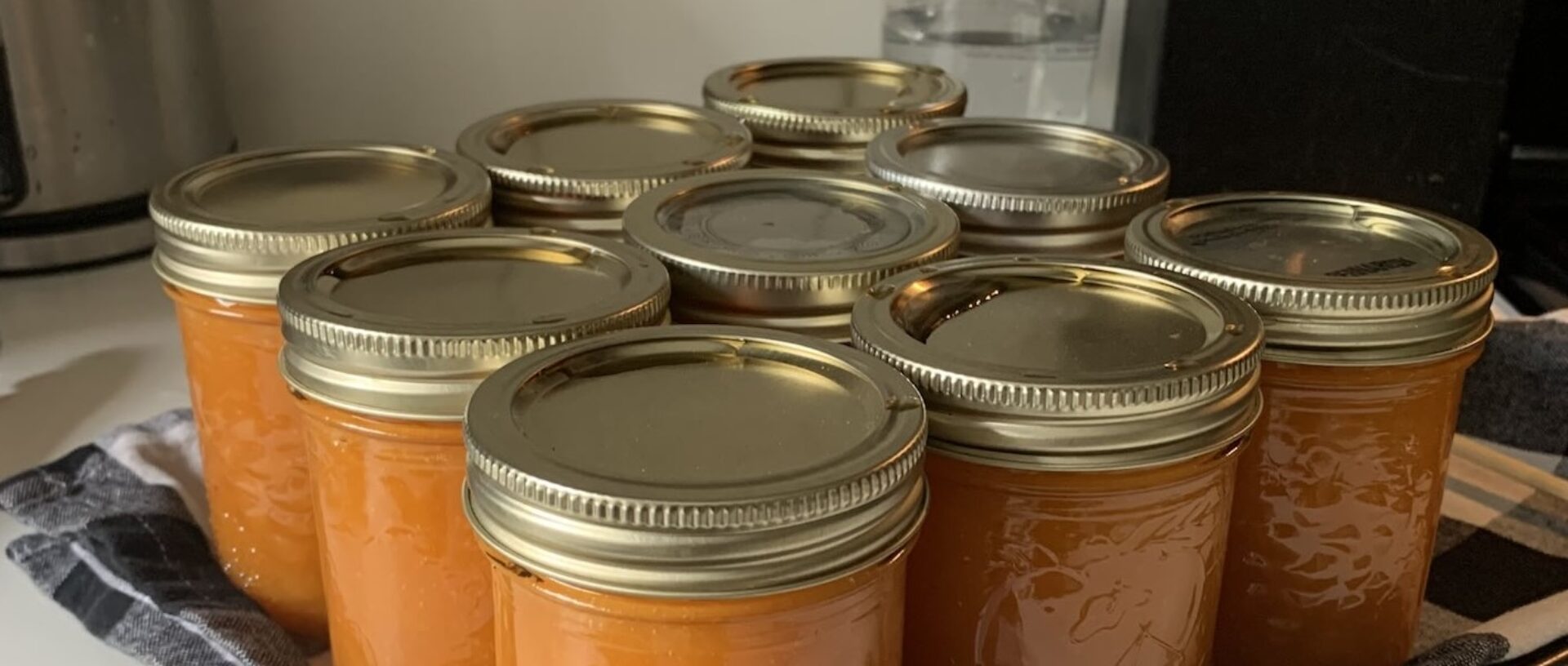
Nonnamaxing is a cute and trendy label for slowing down, enjoying the little things in life, and cooking from scratch. You can learn how to do just that through lessons in soapmaking, candlemaking, and canning and fermenting.
I was innocently scrolling Instagram a few days ago and stumbled across a lovely video, narrated by none other than Whoopi Goldberg, about the latest trend: Nonnamaxing. It’s a cute label for slowing down, taking enjoyment from the little things in life and cooking from scratch. It’s a turning away from modern conveniences that may make life quicker, but not nearly as satisfying.
It’s living like your Italian nonna would have. And even if you don’t have an Italian nonna, it’s something we can all aspire to.
Many people are looking for older, slower ways of doing things. For new ways to get off their phones and out into the world. The good news is, that there are plenty of people in Hamilton who are happy to offer those opportunities to learn, participate and grow with other people.
Anita Joldersma has been running workshops about making homemade laundry soap since 2012. “I was teaching a course called Home with the Heart, a 12-week course for single moms,” she recalls. The curriculum had her teaching about laundry for an hour and a half, and she ran out of things to talk about. Her colleague, beloved local environmentalist, Crystle Numan found a recipe for homemade laundry soap in an Environment Hamilton newsletter and the rest was history.
Joldersma has now run more than 160 sessions for groups of various sizes, either workshops or demonstrations. Each workshop only costs her $10-15 to put on, and participants go home with several litres of liquid laundry soap. Based mainly out of Emmanual Christian Reformed Church, she also goes wherever she is asked. “I’ve gone to a family reunion in Sault Ste Marie and a group of coffee ladies in Lucknow,” she says.
“For the containers, because we make so much, I usually use orange juice jugs or laundry jugs, especially ones that are clear,” Joldersma explains. She raids local recycling bins for plastic containers to hold the soap for her participants, making this perhaps the most environmentally friendly soap you could imagine.
The workshops draw environmentalists who want to save the planet, frugal people who want to save money and still others looking for hypo-allergenic solutions. So why come to a workshop and not just do it at home? It turns out that the pull of community is even stronger than the attraction of saving money or creating hypo-allergenic detergent.
“It reminds me of the quilting bees. We get in the kitchen and laugh. It’s my favourite way to reach out to people. One lady who is in her 80s comes every time and brings containers for me. Sometimes you never see people again, and other times you build a bit of a community.”
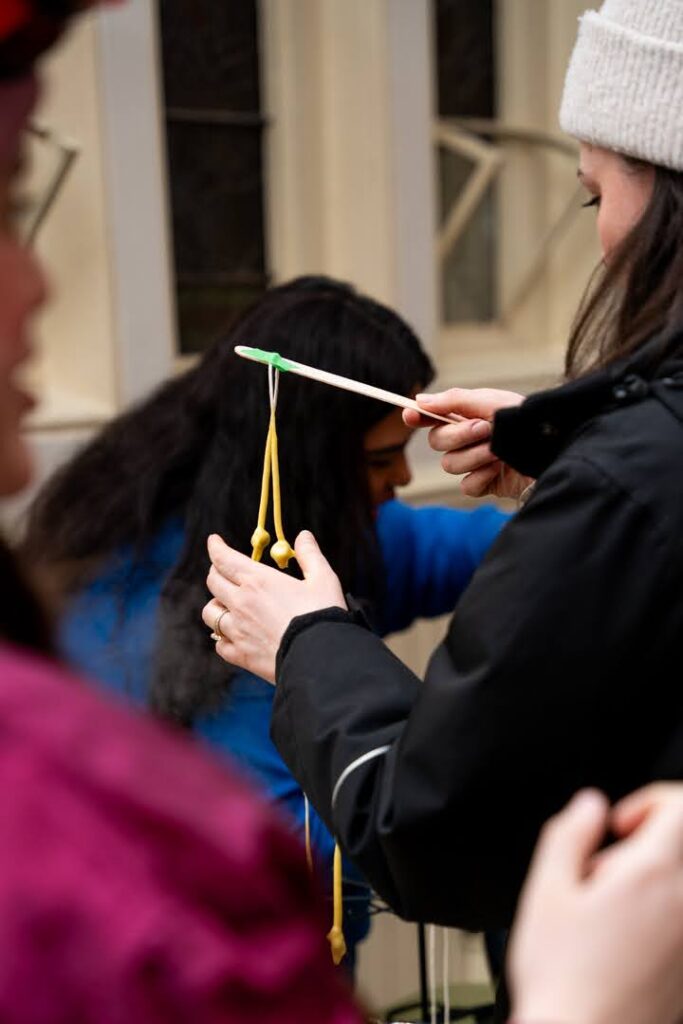
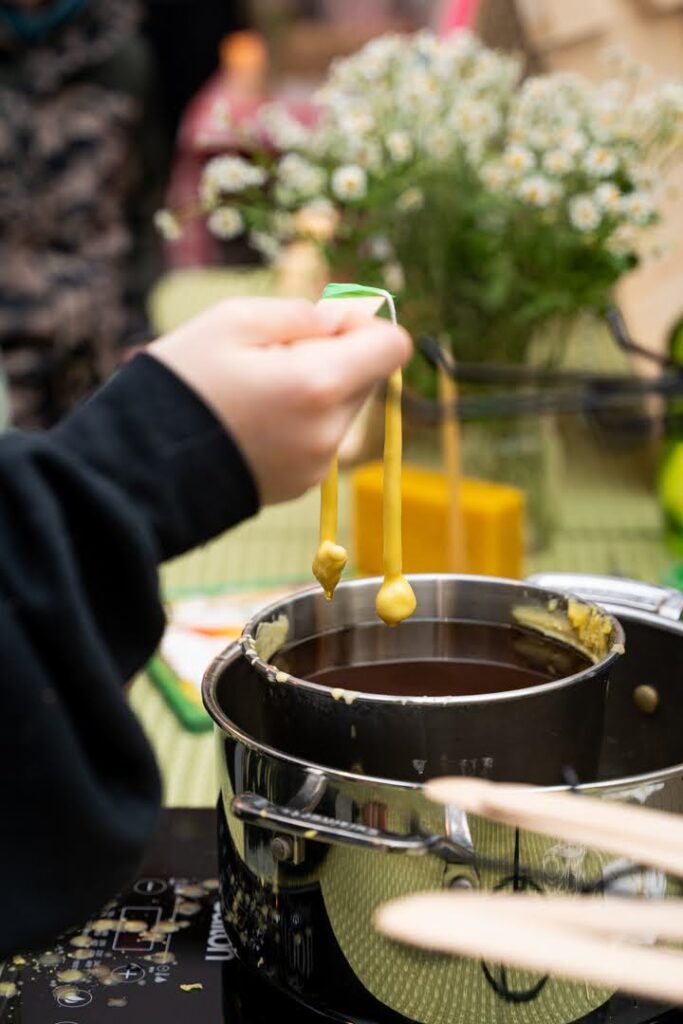
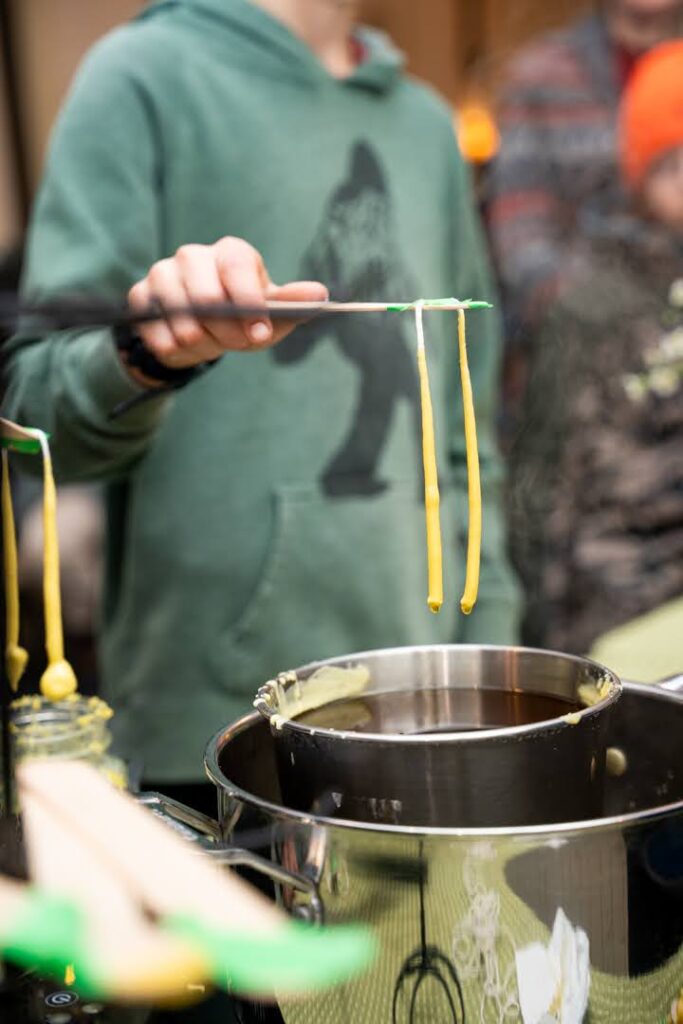
That sense of community is also important for Clarissa Vásquez who taught a candle-dipping workshop at the Hamilton Smorgasbord event put on by Whitney McMeekin for Hamilton Winterfest.
Vásquez does beeswax candle-making as part of a wider practice as a visual artist. “I teach a lot in elementary schools, and also with adults who are artists,” she says.
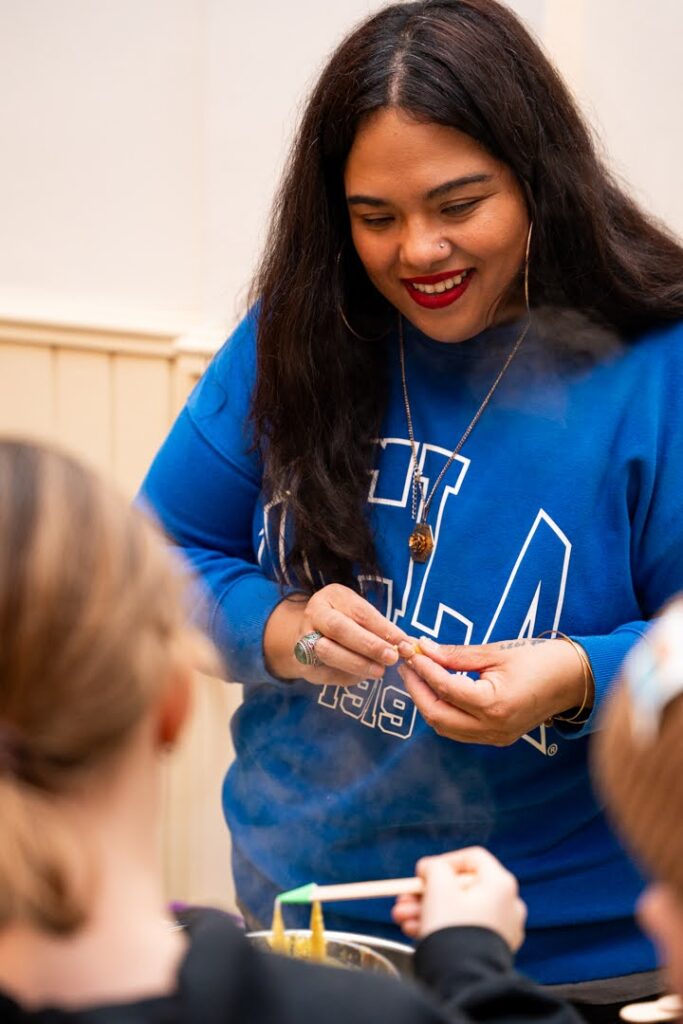
The evening at Smorgasbord in the recently renovated Magnolia Hall was a bit magical. “It was such a beautiful evening. I think we dipped 200 candles. From when I set up, the line was steady.”
She received heartfelt thanks from participants, who said as they were walking away that they felt like they had entered another world. “That world is your world,” Vásquez would reply. “I’m big on mindfulness practice and a strong mediation practice, and that’s one of the things I love about dipping candles.”
Dipping candles requires you to be fully present, and most importantly not rush. “It requires you to take your time.” She says. “It was beautiful seeing people trying to rush through it and it not working, and then encouraging them to take their time.”
Vásquez thinks the enjoyment people expressed for the process came from two places. “I think it’s getting back to the gifts that we come with, and I think there is a desire to reconnect with our hands and our bodies. There is also a need to find quiet. Collectively we have so much noise and it’s important to have a balance of that quiet.”
Vásquez and McMeekin are planning more workshops coming up via her website Vuelo Con Los Angeles.
Meanwhile, on Barton Street is a cozy café that started from a mother’s illness and a love of sourdough.
Ten years ago, Kathryn Dieroff’s mother developed dementia, and Dieroff stepped into the gap to help her father with cooking. “Can you make me a couple of soups a week?” he asked.
“He was eating gluten-free, but could eat sourdough bread,” Dieroff explains. “But sourdough is $9 a loaf! I thought it would be fun for my daughter and I to make it instead.”
Soon, one or two loaves a week turned into two a day and she was trading them for garden vegetables and cans of craft beer. Making things with her family soon turned to requests from others to teach them how to do the same.
“We decided to put together these casual workshops with everything your nana wanted you to know, and we called it NanaCamp,” Dieroff says. “It was the creation of a third space. It was a place people could get together and gather to do a task and you gossip and the task gets done more quickly.”
Dieroff loves the sense of community that comes from people doing things by hand together. “The idea was to make NanaCamp a place where people could learn these historic skills, but as a function of community,” she explains. “The value of a church service is that if someone is struggling or falling behind, you check in on them every week. And we lack that now.”
Dieroff was trying to create a social safety net that otherwise didn’t exist or was at least much less common than it used to be.
“There is no way we could make NanaCamp pay enough to do it full time,” she added. After running a successful goldsmithing business for 20 years, she knew from the numbers it would be impossible.
When the pandemic hit, the need for wedding jewellery dried up, but she caught a lucky break from local pizza legends Maipai and ended up making their crusts. After an incredibly successful specialty night at Maipai, she started a stall at the Hamilton Farmer’s Market.
But that setup was not conducive to her doing the one thing she really wanted to do: workshops. Now Dieroff is on Barton Street East, with a very successful coffee shop and breakfast and lunch spot called ElderCamp. It also happens to be an amazing place to go to learn about fermenting and preserving food.
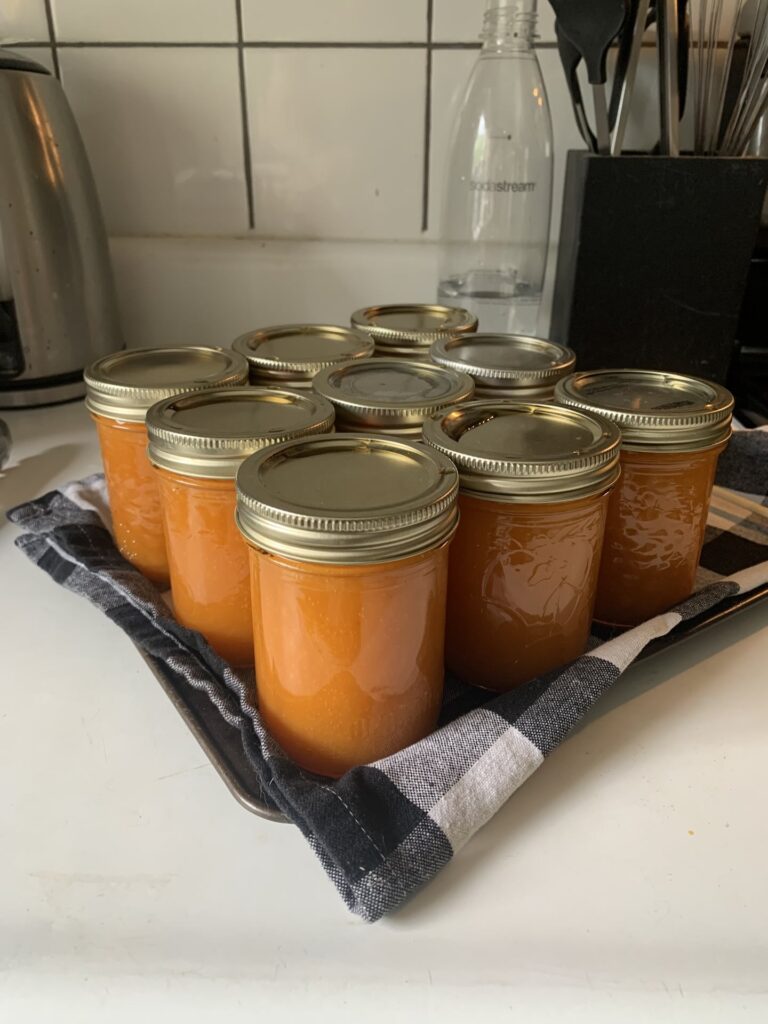
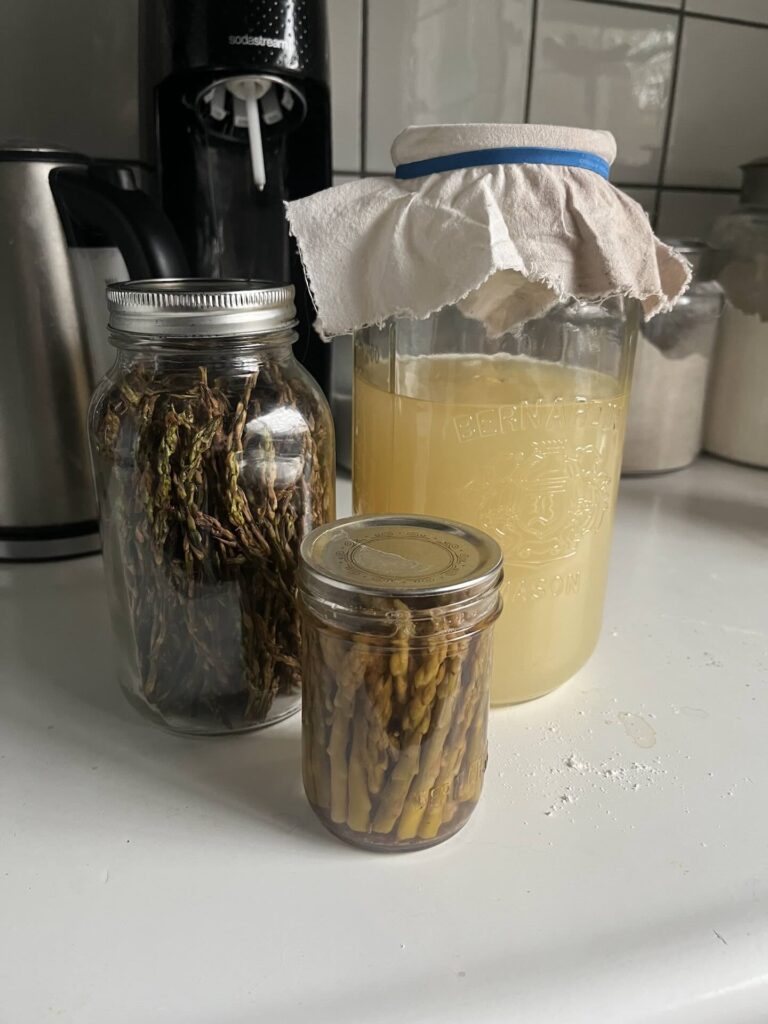
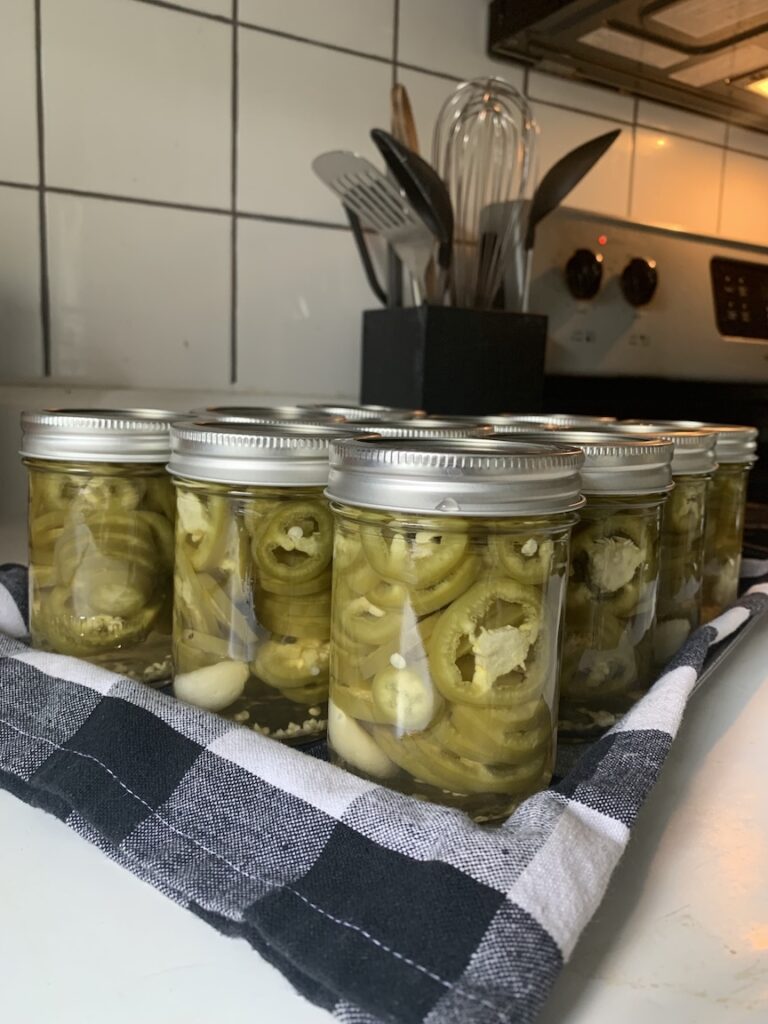
“Now, after spending the first year learning how to run a café seven days a week, we have classes.” Classes have ranged from making yogurt, to canning, to making Kosher pickles. She aims to do things as simply as possible. “This is teaching folks how to do this and empowering them to do it themselves and to taste how good it is.”
Workshops feature the activity, a tasting, and a take-home booklet that explains the technique and focuses on safety. And it is safety she is obsessed with.
“There are a lot of rebel canners and people on the internet doing some wild and crazy stuff. But botulism is no good,” she entreats. Things can not only go bad, but pressure in bottles can build up in bad ways. “Swing top bottles are cute but put your kombucha in plastic bottles or you’re going to have to re-paint your ceiling.”
Dieroff is always eager to share her knowledge, and new classes are coming soon, which you can find on her website.
Maybe your Italian nonna isn’t Italian after all. Maybe she’s a Dutch laundry-soap maker, or a Latinx artist and candle maker, or someone who is more of a nana than a nonna. Either way, slowing down and doing things more intentionally and reconnecting with ourselves and with others may be just the thing for appreciating life and living more fully.
And who knows? If she approves, your real nonna may show you’re some of her secret recipes as a reward.