





New work by Hamilton playwright celebrates women who fought for landmark rights
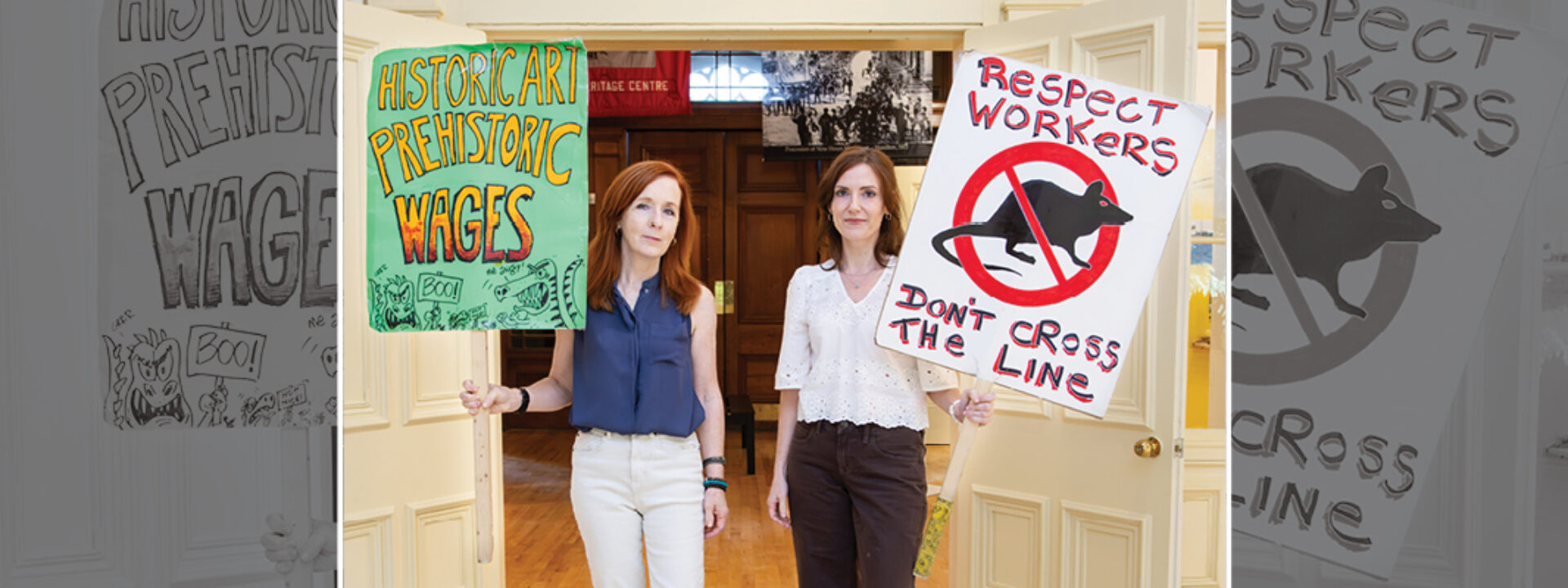
Kristen Da Silva’s Sisters of ’78, which kicks off the 2026-2027 season at Theatre Aquarius, documents a little-known five-month strike by auto parts workers who worked in a plant known as the “butcher shop” in Centralia, Ont. Despite a massive police crackdown and political pressure, these women persevered to gain union protection and sexual harassment legislation.
Playwright Kristen Da Silva has long wanted to write a play based on historical events. It probably makes perfect sense that she chose a story about an industrial strike, given that she gave up her career as a labour negotiator to pursue playwriting full time.
Sisters of ’78 will open the 2026-2027 season at Theatre Aquarius. It’s the story of the women behind a five-month strike at Fleck Manufacturing in Centralia, Ont.
Eighty women of the 130 in the plant, who were working in often appalling, unsafe, and oppressive conditions for terrible pay as they fabricated wiring assemblies for automobiles, walked out in the bitter cold of March.
The conditions in the plant were like something out of a Charles Dickens novel, says Da Silva.
“They had to stand in standing water and there were reports of trench foot. There were rodents. There were snakes. The machines were in poor repair. People were getting injured so often that the town doctor called the place the butcher shop. Like they were losing fingers.”
The strikers she talked to said when a safety inspector demanded a machine be shut down, by the time that person was getting into their car in the parking lot, management was taking the tape off and putting another worker on the machine.

Negotiations for a first contract under a newly formed union were hindered by management who refused to accept a clause that would require employees covered by a union deal to contribute dues. That was a threat not only to the new union at Fleck, but to union security across the province.
The strikers were met by a massive police response and were harassed, beaten, and arrested, and pressured by all levels of government to get back to work. The OPP is said to have sent helicopters, posted officers with cameras on nearby rooftops, and spent more than $1 million dollars to prevent the strikers from earning a 45-cent-an-hour raise.
“So what they wanted was safety. They wanted protection from sexual harassment, which was also rampant, and they wanted a living wage, and they were being treated as some kind of insurrection,” says Da Silva.
When scabs crossed the picket line, the strike tore apart the community and many families and friendships.
But the strikers persevered, secured union protection, and managed to earn the first codification of sexual harassment as a crime in Canadian labour law.
Though she studied labour relations in university, Da Silva says there was little more than a passing reference to it. This is a story that begs to be told, she says.
Hero’s journey story
Da Silva’s play, which was commissioned by the Blyth Festival, is based on real events and she spoke to several of the women involved, but all the characters in the play are fictional.
The story immediately grabbed her because of its dramatic arc, says Da Silva, who has become one of Canada's most produced playwrights and is a two-time recipient of the Playwrights Guild New Comedy Award. She moved to Hamilton several years ago.
“This really already had this sort of hero's journey, underdog story. You know, just like some of the best movies and plays you've seen. Really, the true events followed a quite dramatic arc themselves. So as soon as I started to dig in a little more and figured out what happened over the course of this five-month strike, it became clear to me that there was something there that really lent itself to being put into a play.”
When she read quotes from the women and saw clips from that time in a short documentary called They Called it the Butcher Shop, she connected with the strikers.
“I come from a small town, and they reminded me of my aunts, my friends, my friends' moms. Like they just reminded me of women I knew, regular women that had this fight that they went through for their rights, and also that you know what they achieved was so substantial.”
Da Silva also has direct experience in working in a male-dominated field. It’s ironic, given the subject matter of Sisters of ‘78, that she worked for years in human resources, leading industrial labour negotiations, but also experiencing workplace sexism, though much less overt than women of eras past.
The Blyth premiere was directed by Theatre Aquarius artistic director Mary Francis Moore, who had yearned to bring a Da Silva play to Hamilton.
About two pages into reading the draft of Sisters of ’78, she was convinced it was right for Hamilton.
“I read so many plays, and you know when a play just grabs you right away.”
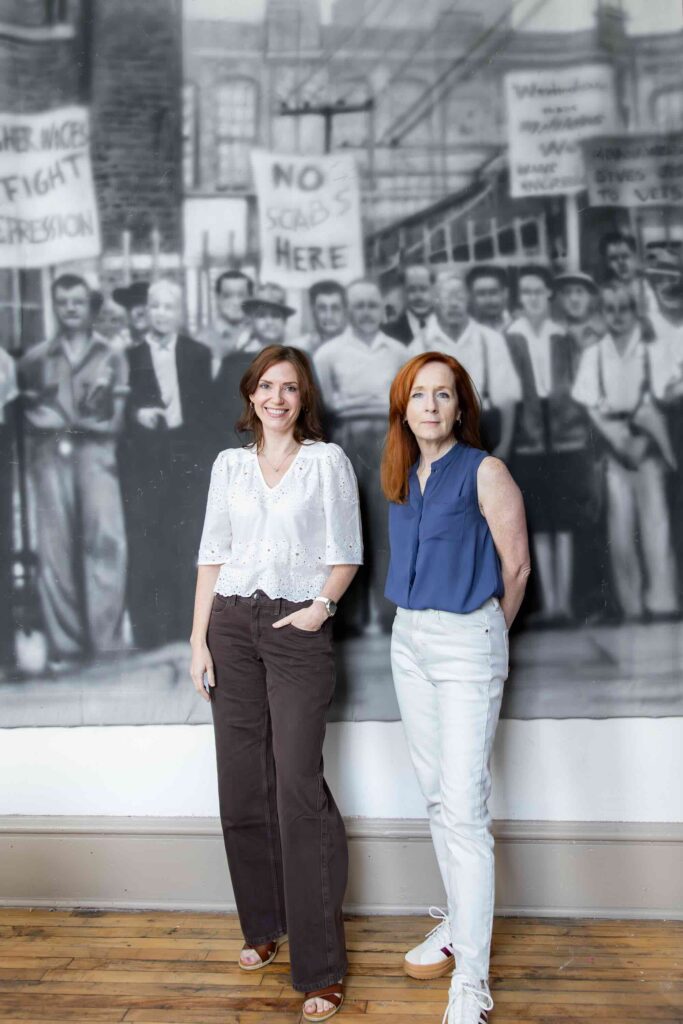
It made sense to open in Blyth, which is just over 50 km from the Fleck plant, and where the personal connections to the Fleck strike continue to resonate.
But a tale of working-class people fighting for their rights also suits Hamilton, says Moore.
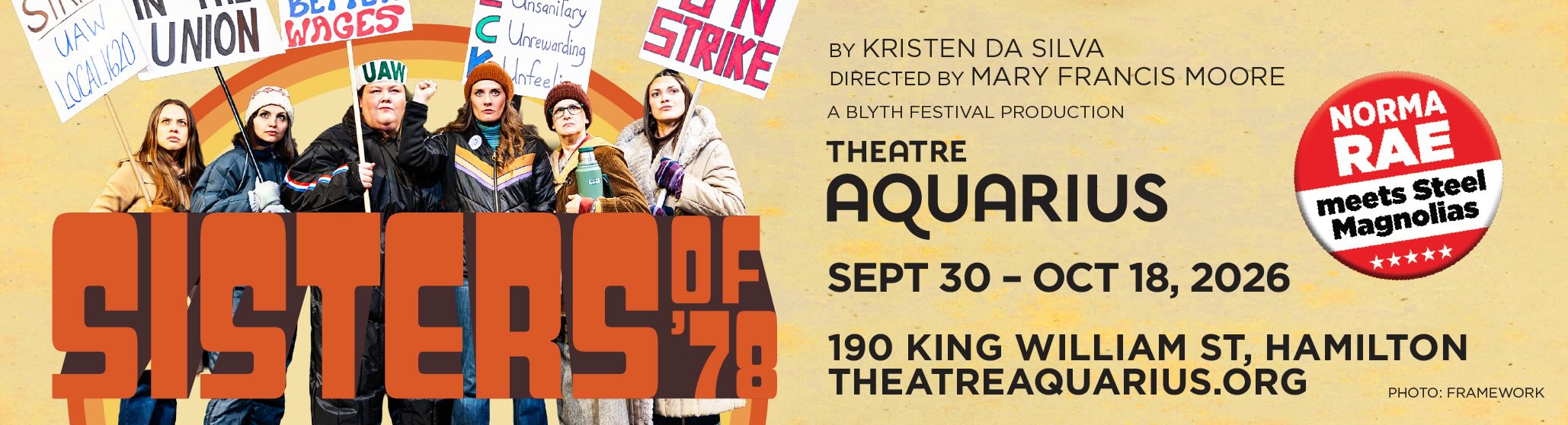
She describes Sisters of '78 as a fast-paced and humorous dramatic ensemble that does not lecture or moralize, something like Norma Rae meets Steel Magnolias. The strong and natural chemistry of the female actors led to new scenes being written in rehearsals.
“I think Kristen's done such a great job showing a multi-generational impact of somebody just raising their head, going like, ‘What if this isn't all there is?’” says Moore. “And what the domestic impact of that is, the fractures it caused.”
Doing the story justice
Da Silva spent two years researching the strike and another year or so writing the play. She put out a call in the local newspaper to connect with the strikers. That led to talking to several women who took part in the strike. It was inspiring to hear their stories, she says.
Mary Lou Richards, who was on the original bargaining team, a key figure in the strike, and testified at the labour board hearing against her employer, drove Da Silva to Centralia, showed her where the picket line would have been, and where the old buildings were. They talked all day.
“There is a sense of responsibility for how I tell the story and how I depict the women. None of the characters are based on anyone real, but I wanted to capture the essential spirit of the women as best as I could. So it was both a privilege to get to speak to them and know them and have their blessing to tell the story, and then the responsibility to do it right, to do it justice. I really wanted for them, especially, to find it truthful and find that it resonated with them.”
That truthfulness bubbled up during rehearsals, too, when members of the cast or creative team would reflect on some of the shocking, abusive, and misogynistic things uttered by the male characters and how those behaviours were taught and reinforced in men at the time, says Moore.
“There was such a sense of familiarity, not necessarily that we would have in our own lives right now, but that we remember parents or grandparents or aunts and uncles saying these kinds of things. And you know, everybody was bringing stories. This stuff really sparked a lot of conversation.”

Defying expectations
Sisters of ’78 wrapped in Blyth in early August, earning rave reviews. Though the production is travelling down the road from Blyth with the same cast and creative team for its Sept. 30 to Oct. 17 run in Hamilton, it will require some adapting for the much bigger stage at Theatre Aquarius.
Da Silva says the actors, Madison Hayes-Crook, Cara Hunter, Hamilton’s Alyssa LeClair, Kirstyn Russelle, and Shaina Silver-Baird, along with Aiden Altow and Geoffrey Pounsett, bring “tremendous levels of talent, intelligence, and insight. They're all some of the finest actors I've worked with in my career ever.”
All but Hunter and LeClair are making their Aquarius debut.
Da Silva, whose plays include Where You Are, Beyond the Sea, Hurry Hard, Sugar Road, The Rules of Playing Risk, and By the Light of a Story, says Sisters of ’78 was a unique creative experience.
Working with Moore, who is a noted dramaturg, helped refine the script and narrow the focus and strip back the number of characters, says Da Silva.
“You can get a little in the weeds, especially with a story this big. I mean, the actual real event is so epic in scope,” she says.
“We kept saying we should have made it a musical so we could have a cast of 30, because there's so many people involved in the actual story. There are so many people that had pivotal moments to play in the actual story, but not necessarily with a character.”
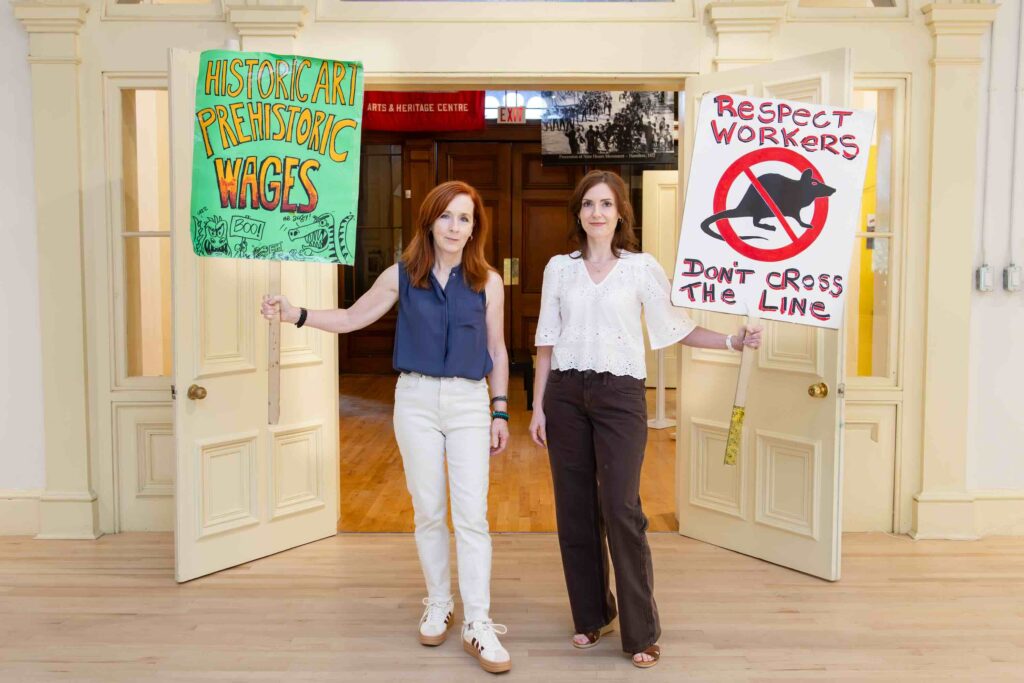
In fact, in reworking the story, Da Silva and Moore axed between 15 and 20 characters, mostly male figures, in favour of depicting the forces of patriarchy, control and harassment within the factory in the narrative.
“This nameless, faceless patriarchy was much more threatening than someone playing multiple roles,” says Moore. “Because of how the set is built, they refer to the upstairs. Like management is upstairs. Management is up in their little cubicle watching us. So that felt more threatening and dangerous.”
Narrowing down the characters allowed a deeper focus on the central women driving the story, says Da Silva.
“Because when they're all together, there's just this beautiful chemistry and a really lived-in sort of support system. But again, like true to the time, these aren't people who are typically maybe very effusive or descriptive in how they feel about each other. But there's just the values that they hold, that they stand up for each other and they take care of one another, and then the power in that is that you care about the women individually and you care about the collective of the women.”
The Fleck strikers generally had a high school education at most, ranged in age from 16 to 65, and many were single moms. They weren’t agitators and most didn’t consider themselves feminists. They weren’t expected to demand more. They weren’t expected to form a union or go on strike.
They were expected to fold to the demands of factory managers and the enormous mobilization of the OPP.
“And then, you know, questions started to be asked as to who has the power to get all these OPP here? Why are they here? Why are they so interested in this strike? They were treating this as almost like a violent revolution,” says Da Silva.
Critics alleged that company founder James Fleck’s influence played a role in the crackdown, even though he had divested his share of the company to his family when he became a deputy minister in the Conservative provincial government, He claimed then and until today that he had no involvement in the strike response.
A move to Hamilton
Da Silva’s love of theatre started in elementary school in Nobleton, Ont. She took part in all the shows in high school she could, but when it came time for university, she didn’t choose that route.
“I was also the first person in my family to go to university, and my parents helped me with the tuition. So I think there was a part of me that thought I should make a more pragmatic choice of major.”
But at York University, she had to take an arts course in her first year. She took acting. From there, she got involved in improv, mainstage shows, and playwriting. It was a great experience, but after graduating, her nine to five job didn’t leave as much time for theatre as she wanted.
“Fast forwarding many years, I got to a point in my career where I thought I don't really feel like I'm in the right place anymore, and I had started writing plays, and I'd had some success, early success, with them getting picked up, and then my aunt, my mom's youngest sister got very ill with cancer and passed away, and it was not that long after she retired. It was really a big turning point for me, where I thought, I don't want to get to the end of my life and think I didn't do the one thing I really wanted to do. So I decided to just jump, and that was 10 years ago.”
After living in Oakville for many years, Da Silva and her husband, who have raised three children, also decided to jump into moving to Hamilton. They live in the Durand neighbourhood.
“We found a place we fell in love with here in Hamilton, and I fell in love with the art scene in Hamilton.” It didn’t hurt that she wanted to work with Moore.
Da Silva says 2026 has been a busy year of productions of her plays and she’s grateful for that. She also continues to act, including in a play this summer in Port Stanley called Deadly Memories by fellow Hamilton playwright Stephen Gallagher.
Working two hours away in Blyth meant Moore and Da Silva spent a lot of time in cars together.
“We got to fast forward our relationship,” says Moore. “We kept thinking we would talk about the play, but we really didn’t. We had these really lovely drives throughout the country, and we'd have these lovely chats on the drive.”
The two also had some leisurely evenings together on the nights they would stay over in Blyth. They’d take walks and talk about the characters and how events would affect them as people, and wives and mothers. It’s rare for directors and playwrights to get that much time together, says Moore.
And so, even though it was the first time the two women have worked together, it didn’t feel that way, says Da Silva.
“Anything I was thinking about, I would go to talk to Mary Francis to wrestle with it and she would bring it up to me. You know things are clicking at that point when it's like that,” she says.
“What became really clear was how much this story of sisterhood resonated, and the story of friendship. So there's so much information about the actual real-life event, but when the actors had the script, they just clicked, and they became this sisterhood very quickly. And so I think that they started to demand to be heard, which was really exciting.”
NEED TO KNOW
Sisters of '78
Sept. 30 – Oct. 18
Theatre Aquarius
190 King William St.
Tickets here