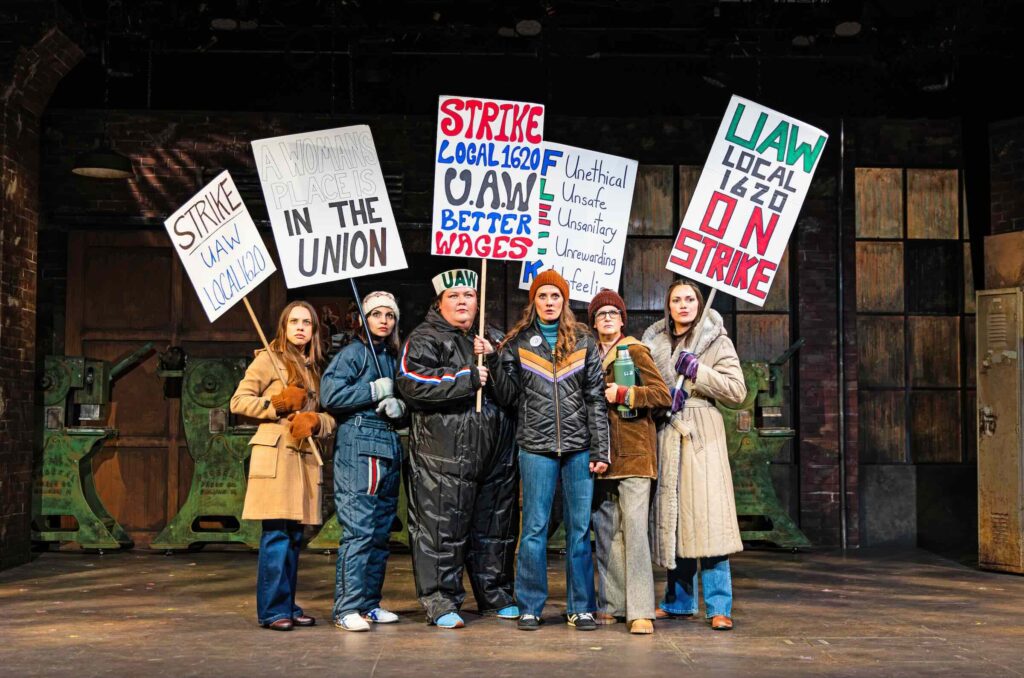






REVIEW: Sisters of ’78 is triumphant and powerful
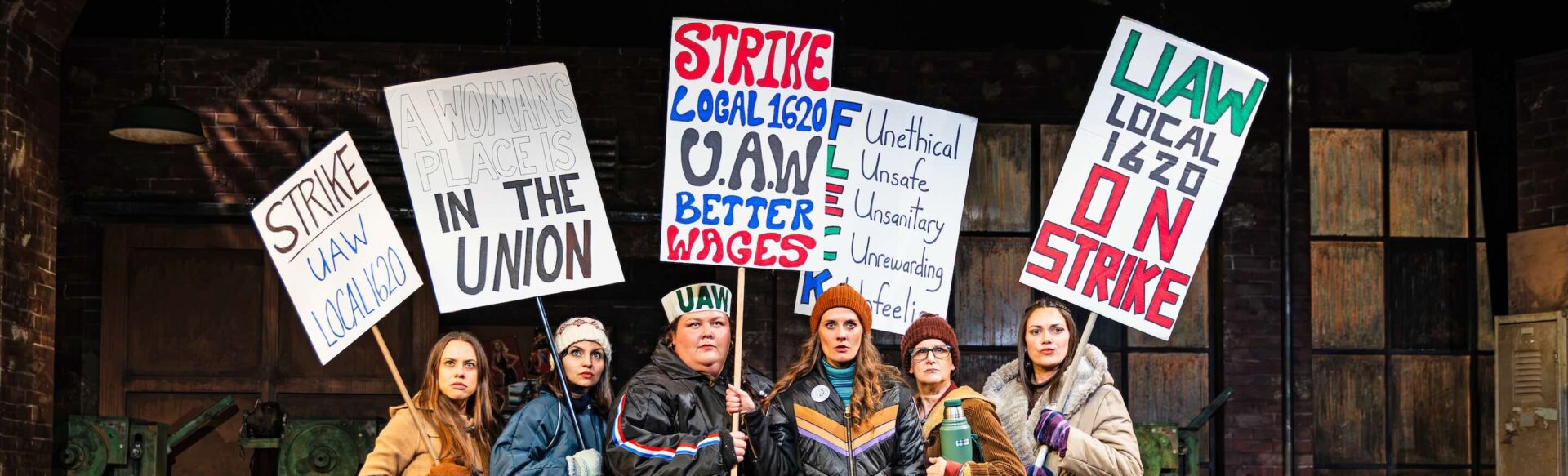
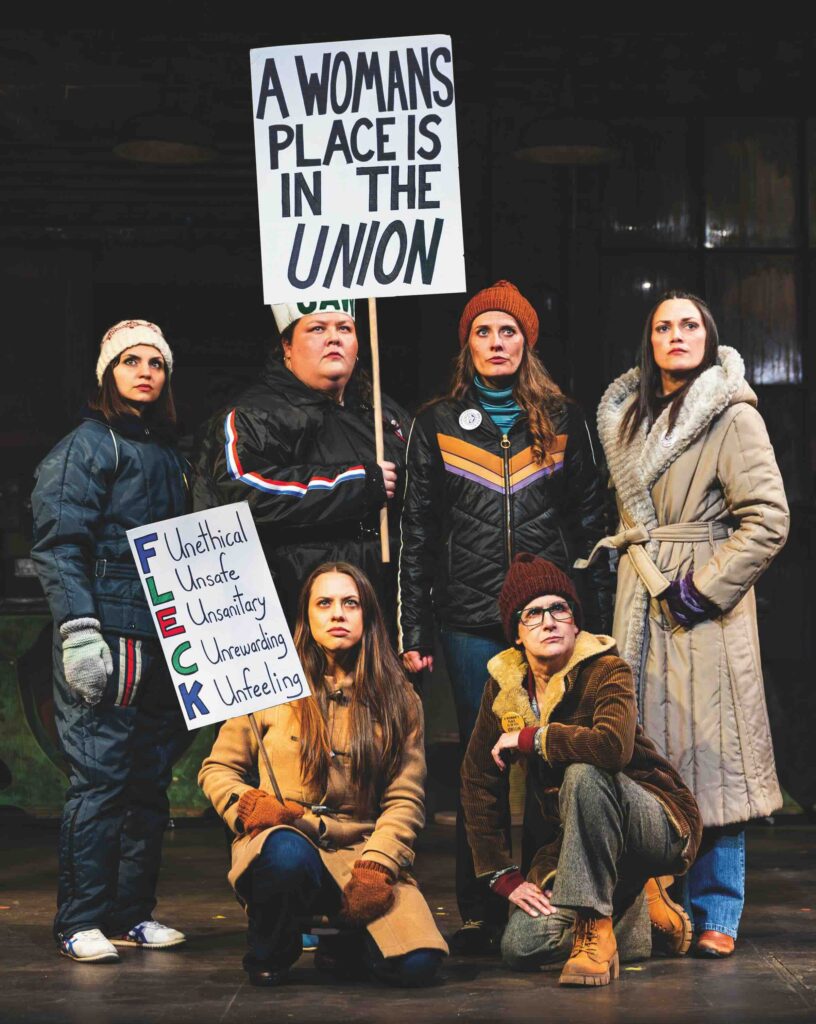
The season opener at Theatre Aquarius offers an inspiring tale of ordinary women who challenged power and authority, fighting for themselves, their families, and each other in a five-month labour strike that changed workplaces in Ontario. It runs until Oct. 18.
Rights and privileges are won through the hard work, courage, and sacrifice of those who have come before us.
Sister of ’78, the opening show of the 2026-2027 season at Theatre Aquarius, reminds us of that in a triumphant, funny, and highly entertaining way.
It is the work of award-winning Hamilton playwright Kristen Da Silva, who deeply researched the five-month Fleck strike over low pay and appalling working conditions that drew a violent and out-of-all-proportion police response. The plant’s owner was a minister in the Ontario cabinet.
It was a clear misuse of political power and wealth that feels particularly relevant today.
Strikers were arrested and threatened, while the company brought in replacement workers to keep pumping out wire for the automotive industry. When some employees crossed the line, the small town was highly divided.
But the strikers stayed unified and persevered in the face of it all.
READ OUR SISTERS OF '78 PREVIEW HERE
The strike and a subsequent labour board ruling ultimately advanced landmark union rights, along with sexual harassment regulations.
“And, yet, as you read this, I’m willing to wager many of you have never heard of the women of Fleck Manufacturing, or the incredible events of 1978,” Da Silva wrote in her program message. “And that is the reason this play now exists.”
She points out that, though the play is based on real-life events, it is fiction, not documentary.
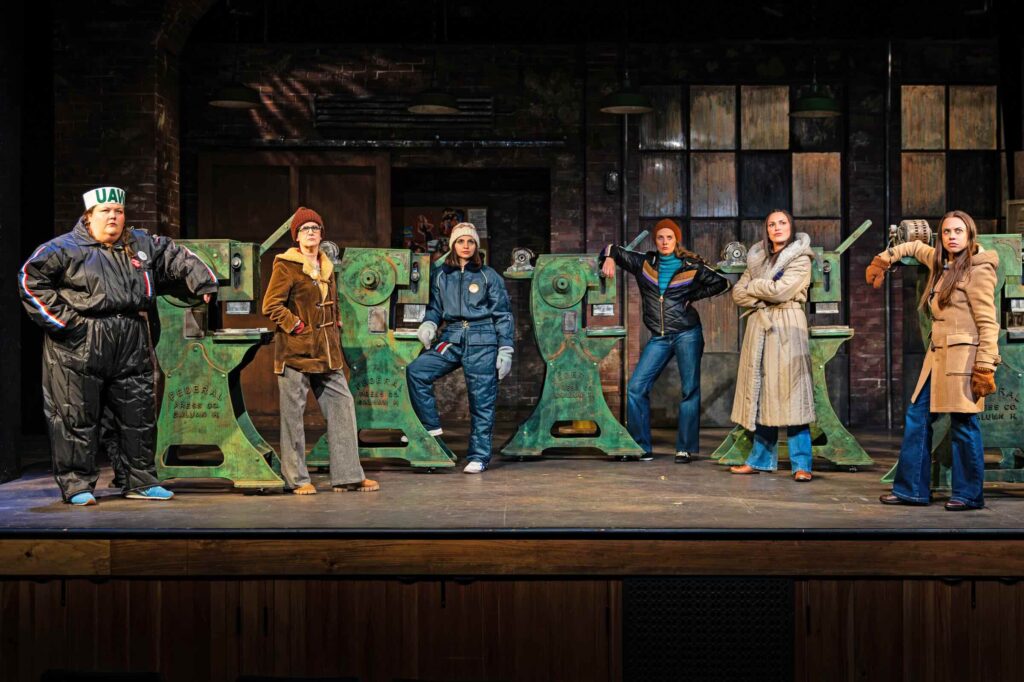
Sisters of ’78 introduces us to five women – Maeve, Joyce, Natalie, Angie, and Laurie – who toil at Fleck Manufacturing in Centralia, Ont. It’s a tough place to make a living. The women deal with dangerous and decrepit machinery that causes everything from cuts to catastrophic hand injuries.
Things are so bad, the local doctor calls the place The Butcher Shop.
Then there is the sexist, smug, and condescending boss Lumpy, who represents other unseen managers in the factory. His comments and behaviour are harassment, pure and simple.
But these women need their jobs, even at a paltry $2.85 an hour. For context, that would be $12.87 an hour in 2026 dollars, more than $5 under the current minimum wage in Ontario.
The women all have challenges at home. Joyce and Laurie are single moms and weary veterans of Fleck.
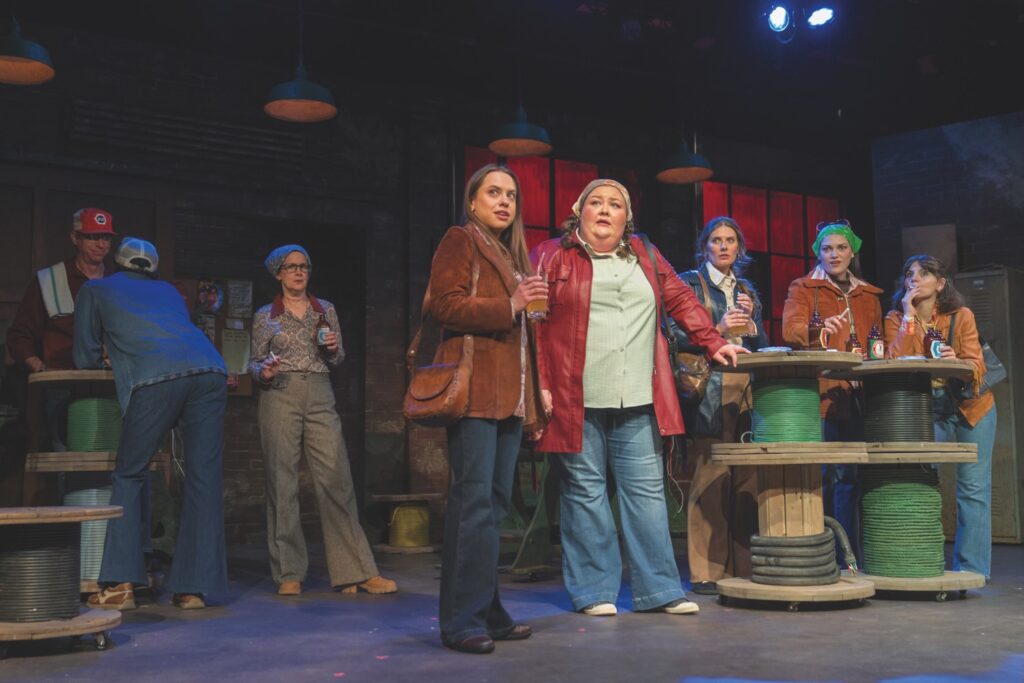
The tough and edgy Natalie has three sons and works two jobs to make ends meet. Her family lives in her brother’s basement. When she discovers she’s pregnant again, she shares that wanted to have her tubes tied but her doctor refused. After all, her husband might want more kids.
Then there’s Angie. At just 20, she imagines a bigger life than she has. She’s the frequent object of the unwanted attention of Lumpy. When she can barely feel her hands because the factory is so cold, Lumpy tells her to work faster in order to keep warm.
But it’s through Maeve that a personal story is truly told. She’s married to Andrew, a self-absorbed and casually cruel man who leaves home to train for the RCMP in Regina. Maeve, mother to eight-year-old Janie, has no job experience.
But she has dreams of moving out of her mother-in-law’s house and decides to join her friend Laurie at Fleck, hiding her new job from Andrew. Soon, Maeve is joining the outspoken den mother Joyce as a leader in the effort to get union ratification.
There was another union bid six years earlier, but the company headed it off by making promises for improvements that were never kept.
“That place is going to kill one of us one day,” says Joyce. It doesn't feel like hyperbole.
But there isn’t complete unity in the ranks. Laurie believes both the union vote, and the eventual strike when the company refuses to negotiate in good faith, will blow up in the workers’ faces. Her late husband lost his job at a plant when layoffs came after unionization.
She chooses to cross the picket line and friends find themselves on opposite sides. As the strike takes hold, police are arriving by the hundreds and women are being picked off the line through injuries and arrest.
Members of the audience at a Saturday matinee, which included many groups of women, frequently groaned at the men and cheered for the women.
Andrew’s demand that his wife pack and unpack his suitcase drew load grumbles. Same with efforts by Lumpy to demean the workers. When the women cut loose to “You Should Be Dancing,” it was a much-needed burst of joy in which the audience revelled.
And when Joyce, played by Hamiltonian Alyssa LeClair, stands centre stage and vows she will stay on the line whether she faces sticks, boots, or police dogs, I got goosebumps.
The play was commissioned by the Blyth Festival, where it premiered in June. Much of the same cast and creative team, led by the play’s director and Theatre Aquarius artistic director Mary Francis Moore, are in place for the Hamilton run.
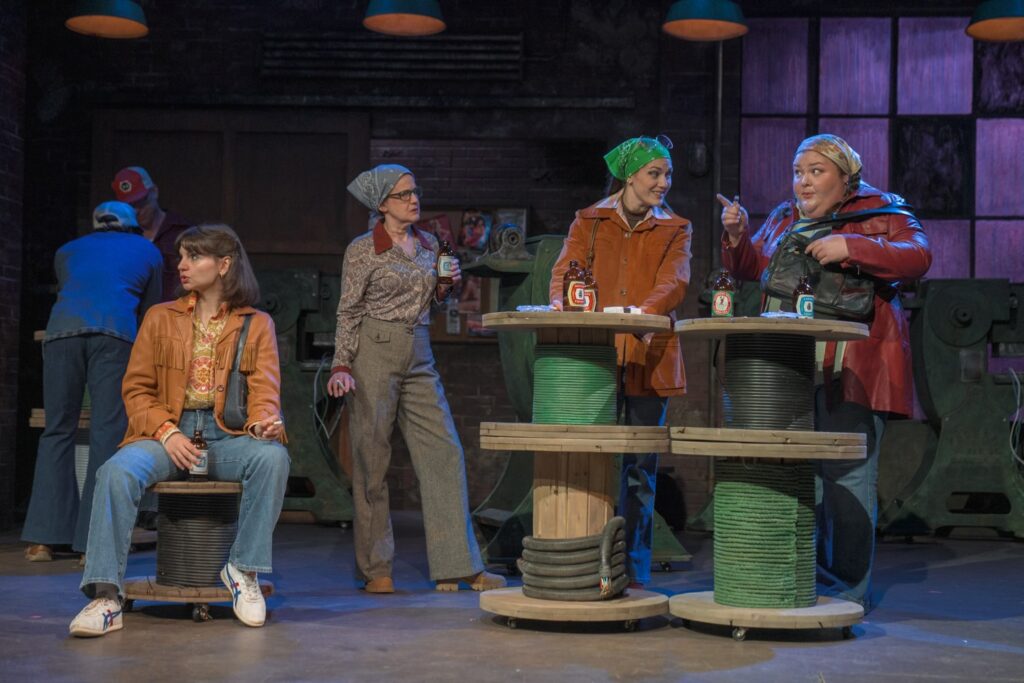
The set is simple and effective. Three-quarters of the stage is the plant, including a locker room and the shop floor. The space doubles as a local bar when high top tables are rolled in. The other quarter is Maeve’s small kitchen, complete with a wall phone and saloon doors.
Of course, the decor, clothes, the cigarettes and stubby beer bottles, and most of all, the music, are all firmly rooted in the 1970s. And what a joy the music is. It’s a soundtrack of the greatest tunes of a generation: Elton John, Tina Turner, Fleetwood Mac, Stevie Wonder, Kansas, and Meatloaf among many others.
An effective storytelling technique was the use of voice-over narration simply reading relevant sections of the provincial Labour Relations Act, which stood in stark contrast to the behaviour of the management at Fleck.
The cast delivers strong performances across the board.
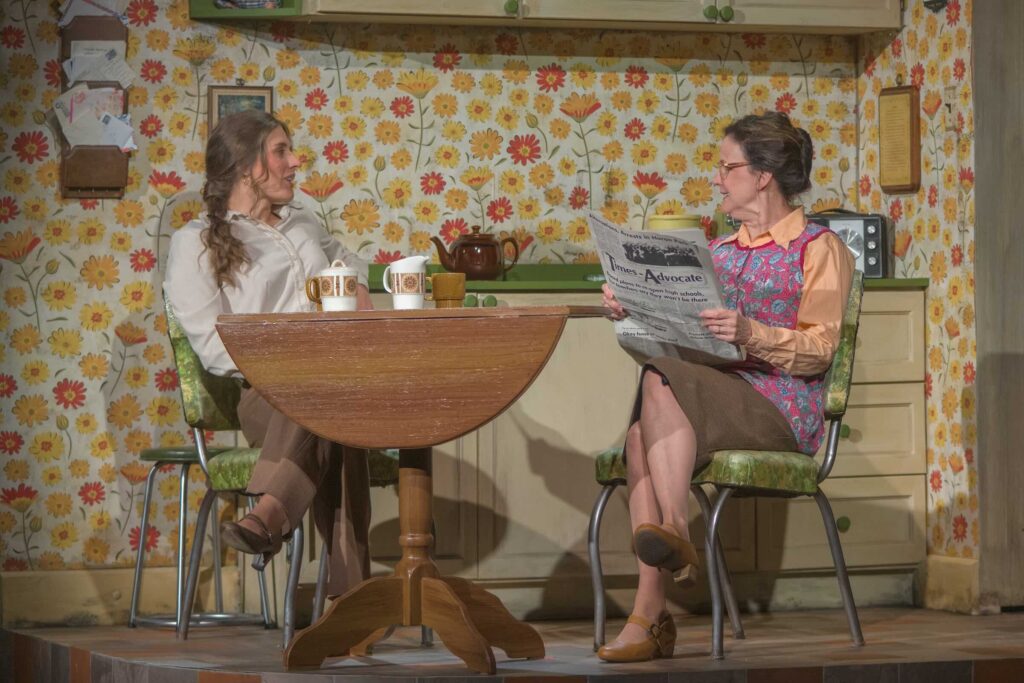
Madison Hayes-Crook as Maeve, Kait Post as Angie, Kirstyn Russelle as Natalie, Shaina Silver-Baird as Laurie, Cara Hunter as Margaret/Claudine, and the aforementioned LeClair as Joyce, bring to life women that are, at turns, funny, conflicted, scared, defiant, wise, resolute, unsure, and, ultimately, easy to root for.
They shine collectively and individually.
Aiden Altow as Andrew and Geoffrey Pounsett as Lumpy each effectively bring out the menace and misogyny of their characters without overplaying their hands and becoming caricatures.
The subject matter would have made it easy to fall into platitudes or become preachy, but Da Silva's script and Moore's direction avoids that path.
A downside: The trade off for a run time of under two hours is that we are left wanting to know more about these women. What has made them what they are? What do they dream about? Where do they find meaning in their lives?
What comes across loud and clear is the camaraderie between the female characters. They razz, challenge, and stand up for each other. Sisters of ’78 is billed as Norma Rae meets Steel Magnolias. That’s a tall order, but this play delivers.
Sisters of '78 will make you laugh out loud, bring a lump to your throat, and make you want to jump to your feet. It’s heartfelt and triumphant, and reminds us that heroes often emerge from the ranks of the powerless refusing to remain silent.
The Fleck strikers stood together to confront the status quo despite facing huge personal risks.
“Their struggle demonstrates how social change often begins; not with people who set out to make history, but with ordinary people who decide that the circumstances around them are no longer acceptable,” writes Moore in her program notes.
That is a message that resonates just as strongly today as it did nearly 50 years ago.
Only two years before the events of Sisters of ’78, American historian Laurel Thatcher Ulrich coined the phrase: "Well-behaved women seldom make history.”
It became a feminist rally cry of rebellion, but what Ulrich was actually arguing is that average, hard-working women are largely ignored by historians.
Sisters of ’78 does an admirable and important job of shining a light on the hard-won history made by ordinary women in our own backyard.
NEED TO KNOW
Sisters of ’78
Theatre Aquarius
190 King William St., Hamilton
Until Oct. 18
Tickets here