


CITY VIEW: A cancer crusader
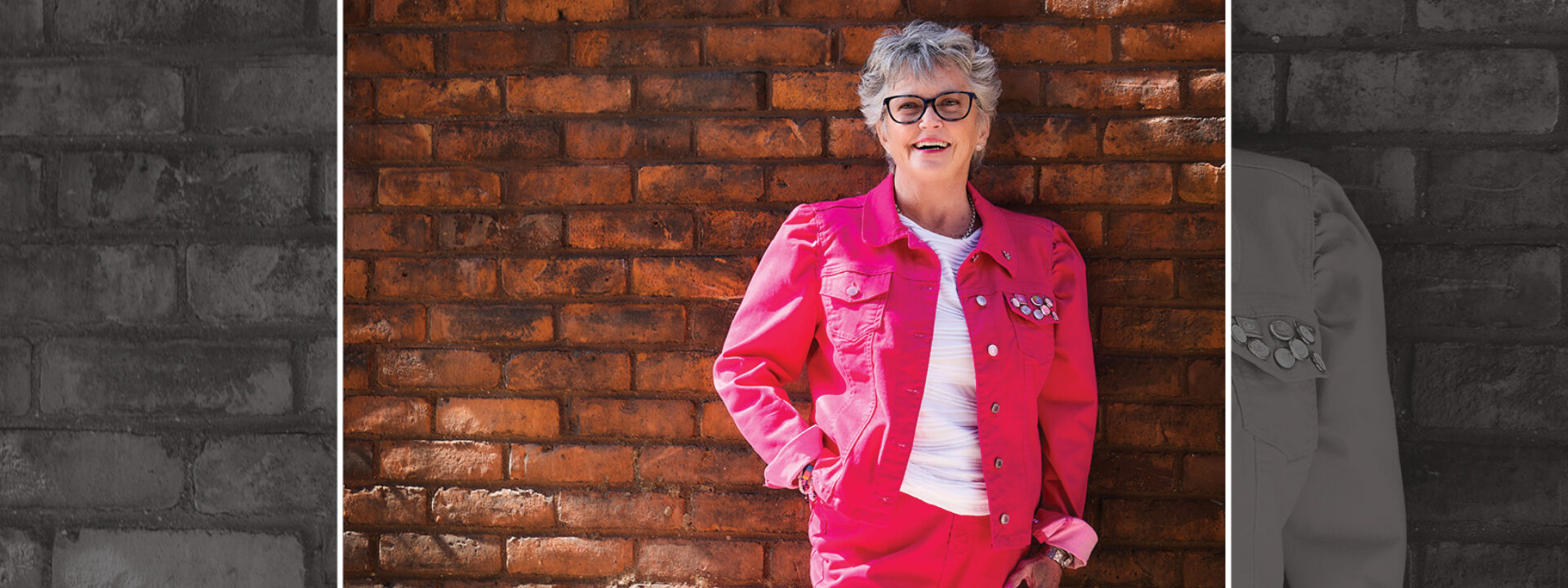
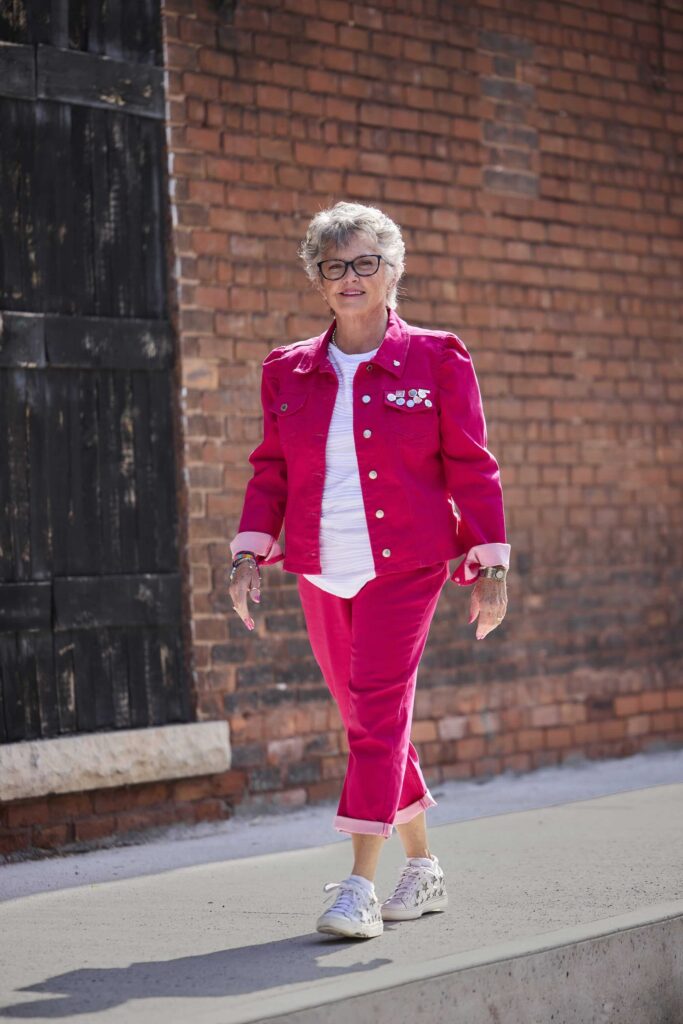
Nancy McMillan is a breast cancer survivor who has chaired the BRIGHT Run fundraiser since 2012. It has raised $6.6 million for local cancer research.
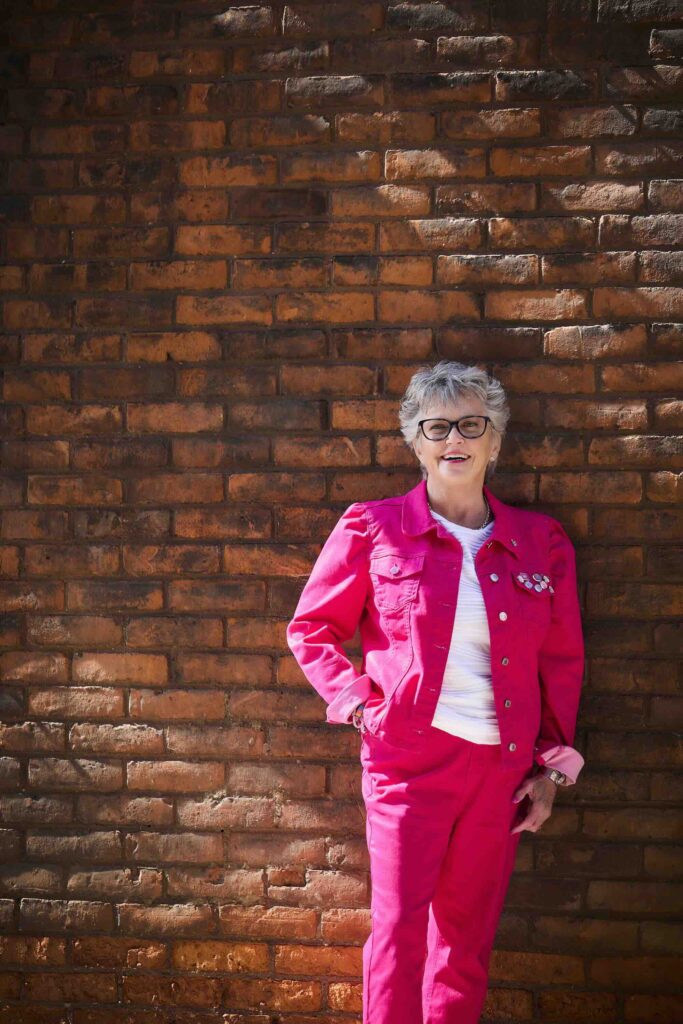
NANCY McMILLAN was born in Ottawa and spent time growing up in Toronto, New York, Vancouver, and Ottawa, mostly in that order. She studied business administration at Western University and then followed in the footsteps of her father with a career at Scotiabank. Her mother was a registered nurse but any idea of a medical career ended with a stint as a candy striper at Ottawa Civic Hospital. McMillan travelled all over the province with the bank, working in operations at 19 different branches, and then shifting to private investing, and then wealth management. She put down roots when she bought a house in Burlington in 1992. Shortly after, she met her husband Gord Bell and they moved to Grimsby. McMillan was named a Hamilton Woman of Distinction in 2013 and received a Meritorious Service Medal from the Governor General of Canada in 2025. She is a stepmom to two boys and a grandmother to four. She retired after a 33-year career. McMillan has been chair of the BRIGHT Run since 2012. It has raised $6.6 million for local cancer research. The 19th annual BRIGHT Run is Sept. 12.
Can you tell us about your experience with cancer?
I had breast cancer while I was still working when I was 48. I took a couple of years to go through that whole thing, and I was very fortunate because I could. Then I went back to work for a couple of years. And then I decided to leave after 33 years when I was 53. I was very fortunate, very very fortunate, to be able to start with one [company] name on the paycheque and end with the same name on the paycheque for that many years, because that doesn't happen.
The interesting back story is on Oct. 4, it was 4:07 in the morning and I woke up from a dream, and in the dream I had seen pink ribbon. I did kind of feel something [in my breast], and I did what every responsible woman would do, rolled over and went back to sleep. I got up in the morning, got in the shower, and had a recollection of something and I felt something again. I had a fabulous family doctor who was at the time at a conference in Arizona, and within 24 hours she had set me up to go and get a mammogram at Joe Brant, because I was living in Burlington. I did the whole mammogram and ultrasound thing and on Oct. 28 I had my surgery. I was so very fortunate, because I think waiting would have been awful.
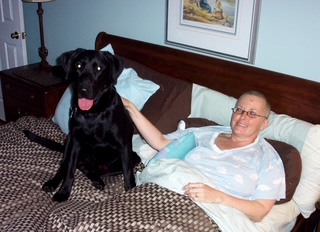
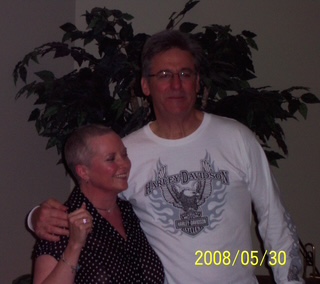
So, I had my surgery at Joe Brant, and then I was referred to JCC (Juravinski Cancer Centre), and you have to wait a little while after the surgery, right? So, I went and met with the gang there and the medical oncologist, Dr. Arnold. He asked if I wanted to wait for treatment until the new year but I said, ‘No, let's go.’ So, my mom and dad were coming for Christmas. My first chemo was Dec. 14, and when I went to see the wig fitter, because I was planning on going back to work. She said, 'Your hair will fall out on the 17th day.’ I said, ‘How do you know that?’ She looks at me and says, 'Well, it’s not my first rodeo. I know these things.’ So, Mom and Dad came for Christmas, and they got the bums rush on the 26th of December because I didn’t want them to see my hair fall out.
So, I did the chemo, and then I did eight of those, and then I did radiation, and there were 30 of those. An interesting side note, 30 years have passed, and when I went for chemo, I had bought myself a nice fluffy house coat and slippers, everything matched, of course, I came home from my first chemo, changed into my fluffy house coat slippers went and sat in the big Lazy Boy and waited to throw up. I'm still waiting. I didn’t have any of that. And now there are powerful drugs to get a grip on nausea and gurgle gut and that’s thanks to research.
The other thing that's interesting is I had 30 radiation treatments, 25 and a boost of five. Now
that would be five treatments if someone presented exactly the same as I did. That speaks in both cases to improved quality of life as you go through the going through to get through.
After radiation, I had Herceptin because I was H2 positive. There were 13 of those, one every three weeks. So it truly was the gift that kept on giving. I was originally supposed to have 10 years’ worth of adjuvant therapy, but halfway through that, they said research was showing five is good.
How would you describe the care you received?
My medical oncologist, knowing that I came from a numbers world, I remember him coming in for the first appointment, said all right, and he had this sheet of paper, and he handed it to me. He says, I know you'll understand the numbers, here you go. So he gave me the sheet, and I looked at it, and it was, you know, the chance of recurrence, the chance of all of these things, and I studied it, and my husband says, ‘Let me see that.’ I said, ‘No, we're good. We go with the best odds possible, right there.’ And that was the end of that conversation.
And another little side note about him was every appointment that I would go to to see him, I had a book of questions, and I'd go in with my questions, and he'd answer them. One day, I went in, I didn't have my book, and he says, ‘So, where's the book?’ But I didn't have anything. He knew that this was uncharacteristic, and he saw how many patients in the course of a two-week period in between seeing me. He wanted to know what's going on. I just had a wonderful level of care.
It feels like there's just like a big warm hug that comes around you when you walk in that door [to the chemo clinic]. Because I remember walking in for the first time. Gord dropped me off, I walked in, I stood inside the double doors and looked around at them. I just thought, I don't belong here. When in reality, it's the only place that I did belong, right?
How did cancer change your life?
I have to bite my tongue, and I do – mostly – when people will say, well, when I retire, I'm going to do this or that. Or, well, I don't have time for that right now, but you know, I'll put it on the list.
I learned from my experience, you don't put off anything, anything, whether it's driving home, I need gas … I'll get it tomorrow. No, I'll get it right now. So it can be the little things or planning to go to Hawaii when I retire. Do you have the means to go now? Yes, go, go, go. God willing, you can do it again. Don't put off anything. I found it to be a true wake-up call for me. And I learned when people offer to do something for you, or to help, say yes, because it's more for them than for you. Everybody wants to help; they don't know what the hell to do. So, if they offer to do the smallest of things that you could do yourself, say, ‘Thank you, that would be great.’
Everybody has a little something they can share, and they feel so good about making a contribution. We need to allow more of that to happen in our world.
What’s the origin of the BRIGHT Run?
About the same time that I was diagnosed, at the cancer centre, there were five medical oncologists and registered nurses, and they had been hearing from the patient base about going down the road to PMH [Princess Margaret Hospital] to do the Weekend to End Breast Cancer, and then there was the CIBC Run for the Cure. And they were getting a little miffed that, you know, their patient base was doing great things, no question about it, but they were right here, and doing great research.
So they came together and they decided to do their event on exactly the same day as the PMH Walk. So they were going to go nose to nose. So they did. So it always happens on the first Saturday after Labour Day. It has since the beginning, and it will continue.
So, the first year (Sept. 6, 2008) I think they raised just a little over $250,000 and I think they had between 700 and 800 participants. I participated that year, and for the three years after that with my team and did some fundraising. It was originally at Dundas Valley Conservation Area, they had all kinds of stuff, they had stuff for the kids, they had bands, they had music, they had food, just a real celebratory feel to it over the next five years.
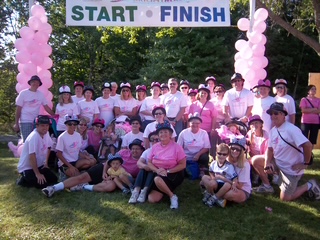
How has the BRIGHT Run grown?
The challenge was the community awareness that we had an event here that was ours, that was local, so that was when I got involved with the marketing side of things. That's what I found the struggle was, because I'd be out talking about the BRIGHT Run, and everybody was saying, ‘Oh yes, they do that every year in Toronto.’ So we had to really focus on awareness. But the minute you mention local research that we're doing right here at Juravinsky, you had people's attention because this community is so Hamilton strong and so proud of the local roots and the local accomplishments, people wanted to be on board.
So we got some traction and it took us about five years to really become a known entity. It continued to incrementally grow in the amounts raised. We got to big and had to move to Christie Conservation Area. Unfortunately, there's always new folks coming on board, because there are about 50 breast cancer patients, brand new, that walk through those [cancer centre] doors every month. So we were constantly building new teams and people that come, they never leave. It's the Hotel California kind of effect with the BRIGHT Run community. Once you join as a participant or a volunteer or both, you're stuck, which is a glorious thing.
How did you become chair?
The gal who was the chair moved to Grand Valley Hospital, so I was her eyes and ears on the ground for that first year. She continued chairing, and I did the running around locally. That lasted a year and then I took it over.
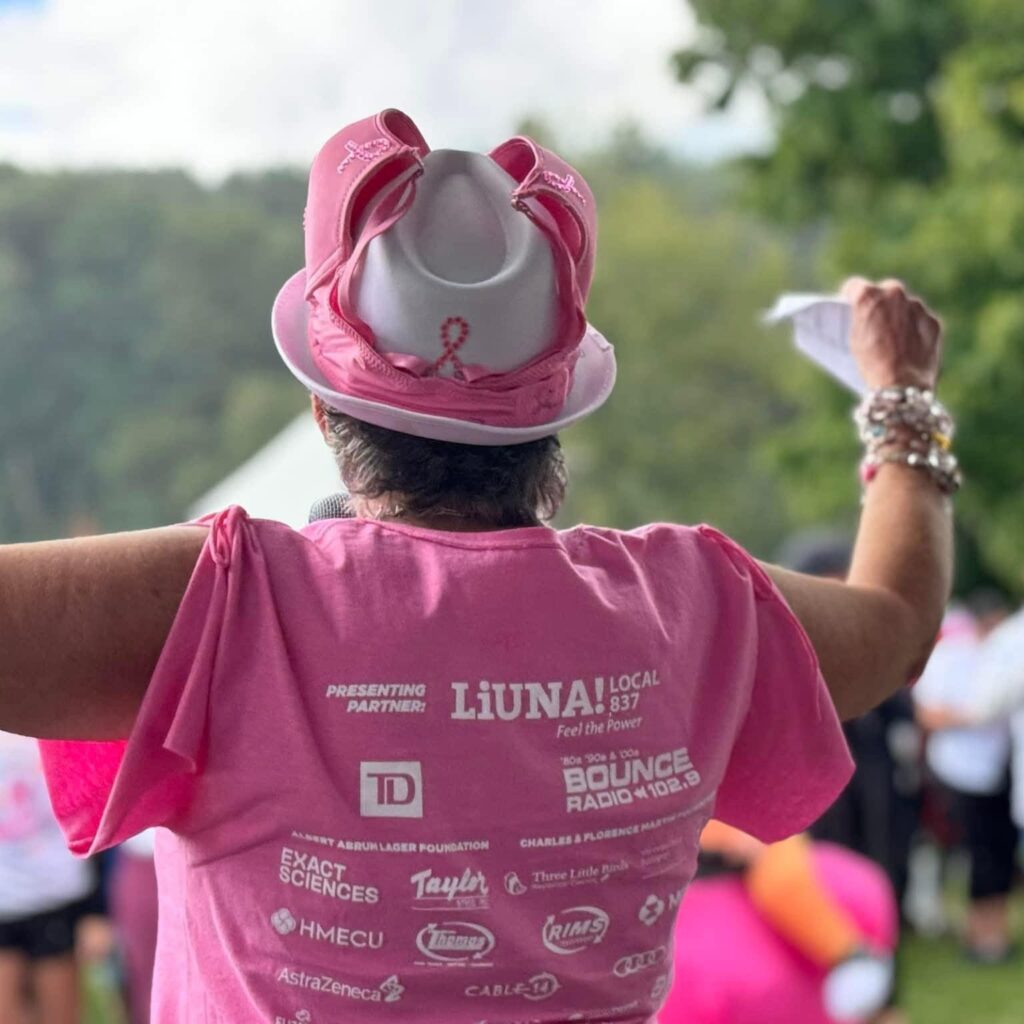
Did you know during your battle and recovery that you would get involved in fundraising for cancer?
Quite honestly, I don't think I ever had that realization. I think I just morphed into it. I can remember being at the cancer centre nearing the end of my treatment and wanting to get the address for the Juravinskis, so I could write them a personal note to say thank you for that building. So I just wanted to express my gratitude that way, and then I got involved in the fundraising. My father reminded me of this. I'd been fundraising since I was six years old. I was in my public school. I was selling hot dogs at lunchtime raise money to buy basketballs for the gym. Basketballs that I would never use. I was not an athlete.
I can't think of a time when I haven't been raising money. My mom had MS, so I’ve been raising money for MS research. I don't even think about it. It's just part of my reason to be. So, when this came up, it was like, I can do the raising money thing. And then when I was in charge of the whole kit and caboodle, well, that's really, really cool.
How does the BRIGHT Run operate?
Our primary goal is to raise the money, and then we hand it over to the [Hamilton Health Sciences] Foundation, who is the steward of our money. Through their grants and distribution protocol, they take applications on an annual basis. They scrutinize those through peer review. To date, we've funded 24 projects that in some cases have grown to international studies and have changed practice for breast cancer patients.
What are some of the accomplishments of the BRIGHT Run?
In the early days, the funding was for seed projects to get a proof of concept. BRIGHT Run was putting in $50,000 for individual projects to fund those seed projects and get them off the ground. Years later, here we are. We just put $1 million into the pot in the last call, and I believe there's been about eight or nine applications come in for grants, so we wait until the end of July to find out how many of those we'll be able to fund. We outfitted one of the ultrasound suites at the CIBC Breast Assessment Centre when it was opening. We brought the PYNK Program to the Juravinski Centre. We’re really proud. It’s one of only three in Ontario. It’s for women under 40 who have breast cancer. The other thing we did is that we were able to endow a chair at McMaster – the BRIGHT Run Breast Cancer Learning Health System Research Chair. They recruited from across the country, into the U.S. and internationally as well, and we have Dr. Ashirbani Saha. Her background is as an engineer, and her focus is on using artificial intelligence to move breast cancer forward. She and her bright and sparkly students are doing incredible, incredible work.
Those are the highlights of what we've done with the money that we've been able to raise $5 at a time. Because we don't have people writing $1,000 cheques; you buy a raffle ticket for five bucks, you buy a penny sale for five bucks. We get some nice donations, but no big cheques. It’s boots on the ground.
How would you describe Hamilton as a centre of cancer care?
The best. We are blessed that we have world-renowned practitioners here who are not only great patient-centred physicians, but world-renowned researchers who get it. They see the patient, they talk to the patient, they listen to the patient, and then they go back and think, OK, how can we make this process better for the next person that's going to go through this experience? And they're everywhere, the radiation oncologist, the medical oncologist, the surgical oncologist, the nurses that support them, they are all top of their game and very empathetic. A number of them have been through down the road themselves, and they're able to share that with their colleagues who haven't, and you really get that sense that we're all in this together in that building.
What's the greatest joy in running the BRIGHT Run?
Seeing the smiles on people's faces when they are in a really tough spot, and you can give them something to look forward to: Have you got Sept. 12 on your calendar? It just takes them from where they are to over here. They've got something to look forward to. They've got a purpose. I have heard from family members: I don't know what we would have done without the BRIGHT Run, because it gave their loved one something to focus on outside of him or herself, and something to put their energy into that wasn't getting dressed to go for another appointment.
I'm not a professional fundraiser. I love what I'm doing, and I love meeting the people who want to do something, and to have that opportunity to do that pretty much 365 days of the year, I'm pretty lucky.
What is the greatest challenge in running the BRIGHT Run?
The greatest challenge is somehow convincing everybody that a small contribution can make a difference. People will say they’ve only got four hours a week to share. Great, that four hours means the world to me. Or that the $2 they have in their pocket will help. It’s letting people know that what they have to contribute is enough. That's probably the biggest challenge. People always think they should be doing more, not realizing that what they're doing truly is more.
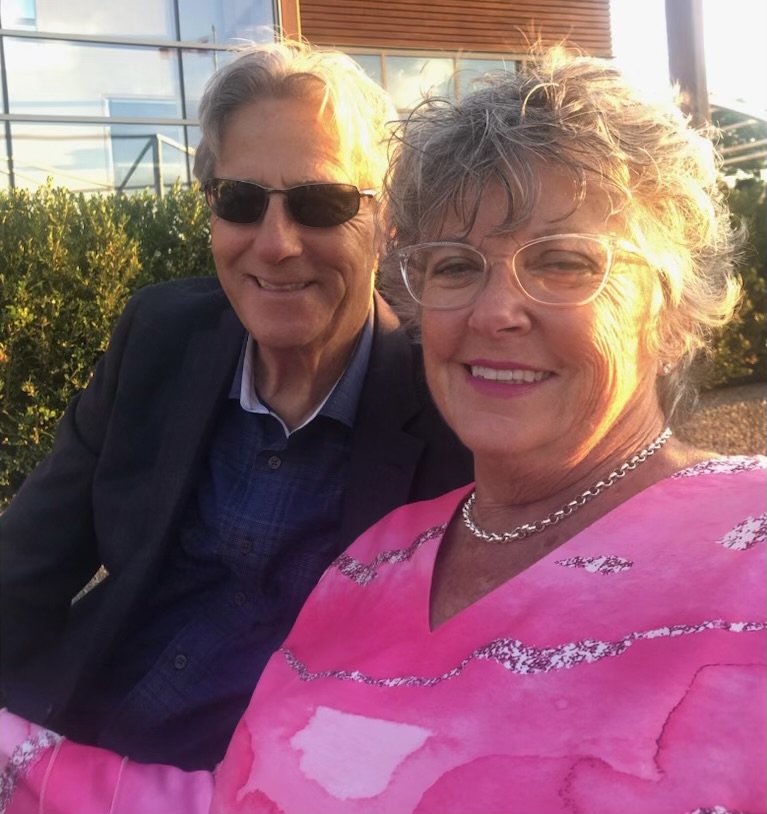
Tell us about the team you have behind you at the BRIGHT Run.
We have an executive at the moment of 12. We have two folks who are primarily scientific directors, so they oversee to make sure that you know everything is staying in line with our purpose. Five are on staff at JCC. We also have four breast cancer survivors. The executive is broken down into five different committees, so we have somebody looking after community partnerships, somebody looking after advertising, marketing, and communications, another group looking after teams registration and fundraising, and another group looking after volunteers, and then we have our secretary, who makes sure that you know we don't miss a beat, and then there's me. And we have a new subcommittee for digital marketing because we have an intern for the summer. And we have a group of probably 250 volunteers.
Do you have a story from the event that stands out for you?
Each person I meet is a story on their own, and each person that I've had the privilege to meet in this world comes at it with their own unique set of circumstances. There isn't just one, because they are all collectively just the reason I get up in the morning. I meet somebody new pretty much every day and learn a little bit more that just fuels the tank.
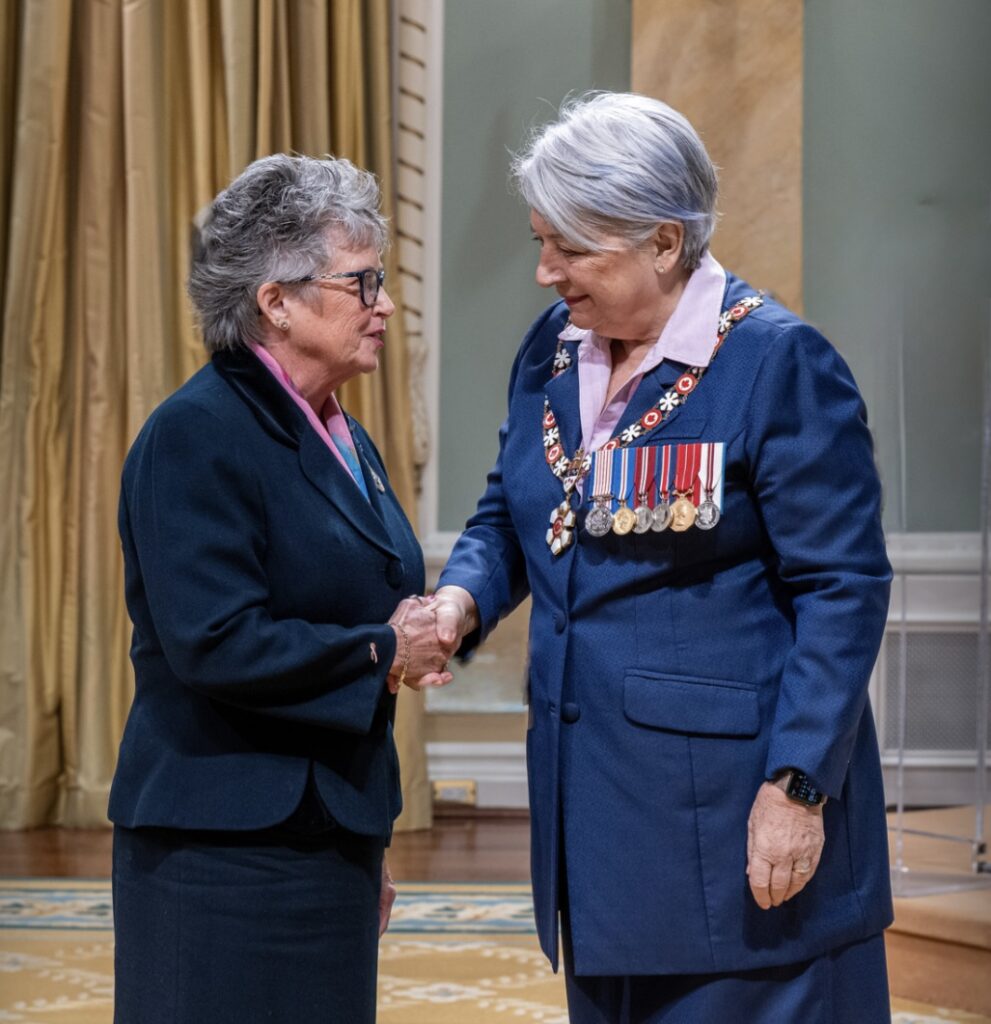
You have had some major recognitions, including being named a Hamilton Woman of Distinction in 2013 and a Meritorious Service Medal from the Governor General of Canada in 2025. What do those recognitions mean to you?
It makes me cry. I never set out to do anything to be, to be recognized. Having said that, gosh, it feels good to be appreciated in this way. My mom was a real monarchy fan. And although she wasn't able to be there, she was there, and she'd be so proud. Same with my dad. It's great to have you have your name on a certificate and hang it up on the wall. That's lovely, but it's so much more than that. I'm never able to express in words what it means, and I just hope that I'm setting a really good example for my grandchildren.
Who inspires you?
My dad. And the young sparkly kids. Anybody under the age of 40 is a kid. They have a passion and a drive to do something. They inspire me because their energy, their commitment, their passion, they want to do something, want to make a difference, and if I can get out of the way and allow them to do that, that makes me want to do more.
What's your favourite hangout in Hamilton?
One is a bench where you can overlook the Mountain Brow. You can see so many different aspects of what makes Hamilton Hamilton. Look over the core of the city, past the stadium, look out to the water, see the ships. I just sit there and just take it all in. The other is a new pink park bench right outside the CIBC Breast Assessment Centre where you can sit and reflect, look back, look forward, or just be, because when you're coming into the Breast Assessment Centre, whether everything's A-OK or you find out that there's work to be done, sometimes you just need to pause, and now there's a place to just pause and know that you're surrounded by all the good vibes that come with the BRIGHT Run. It is a lovely piece of recognition that the foundation put forward for us.
As far as things that I like to do, I love going to the theatre, whether it be Ancaster or whether it be Theatre Aquarius or any of community theatre. I just like to go and appreciate the talent. I don't think I purposely go out to a favourite hangout. I can usually find, as Pollyanna as this sounds, I can find great things about wherever I am that I can appreciate.
What's your favourite meal in Hamilton?
The lasagna at Valentino's.
Is there a Hamilton arts or cultural event that you look forward to attending?
I love the theatre. And now I am so excited to have the PWHL coming to Hamilton. I am just over the moon.