





St. Matthew’s House: From charity to justice
Closing a food bank might seem counterintuitive when dealing with hunger and poverty, but the Hamilton non-profit has shifted to an integrated system that supports dignity at every stage of life.
St. Matthew’s began as an Anglican church in the late 19th century, serving a neighbourhood once described as vibrant and working class. After the church building was lost to fire, the mission remained, evolving over time into a community organization focused on meeting the needs of those living with poverty, isolation, and housing insecurity.
Today, that same neighbourhood is often described differently. Where “vibrant” once spoke to industry and density, “vagrant” is now too often used to describe the visible realities of poverty. Now known as St. Matthew’s House, it sits in the tension between those narratives, grounded in the community’s history, while responding to its present.
Its approach to food is one of the clearest expressions of that evolution.
When Renée Wetselaar became executive director in 2018, she made a decision that raised eyebrows and ire, closing one of Hamilton’s first food banks.
At a time when demand for food security programs was increasing, the move seemed counterintuitive. When food banks sprang up in the 1980s after a recession that kickstarted the decade into despair, they were originally seen as an emergency response, never meant to be permanent.
Closing the food bank did not mean stepping away from food. It meant asking a harder question, what would it look like to address food insecurity differently?
Food as part of daily life
The answer did not come in a single program, but in a network of responses that reflect the realities of people’s lives.
It begins early.
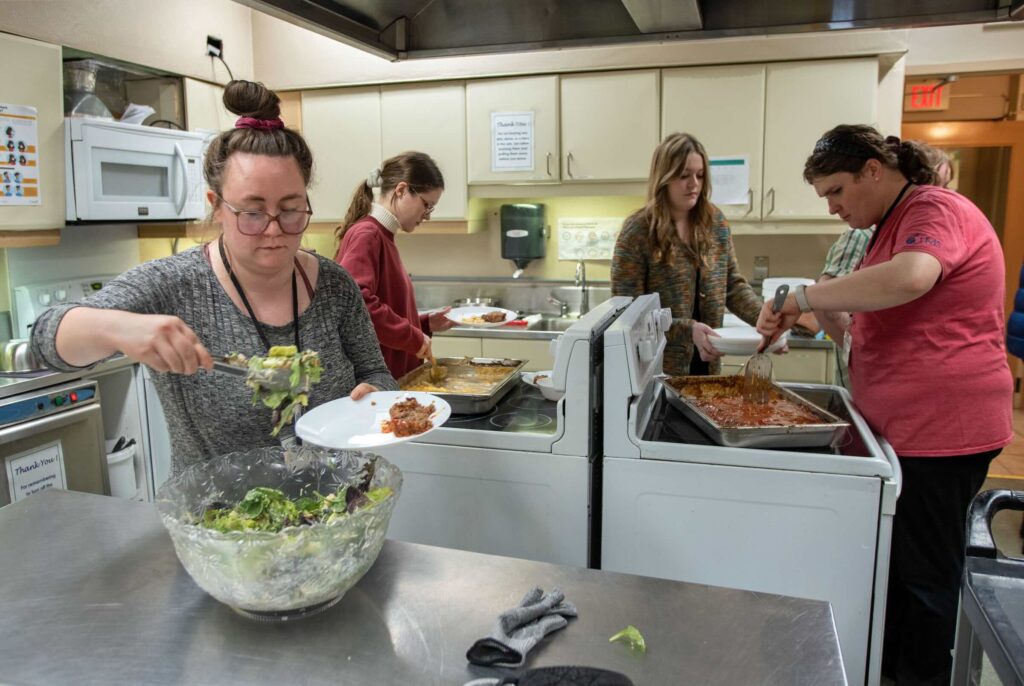
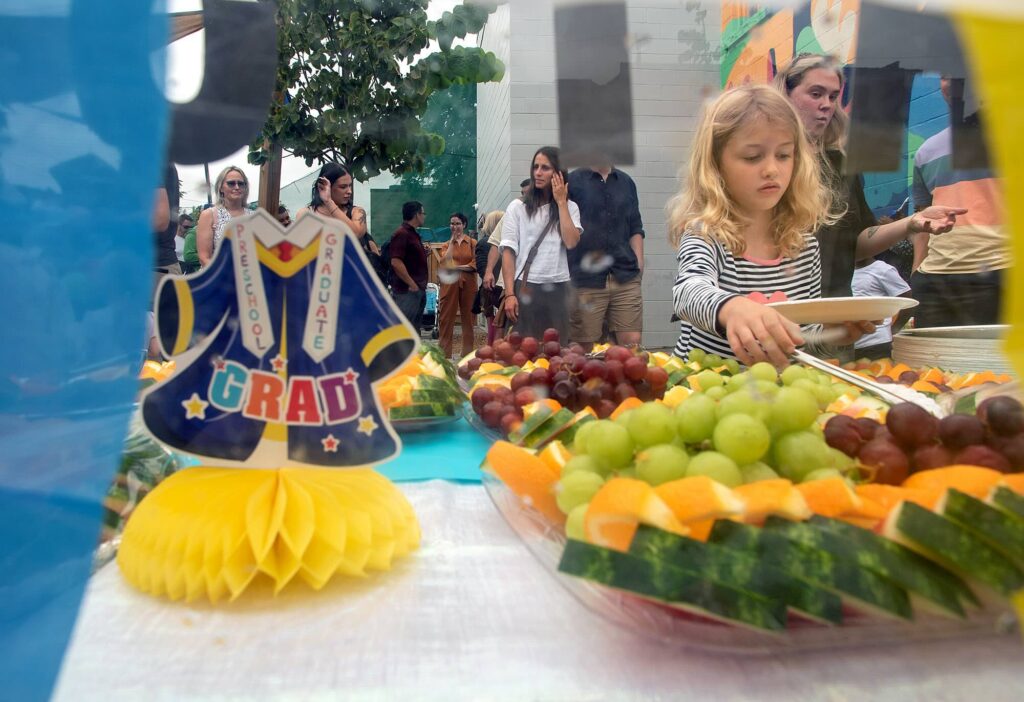
At St. Matt’s child care centres, meals and snacks are part of the daily rhythm, planned, nutritious, and consistent. For families navigating tight budgets, that reliability matters. Food here is not emergency support. It is part of a stable environment where children can grow, learn, and thrive.
Further along that continuum, food becomes a point of connection.
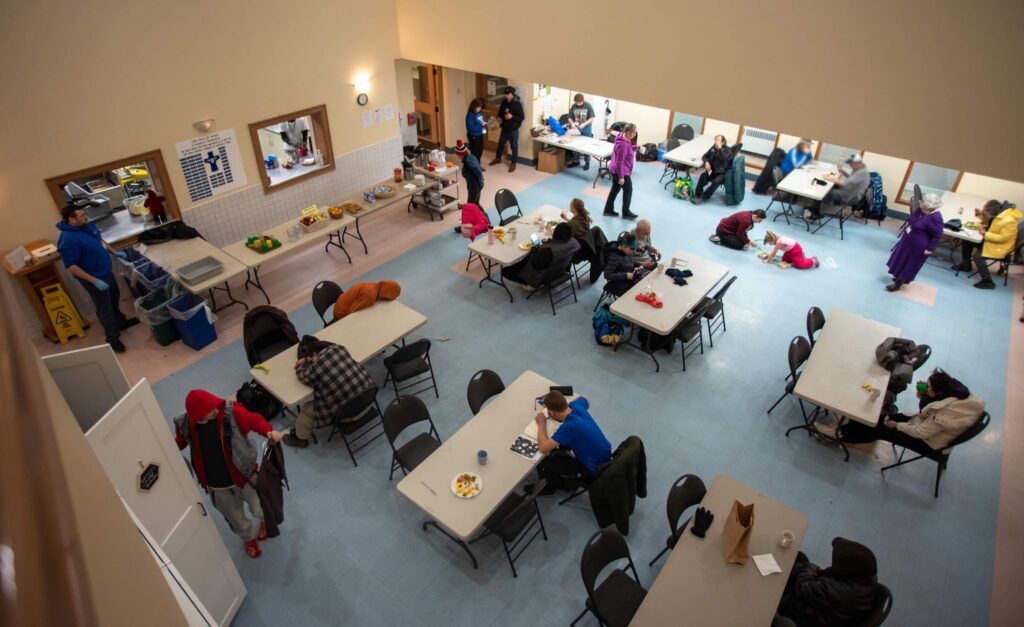
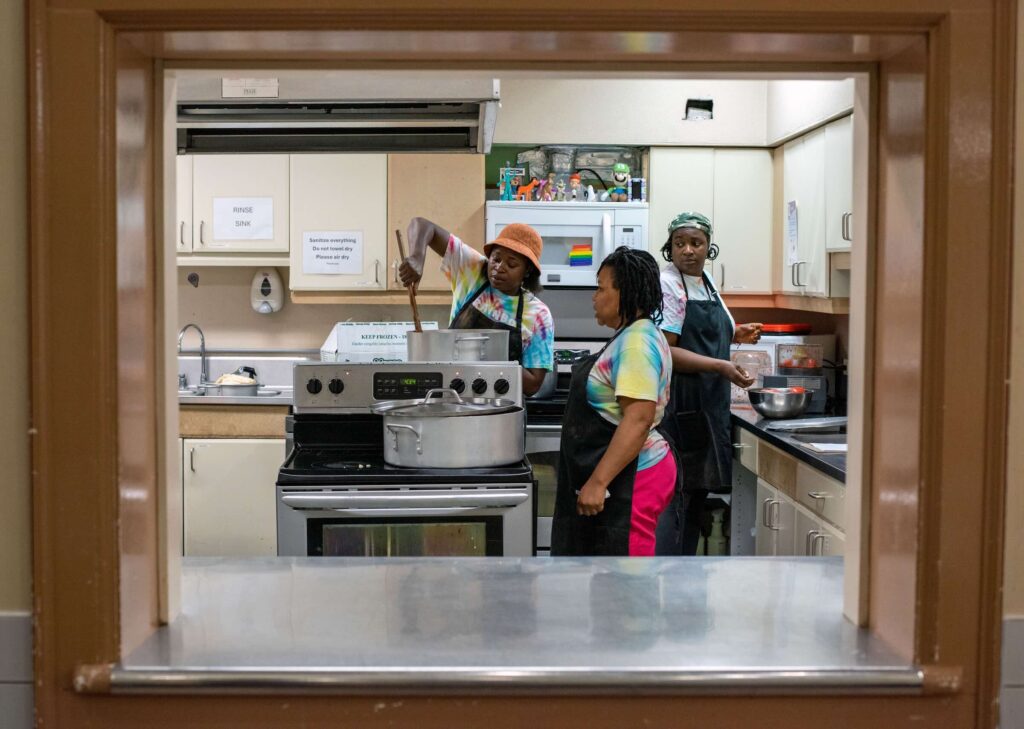
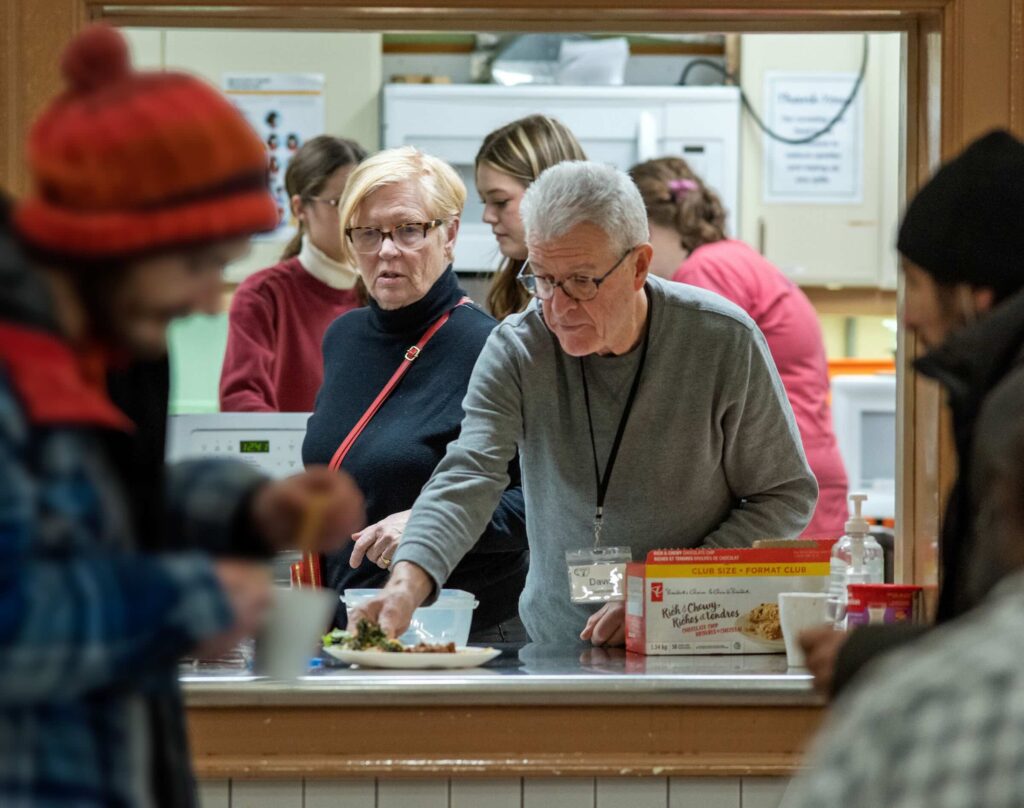
At Cathedral Café, located at Christ’s Church Cathedral on James Street North, individuals experiencing homelessness or housing instability find more than a meal. What began as a winter warming centre in 2023 has become a year-round program, offering space to come in from the elements, access washrooms, and receive breakfast and lunch in a setting designed for dignity.
In a recent three-month reporting period, the program welcomed 4,674 visitors, 3,283 of whom were unhoused, and served 5,910 meals. Clothing, hygiene supplies, and referrals to services are part of the offering, alongside partnerships with agencies providing income support, health services, and harm reduction.
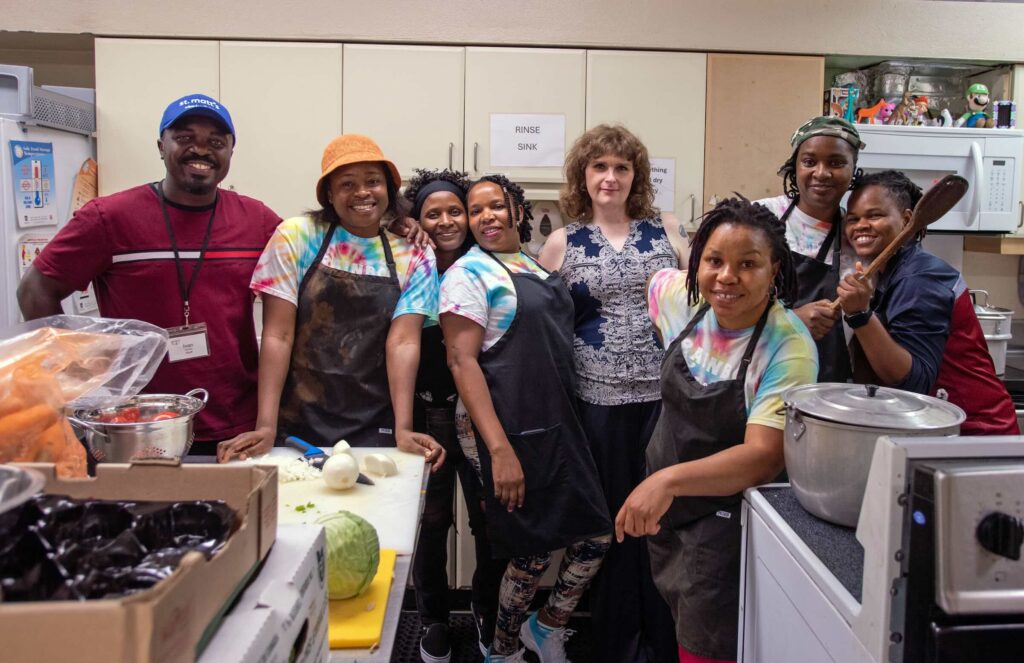
Under the leadership of head chef and supervisor Molly Bozarth, the kitchen has become a place where people are known. Bozarth, who started at St Matt’s as a food delivery driver, has seen the shift firsthand.
“Everyone should have access to food as a basic human right and it's nice to help even a little bit in the community. It gives me joy serving good meals to hundreds of people each week.”
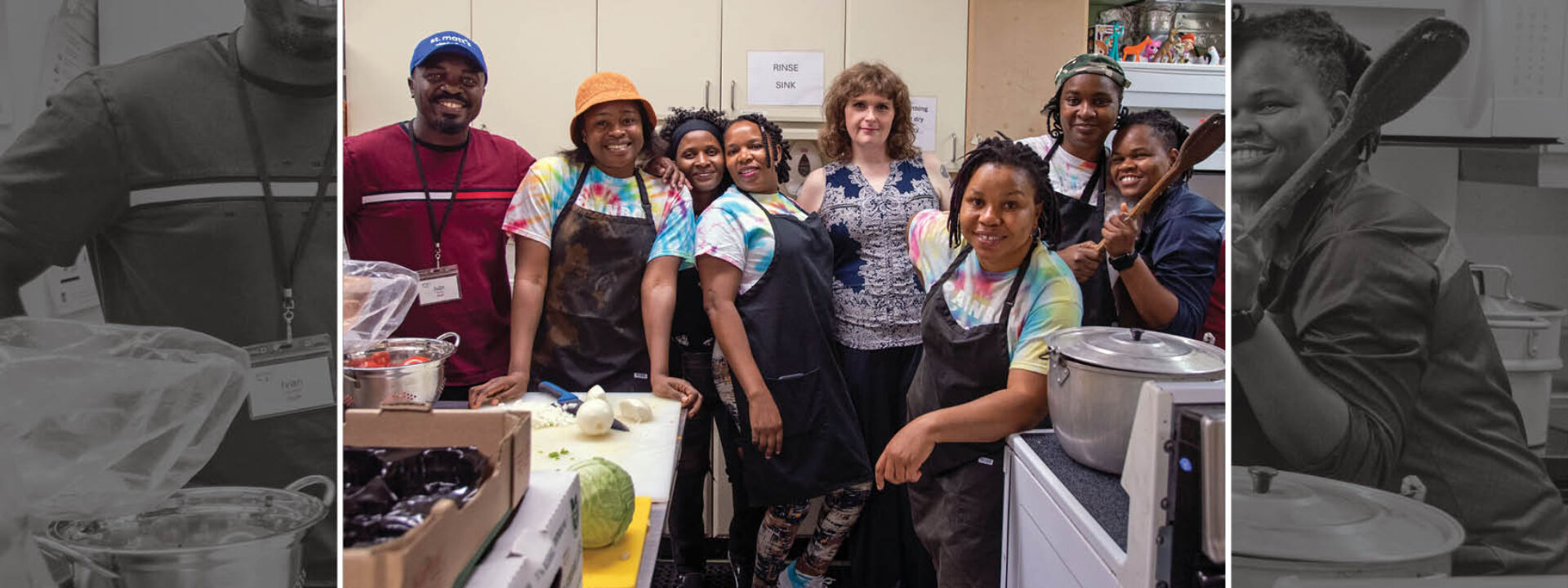
Today, Bozarth not only oversees the Cathedral Café, but she also works closely with another Cathedral-based community, the Rainbow Kings and Queens, a group of more than 500 LGBTQ asylum seekers and refugees who have escaped to Canada from African countries with death-dealing homophobic policies. Bozarth connects to the group through food but also through her own identity as a trans woman.
Through the support of St. Matt’s and the Anglican Diocese of Niagara, Bozarth works with Rainbow cooks to ensure the food reflects their cultures and tastes. Ingredients such as matoke and ugali flour are intentionally sourced.
“I just feel the joy of the Rainbow Kings and Queens and when they are in the kitchen making food they know from their countries of origin, it is a powerful experience,” Bozarth says.
The work extends beyond meals to include support with food handling and preparation, allowing food to become a source of identity and belonging, not just survival.
Food that comes to you
For seniors, the shift is equally profound. Under the clever umbrella, SinKs - Seniors in Kitchens - a multi-pronged approach works to make the name a reality, keeping people at home in their own kitchens.
Through the Seniors First Response Team, older adults are connected to emergency food, prepared meals, cooking demos, and a regularly scheduled mobile food market, alongside support from an intervention worker and paralegal who help navigate income, housing, and health services.
Each month, more than 500 deliveries are made, ensuring seniors receive at least five days worth of food directly to their doors.
For many older adults, accessing food is not simply about affordability. It is about mobility, health, transportation, and isolation, factors that can make even a short trip to a food bank impossible. As one client of St. Matt’s noted, “It’s not just food insecurity. It’s life insecurity.”
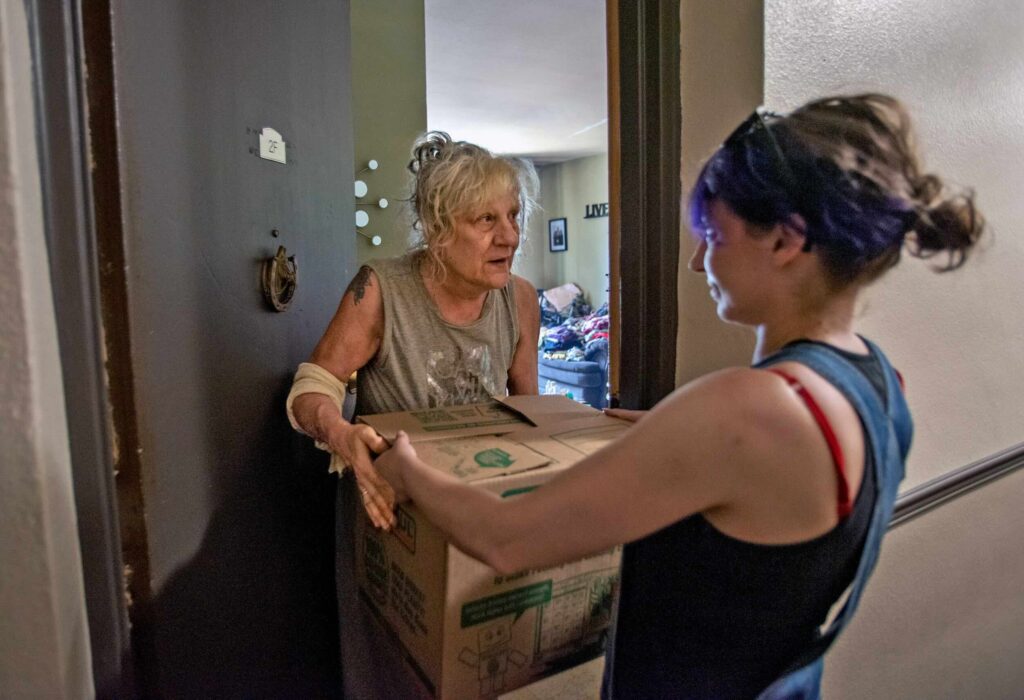
Food delivery creates more than access. It creates a point of contact, a chance to check in, build trust, and connect people to supports before a crisis takes hold.
Nowhere is the shift from charity to justice more visible than at 412 Barton St. E.
On the site where the food bank once stood, St. Matt’s has developed The 412, a six-storey building providing 15 deeply affordable homes for seniors who have experienced homelessness, with a focus on Black and Indigenous older adults.
Managed day to day by Mouhamadou “Mo” Taffa, The 412 offers more than shelter. Residents move into private apartments with their own kitchens, spaces where they can cook, host, and live with autonomy. At the same time, they are connected to supports, including food programs that deliver culturally appropriate meals when needed.
With rent-geared-to-income at around $200, and the remainder covered by an agreement with the City of Hamilton, residents are no longer forced to rely on emergency food systems. They have the ability to choose what they eat, when to prepare it themselves, and to receive support that respects their cultural preferences and circumstances.

A different way forward
What emerges from these programs is not a replacement for a food bank, but a different way of understanding the problem.
Food insecurity is not simply a lack of food. It is a reflection of deeper inequities in income, housing, health, and access.
Increasingly, leaders across the country are pointing to income security as a key part of the solution. The Primate of the Anglican Church of Canada has called for a universal basic income, linking financial stability directly to dignity, equity, and the ability to meet basic needs.
The idea has also been studied at the federal level, including by a House of Commons committee examining income security as a key response to poverty and inequality.
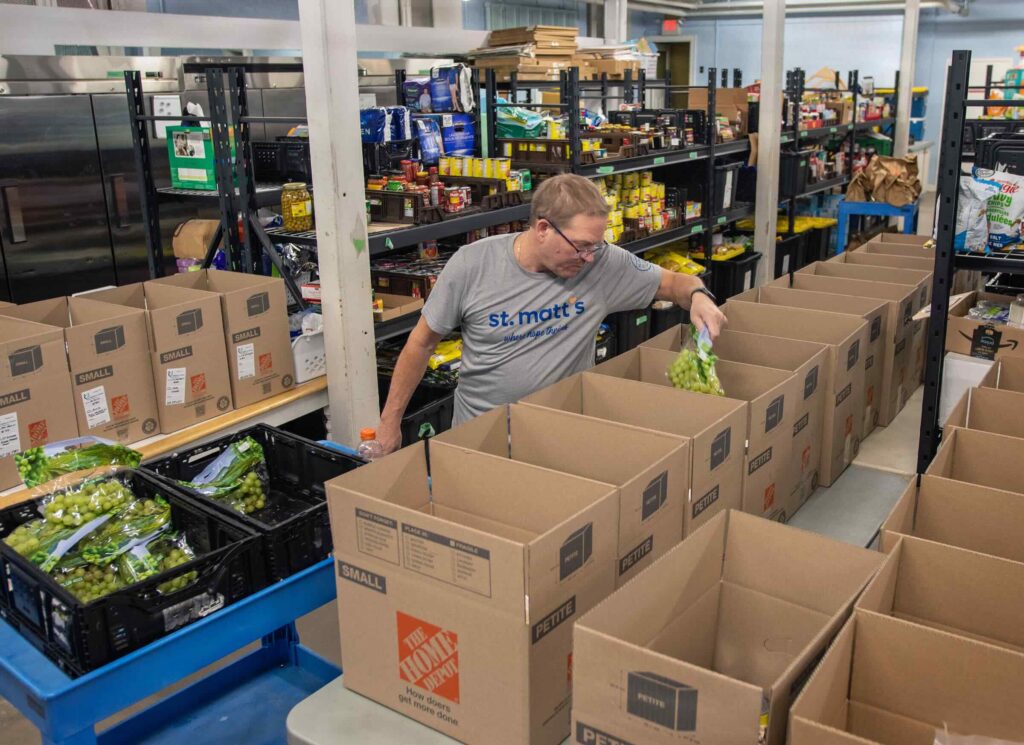
At St. Matt’s, food is integrated across a continuum of care, from child care centres to community meals, from culturally meaningful ingredients to home delivery for seniors, from emergency response to permanent housing.
In each case, the goal is the same: to move away from systems that require people to line up for what they need, and toward systems that allow them to live with dignity.
Closing a food bank invites criticism, raises questions, and challenges deeply held assumptions about what help should look like.
But in Hamilton, it has opened the door to something more human and more sustainable. Taken together, the food programs at St. Matt’s reflect a shift from charity to justice, from isolated services to an integrated system that supports dignity at every stage of life.
The goal was never to run a better food bank. It was to build a community where one is no longer needed.
FIFTY WAYS TO CLOSE A FOOD BANK
Food banks and meal programs do not end poverty. They are bandaids placed carefully over hunger pangs, hiding the fact people in our communities cannot afford to buy their own food.
At the same time, food banks and meal programs can be tourniquets, saving people from bleeding out today but not changing the circumstances that will bring the hunger back tomorrow.
Almost two decades ago, the Hamilton Roundtable for Poverty Reduction and the Social Planning and Research Council of Hamilton, started calling on community leaders and Hamiltonians across the city to, “Do the Math,” asking people to create a budget for the measly amount received on Ontario Works at the time.
It wasn’t possible then and it’s not possible now. Premier Doug Ford has frozen OW at $733 a month and just months after his election in 2018, he cancelled the only hope of an alternative to the current system, Ontario’s Basic Income Pilot.
Started under then-premier Kathleen Wynne, OBIP almost doubled that floor. It allowed people to start school, take a chance on a safer job, or an apartment unit in a better building. It made it possible to choose your own food adventure at a grocery store instead of a “bank” for food chosen for you. Professor Wayne Lewchuk at McMaster University led a study that showed substantial improvement in the mental health of people on OBIP.
Years before that, food bank volunteers in Sudbury were feeling hopeless, realizing their efforts weren’t ending poverty and they might be stuck volunteering in a broken system well past their best before date. So, they turned to music for inspiration, taking Paul Simon’s hit, “50 Ways to Leave Your Lover,” and turning it into “50 Ways to Close the Foodbank.”
The first way is directly connected to OW, Ontario Disability Support Payment, and the provincial minimum wage vs. Ontario’s living wage: “Just bump up the cheques, Rex.”
Renée Wetselaar needed the inspiration of that song when she made a decision to close the food bank at St. Matt’s in 2019. The organization, which was teetering on bankruptcy, redistributed resources and leaned into other food programs and services that allowed for more dignity.
At the same time, the dilapidated building that had housed the food bank, began a transformation to The 412, providing housing for 15 Black and Indigenous seniors, each with their own kitchen and access to a community kitchen.
Wetselaar and her team have given others a tangible model of one of 50 ways to close a food bank.